Winter aconite (Eranthis hyemalis)
Achieve the earliest bloom in your garden with Winter aconite (Eranthis hyemalis). Hardy, low-maintenance, bright yellow heralds of spring.


Bloom Boldly, No Matter the Season - Sweatshirt
Cozy organic cotton sweatshirt featuring our exclusive Purple Coneflower design. Perfect for gardeners who bloom year-round.
Inspired by the beautiful Winter aconite
Limited first batch (50) — join the waitlist for early access
Waitlist closes Feb 15, 2026.
Complete Plant Information
Field Guide Continues
Ready for care notes, companion picks, and planting tips?
The map is just the start. The full guide below covers growth habits, seasonal performance, and landscape uses.
Overview
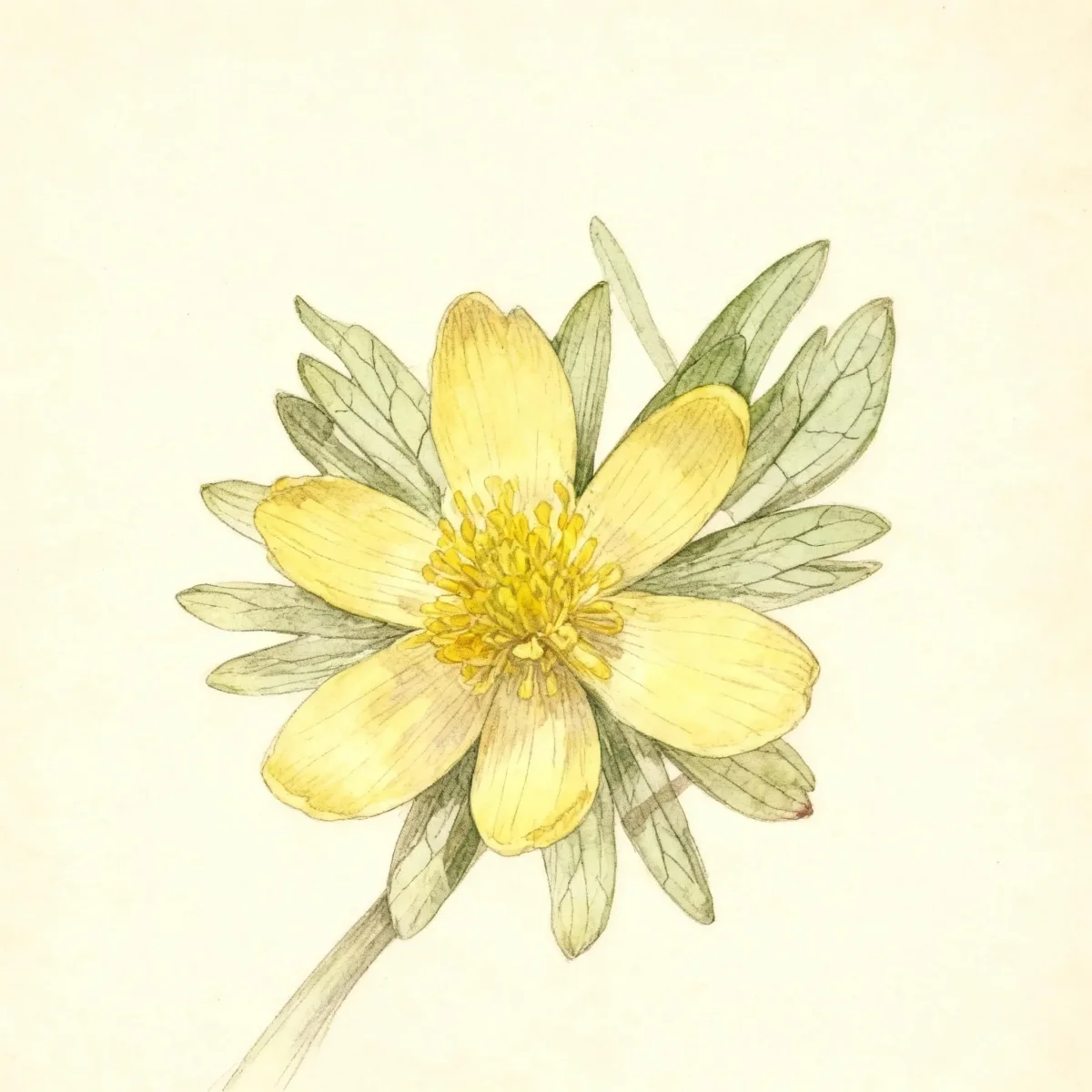
The Winter aconite, scientifically known as Eranthis hyemalis, is celebrated for its role as a true harbinger of spring, often pushing bright yellow flowers up through late snow. This cheerful groundcover offers one of the earliest color displays available to gardeners, emerging before nearly all other spring bulbs. These rugged plants create vibrant, low-growing mats perfect for brightening up drab late winter landscapes.
Native to Southern France extending into Bulgaria, Eranthis hyemalis is valued for its exceptionally easy culture and low maintenance requirements once established. Its signature bloom is cup-shaped and intensely yellow, reminiscent of a small buttercup, immediately followed by a distinctive collar of green, leaf-like bracts. These early blooms make Winter aconite an essential addition for gardeners anticipating the end of winter dormancy.
These hardy bulbs naturalize readily, creating dense, colorful drifts under deciduous trees or along pathways. Their short stature and tolerance for emerging shade make them excellent underplanting specimens. For gardeners seeking reliable, early-season impact with minimal effort, achieving success with Eranthis hyemalis is highly rewarding.
Fast Facts
- Plant Family: Ranunculaceae
- Plant Type: Bulb
- Native Range: Southern France to Bulgaria
- Hardiness Zones: USDA Zones 3-7
- Size at Maturity:
- Height: 0.25-0.5 ft
- Spread: 0.25-0.5 ft
- Bloom Time: March to April
- Bloom Description: Bright yellow
- Sun Exposure: Full sun to part shade
- Water Needs: Medium
- Maintenance Level: Low
How to Grow
Planting Eranthis hyemalis tubers should ideally occur in the late summer or early fall before the ground freezes hard. Prepare the soil by ensuring it is organically rich, well-drained, and retains medium moisture consistently. Before planting the tubers 2 to 3 inches deep and spaced about 3 inches apart, soak them overnight to rehydrate them, which significantly aids establishment.
While they thrive best in areas that receive full sun during their brief blooming period, ensure the planting site will gain increasing shade as overhead canopy trees leaf out later in the season. Consistent moisture is critical year-round, even though the foliage dies back by late spring; avoid letting the area dry out completely during summer and fall dormancy.
Once satisfied with their placement, it is best to leave Winter aconite undisturbed, as they have a tendency to self-seed and naturalize beautifully over successive years in optimal conditions. Maintenance is generally low; minimal care is required beyond ensuring they have adequate moisture supply before dormancy begins.
Landscape Uses
Eranthis hyemalis is perfectly suited for naturalizing, allowing it to spread and form large, cheerful colonies over time. This characteristic makes them superb for scattering beneath the canopy of deciduous trees where they receive crucial spring sunlight before the leaves fully develop. They are also excellent for creating informal borders along winding paths or walkways where their low growth won’t obstruct views.
Consider using Winter aconite in rock gardens or along the edges of foundation plantings where their early burst of color can be greatly appreciated near frequently used areas like a garage entrance or kitchen window. For container gardening, group them densely in pots to maximize the impact of their short bloom window, remembering that container soil dries faster and may require slightly more attention to irrigation.
Their early emergence also makes good companions for later blooming bulbs like daffodils or tulips, providing continuous spring interest; plant them slightly ahead of taller neighbors so the area remains decorated throughout the season.
Standout Features
Flower Qualities
- Showy
Noteworthy Characteristics
Eranthus hyemalis, commonly called winter aconite, is native to Europe (France to Bulgaria). It is a late winter bloomer (before crocus) that features cup-shaped, upward-facing, bright yellow, butter-cup like flowers on stalks to 3-4” tall. The genus name derives from Greek words implying ‘spring flower’ due to its extremely early flowering time, signaling the end of winter.
Tolerances
- Deer
- Black Walnut
Potential Problems
Fortunately, Eranthis hyemalis rarely faces serious insect or disease complications in the garden. The primary consideration for gardeners relates more to cultural needs, specifically soil drainage and moisture consistency. Ensure planting locations do not retain standing water, as this can lead to tuber rot, though they are generally tougher than many other early bulbs.
If the plant fails to return robustly in subsequent years, it might indicate the location is receiving too much summer drought or too much dense shade after spring bloom. Always leave the foliage to die back naturally so the plant can recharge its energy reserves.
Frequently Asked Questions
What hardiness zones is Winter aconite suitable for?
Winter aconite (Eranthis hyemalis) is reliably hardy across USDA Zones 3 through 7.
How large does Winter aconite grow?
This species remains very low-growing, typically reaching a height between 0.25 and 0.5 feet, with an equal spread of 0.25 to 0.5 feet at maturity.
When does Winter aconite bloom?
The characteristic bright yellow flowers of Eranthis hyemalis appear relatively early, usually blooming from March into April.
What sun exposure does Eranthis hyemalis need?
Winter aconite prefers a spot that offers full sun at the time of its bloom, transitioning to part shade as larger trees begin to leaf over later in the season.
Conclusion
The appeal of Eranthis hyemalis lies in its tenacity and spectacular early performance, delivering undeniable bright yellow color when the garden needs it most. Planting Winter aconite is an uncomplicated way to guarantee one of spring’s first grand displays. Before planting this fall, confirm your soil provides excellent drainage and plan locations where you can easily observe the emerging shoots near walkways or windows.
Companion Planting
When selecting companions for your Eranthis hyemalis planting, focus on other bulbs that share similar cultural requirements or bloom sequentially. Snowdrops (Galanthus), miniature daffodils, and scilla all thrive under deciduous trees, enjoying the full sun of early spring before the canopy closes. These companions provide continuous color just before and just after the Winter aconite finishes its sprint.
Consider planting the tubers layered together; the Winter aconite will cover the ground first, and as its foliage yellows, the emerging leaves of tulips or later spring ephemerals will take over the space, masking the fading Winter aconite leaves effectively.
Seasonal Care Calendar
The critical care window for Eranthis hyemalis is late summer/early fall and moist early spring. During the late summer/early fall, this is the time to plant the tubers 2-3” deep, following the overnight soaking recommendation. Avoid excessive digging or disturbing this area during summer, as the dormant tubers are present below the soil surface.
As spring approaches in March, look for the first signs of green. Water consistently during this bloom period and immediately afterward. Once the leaves turn yellow and start to collapse in late spring, cease heavy watering, allowing the soil to approach dryness during the summer dormancy phase, as they prefer less moisture when inactive.