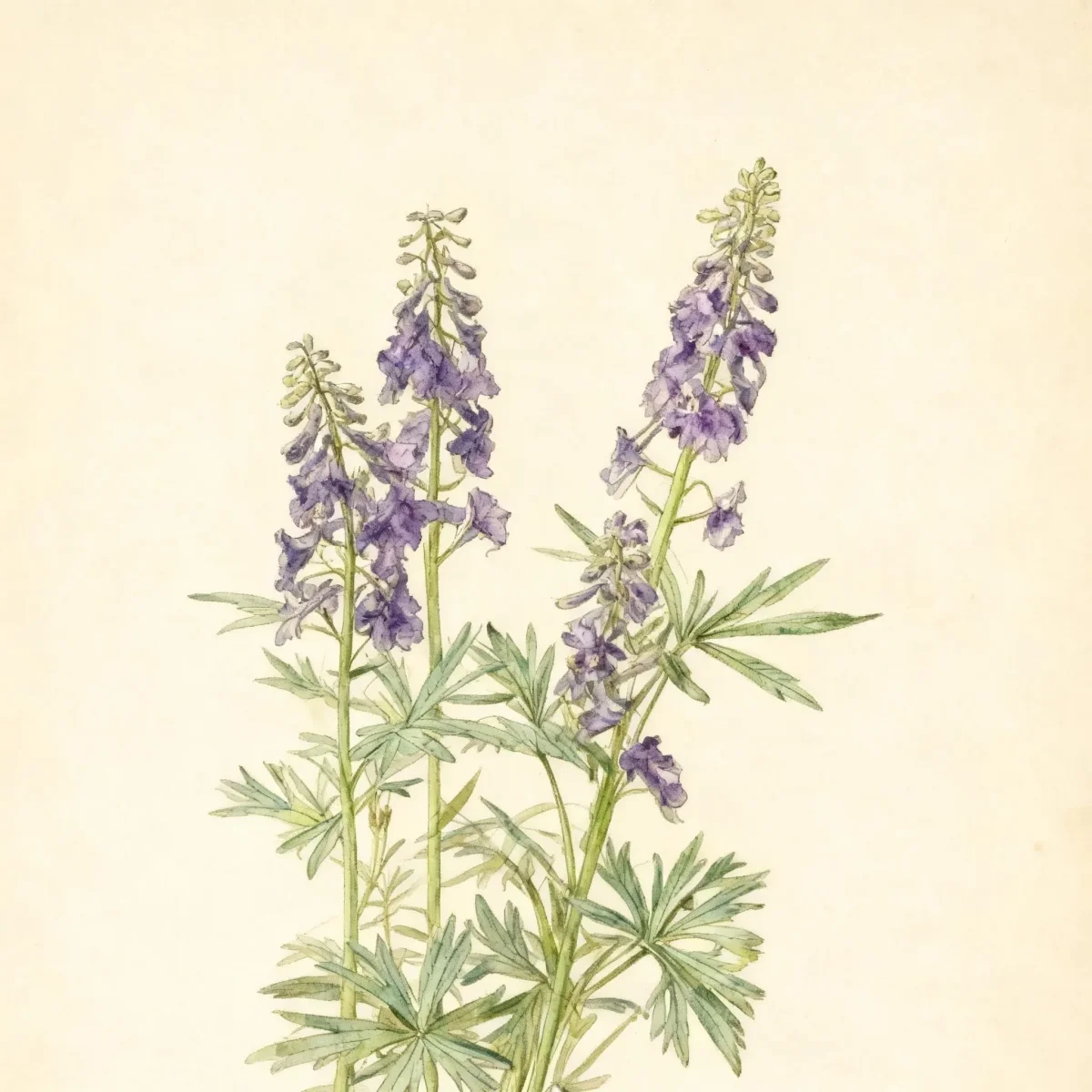
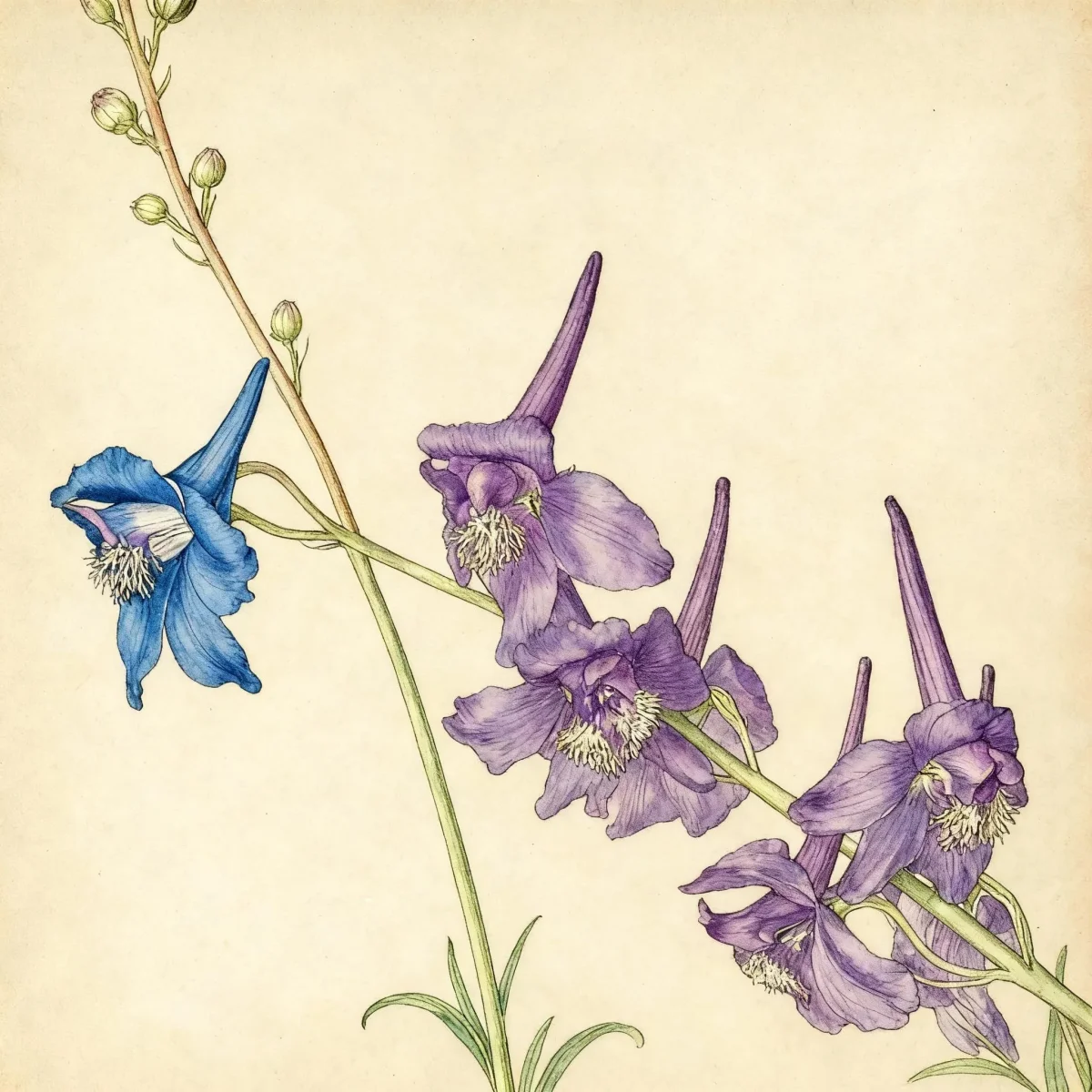
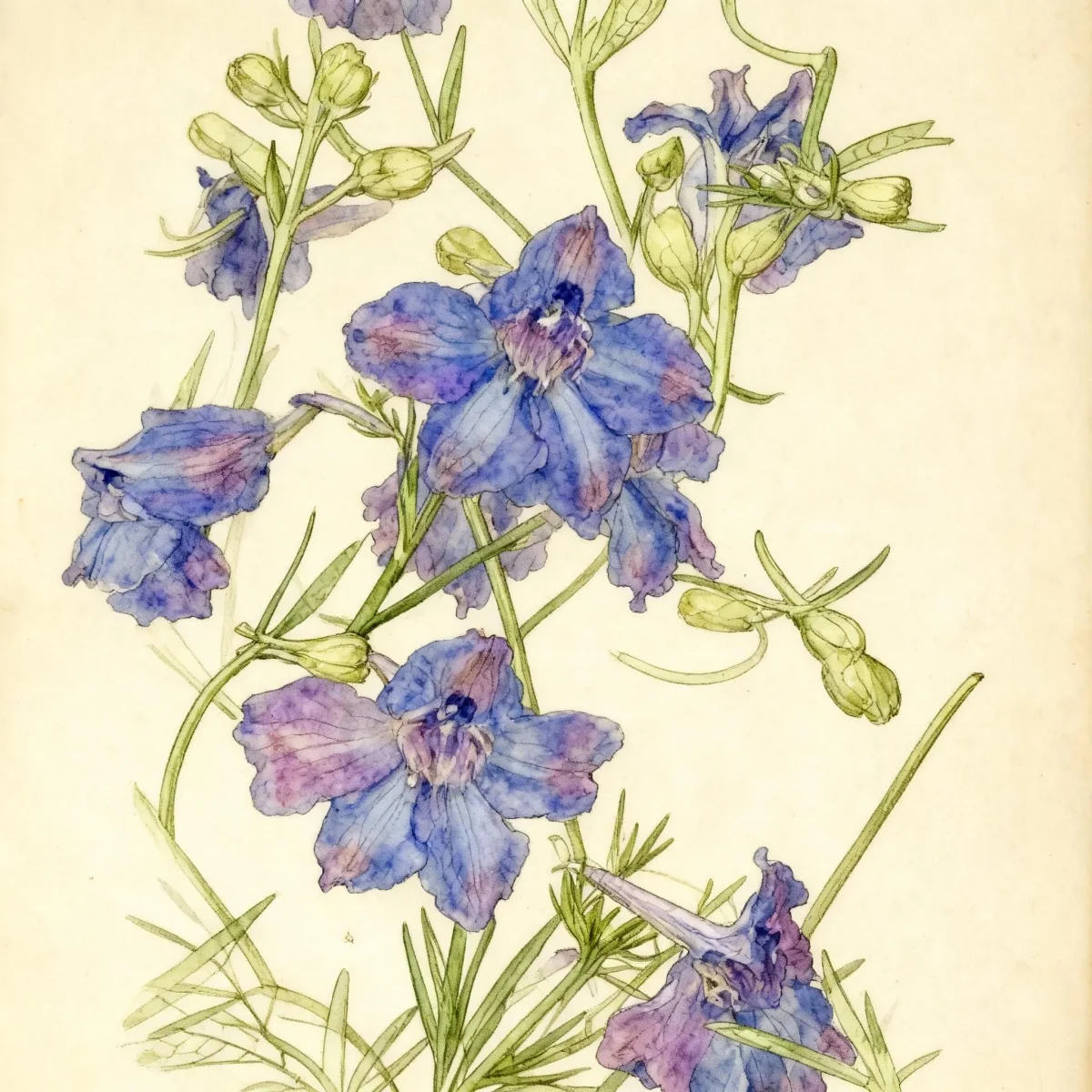
Tall larkspur (Delphinium exaltatum)
Delphinium exaltatum, Tall larkspur, offers towering spikes of gentian blue blooms in the east U.S. A medium-maintenance perennial thriving in full sun.
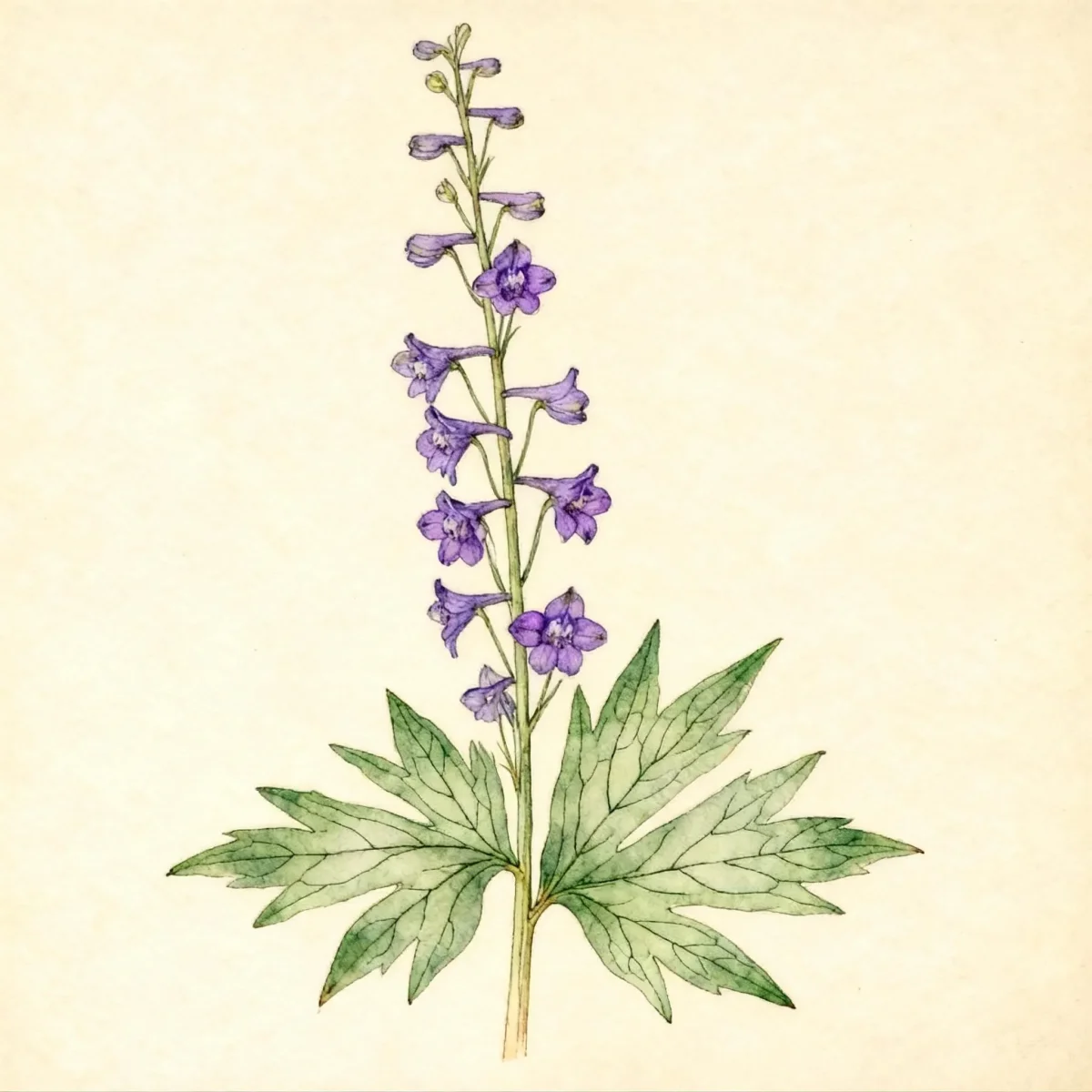

Bloom Boldly, No Matter the Season - Sweatshirt
Cozy organic cotton sweatshirt featuring our exclusive Purple Coneflower design. Perfect for gardeners who bloom year-round.
Inspired by the beautiful Tall larkspur
Limited first batch (50) — join the waitlist for early access
Waitlist closes Feb 15, 2026.
Complete Plant Information
Field Guide Continues
Ready for care notes, companion picks, and planting tips?
The map is just the start. The full guide below covers growth habits, seasonal performance, and landscape uses.
Overview
Delphinium exaltatum, commonly known as Tall larkspur, stands out in the summer garden with its impressive stature and clear, gentian blue flowers. Unlike many shorter delphiniums, this native perennial offers significant vertical interest, reaching heights of four to six feet. Gardeners value this species for its reliable summer color and its inclusion in naturalized or cottage-style plantings.
Originating in the Eastern United States, Tall larkspur thrives best in rich, well-drained soils where it receives consistent moisture. While it demands full sun for the best performance, it benefits from slight shelter from intense afternoon heat, especially in the warmer parts of its range. This species is generally hardier and more adaptable to heat than many of the cultivated delphinium hybrids.
A key characteristic of Delphinium exaltatum is its later and more abundant bloom period compared to other native U.S. larkspurs. Incorporating Tall larkspur brings height and beautiful color contrast to perennial borders, provided its cultural needs for robust support and balanced moisture are met. Remember that all parts of this handsome plant contain toxins, necessitating careful placement away from grazing animals or curious pets.
Fast Facts
- Plant Family: Ranunculaceae
- Plant Type: Herbaceous perennial
- Native Range: Eastern United States
- Hardiness Zones: USDA Zones 5-7
- Size at Maturity:
- Height: 4-6 ft
- Spread: 1-2 ft
- Bloom Time: July to September
- Bloom Description: Gentian blue
- Sun Exposure: Full sun
- Water Needs: Medium
- Maintenance Level: Medium
How to Grow
The ideal time to establish Delphinium exaltatum is when soil temperatures are moderate, often in spring or early fall, giving the plant time to root before summer stress. For establishment, select a site providing full sun exposure, though a location that offers slight afternoon shade in the hottest climates prevents wilting. Soil quality is crucial; aim for environments that are fertile, well-drained, and consistently medium in moisture content.
Routine cultural care involves regular feeding to sustain its tall growth habit. Water deeply when the top inch of soil feels dry, avoiding overly saturated conditions, which can lead to rot. Because of its height, supporting taller stems against strong winds is often necessary; staking early in the season prevents damage to the developing structure.
To encourage rebloom, gardeners should diligently remove spent flower spikes immediately after the primary bloom fades in the summer. While a second flush of flowers may appear, it is usually sparse compared to the initial display. Be aware that Tall larkspur generally objects to high humidity and is not well-suited for the deep South, thriving instead in cooler summer regions.
Landscape Uses
Tall larkspur is an excellent vertical accent when used in the background of mixed borders or within dedicated cottage gardens, providing structure from July through early September. Its stately height makes it perfect for screening less attractive elements or providing visual anchors in large beds. Though beautiful alone, Delphinium exaltatum integrates well when massed or planted in small drifts rather than isolated specimens.
Consider pairing this native perennial with plants that share similar sun and moisture requirements, such as Rudbeckia or tall native grasses, which can complement its architectural form. For those focused on native planting schemes, incorporating Tall larkspur into designated native plant habitat areas highlights regional flora. Ensure that plantings are spaced appropriately, respecting its eventual spread of one to two feet between individuals.
Growing Delphinium exaltatum is a rewarding endeavor for adding drama to the perennial border. Its striking vertical element draws the eye upward, enhancing the sense of scale in the garden design.
Standout Features
Flower Qualities
- Showy
Noteworthy Characteristics
Delphinium exaltatum, commonly called tall larkspur, is native to Eastern North America from Pennsylvania and Ohio south through the Appalachians into northern Alabama, with several small, isolated populations existing in the Ozarks in far south central Missouri. Tall larkspur typically grows 4-6’ tall and features loose terminal racemes of gentian blue flowers which bloom in summer. The genus name references the Greek word delphis due to the flower bud shape resembling a dolphin.
Tolerances
- Deer
Potential Problems
Gardeners should be diligent in monitoring Tall larkspur for common fungal issues, as susceptibility to powdery mildew, botrytis blight, and various leaf spots is common. Crown rot can become a significant concern if soil drainage is inadequate or if overwatering occurs. Slugs and snails occasionally feed on new growth, so inspect plants regularly, especially in moist conditions. To mitigate fungal problems, ensure good air circulation around the plants by providing adequate spacing and avoiding overhead watering late in the day.
Frequently Asked Questions
What hardiness zones is Tall larkspur suitable for?
Delphinium exaltatum is generally suited for USDA Hardiness Zones 5 through 7.
How large does Tall larkspur grow?
This imposing perennial typically reaches a mature height between 4 and 6 feet, with a spread of 1 to 2 feet.
What sun exposure does Delphinium exaltatum need?
Delphinium exaltatum requires full sun exposure to achieve its best height and flowering potential.
When does Tall larkspur bloom?
Tall larkspur blooms later in the season, typically from July through September, displaying striking gentian blue flowers.
Conclusion
For gardeners seeking vertical excitement and clear, cool blue tones late in the summer, Delphinium exaltatum offers a robust, native solution. Successfully growing this Tall larkspur requires attention to drainage, staking, and disease prevention, rewarding the effort with spectacular height. Before planting, confirm your site meets the full sun requirement and is within USDA Zones 5-7 for the best results.
Companion Planting
When planning companions for Delphinium exaltatum, prioritize plants that thrive in full sun and medium, well-drained soil. Avoid plants that require heavy or consistently wet conditions, as this predisposes the larkspur to crown rot. Consider pairing the blue spires with contrasting textures and colors, such as the warm yellows of Coneflowers (Echinacea) or the sturdy gray-green foliage of Russian Sage (Perovskia).
The height of Tall larkspur means its base can occasionally look bare after early summer blooms fade. Suitable companions include sturdy, mid-height perennials like Catmint (Nepeta) or hardy Salvias, whose lower profiles will fill in the space while complementing the gentian blue. Proper companion selection aids air circulation, which is vital for discouraging fungal issues in the foliage.
Seasonal Care Calendar
Managing Tall larkspur involves key tasks timed throughout the growing year. In early spring, before significant new growth emerges, it is the best time to install any necessary staking supports, securing them firmly near the crown. Mid-season (early summer), deadhead spent flower stalks from the main bloom to promote potential secondary flowering in the fall.
As summer progresses, monitor moisture levels closely, providing supplemental water during dry spells. Throughout the active growing season, regular fertilization helps support the high nutrient demands of this taller species. Once fall arrives and temperatures cool, cut back the remaining dead foliage near the ground, ensuring the area is clean before winter sets in to minimize overwintering fungal spores.