Hellebore (Helleborus orientalis)
The Hellebore, Helleborus orientalis, offers stunning late winter blooms in zones 4-9, thriving in shade with low maintenance.


Bloom Boldly, No Matter the Season - Sweatshirt
Cozy organic cotton sweatshirt featuring our exclusive Purple Coneflower design. Perfect for gardeners who bloom year-round.
Inspired by the beautiful Hellebore
Limited first batch (50) — join the waitlist for early access
Waitlist closes Feb 15, 2026.
Complete Plant Information
Field Guide Continues
Ready for care notes, companion picks, and planting tips?
The map is just the start. The full guide below covers growth habits, seasonal performance, and landscape uses.
Overview
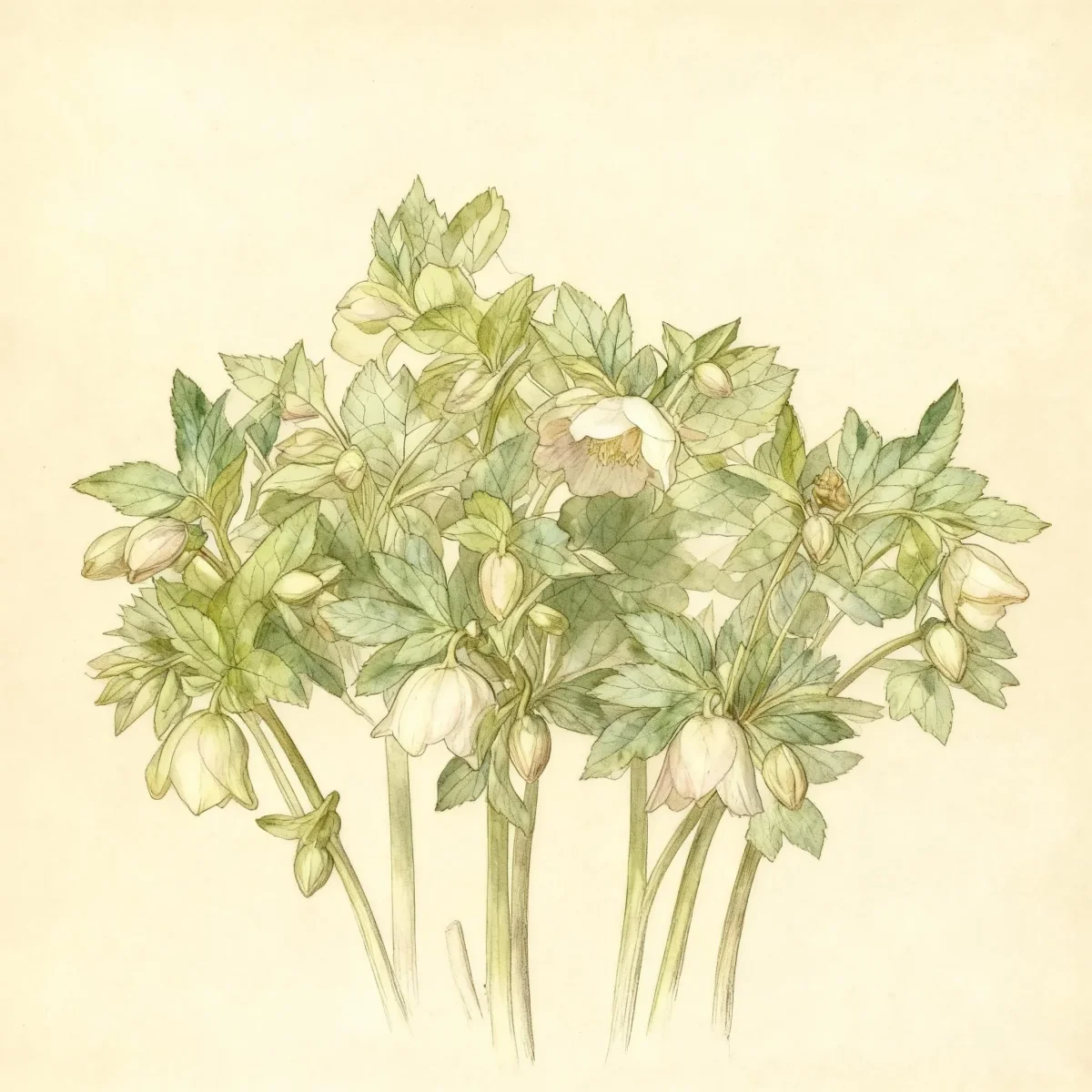
The Hellebore, specifically Helleborus orientalis, is a cherished herbaceous perennial known for brightening the late winter and early spring garden when little else is flowering. These plants offer remarkable charm with their large, nodding, cup-shaped blooms that often appear while snow is still on the ground, making the Hellebore a true herald of spring colors. Cultivating Helleborus orientalis provides long-lasting color and is highly valued for its evergreen foliage which remains attractive even when not in bloom.
This Lenten rose establishes quickly into attractive clumps, typically reaching 1 to 1.5 feet in height, making it perfect for shaded borders or woodland settings. It is remarkably tough, exhibiting low maintenance requirements once established, and tolerates conditions like heavy shade and dry soil better than many other woodland bloomers. Gardeners rely on the Hellebore sequence for reliable visual interest long before summer perennials emerge.
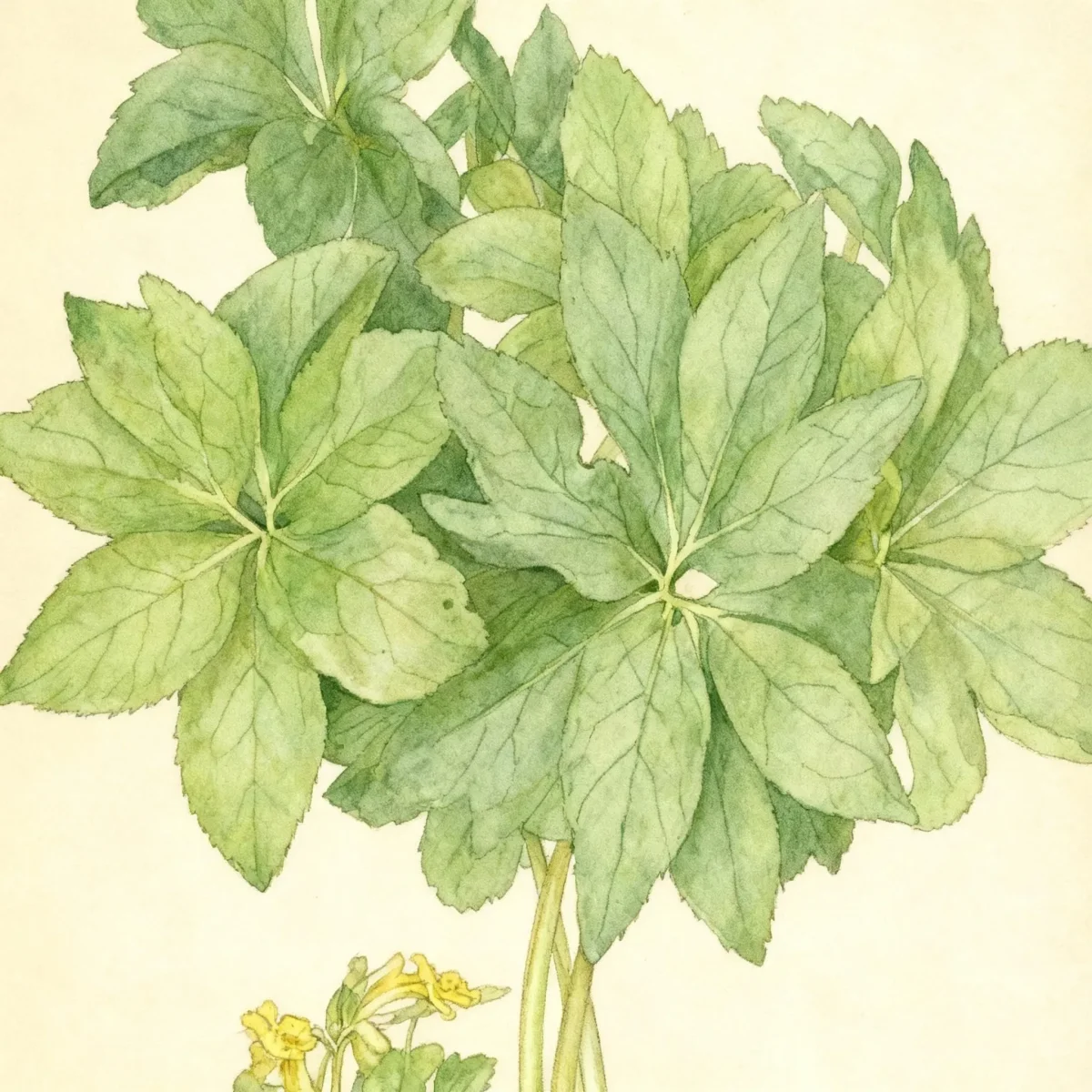
Its natural resistance to deer browsing, coupled with its ability to thrive in deep shade, makes this Hellebore an indispensable structural plant for challenging garden spots. The persistent, glossy, dark green leaves ensure that the landscape retains texture and color throughout the dormant season, reinforcing the value of the Helleborus orientalis in any shade garden design.
Fast Facts
- Plant Family: Ranunculaceae
- Plant Type: Herbaceous perennial
- Native Range: Turkey, Caucasus
- Hardiness Zones: USDA Zones 4-9
- Size at Maturity:
- Height: 1-1.5 ft
- Spread: 1-1.5 ft
- Bloom Time: April
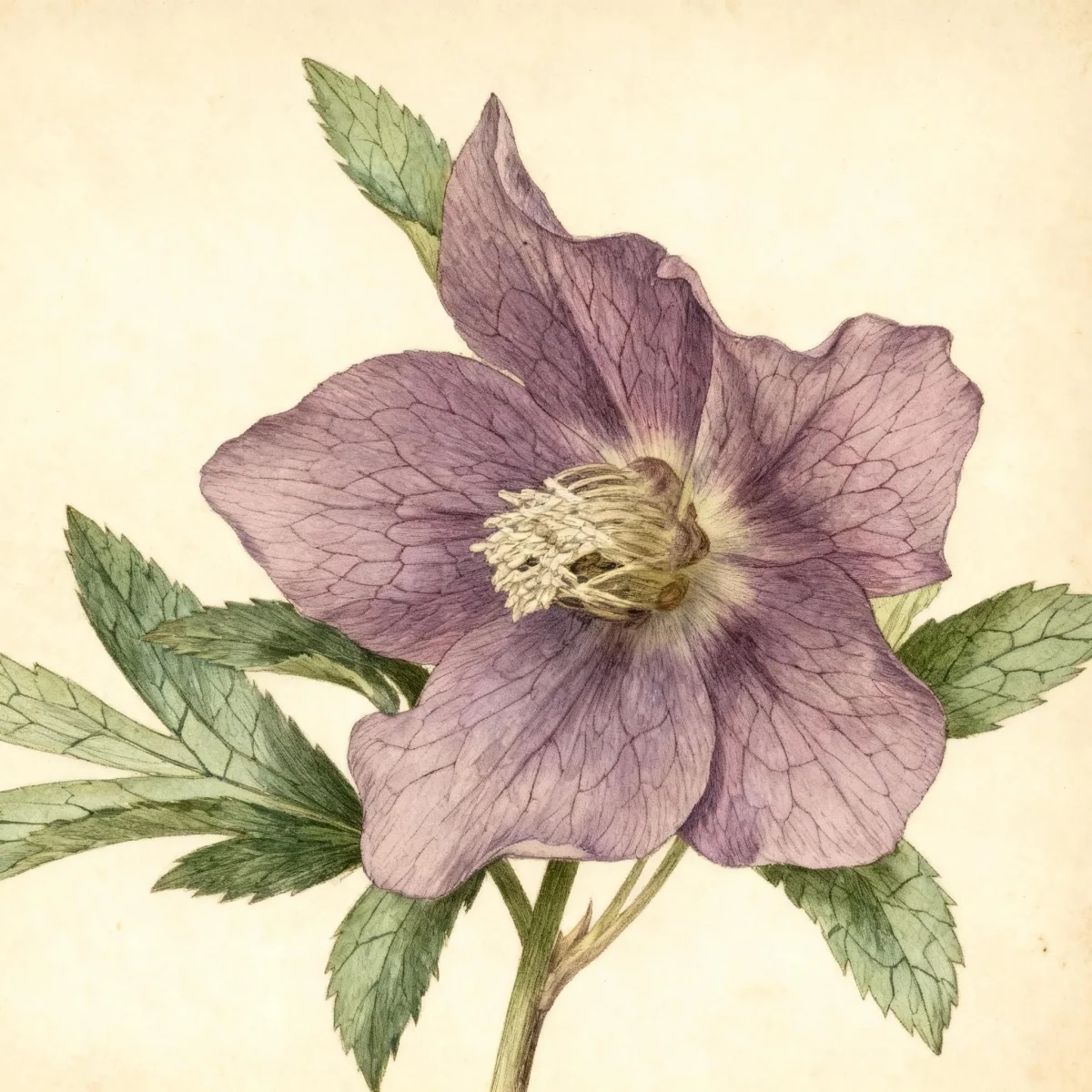
- Bloom Description: White to pink to rose-purple with yellow stamens
- Sun Exposure: Part shade to full shade
- Water Needs: Medium
- Maintenance Level: Low
How to Grow
For optimal performance, plant your Helleborus orientalis during the spring or fall when conditions are cooler. The placement is crucial: these plants thrive best in organically rich, humusy, well-drained soils. Ensure they receive part shade to full shade; deep shade is well tolerated, but protection from intense afternoon sun is essential. Locate these plants where they are somewhat shielded from harsh, drying winter winds, as this prevents foliage scorch.
Watering needs for the Hellebore are medium, requiring consistent moisture, especially when establishing. Avoid letting the soil become waterlogged, as this can lead to crown rot, their primary disease vulnerability. While vigorous, established clumps establish quickly and can handle some dry soil conditions, particularly due to the tolerance this Hellebore exhibits. Minimal fertilization is required; focusing on top-dressing with compost annually is usually sufficient to enrich the soil.
Pruning involves cutting back the old flowering stems immediately after the bloom period concludes. This simple act directs the plant’s energy toward producing fresh, clean foliage for the coming season. Propagation is easily achieved through the division of established clumps, which is best done in the spring, or by allowing the plants to self-seed in place, which creates naturalized groupings of this lovely Lenten rose.
Landscape Uses
The Hellebore is perfectly suited for integration into naturalized settings where its evergreen clump-forming habit can slowly spread over time. They function beautifully as early-season interest near walkways, patios, or kitchen windows, providing a vital splash of color during the late winter and early spring thaw. Consider grouping them under the canopy of large deciduous trees or within woodland garden schemes where seasonal light shifts are managed.
For border fronts, the dense, neat foliage of the Helleborus orientalis provides an excellent foil for emerging spring bulbs like daffodils and tulips, which bloom slightly later. They can also be massed to create a sophisticated, low-maintenance ground cover that suppresses weeds while offering textural contrast year-round. The inherent deer resistance of this Hellebore means they remain intact when browsing animals are scarce in late winter.
Standout Features
Flower Qualities
- Showy
Noteworthy Characteristics
Helleborus orientalis, commonly called Lenten rose, is a clump-forming, late winter-blooming perennial which typically grows 1-1.5’ tall. Features large, cup-shaped, rose-like, usually nodding flowers (3-4” diameter) with center crowns of conspicuously contrasting yellow stamens. Flower color is extremely variable, ranging from white to pink to light rose-purple, frequently with interior spotting. Leaves, stems and roots are poisonous, a characteristic noted in the genus name derivation.
Tolerances
- Deer
- Heavy Shade
- Dry Soil
- Shallow-Rocky Soil
- Air Pollution
Potential Problems
Overall, the Hellebore is recognized as a rugged and easy-to-grow garden plant, resisting most serious insect infestations or diseases. The primary concerns gardeners face relate to fungal issues, particularly leaf spot and crown rot. Crown rot is often caused by overly wet, poorly drained soil conditions or improper planting depth. To mitigate these issues, ensure excellent drainage when planting and avoid heavy mulch piled directly against the crown of the perennial.
Foliage that appears scorched or tattered, particularly in extremely cold northeastern or midwestern winters, is usually a reaction to harsh environmental exposure rather than disease. Protecting your Helleborus orientalis from frigid winds and ensuring adequate snow cover acts as insulation during severe cold snaps will help maintain its attractive evergreen appearance.
Frequently Asked Questions
What hardiness zones is Hellebore suitable for?
The Hellebore is suitable for USDA Zones 4 through 9, offering a wide range of adaptability across many climates.
How large does Hellebore grow?
This perennial typically reaches a mature height range of 1 to 1.5 feet, with a comparable spread of 1 to 1.5 feet, forming neat clumps.
What sun exposure does Helleborus orientalis need?
Helleborus orientalis prefers part shade to full shade conditions, making it an excellent choice for woodland areas or beneath deciduous trees.
When does Hellebore bloom?
The characteristic bloom time for this variety is April, featuring flowers that range from white to pink to rose-purple, highlighted by contrasting yellow stamens.
Conclusion
The Helleborus orientalis remains a superstar in the shade garden, delivering unmatched early-season color and desirable evergreen texture with minimal gardener intervention. Its reliability and hardiness make the Hellebore a worthwhile investment for nearly any garden design challenged by shade. Always check your local USDA hardiness zone compatibility before planning your planting locations.
Companion Planting
When designing a space around your Helleborus orientalis, consider plants that share its preference for well-drained, humus-rich soil and part to full shade. Hellebores look especially stunning when paired with early spring ephemerals like species tulips or dwarf daffodils, whose bright colors contrast wonderfully with the matte finish of the Hellebore’s flowers. Later in the season, hostas and ferns provide lush, textural coverage that masks spent Hellebore stems while capitalizing on the same environmental conditions. Grouping these shade-lovers creates a layered, year-round, low-maintenance tapestry.
Propagation Tips
While the Helleborus orientalis is slow to establish self seedlings, propagation via clump division yields immediate results and is the most reliable method for increasing your stock. The best time to divide these dense clumps is in the early spring, just as the new growth is emerging or immediately after flowering is complete. Carefully dig up sections of the established plant, ensuring each division retains several active buds and a healthy root system, and replant them at the same depth they were previously growing.
Self-seeding occurs naturally if the flowers are left to mature, though the resulting seedlings may take several years to reach flowering size. If you wish to collect seed, gather the seed heads promptly once they begin to mature in late spring or early summer before they shatter on their own. While the initial establishment of the Hellebore relies on patience, future propagation is straightforward once you have established, healthy clumps to work with.