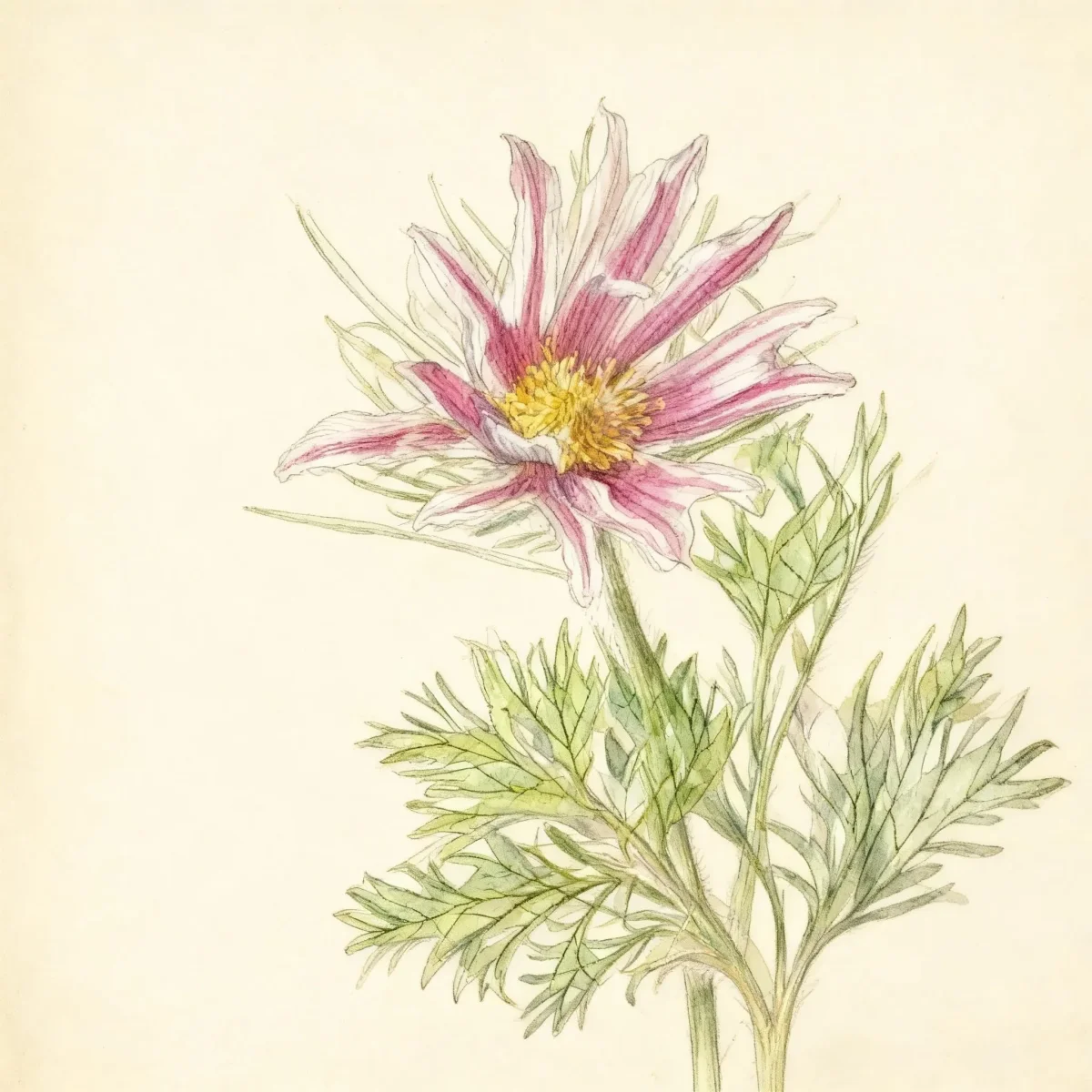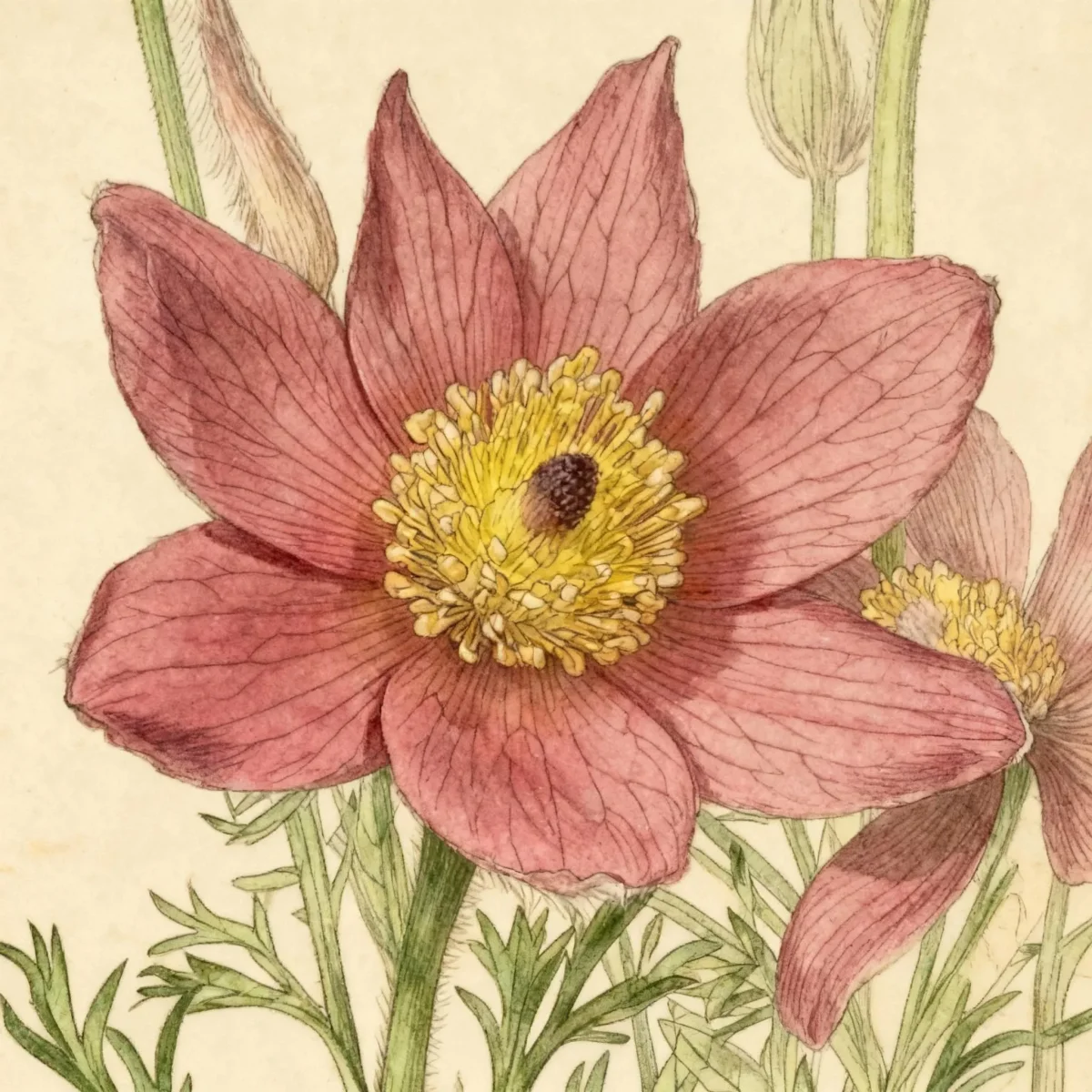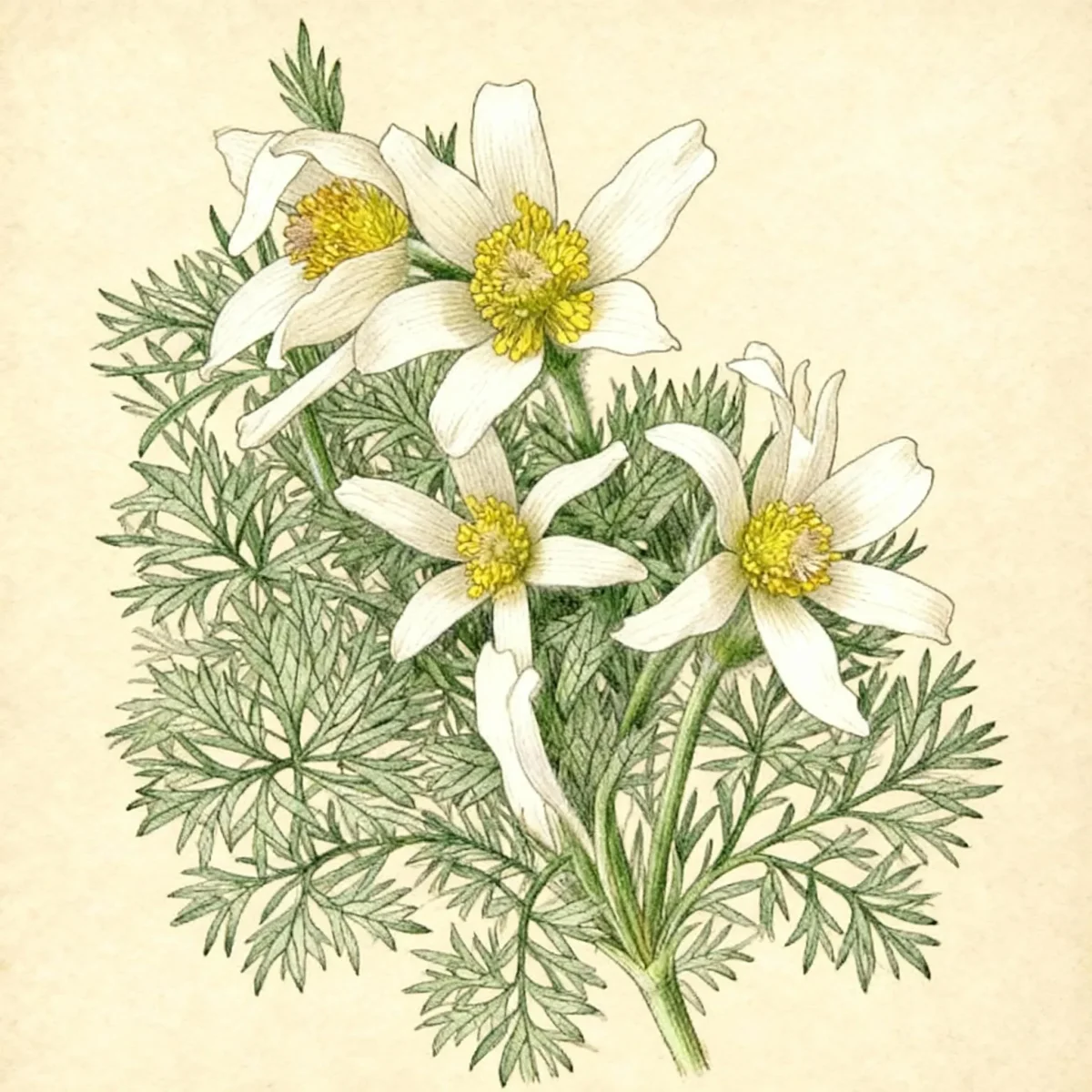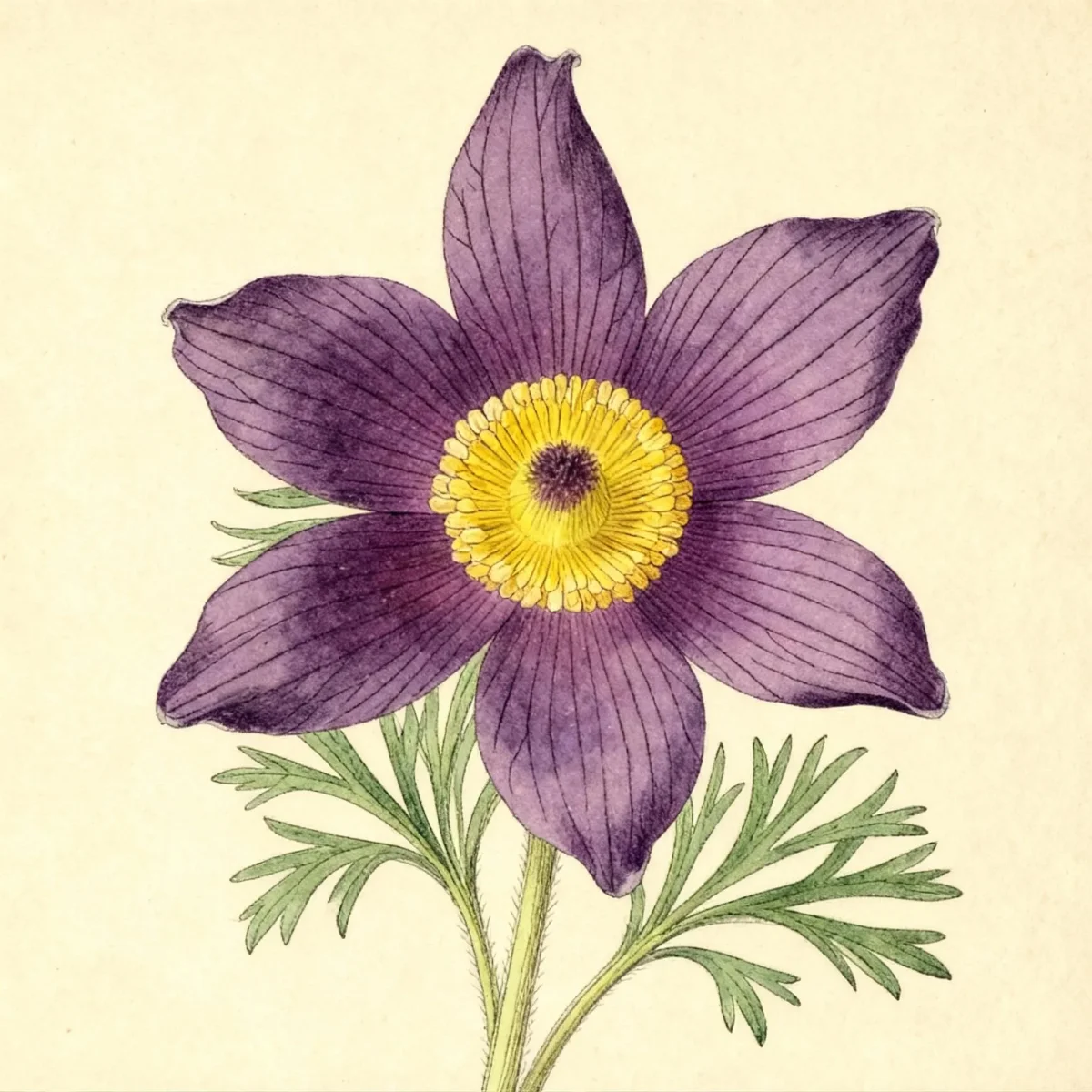

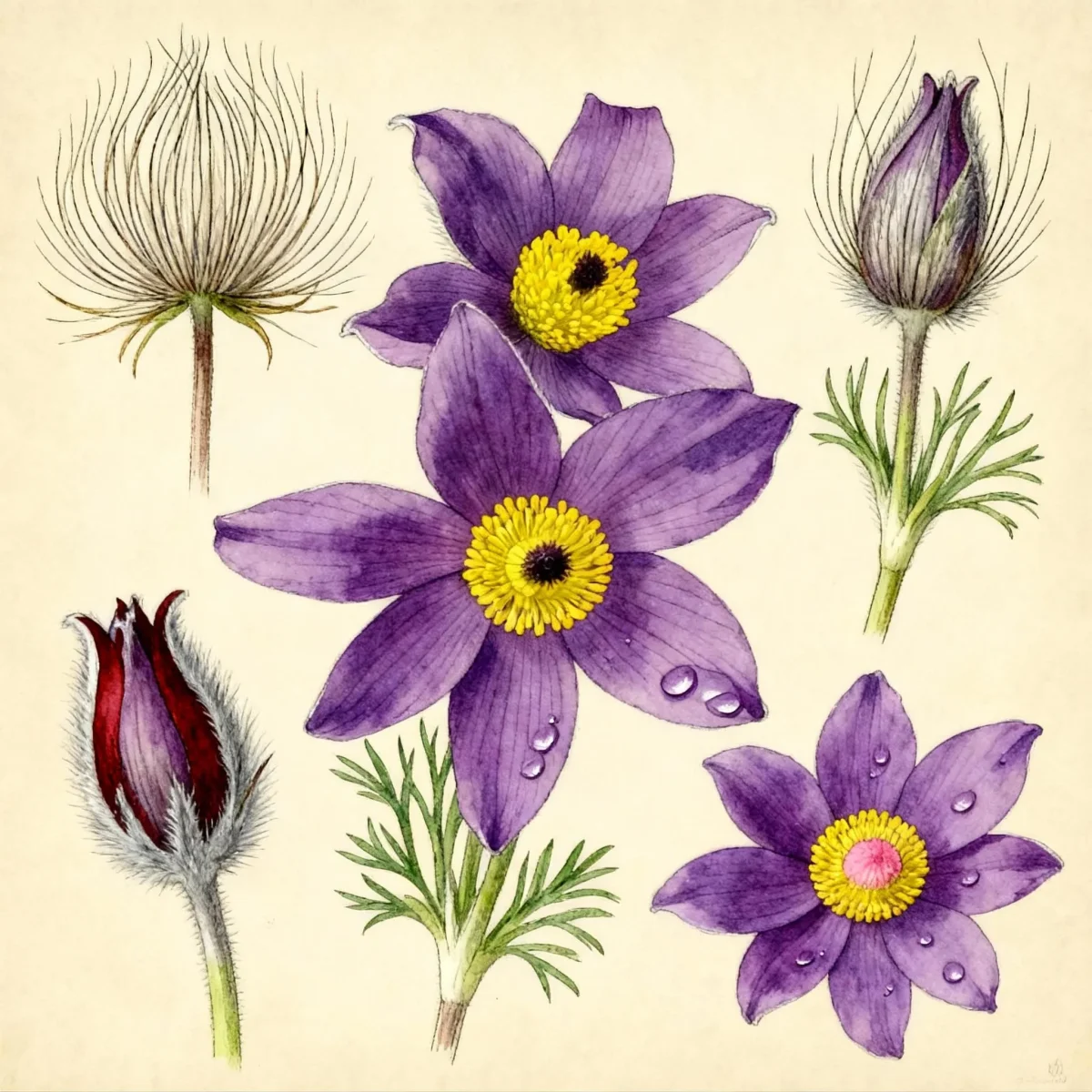
Pasque flower (Pulsatilla vulgaris)
Discover the early spring beauty of Pasque flower (Pulsatilla vulgaris), a low-maintenance perennial known for fuzzy stems and violet blooms.
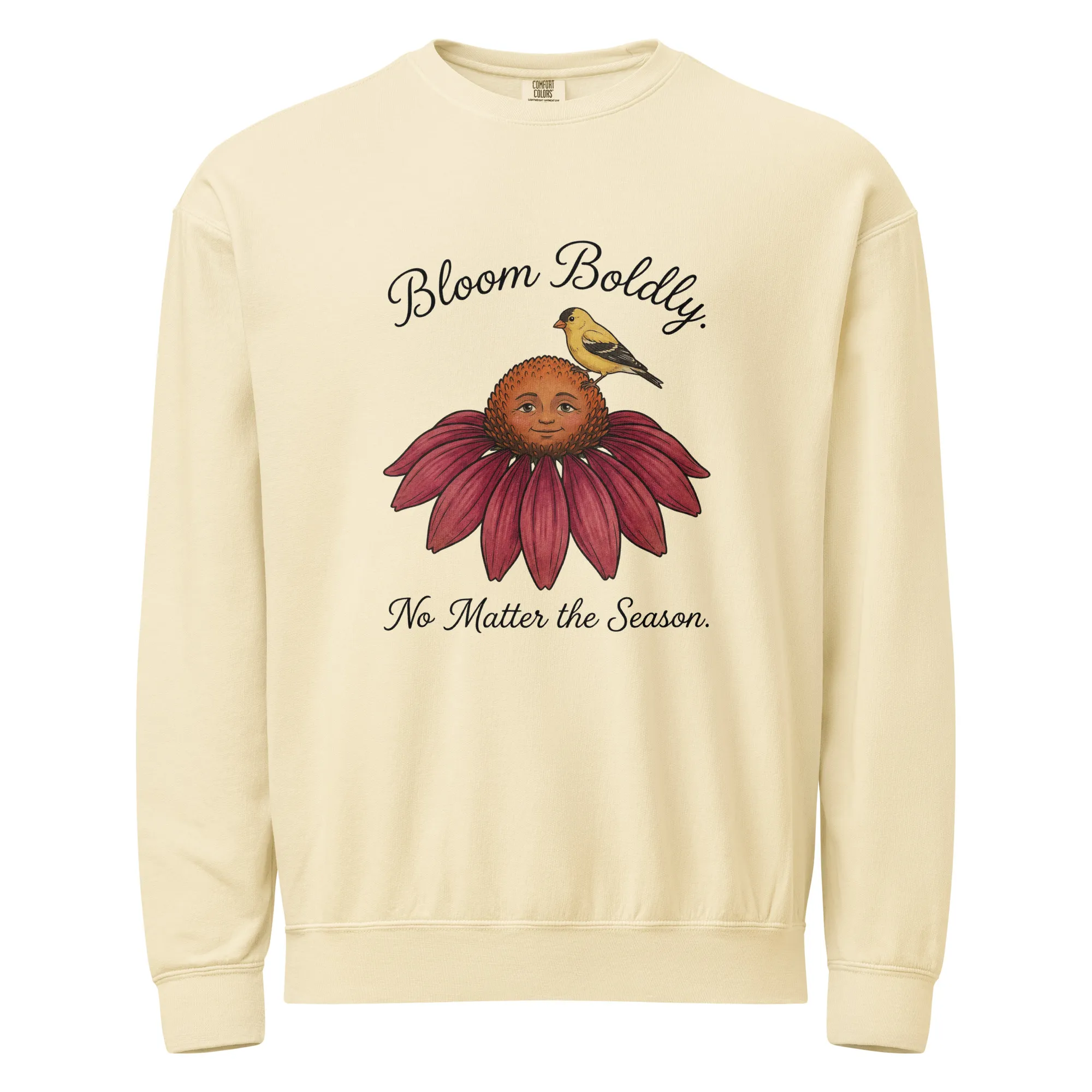
Bloom Boldly, No Matter the Season - Sweatshirt
Cozy organic cotton sweatshirt featuring our exclusive Purple Coneflower design. Perfect for gardeners who bloom year-round.
Inspired by the beautiful Pasque flower
Limited first batch (50) — join the waitlist for early access
Waitlist closes Feb 15, 2026.
Complete Plant Information
Field Guide Continues
Ready for care notes, companion picks, and planting tips?
The map is just the start. The full guide below covers growth habits, seasonal performance, and landscape uses.
Overview
The Pasque flower (Pulsatilla vulgaris) is a highly prized early-blooming perennial, often signaling the true arrival of spring in the garden. Its most distinguishing feature is the emergence of deep-hued, bell-shaped flowers atop hairy stems, sometimes appearing while snow patches still linger. This species is valuable for its low maintenance requirements combined with spectacular, albeit brief, spring color.
Pulsatilla vulgaris thrives best in conditions that mimic its native European, gritty environments. While it is a visually appealing perennial, gardeners should note that its delicate look belies its robust nature, provided the soil drainage is excellent. The genus name Pulsatilla refers to the way the flowers sway gently in the breeze.
Once the flowers fade, the plant develops equally ornamental, fluffy, plume-like seedheads reminiscent of certain clematis varieties, extending its visual interest. The deeply-divided, fern-like foliage remains attractive throughout the season, making the Pasque flower a worthwhile addition to rock gardens or border fronts.
Fast Facts
- Plant Family: Ranunculaceae
- Plant Type: Herbaceous perennial
- Native Range: Europe, southwestern Asia
- Hardiness Zones: USDA Zones 4-8
- Size at Maturity:
- Height: 0.75-1 ft
- Spread: 0.75-1 ft
- Bloom Time: April to May
- Bloom Description: Pale or dark violet, rarely white
- Sun Exposure: Full sun to part shade
- Water Needs: Medium
- Maintenance Level: Low
How to Grow
Planting the Pasque flower is best done in spring or fall when soil temperatures are moderate. Success hinges entirely on achieving proper soil conditions. Pulsatilla vulgaris demands fertile, humusy, gritty soil with impeccable drainage. Plant in full sun, though light afternoon shade is tolerated, especially in very hot climates.
Once established, care is minimal. Water needs are medium; they prefer consistent moisture but absolutely cannot tolerate soggy roots, which is why good drainage is emphasized. Fertilization is generally unnecessary; heavy feeding can cause foliage to become floppy rather than compact. Avoid disturbing established clumps as this plant resents being transplanted.
In cooler climates, Pulsatilla vulgaris handles drier spells well once mature. However, in hot summers, ensure deep, infrequent watering during dry periods to support the plant through the heat. In very hot regions, the plant may require more consistent moisture to perform optimally.
Landscape Uses
The compact size and early bloom time of Pasque flower make it an ideal candidate for the front edge of perennial borders, offering excitement long before summer bloomers emerge. They also excel in rock gardens, where the gritty, well-drained soil mimics their preferred natural habitat and allows their delicate form to be easily appreciated up close.
Consider pairing Pulsatilla vulgaris with other early spring bulbs like dwarf irises or early tulips, ensuring the companions have similar sun and drainage requirements. In rock garden settings, they look beautiful cascading over stone crevices or nestled among low-growing alpine plants. Avoid planting them in areas with heavy clay or deep shade, as this will significantly reduce performance and potentially lead to rot.
Standout Features
Flower Qualities
- Showy
Fruit Qualities
- Showy
Noteworthy Characteristics
Pulsatilla vulgaris is a purple-flowered Pasque flower that is native to Europe. Hairy flower stems emerge from the ground very early in spring, often while winter remnants are still present. Flowers are followed by equally-ornamental, plume-like seedheads forming fluffy spherical clusters which provide a unique textural element after flowering. The species is synonymous with Anemone pulsatilla, and its common name, Pasque, refers to Easter due to its early spring schedule.
Tolerances
- Rabbit
Potential Problems
This plant suffers from No serious insect or disease problems when site selection is correct. The primary cause of decline is poor drainage, which leads to crown or root rot, especially in overly heavy or compacted soils. To ensure success, focus environmental management on gritty soil and adequate sun exposure, rather than insecticide applications.
Frequently Asked Questions
What hardiness zones is Pulsatilla vulgaris suitable for?
The Pasque flower is highly adaptable to USDA Zones 4 through 8.
How large does Pasque flower grow?
This charming perennial typically reaches a height between 0.75 and 1 foot, with an equivalent spread of 0.75 to 1 foot once fully mature.
When does Pasque flower bloom?
You can expect the bloom time for Pulsatilla vulgaris to be from April to May, displaying flowers that are pale or dark violet, though white varieties do occasionally occur.
What sun exposure does Pulsatilla vulgaris need?
It performs best in full sun but can tolerate light breaks of part shade, especially as summer temperatures rise.
Conclusion
The Pasque flower (Pulsatilla vulgaris) offers unparalleled early spring drama with its fuzzy stems and vibrant violet blooms, adding essential structure to the evolving garden palette. Its extremely low maintenance profile—provided excellent soil drainage is met—makes the Pasque flower an invaluable asset. Before planting, confirm your soil structure is gritty and well-drained to ensure years of reliable, charming spring performance.
Companion Planting
When selecting neighbors for Pulsatilla vulgaris, focus on plants that appreciate the same sun exposure and abhor wet feet. Good companions include various low-growing Sedums, Alyssum, and creeping Thymes, which all thrive in well-drained, gritty media. These pairings enhance the rock garden aesthetic while sharing similar cultural needs. Combining the early bloom of the Pasque flower with later-blooming, drought-tolerant perennials like ornamental grasses or lavender ensures continuous textural interest after the violet bells have faded.
Seasonal Care Calendar
Spring is the most active time for Pulsatilla vulgaris. After the last hard frost, clean up any lingering old foliage, but only do so gently, as new growth is emerging right from the crown. Focus on observing moisture levels during spring growth flushes. Summer care pivots entirely to managing heat; ensure plants receive sufficient, deep watering during dry spells, especially in southern zones, while being cautious not to overwater. Winter preparation is minimal; just ensure the soil is not waterlogged as it enters dormancy.