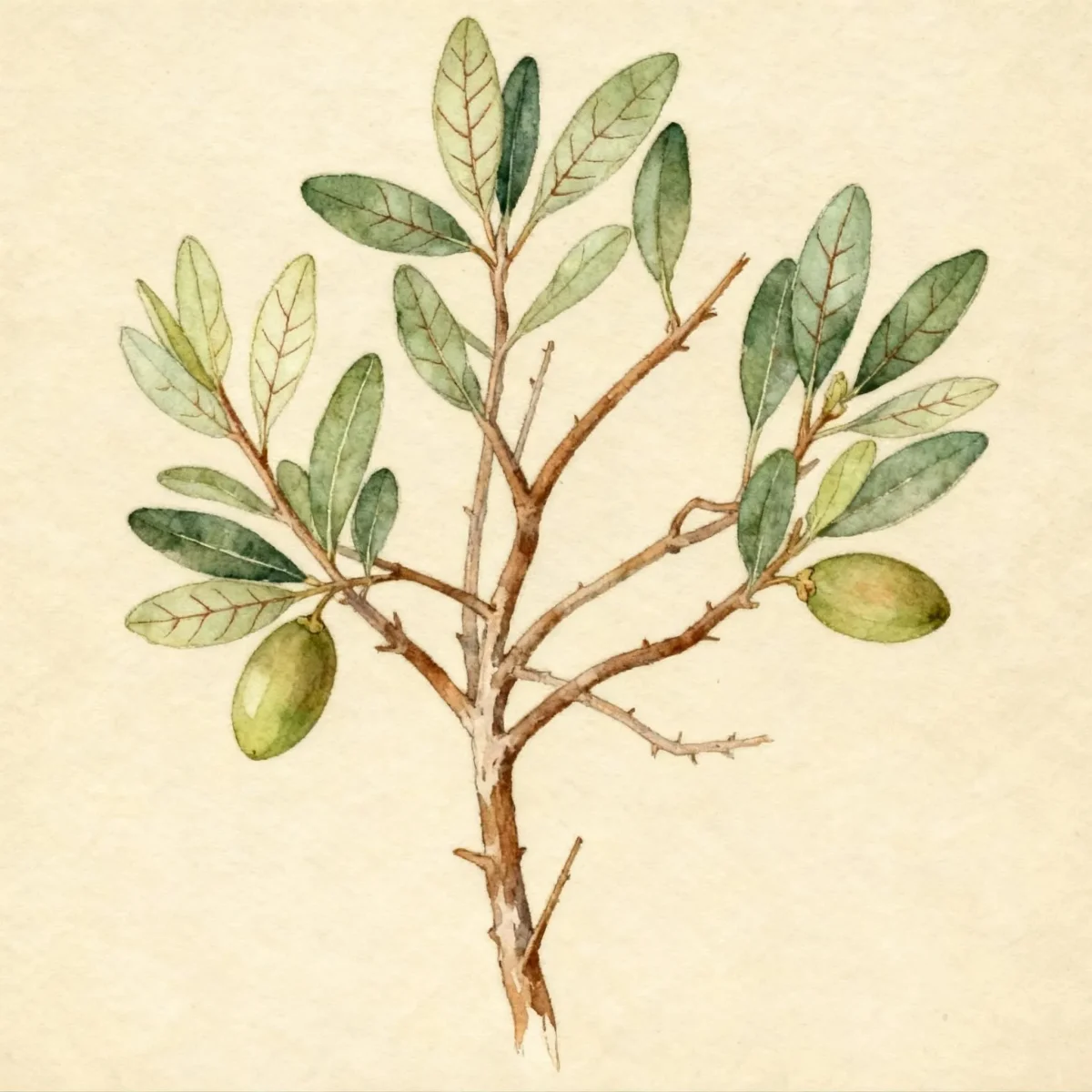
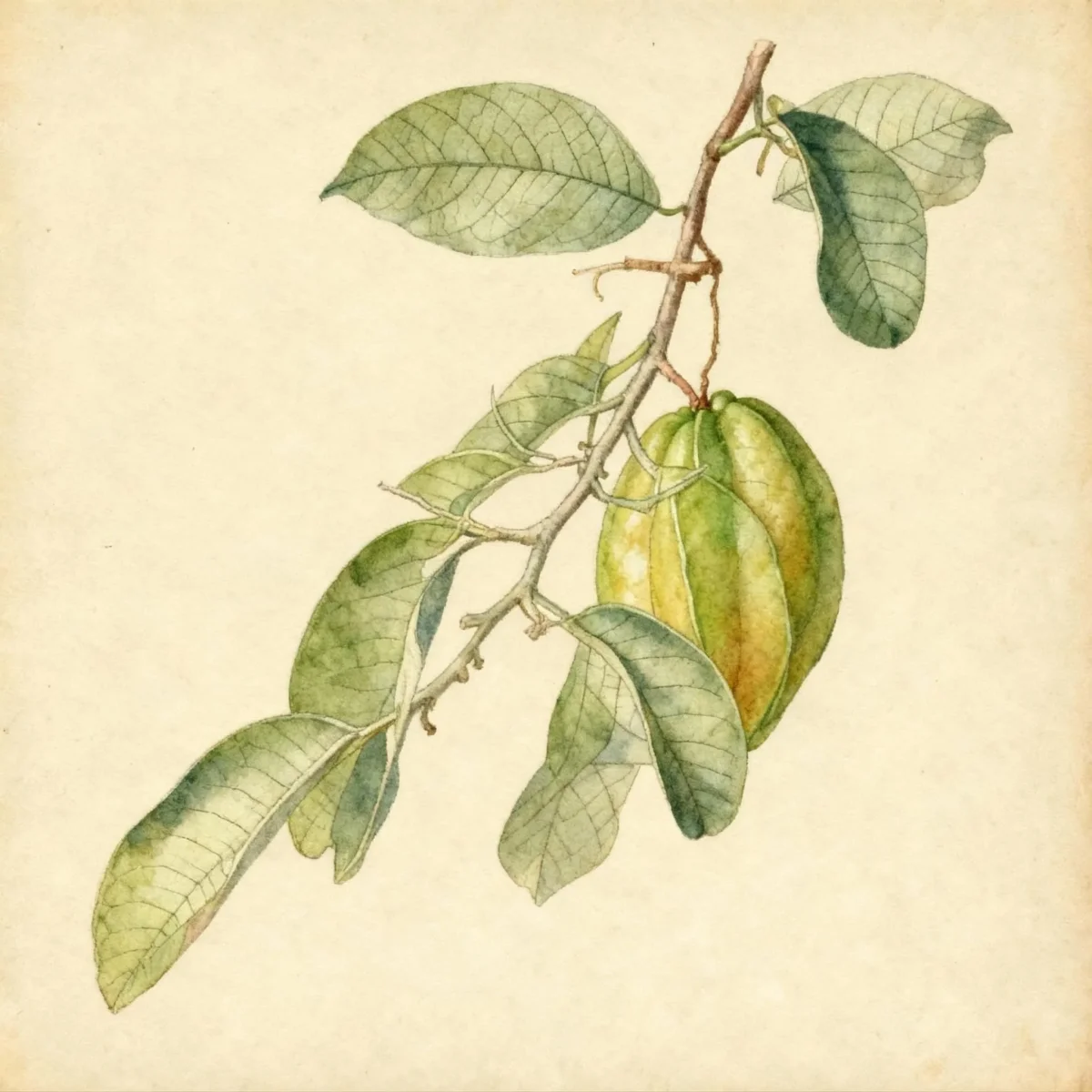
Star apple (Chrysophyllum cainito)
Star apple, Chrysophyllum cainito, is a striking evergreen known for glossy foliage and sweet, star-patterned edible fruit. Thrives in tropical sun.

Bloom Boldly, No Matter the Season - Sweatshirt
Cozy organic cotton sweatshirt featuring our exclusive Purple Coneflower design. Perfect for gardeners who bloom year-round.
Inspired by the beautiful Star apple
Limited first batch (50) — join the waitlist for early access
Waitlist closes Feb 15, 2026.
Complete Plant Information
Field Guide Continues
Ready for care notes, companion picks, and planting tips?
The map is just the start. The full guide below covers growth habits, seasonal performance, and landscape uses.
Overview
The Star apple, scientifically known as Chrysophyllum cainito, is a highly valued tropical fruit tree celebrated for its dense, spreading canopy perfect for shade. Its most distinguishing feature is its remarkable foliage: glossy green above and covered with a layer of coppery, golden hairs underneath, offering year-round visual interest. This evergreen native of the West Indies is an excellent addition to frost-free landscapes, providing both aesthetic beauty and delicious, unique fruit.
Mature Chrysophyllum cainito specimens can reach substantial heights and spreads, becoming imposing features in the landscape suitable for specimen planting or large garden shading. While prized for its sweet, star-shaped fruits—which appear in either purple or green skins—the tree demands consistent warmth and excellent drainage to flourish. Successful cultivation hinges on maintaining tropical living conditions, as cold temperatures pose a serious threat to this subtropical beauty.
For gardeners in appropriate climates (Zones 10-12), the Chrysophyllum cainito offers a rewarding experience, producing fragrant, small flowers followed by highly sought-after edibles. Its medium maintenance requirements are offset by its dramatic appearance and the dependable harvest yielded once the tree matures.
Fast Facts
- Plant Family: Sapotaceae
- Plant Type: Fruit
- Native Range: West Indies
- Hardiness Zones: USDA Zones 10-12
- Size at Maturity:
- Height: 30-80 ft
- Spread: 15-80 ft
- Bloom Time: Seasonal bloomer
- Bloom Description: Creamy white
- Sun Exposure: Full sun
- Water Needs: Dry to medium
- Maintenance Level: Medium
How to Grow
Planting the Star apple thrives best when established during warm periods, ensuring the tree receives full sun exposure throughout the day. While adaptable to various soil structures, including clayey soils, the absolute requirement for Chrysophyllum cainito is excellent drainage. It prefers deep, rich, slightly acidic loams that are evenly moist but never saturated.
Once established, the tree exhibits a moderate tolerance for drought, aligning with its natural preference for tropical climates that have a defined dry season. However, severe dryness will trigger leaf drop and significantly reduce fruit production, necessitating supplemental irrigation during extended dry spells. Pruning should be minimal, focusing mainly on removing dead or damaged wood, as heavy pruning can stress the tree.
Cold tolerance for this species is very low. Air temperatures dipping to 40°F can cause leaf drop, and temperatures reaching 28°F can result in severe dieback or fatality, especially in younger trees. Gardeners must ensure site selection protects the tree from winter winds and frost.
Landscape Uses
The mature size of the Chrysophyllum cainito makes it ideally suited for use as a substantial specimen tree in open areas where its spreading canopy can be fully appreciated. It functions excellently as a shade provider over large patios or lawn areas in tropical settings. Although grown commercially for its fruit, its ornamental value means it belongs prominently in home gardens where space permits.
Because it is an evergreen tree providing dense coverage, it can serve as a natural screen or windbreak, though care must be taken near property lines given its potential 80-foot spread. While the data does not list specific companion plants, general advice for tropical fruit trees suggests pairing it with other heat-loving species that share full sun requirements and well-draining soil needs. Trees typically begin producing their sweet fruit between the third and fifth year.
Standout Features
Flower Qualities
- Fragrant
- Insignificant
Fruit Qualities
- Edible
Noteworthy Characteristics
Chrysophyllum cainito, commonly known as star apple, is an evergreen tree native to the Caribbean and Central America. It is common in cultivation and has become naturalized in parts of South America, Southeast Asia, and tropical Africa. Mature specimens will reach between 50-80’ tall with dense, spreading canopy of similar width. The foliage is elliptic in shape and 5” long, with a glossy, green upper surface and a layer of fine, yellow-brown hairs on the lower surface. The small, cream-colored flowers are held in axilary clusters along the lengths of the stems and bloom seasonally. They are followed by round fruits, 2-4” in diameter, with sweet, edible flesh. Trees can either bear fruits with light green skin and white flesh, or dark purple skin and purple flesh. There is no difference in taste between green or purple skinned varieties. The fruits can be enjoyed raw or in preserves, but the skin must be removed. The leaves, bark, fruit, and seeds have various traditional medicinal uses.Genus name comes from the Greek chrysos meaning “gold” and phyllon meaning “leaf”, in reference to the appearance of the undersides of the leaves of some species.The specific epithet cainito comes from the local West Indian name for this plant.The common name refers to the star-shaped interior structure of the fruits.
Tolerances
- Drought
- Clay Soil
Potential Problems
The Star apple can be susceptible to red rust, which is caused by the algae Cephaleuros virescens. If infestations are severe, this condition can progress to dieback affecting twigs and small stems. Gardeners should monitor foliage closely, especially in humid, wet conditions, to catch fungal issues early.
Additionally, the tree is sensitive to soil chemistry, and alkaline soil conditions are known to induce chlorosis, causing the characteristic yellowing between the leaf veins. To prevent this, maintain the slightly acidic soil preference mentioned in its culture notes. Promptly address any signs of nutrient deficiency or stress related to inappropriate pH levels.
Frequently Asked Questions
What hardiness zones is Star apple suitable for?
The Chrysophyllum cainito is suitable for USDA Zones 10 through 12. It requires frost-free conditions to survive long-term.
How large does Star apple grow?
The Star apple is a large tree, reaching mature heights between 30 to 80 feet tall, with a corresponding spread often spanning 15 to 80 feet wide.
What sun exposure does Star apple need?
This fruit tree requires full sun exposure for optimal growth and fruit production.
When does Star apple bloom?
The Chrysophyllum cainito blooms seasonally, displaying small, creamy white flowers.
Conclusion
The Chrysophyllum cainito offers significant rewards for the dedicated tropical gardener, providing both striking, unique foliage and famously sweet fruit. With its adaptability to certain soil types like clay, provided drainage is perfect, the Star apple is a worthy specimen or shade tree in suitable niches. Always confirm your local microclimate aligns with USDA Zones 10-12 before planting this beautiful tropical fruit.
Companion Planting
When selecting companions for Chrysophyllum cainito, focus on other heat-loving, fast-draining tropical fruit trees and ornamentals. Avoid planting near shallow-rooted species that might aggressively compete for surface nutrients, given the tree’s need for deep, rich soil. Consider tropical flowering shrubs or understory plants that thrive in partial shade beneath the developing canopy, as the Star apple becomes larger.
Since the tree tolerates drought once established, pairing it with plants requiring consistently soggy soil should be avoided to prevent soil imbalance issues that impact its shallow root system. Look for plants that share its slightly acidic preference to minimize the risk of inducing chlorosis in the Star apple due to high pH neighbors.
Design Ideas
In larger tropical estates, utilize the expansive spread of Chrysophyllum cainito to create defined outdoor rooms or shaded gathering spaces. Its dramatic, two-toned foliage makes it an excellent focal point tree placed where the sunlight catches the golden undersides of the leaves—perhaps slightly off-center in a wide lawn area.
When used as a specimen, ensure adequate space, as the canopy can easily reach 80 feet across, dominating a smaller yard. For home gardens where its ultimate size is daunting, focus on its initial decades, where it functions effectively as a tall privacy screen or windbreak against prevailing winds.