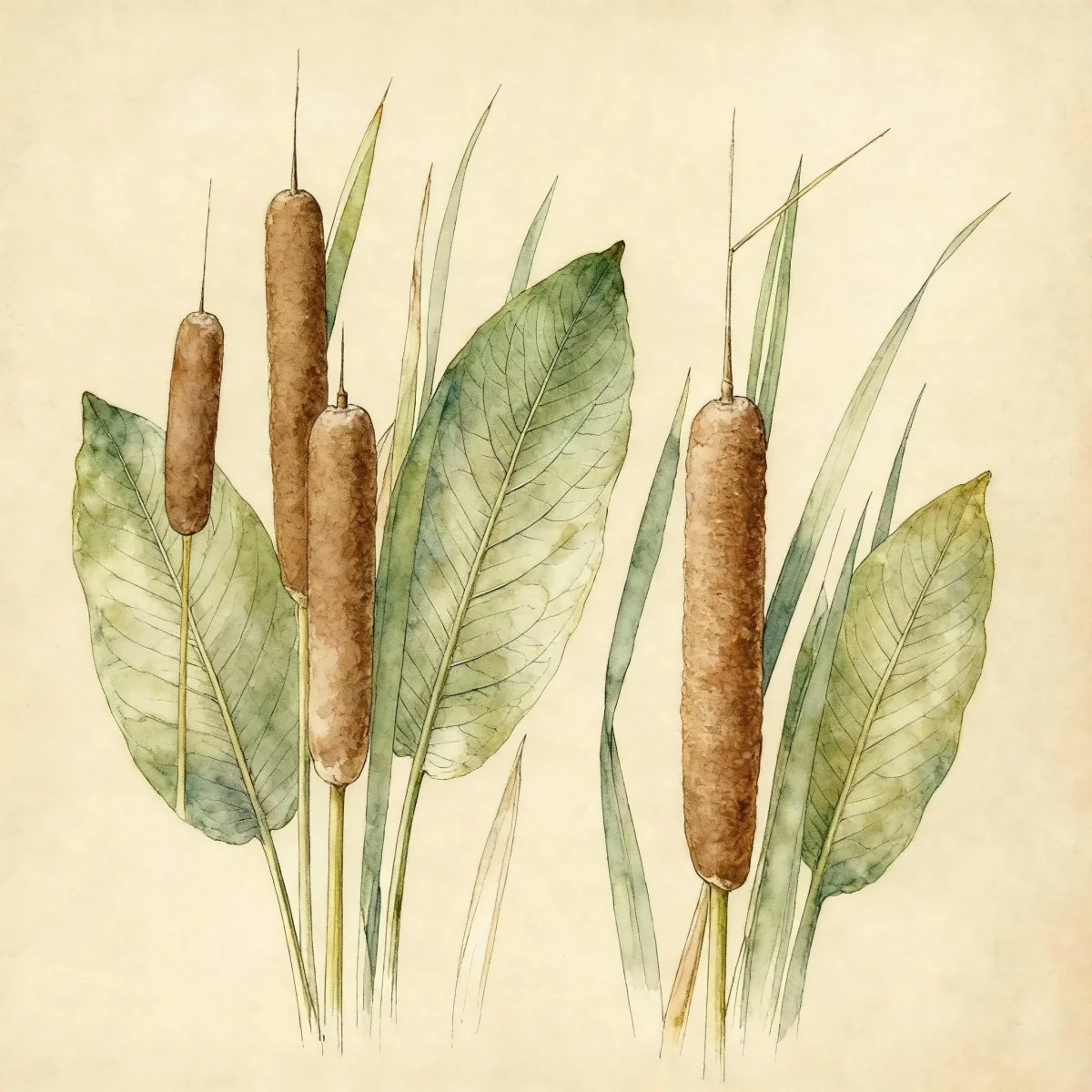
Narrow-leaved cattail (Typha angustifolia)
Typha angustifolia is a robust, marginal perennial known as Narrow-leaved cattail. It thrives in wet soils, offering dense foliage and iconic brown flower spikes.
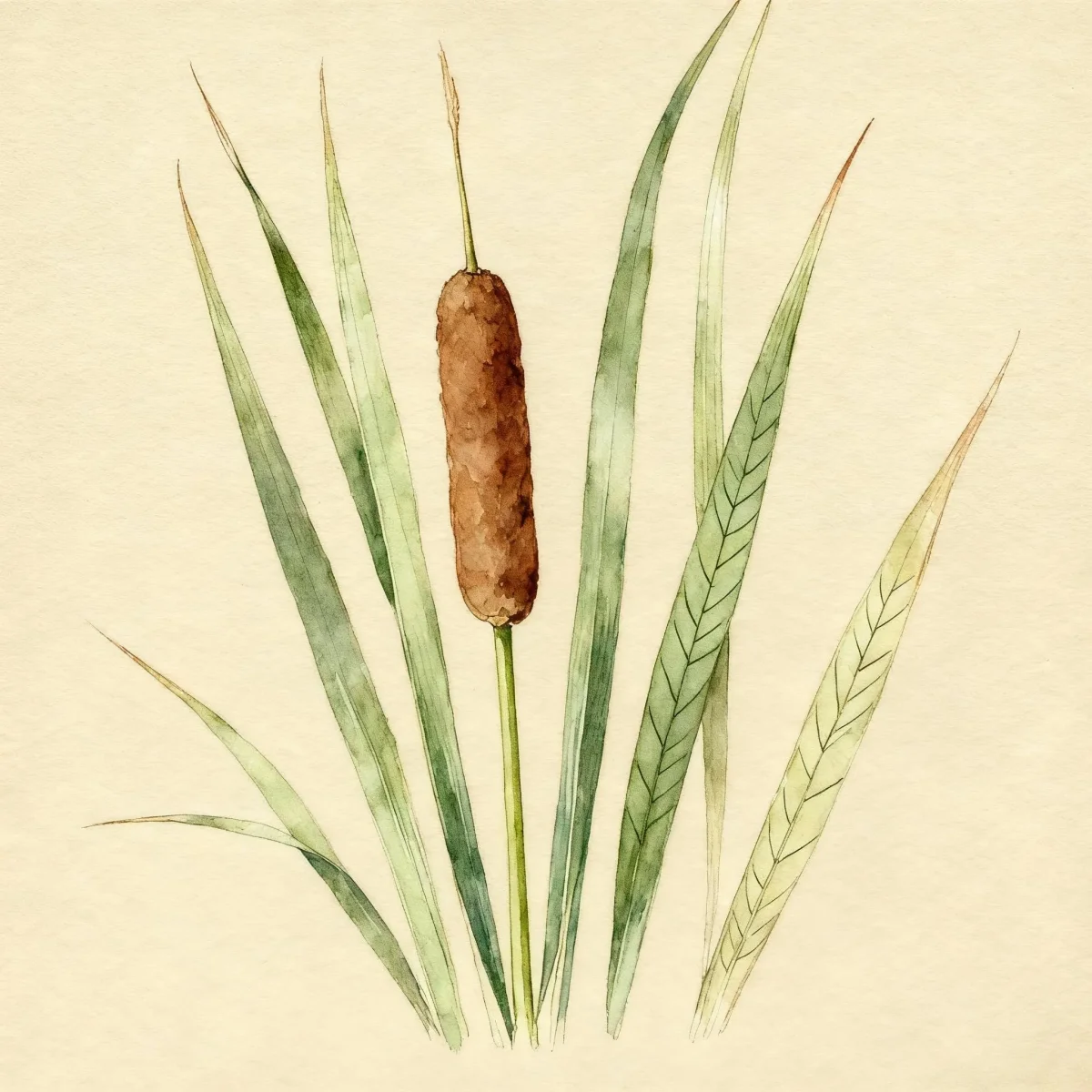

Bloom Boldly, No Matter the Season - Sweatshirt
Cozy organic cotton sweatshirt featuring our exclusive Purple Coneflower design. Perfect for gardeners who bloom year-round.
Inspired by the beautiful Narrow-leaved cattail
Limited first batch (50) — join the waitlist for early access
Waitlist closes Feb 15, 2026.
Complete Plant Information
Field Guide Continues
Ready for care notes, companion picks, and planting tips?
The map is just the start. The full guide below covers growth habits, seasonal performance, and landscape uses.
Overview
Typha angustifolia, commonly known as the Narrow-leaved cattail, is a strikingly recognizable, semi-aquatic herbaceous perennial well-suited for aquatic landscapes. Gardeners value this plant for its dramatic vertical structure provided by its narrow, blade-like leaves, which can reach up to five feet long. It forms robust, dense stands through extensive creeping rhizomes in wet, marginal soils.
This species is a key component of wetland ecosystems, offering essential cover and nesting material for numerous species of marsh birds and wildlife. While visually appealing, gardeners must manage its aggressive colonization habits, as the Narrow-leaved cattail can quickly dominate pond edges if left unchecked.
Typha angustifolia establishes itself easily in full sun to partial shade, provided the soil remains consistently wet or submerged in shallow water. Its iconic, sausage-brown flower spikes appearing from May through July provide long-lasting architectural interest, making Typha angustifolia both an ecological asset and a strong visual statement in water gardens.
Fast Facts
- Plant Family: Typhaceae
- Plant Type: Herbaceous perennial
- Native Range: North America, Europe, northern and central Asia, northern Africa
- Hardiness Zones: USDA Zones 2-11
- Size at Maturity:
- Height: 3-7 ft
- Spread: 3-5 ft
- Bloom Time: May to July
- Bloom Description: Yellow (male) green (female) - sausage brown flower spike
- Sun Exposure: Full sun to part shade
- Water Needs: Wet
- Maintenance Level: Medium
How to Grow
The best time to establish Typha angustifolia is during the growing season when warm soil temperatures encourage rhizome establishment. Plant it directly into rich, loamy soils in saturated areas, pond margins, or standing water up to twelve inches deep. Ensure the location receives full sun for the best flowering, though it tolerates part shade.
Maintenance for the Narrow-leaved cattail is moderate, primarily due to its spreading nature. Water needs are simple: keep the roots consistently wet or submerged. Avoid fertilizer, as excessive nutrients can encourage even more aggressive growth. If you allow this plant to escape containers, it will readily colonize adjacent shorelines and spread outward into shallow water.
To control the spread of Typha angustifolia, diligent management is necessary. Plant in submerged containers or tubs if you wish to keep it contained within a defined space. Alternatively, planting where water depth exceeds twelve inches will naturally limit its invasive reach. In late winter or early spring, remove any dead foliage before new growth emerges, though the mature brown flower spikes are often left standing for winter interest before they break apart in the wind.
Landscape Uses
The primary appeal of Typha angustifolia in landscape design is its function as a premier aquatic and marginal water plant. It is perfectly suited for bog gardens, lining the edges of ponds, or naturalizing in intentionally wet areas where other plants fail. The sheer height and dense screen provided by the foliage make it excellent for creating background massing or screening undesirable views along a water feature.
When using the Narrow-leaved cattail, consider its eventual height and density. While it is highly valued for naturalizing larger wetland restoration areas, container gardening is strongly recommended for smaller residential ponds to prevent rhizomes from becoming difficult to eradicate. The distinctive flower spikes are also highly sought after as architectural elements in dried flower arrangements once they mature to their characteristic brown color.
Standout Features
Flower Qualities
- Showy
Fruit Qualities
- Showy
Noteworthy Characteristics
Typha angustifolia, commonly known as narrowleaf cattail, is a marginal, semi-aquatic, herbaceous perennial that grows from extensive creeping rhizomes, reaching 3-7 feet tall and forming dense, spreading stands. It thrives in wet, mucky soils, including shallow water up to 12 inches deep, and is native across vast regions of the Northern Hemisphere. Identification can be tricky as the Narrow-leaved cattail often hybridizes with Typha latifolia, but its narrower stature and leaf dimensions offer key clues; it features distinctive, narrow, blade-like green leaves and a sausage-brown flower spike atop an unbranched stalk. This prolific plant also offers significant value to wildlife, providing nesting sites and cover, and possesses notable edible uses for its rhizomes, shoots, and flowers.
Tolerances
- Wet Soil
Potential Problems
The primary challenge gardeners face with Typha angustifolia is its vigorous, invasive nature outside of engineered containment. While it suffers from no serious insect or disease problems, its aggressive root system can quickly choke out less assertive aquatic neighbors. Management must focus on preventing spread; use submerged containers or place plants in water deeper than twelve inches to restrain the creeping rhizomes. If left unchecked, the plant will spread throughout a pond or swampy area.
Frequently Asked Questions
What hardiness zones is Narrow-leaved cattail suitable for?
The Typha angustifolia is exceptionally hardy, suitable for USDA Zones 2 through 11, allowing it to survive in most temperate and warmer climates.
How large does Narrow-leaved cattail grow?
This herbaceous perennial typically reaches a mature height between 3 and 7 feet tall, with a spread ranging from 3 to 5 feet wide through its rhizomatous roots.
What sun exposure does Typha angustifolia need?
For optimal growth and flowering, Typha angustifolia requires full sun exposure, although it will tolerate partial shade in very wet environments.
When does Narrow-leaved cattail bloom?
Flowering occurs seasonally, typically from May to July, culminating in the plant’s signature feature: the sausage brown flower spike, which displays separated yellow male flowers above the green female flowers.
Conclusion
The Typha angustifolia, or Narrow-leaved cattail, brings dramatic vertical structure and unmatched resilience to any aquatic landscape planning. Its value lies in its ability to thrive where few other plants can, while simultaneously providing critical cover for wetland fauna. Check your local conditions and plan to install this beautiful marginal water plant in a contained setting or large naturalized area this spring.
Wildlife Benefits
Dense stands of Narrow-leaved cattail offer crucial habitat structuring in wetland areas. These robust clumps provide essential nesting areas and protective cover for numerous species of wetland animals, shielding them from predators. The leaves are particularly valuable as binding material, used by various wetland birds such as red-winged blackbirds and marsh wrens for constructing their nests.
Beyond structural support, Typha angustifolia provides direct sustenance. Throughout the year, different parts of the plant are edible, including the peeled rhizomes which can be ground into flour or cooked like potatoes, and the young shoots which offer a nutty, asparagus-like taste. This dual role as shelter and food source confirms the high ecological benefit of integrating the Narrow-leaved cattail into bio-diverse water margins.
Propagation Tips
The most common and effective method for propagating Typha angustifolia is through the division of its aggressive rhizomes. This should be performed in early spring before active growth begins or immediately after the foliage dies back in the fall. Carefully dig up portions of the established clumps, ensuring each division has several healthy buds attached to a piece of the creeping rhizome. These divisions can then be replanted immediately into the desired wet location.
While propagation by seed is possible, it is often impractical for the home gardener due to the sheer volume produced and germination requirements. Each mature spike releases hundreds of thousands of seeds, aided by fluffy brown hairs for wind dispersal. If attempting seed propagation, start seeds indoors in saturated potting media under strong light, though management of the resulting seedlings requires immediate containment strategies typical of the mature plant.