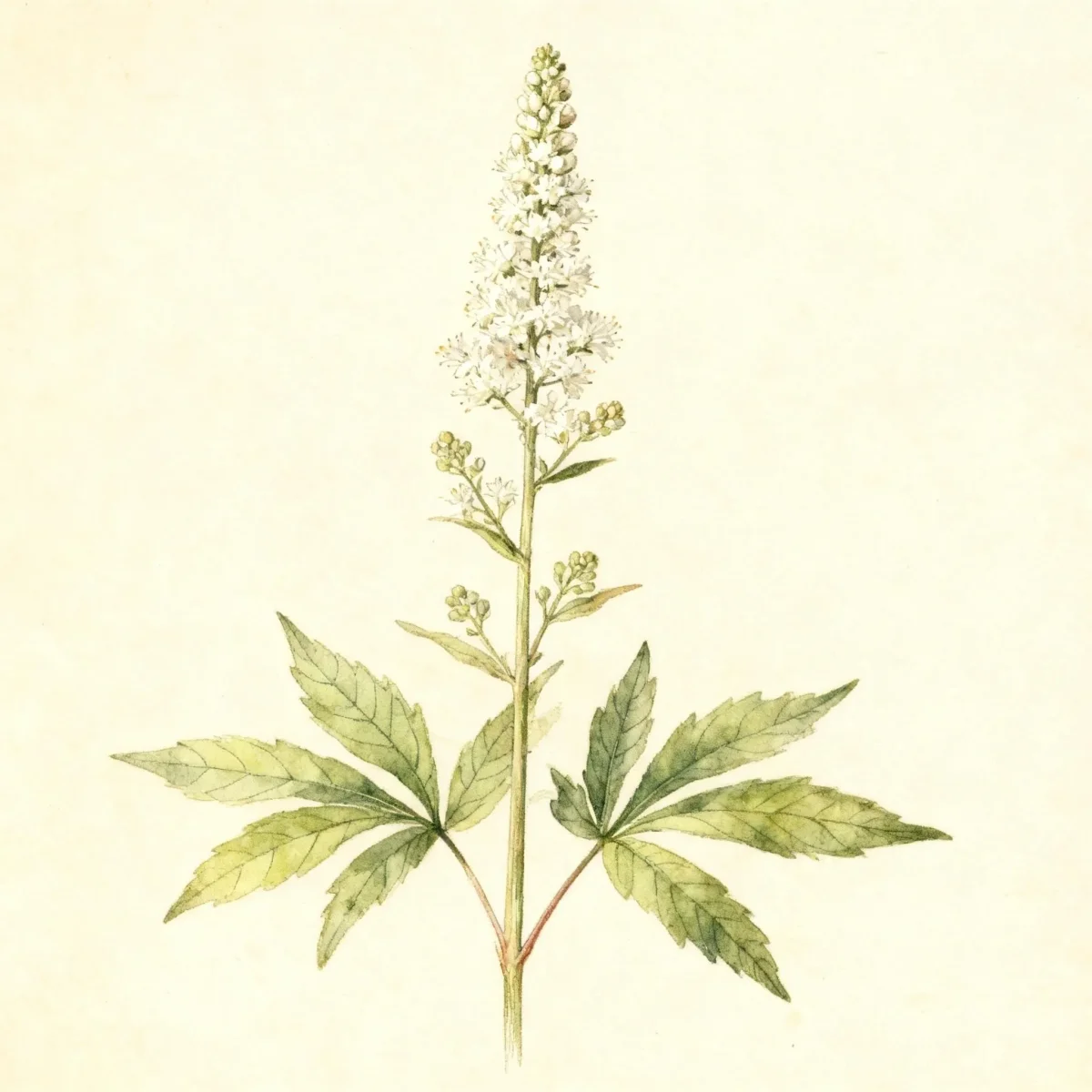
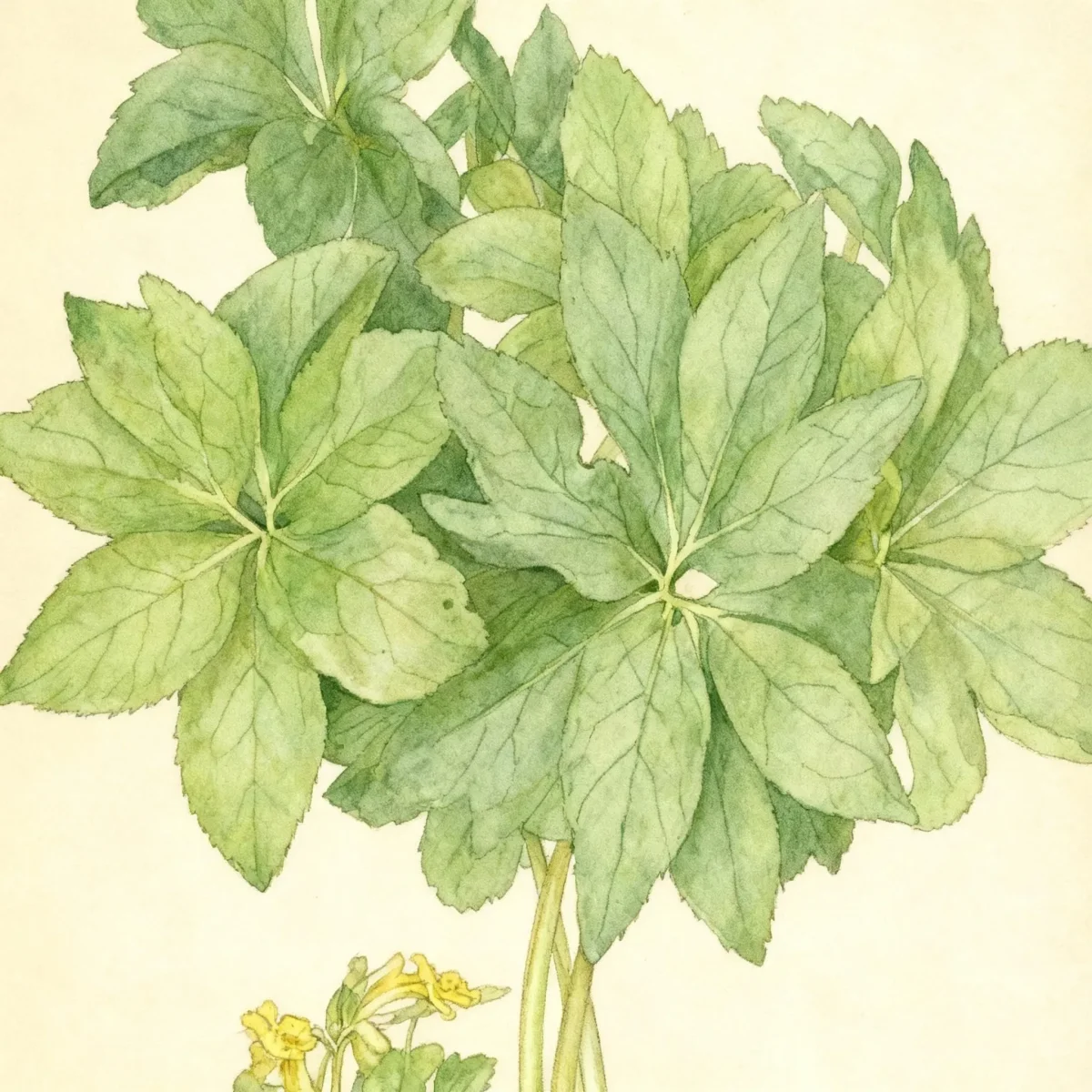
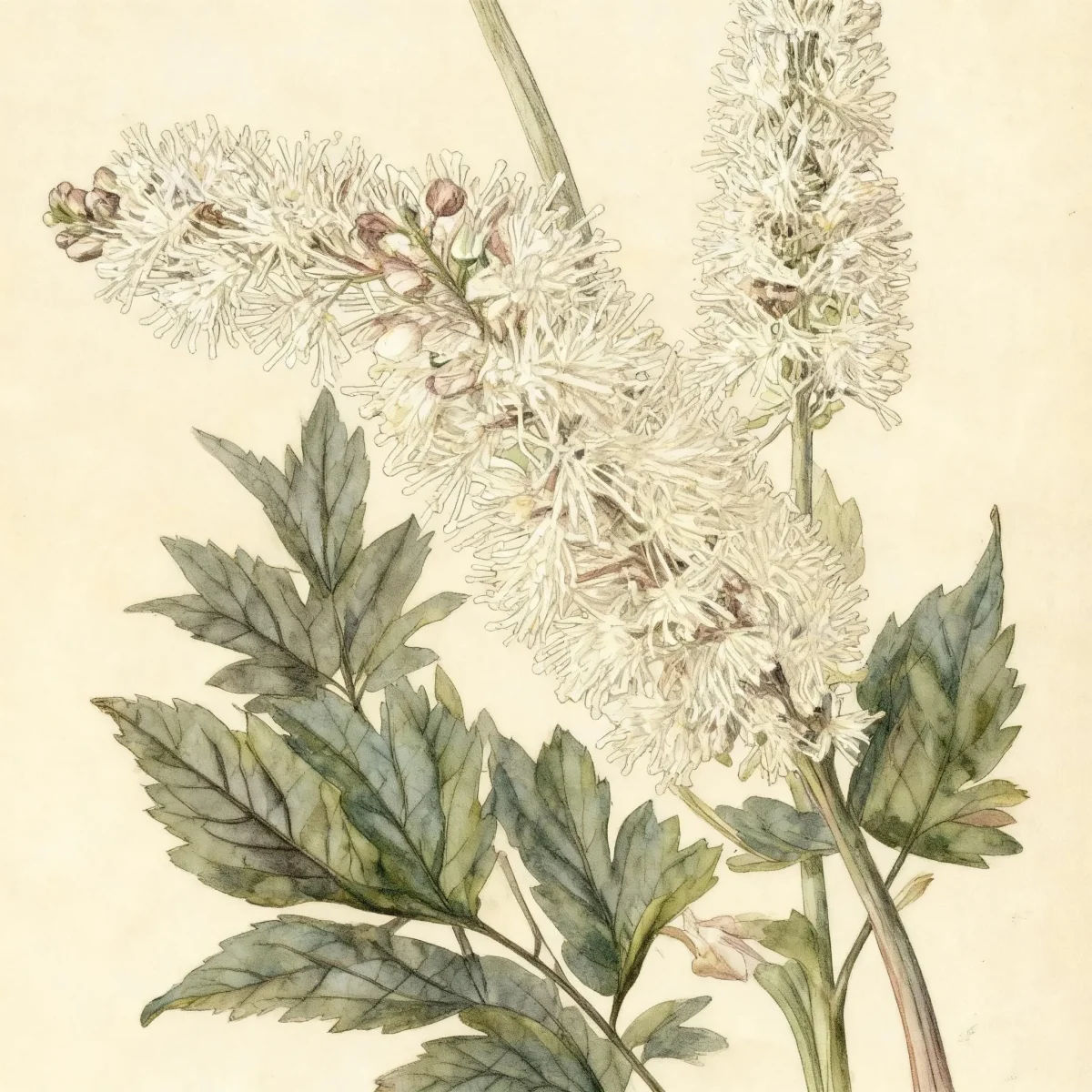
Black cohosh (Actaea racemosa)
Actaea racemosa, or Black cohosh, offers stunning architectural height and fragrant, showy white flower spires for deep shade.
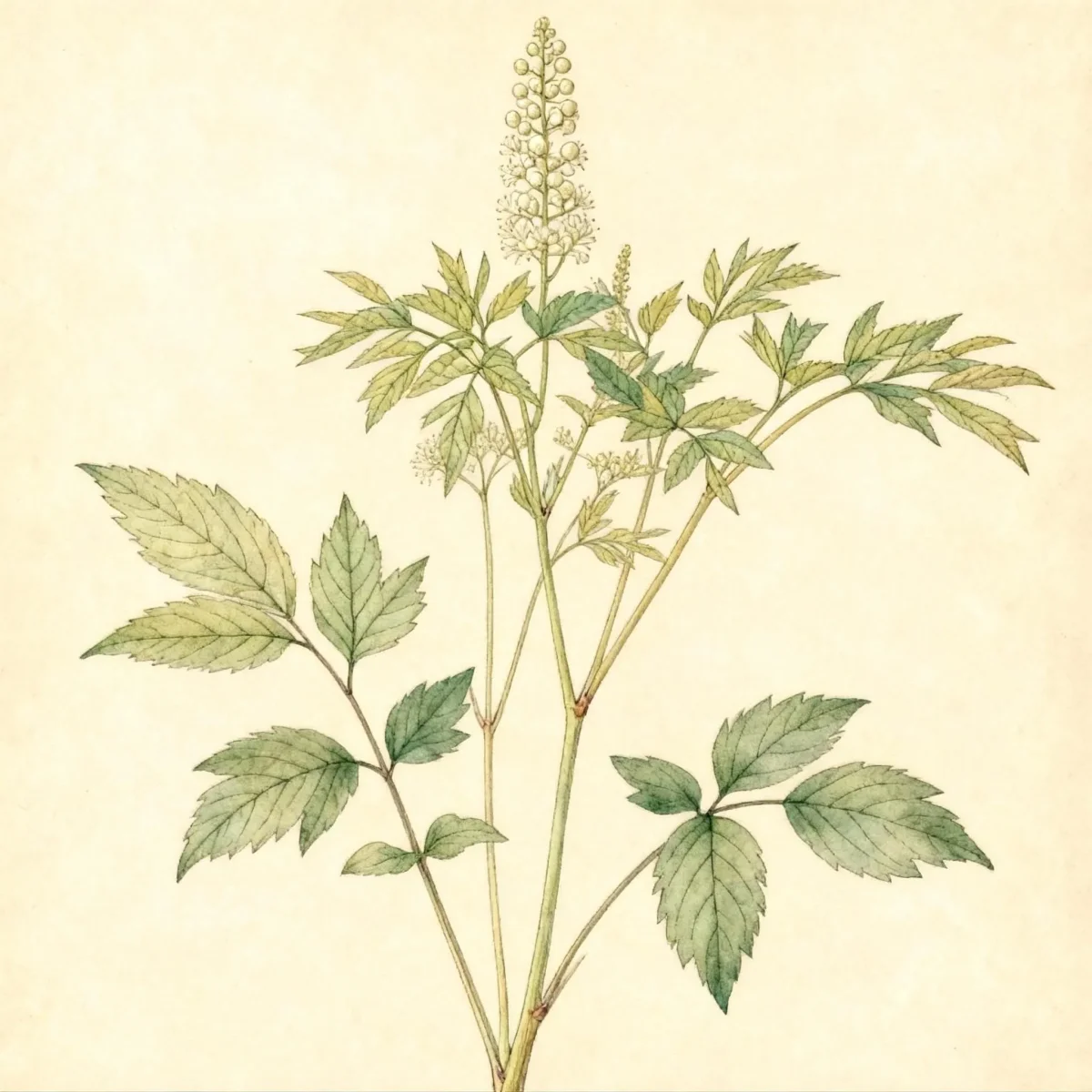

Bloom Boldly, No Matter the Season - Sweatshirt
Cozy organic cotton sweatshirt featuring our exclusive Purple Coneflower design. Perfect for gardeners who bloom year-round.
Inspired by the beautiful Black cohosh
Limited first batch (50) — join the waitlist for early access
Waitlist closes Feb 15, 2026.
Complete Plant Information
Field Guide Continues
Ready for care notes, companion picks, and planting tips?
The map is just the start. The full guide below covers growth habits, seasonal performance, and landscape uses.
Overview
Black cohosh, scientifically known as Actaea racemosa, is a highly valued North American native perennial for gardeners seeking vertical interest in shady locations. Its striking presentation comes from tall, creamy white flower spikes that rise dramatically above the deeply cut, attractive green foliage, providing late-season structure. This herbaceous perennial establishes slowly but becomes a reliable staple in woodland or shade gardens once settled.
The visual appeal of Actaea racemosa is enhanced by its fragrant blooms, adding another dimension to twilight garden enjoyment. Although it requires consistent moisture, its low maintenance needs make it an excellent choice for filling out the back of borders that otherwise remain dull during the summer months. Successful cultivation of Black cohosh relies heavily on site selection in consistently moist, rich soil.
When properly sited, this plant brings architectural height and excellent texture to deep shade plantings where many other flowering specimens struggle. Its upright habit provides contrast against lower-growing groundcovers. For reliable performance and established beauty, gardeners should plan for the initial slow establishment period typical of high-quality Actaea racemosa.
Fast Facts
- Plant Family: Ranunculaceae
- Plant Type: Herbaceous perennial
- Native Range: North America
- Hardiness Zones: USDA Zones 3-8
- Size at Maturity:
- Height: 4-6 ft
- Spread: 2-4 ft
- Bloom Time: June to July
- Bloom Description: White
- Sun Exposure: Part shade to full shade
- Water Needs: Medium
- Maintenance Level: Low
How to Grow
The best time to establish Actaea racemosa is in the spring or fall when temperatures are milder, allowing the plant to focus energy on root development rather than excessive foliage production. Select a location providing part shade to full shade, ideally sheltered from harsh afternoon sun and strong winds. Critically, this plant thrives in average, medium moisture soils that are organically rich and moisture-retentive.
Watering is key to preventing foliage scorch, which occurs if the soil is allowed to dry out, slowing growth considerably. While it is considered low maintenance once established, ensure medium watering levels are maintained, particularly during dry spells. Fertilizing is rarely necessary if the soil is rich in organic matter; focus instead on amending the soil with compost annually to improve moisture retention.
Taller flower spires may occasionally require staking, as they can bend towards areas of brighter light or become top-heavy, although the foliage itself usually provides adequate structural support. Winter preparation is minimal; simply cut back the dead foliage in early spring before new growth emerges to tidy the appearance of the garden space. Remember that Black cohosh is slow-to-establish, so patience is required for the first year or two.
Landscape Uses
Actaea racemosa is exceptionally well-suited for naturalizing within woodland settings, lending an elegant, untamed quality to dappled light areas. It excels at adding significant architectural height and providing that crucial late summer bloom punch to shaded borders where color is often scarce. Groupings of these plants are highly effective, transforming an empty shady corner into a textured focal point.
Due to its strong vertical lines and textural foliage, consider planting Black cohosh in masses against darker backgrounds, such as evergreen shrubs or dark fences, to maximize the impact of the fluffy white flower spires. It integrates beautifully into cottage gardens, offering perennial reliability alongside ferns and hostas. While excellent in large groups, single, well-placed specimens can also serve as valuable anchors in woodland gardens.
Standout Features
Flower Qualities
- Showy
- Fragrant
Noteworthy Characteristics
Actaea racemosa, commonly called black cohosh, is an upright, Missouri native perennial which occurs in rocky woods in the Ozark region of the State. It typically grows to a total height (foliage plus flowering spikes) of 4-6’, but under optimum conditions can reach 8’. Small, numerous, creamy white, fragrant flowers appear in late summer to early fall in long, terminal racemes resembling fluffy spires (typically 1-2’ long) rising well above the foliage on wiry stems. The common name of bugbane is in reference to the odoriferous insect repellant properties of this plant.
Tolerances
- Rabbit
Potential Problems
Actaea racemosa generally exhibits few serious insect or disease issues in the landscape; however, gardeners should monitor for occasional rust or leaf spot infections. The main cultivation challenge arises from insufficient moisture, which can cause leaf margins to brown (scorch) and significantly slow overall growth. To prevent scorching, ensure soils remain consistently moist, especially during warmer weather, and site the plant away from dry, exposed locations.
While foliage usually stands well on its own, taller flower spires may require light support if they become heavy or are exposed to excessive wind. Furthermore, be aware that the graceful spires tend to curve or bend noticeably toward any source of significant sunlight, which can impact formal garden designs.
Frequently Asked Questions
What hardiness zones is Black cohosh suitable for?
Actaea racemosa is highly cold-tolerant and is suitable for USDA Zones 3 through 8.
How large does Actaea racemosa grow?
This perennial typically reaches a mature height between 4 to 6 feet, with a spread generally ranging from 2 to 4 feet wide.
When does Black cohosh bloom?
Flowering occurs primarily from June into July, featuring masses of white, fragrant flowers atop tall spikes.
What sun exposure does Actaea racemosa need?
This plant performs best when situated in part shade to full shade conditions, mimicking its native woodland habitat.
Conclusion
Actaea racemosa delivers unmatched vertical impact and delicate fragrance to deeply shaded gardens, making it an indispensable component for structural interest. If you are looking to elevate your shade garden with an adaptable, low-maintenance perennial, Black cohosh is an excellent choice. Before planting, confirm your site offers consistent moisture, and plan for its slow establishment to ensure years of reliable performance.
Companion Planting in Shade Gardens
Given that Actaea racemosa requires rich, consistently moist, shady conditions, companion plants should share similar cultural needs to thrive together visually and physiologically. Hostas, particularly those with blue or variegated foliage, offer excellent low-level contrast to the towering white spikes of Black cohosh. Ferns, such as Japanese Painted Ferns or Ostrich Ferns, also pair wonderfully, accentuating the fine texture of the Actaea racemosa foliage.
Other shade-loving perennials that appreciate humusy soil like Astilbes (which share a superficial resemblance in flower form) or Tiarella (Foamflower) serve as excellent mid-layer plantings. Grouping these plants helps maintain necessary moisture uniformity across the planting bed, creating a lush, thriving woodland microclimate.
Design Ideas for Architectural Height
Utilizing Actaea racemosa as a structural element allows gardeners to introduce vertical movement where horizontal planting dominates. Place it toward the mid-to-back of a border to prevent it from overshadowing smaller companions, allowing its 1-2 foot flower racemes to soar above lower shrubs and perennials. The visual weight of the deep green foliage provides a strong backdrop in late summer gardens.
Consider using its strong verticality near walkways or transitions between sunnier and shadier areas; the stark white blooms act as beacon in low light conditions. Because the flower spires naturally lean slightly toward the light, deliberately positioning taller structures or darker plantings opposite the main viewing area can help ‘pull’ the spikes toward the visitor for an intentional, dramatic effect.