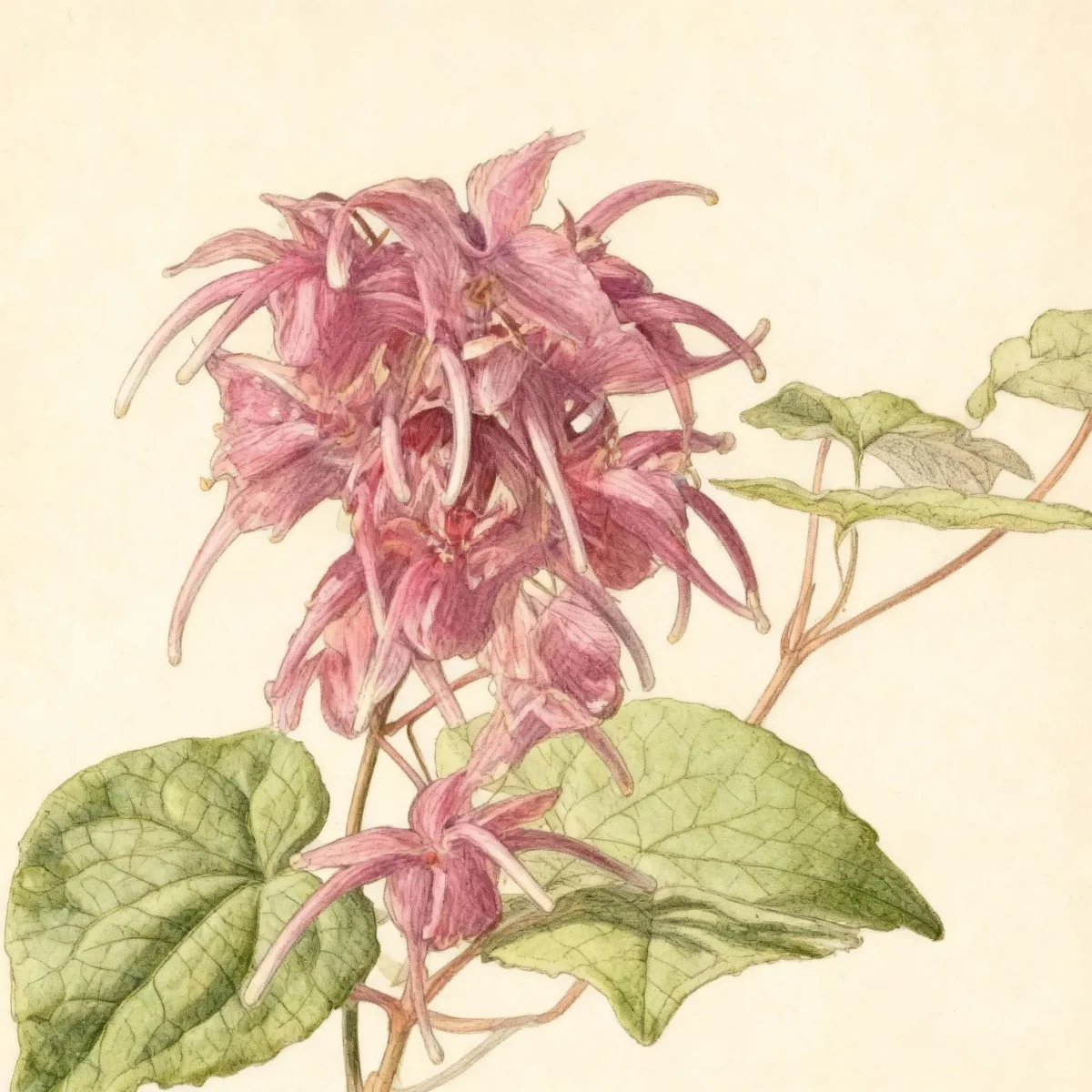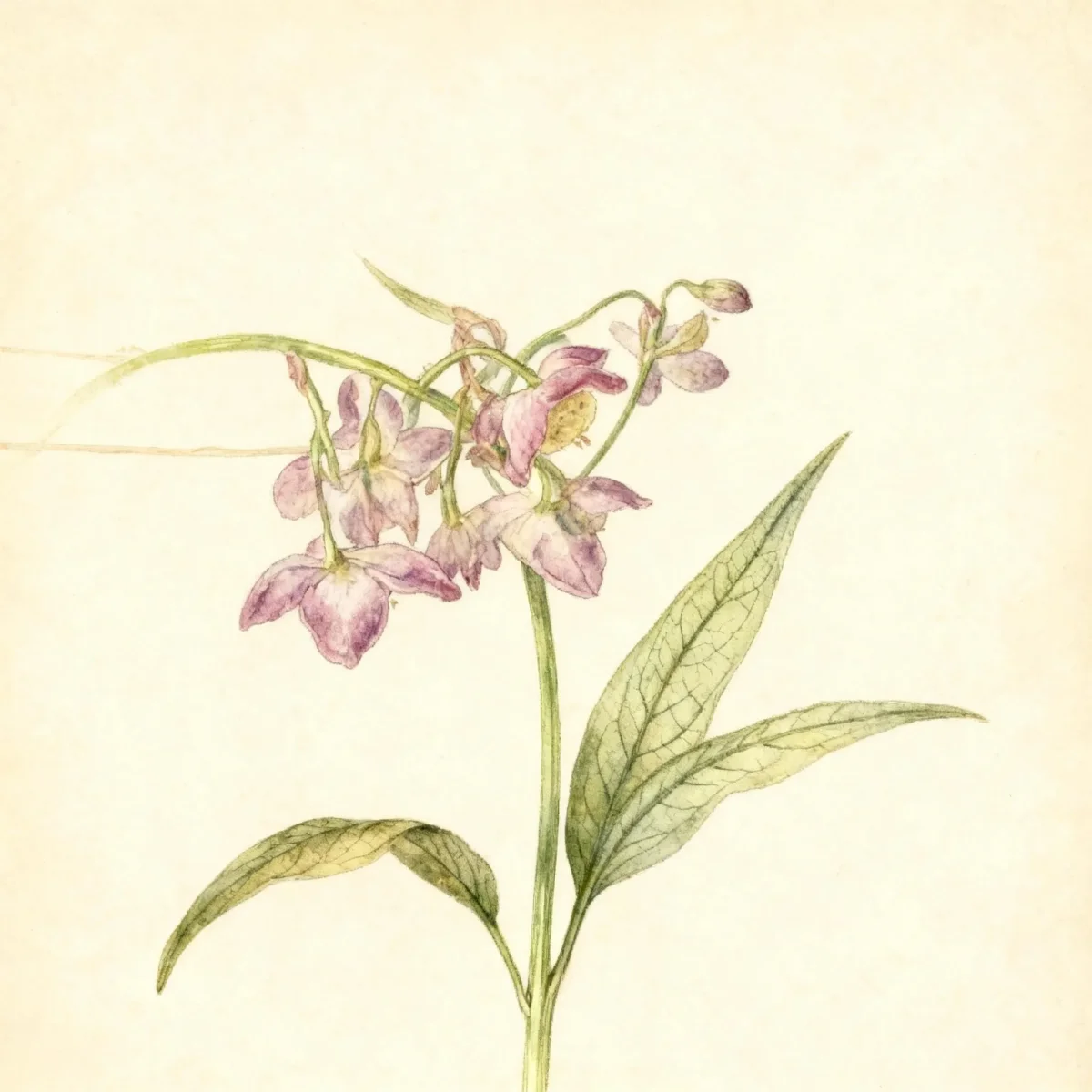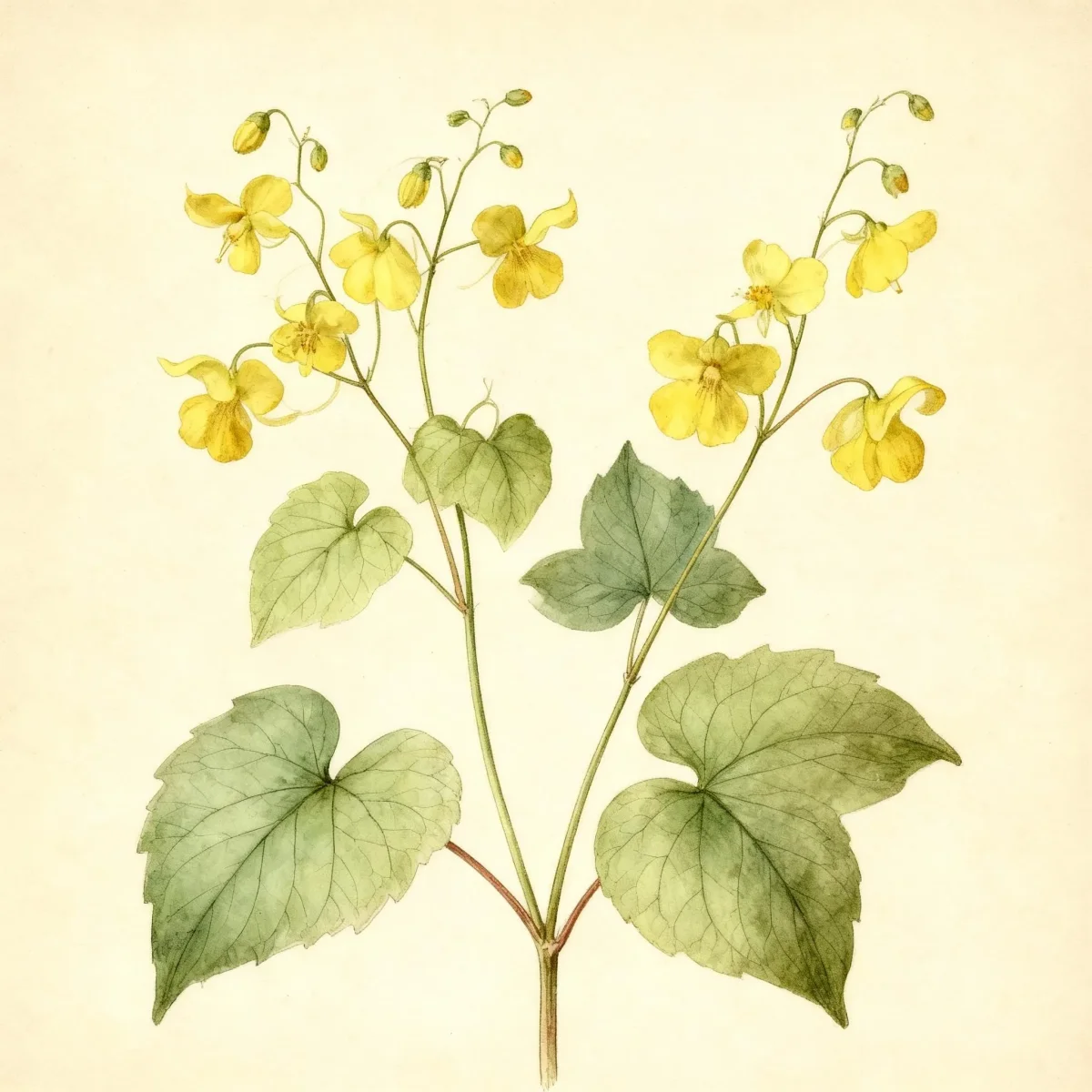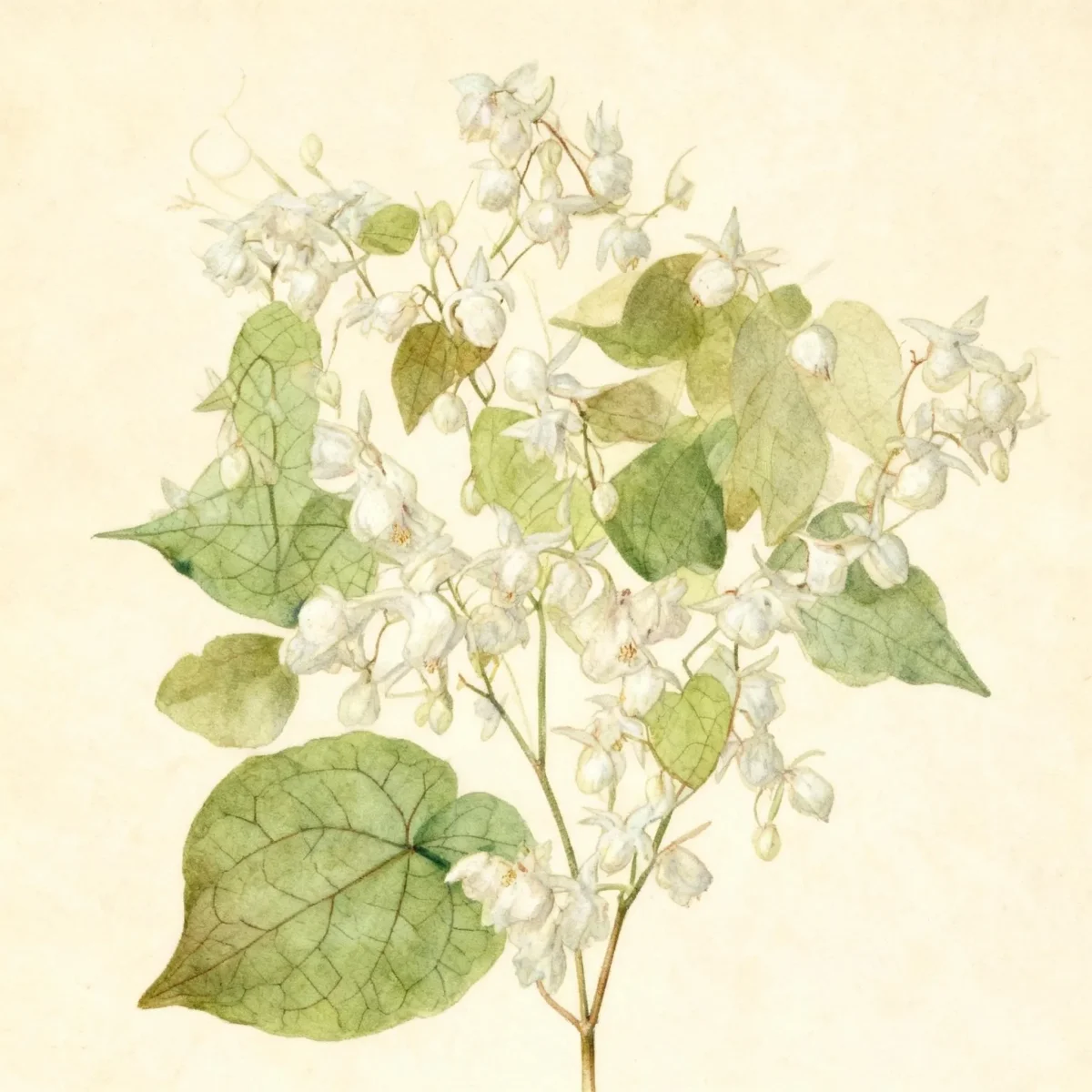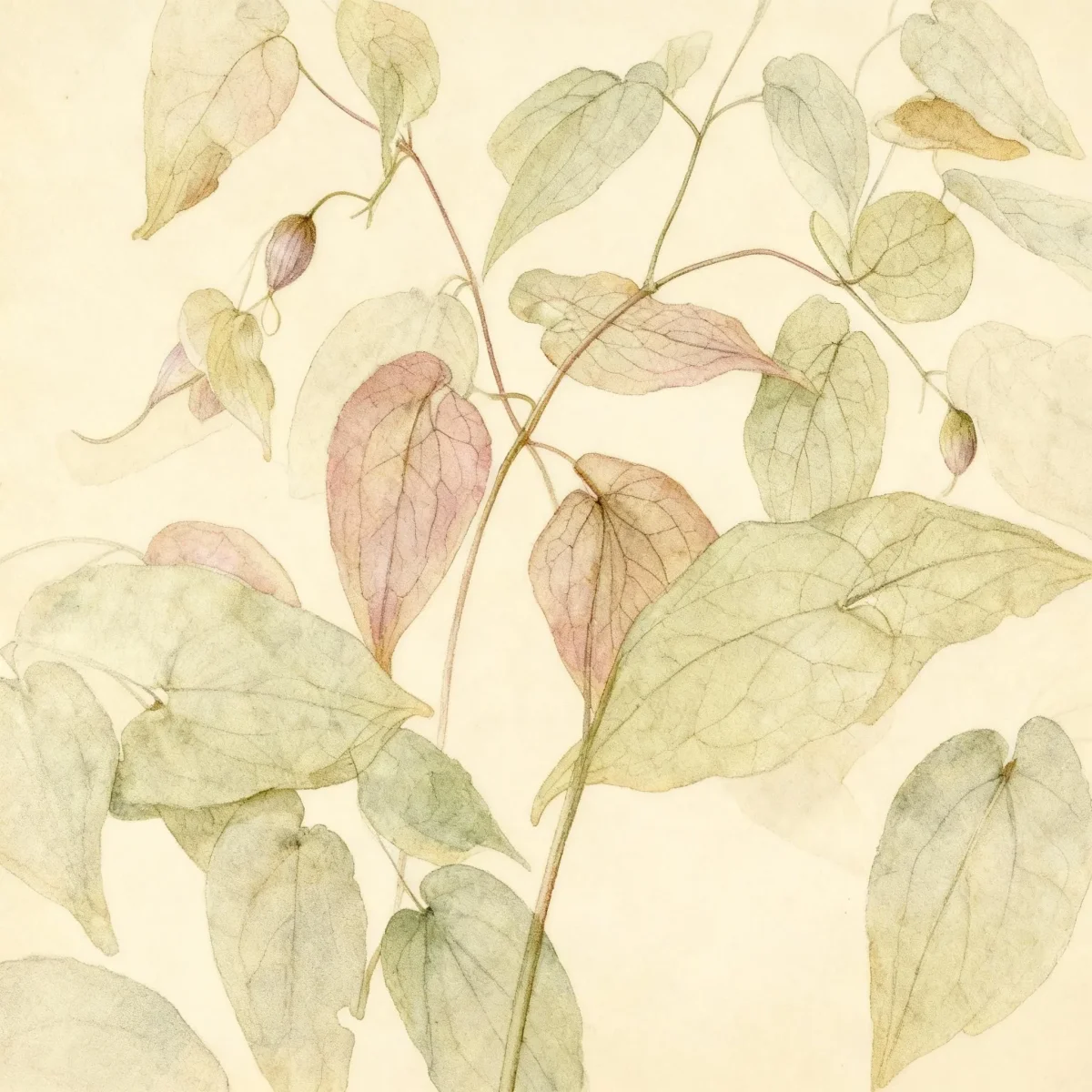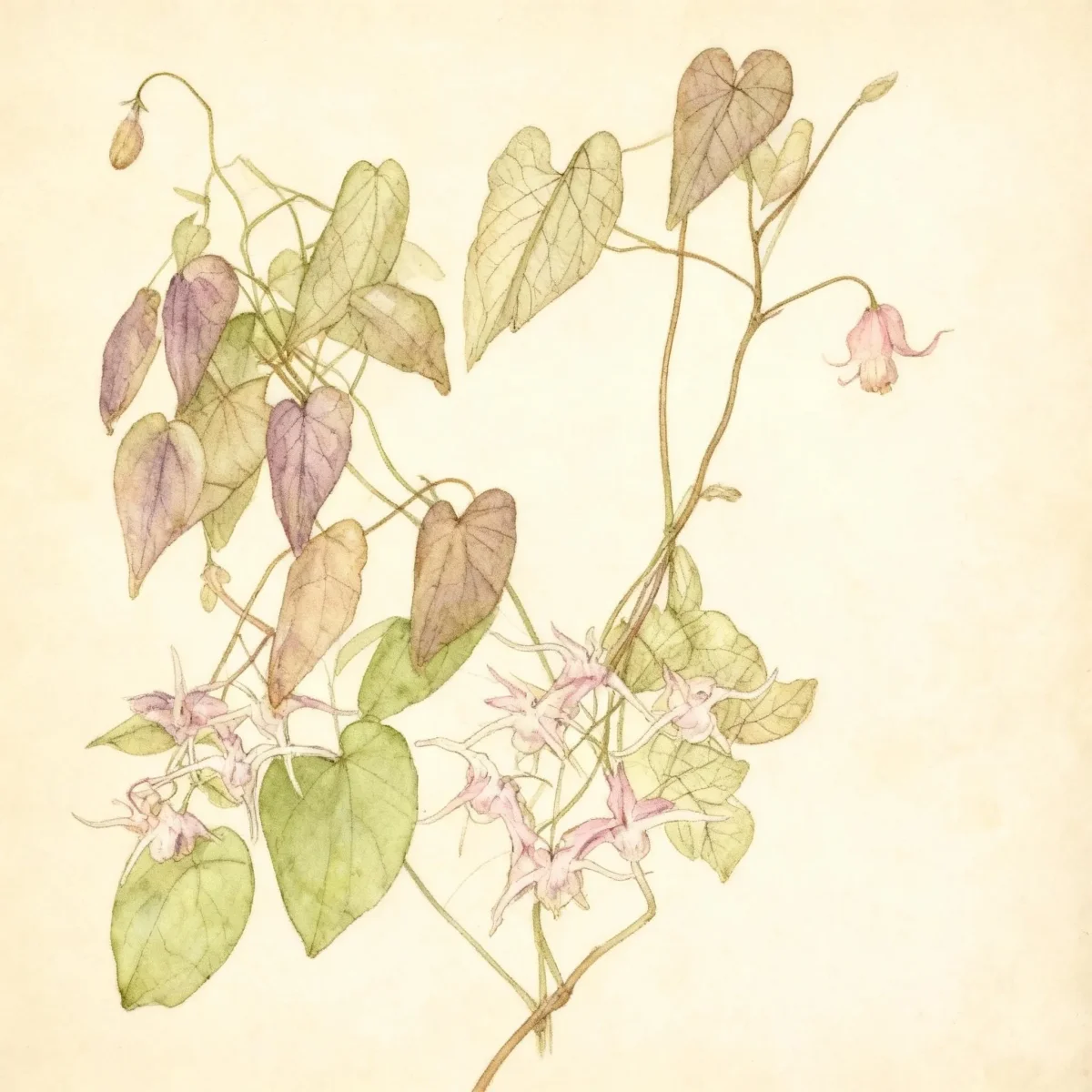

Bishop's hat (Epimedium brevicornu)
Epimedium brevicornu, or Bishop's hat, is a low-maintenance perennial groundcover noted for its charming purple and white spring blooms.

Bloom Boldly, No Matter the Season - Sweatshirt
Cozy organic cotton sweatshirt featuring our exclusive Purple Coneflower design. Perfect for gardeners who bloom year-round.
Inspired by the beautiful Bishop's hat
Limited first batch (50) — join the waitlist for early access
Waitlist closes Feb 15, 2026.
Complete Plant Information
Field Guide Continues
Ready for care notes, companion picks, and planting tips?
The map is just the start. The full guide below covers growth habits, seasonal performance, and landscape uses.
Overview
Epimedium brevicornu, widely known as Bishop’s hat, is a resilient and highly valued herbaceous perennial perfect for shaded garden areas where many other plants struggle. This plant brings an abundance of small but attractive, short-spurred, nodding flowers in striking shades of purple and white during the late spring. Growing slowly to form attractive colonies via creeping rhizomes, Epimedium brevicornu offers functional beauty as a durable ground cover. Gardeners appreciate this species for its low maintenance demands and its ability to thrive in dry shade once established, making it an indispensable addition to woodland settings.
Fast Facts
- Plant Family: Berberidaceae
- Plant Type: Herbaceous perennial
- Native Range: China
- Hardiness Zones: USDA Zones 4-8
- Size at Maturity:
- Height: 1-2 ft
- Spread: 1-2 ft
- Bloom Time: April to May
- Bloom Description: Purple and white
- Sun Exposure: Part shade to full shade
- Water Needs: Dry to medium
- Maintenance Level: Low
How to Grow
Plant Epimedium brevicornu during spring or fall in your garden when conditions are favorable for root establishment. This plant thrives best in average, acidic, well-drained soils, favoring loose organically rich loams that maintain consistent moisture, particularly in areas receiving dappled sunlight or morning sun. Be aware that the attractive foliage of this epimedium often burns if exposed to harsh full afternoon sun.
Maintenance for Bishop’s hat is notably low. While it prefers consistent moisture in part shade, once established, it develops rhizomes that help it tolerate surprising drought conditions, even in dry shade. It is intolerant of alkaline soils, so amend heavy or calcareous soils as necessary before planting. Avoid fertilizing heavily; rich soil is not a requirement.
A light, annual cleanup is usually all that is needed. If the older foliage persists, cut back any remaining dead or tired foliage in late winter before the new spring growth emerges. Propagation of Epimedium brevicornu is easily accomplished through division in either early spring or fall.
Landscape Uses
The primary role of Bishop’s hat in the landscape is that of a superb, tough ground cover for shady areas. Mass plantings of Epimedium brevicornu are highly effective in woodland gardens, naturalized settings, or wild garden areas where they slowly generate thick, attractive colonies of foliage. Because they grow well under mature trees, they solve challenging understory planting dilemmas.
Furthermore, this species excels as a neat edger for paths, walkways, or border fronts, providing seasonal interest when the purple and white flowers appear. They are beautiful companions to spring bulbs planted in similar conditions, emerging just as the bulbs are fading, ensuring continuous seasonal interest in dark corners of the garden.
Standout Features
Flower Qualities
- Showy
Noteworthy Characteristics
Epimedium brevicornu is a rhizomatous, deciduous perennial noted for producing an abundant late spring bloom of small but attractive, short-spurred, nodding flowers atop flowering stems rising above a dense foliage clump. Each flower features four spurred purple petals, and the plant is native to woodlands and slopes in central to north central China. The specific epithet brevicornu references the short flower petals, distinguishing it from other species in the genus.
Tolerances
- Rabbit
- Deer
- Drought
- Heavy Shade
- Erosion
- Dry Soil
- Shallow-Rocky Soil
Potential Problems
This species generally faces no serious insect or disease problems, making it a reliable choice for low-stress gardening. The main disease concern stems from Mosaic virus, which can be transmitted by aphids feeding on the plant. Ensure good air circulation during planting and monitor for aphid outbreaks to prevent viral spread and maintain plant vigor.
Frequently Asked Questions
What hardiness zones is Bishop’s hat suitable for?
Epimedium brevicornu is hardy across USDA Zones 4 through 8, offering adaptability across a wide range of climates.
How large does Epimedium brevicornu grow?
At maturity, Bishop’s hat typically reaches a height between 1 and 2 feet, with a corresponding spread of 1 to 2 feet.
What sun exposure does Bishop’s hat need?
This perennial prefers part shade to full shade conditions; direct, hot afternoon sun should generally be avoided as it can scorch the foliage.
When does Bishop’s hat bloom?
The lovely display of purple and white flowers occurs reliably from April into May.
Conclusion
The combination of low maintenance, excellent shade tolerance, and resistance to browsing animals makes Bishop’s hat an invaluable perennial. Consider using Epimedium brevicornu to permanently carpet difficult, dry shade spots in your landscape. Before planting, confirm that your garden environment aligns with USDA Zones 4-8 and that the soil pH is ideally acidic.
Companion Planting
When selecting neighbors for Epimedium brevicornu, focus on other shade-loving, low-maintenance perennials that share similar soil and moisture requirements. Hostas are classic companions, providing contrasting large leaf textures against the fine foliage of Bishop’s hat. Ferns, such as Japanese Painted Ferns or Autumn Ferns, also pair beautifully, enhancing the woodland aesthetic that this epimedium naturally creates.
Propagation Tips
Since Epimedium brevicornu spreads slowly by creeping rhizomes, division is the most straightforward method for propagation. Wait until early spring, just as new growth is beginning, or perform the division in the fall after the growing season has slowed. Dig up sections of the established clump, ensuring each division has several healthy crowns and good root material, and replant immediately into well-prepared soil.