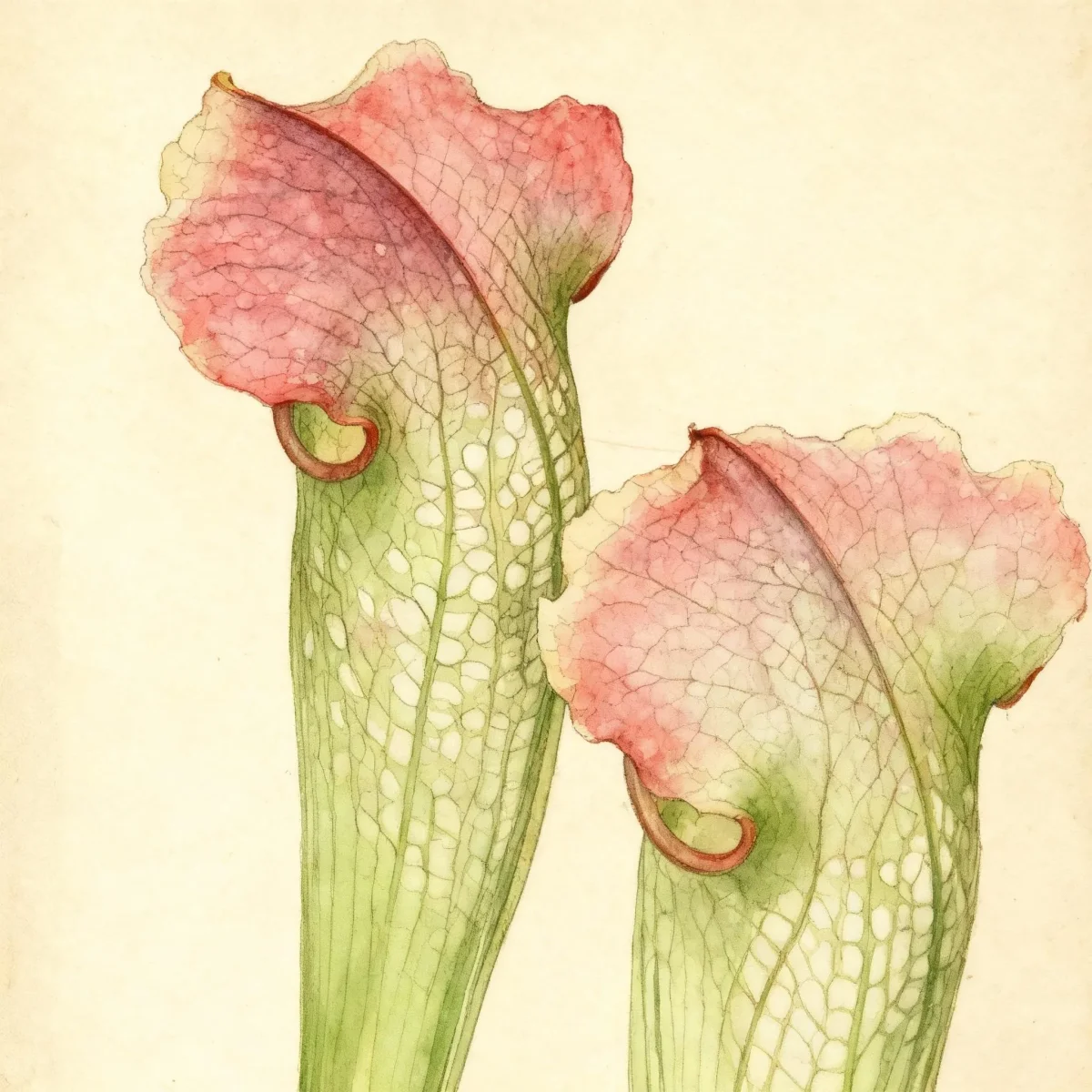
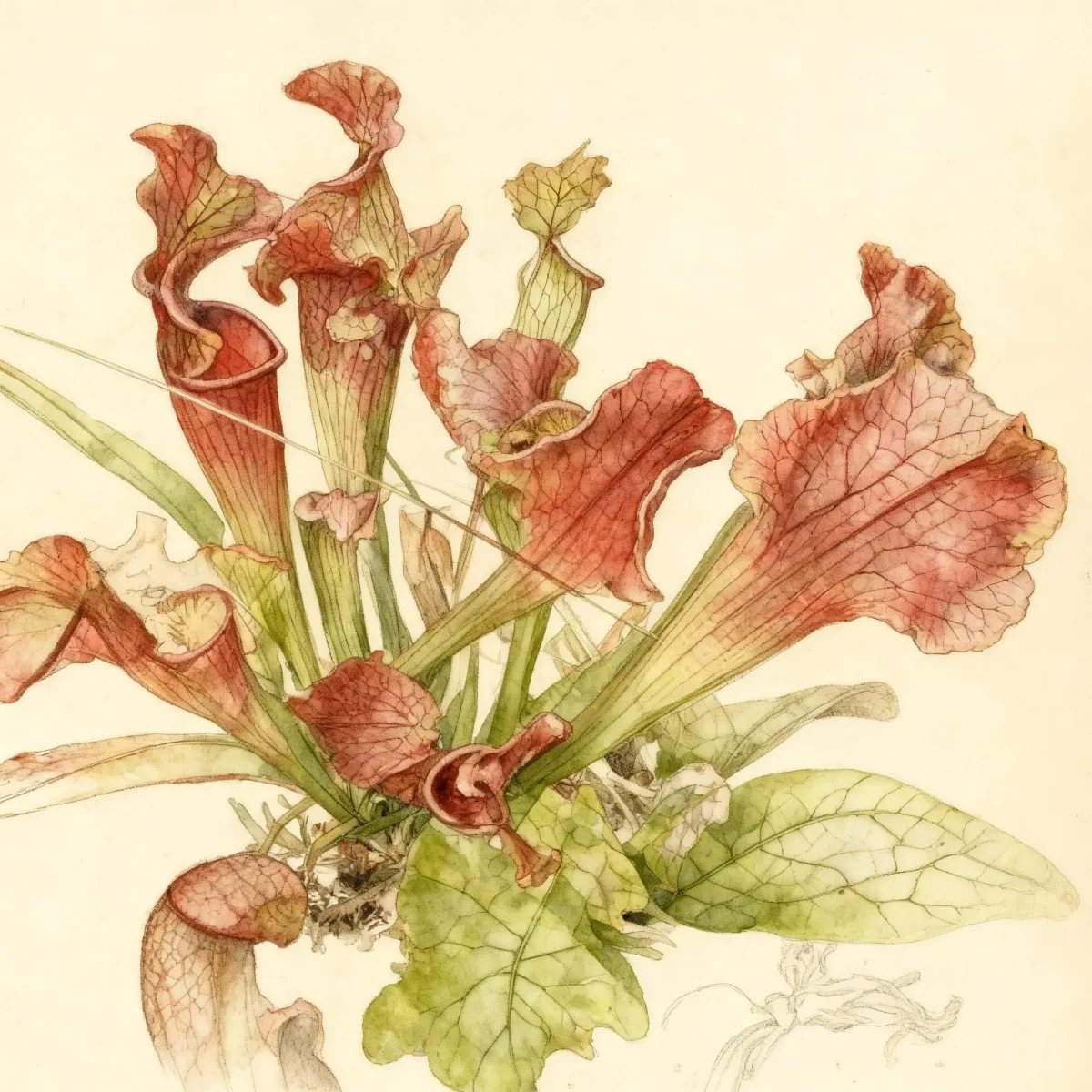
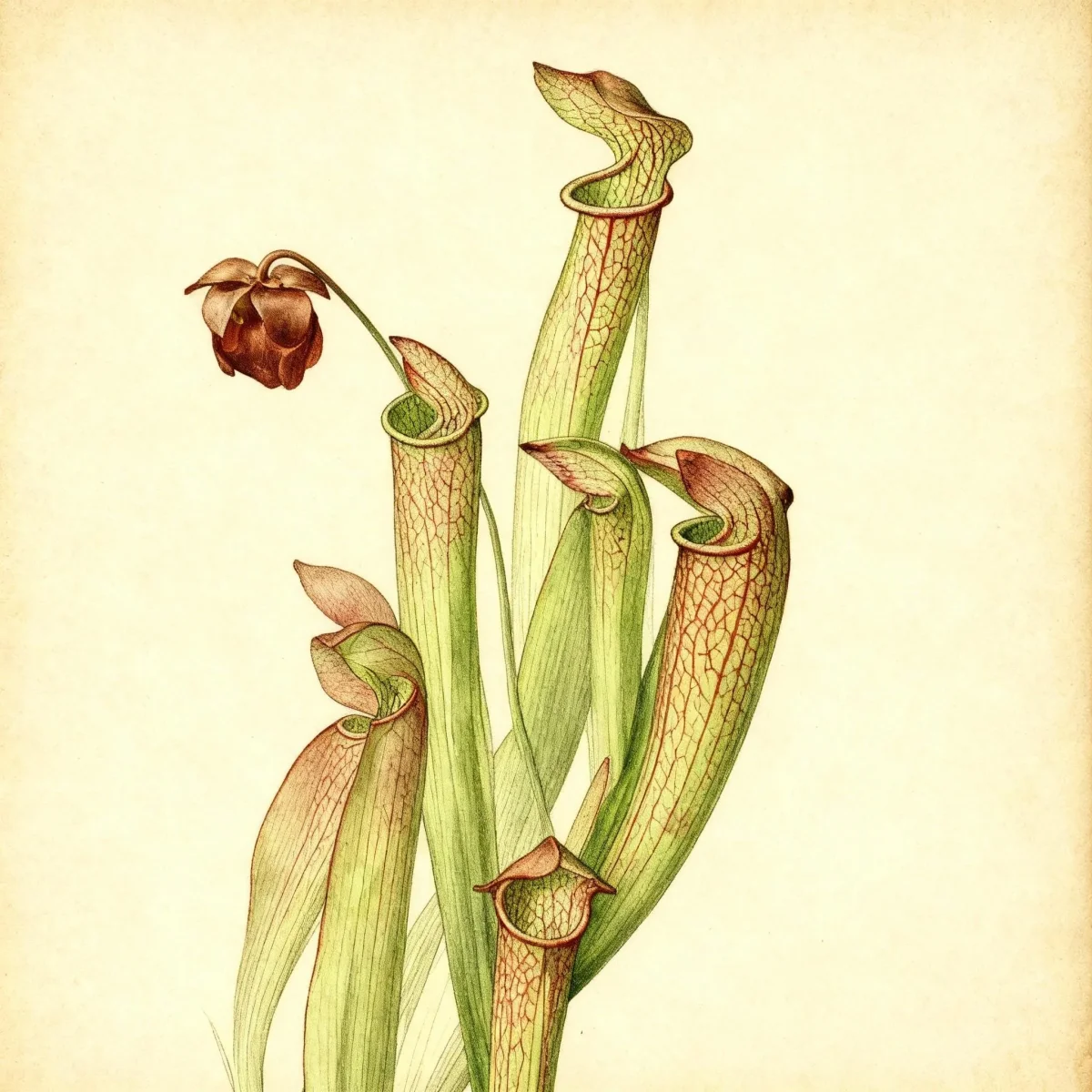
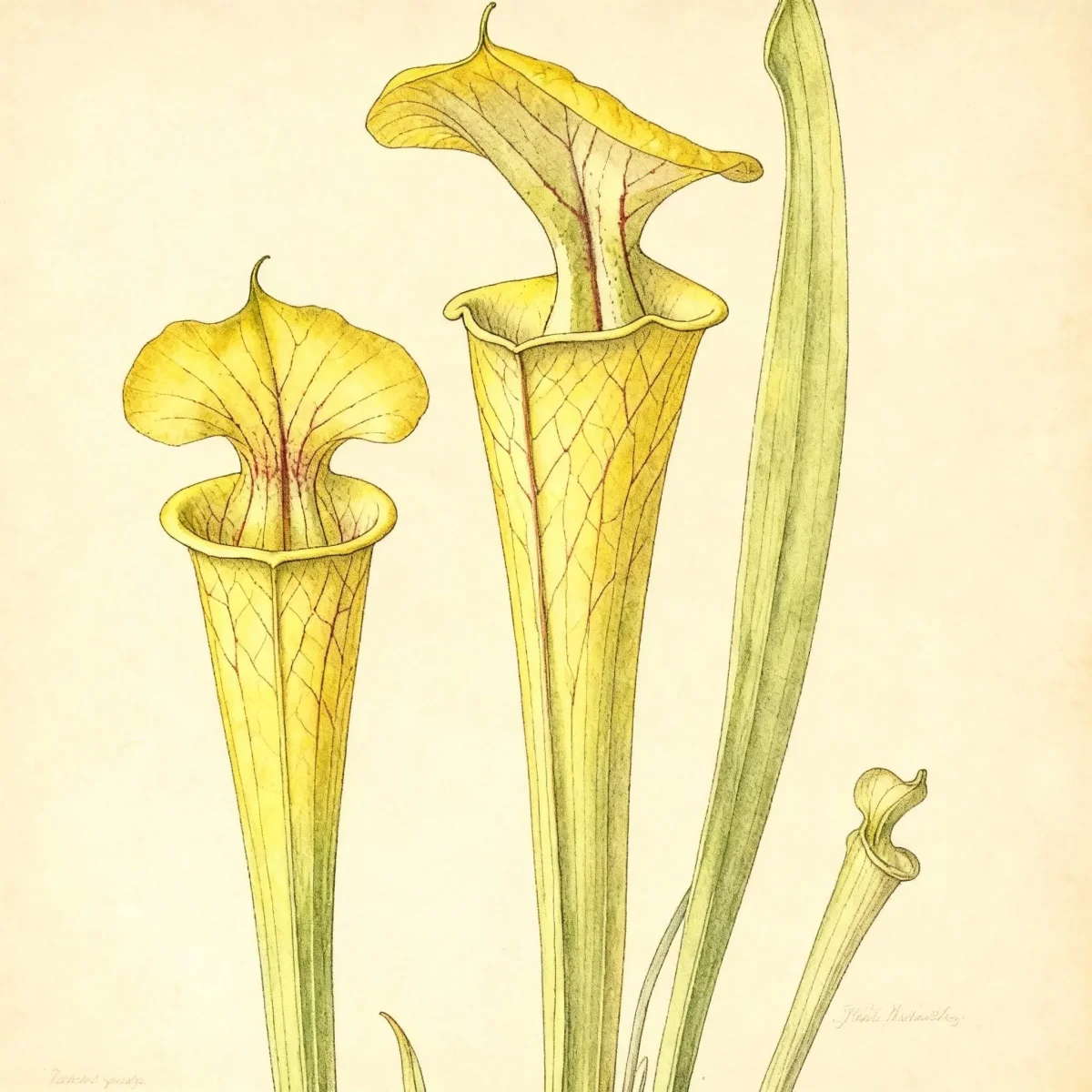
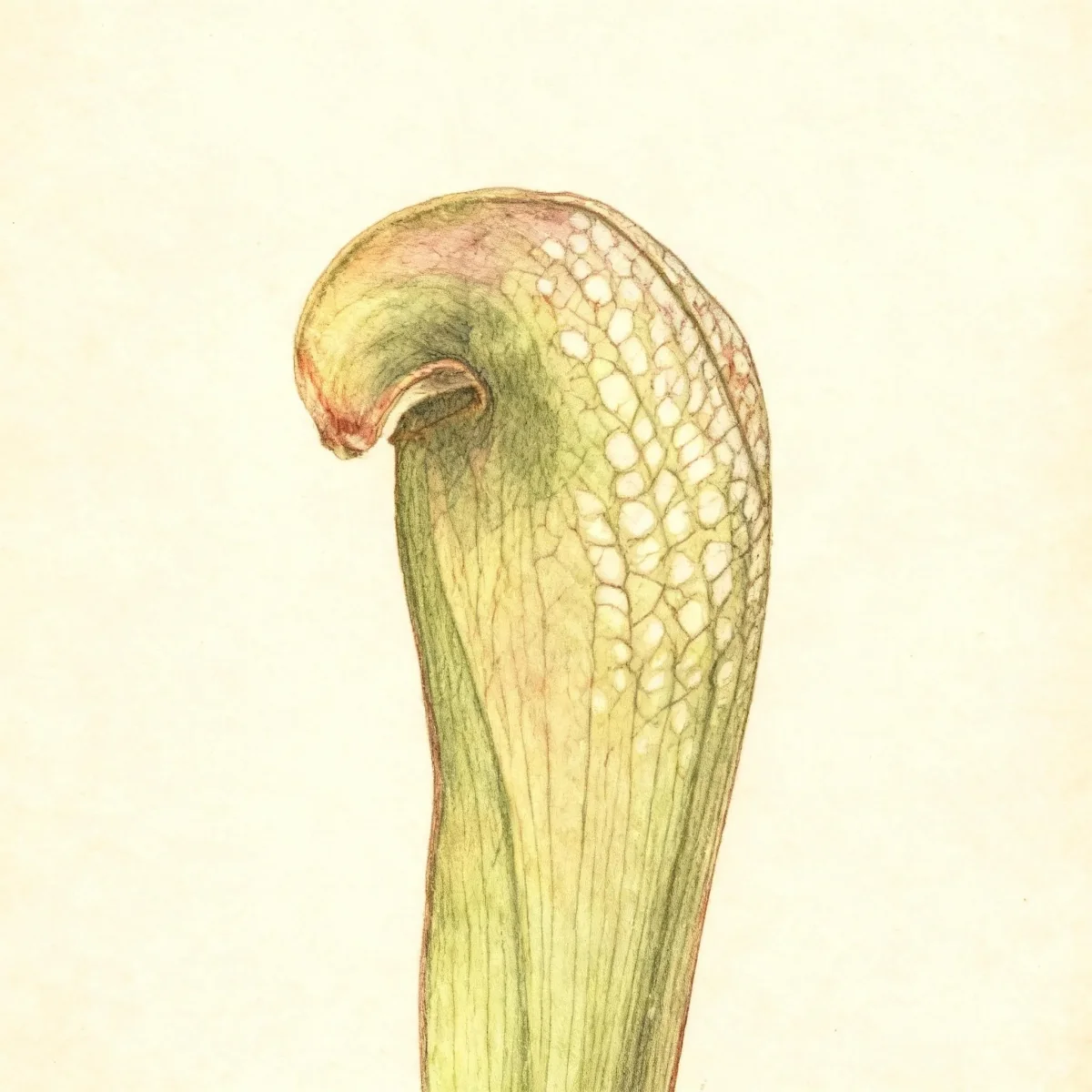
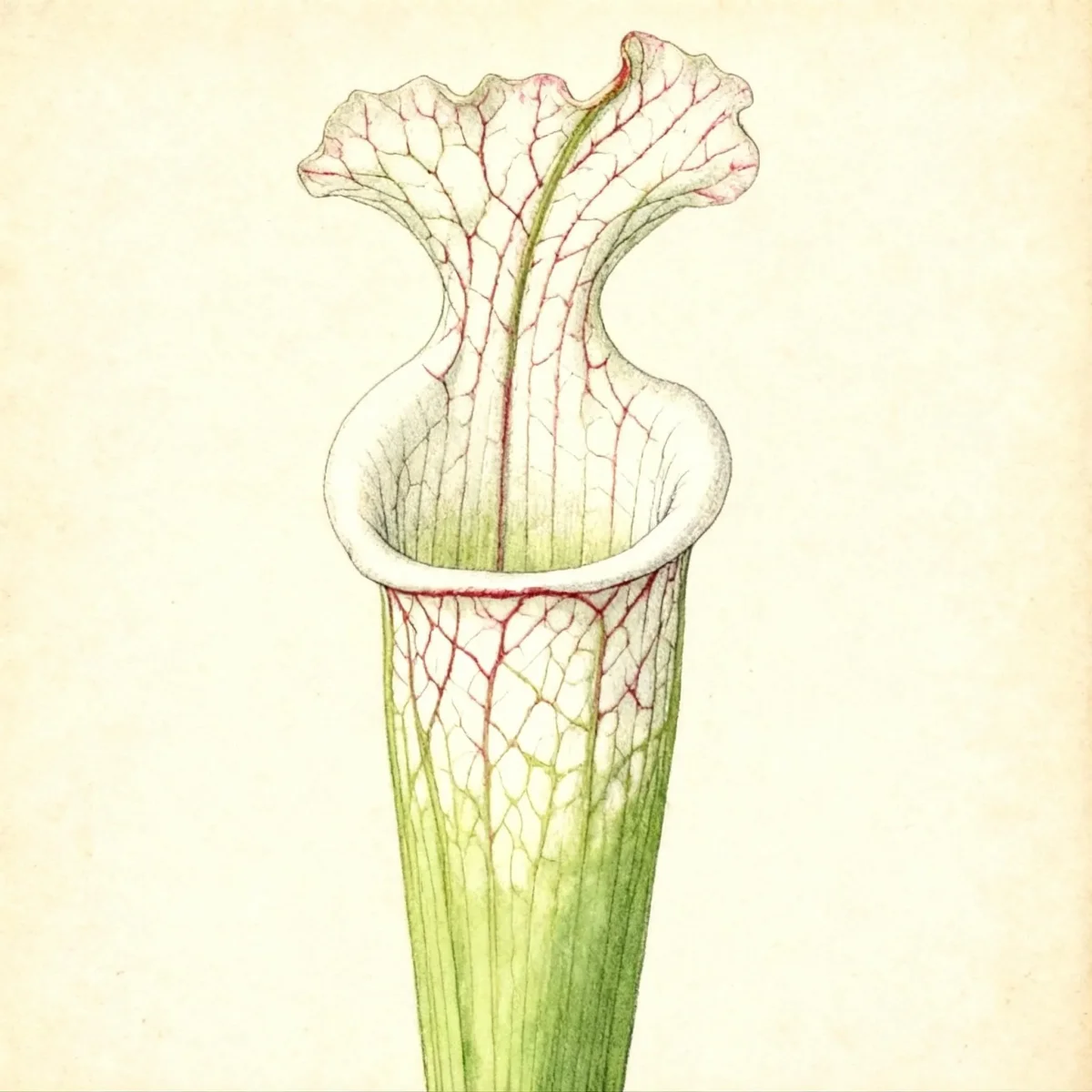
Purple pitcher plant (Sarracenia purpurea subsp. Venosa)
Carnivorous Purple pitcher plant (Sarracenia purpurea subsp. venosa) offers showy red blooms and unique insect-trapping pitchers. Requires bog conditions.
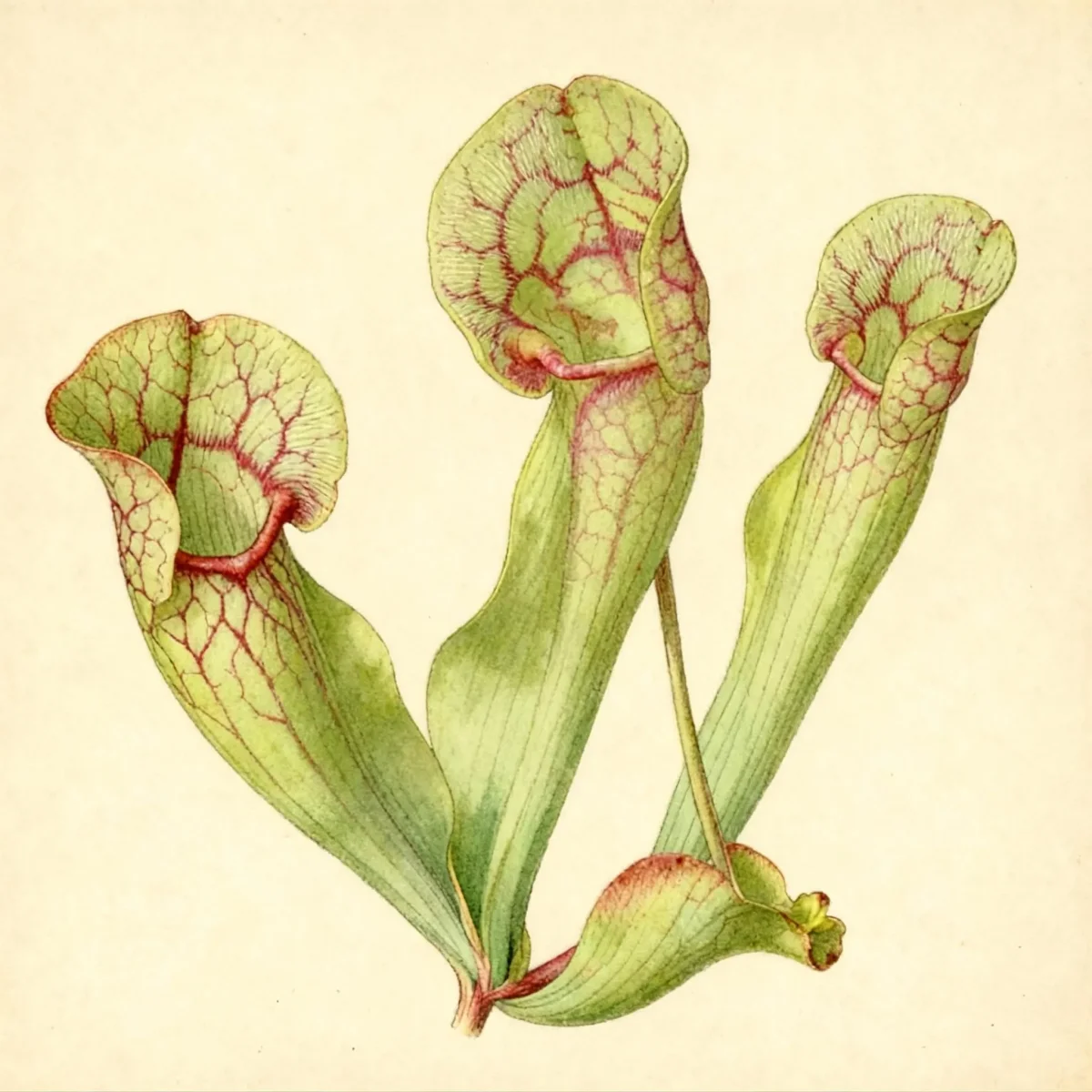

Bloom Boldly, No Matter the Season - Sweatshirt
Cozy organic cotton sweatshirt featuring our exclusive Purple Coneflower design. Perfect for gardeners who bloom year-round.
Inspired by the beautiful Purple pitcher plant
Limited first batch (50) — join the waitlist for early access
Waitlist closes Feb 15, 2026.
Complete Plant Information
Field Guide Continues
Ready for care notes, companion picks, and planting tips?
The map is just the start. The full guide below covers growth habits, seasonal performance, and landscape uses.
Overview
The Purple pitcher plant, scientifically known as Sarracenia purpurea subsp. venosa, is a fascinating specimen prized for its carnivorous nature and unique foliage. This herbaceous perennial creates basal rosettes of trumpet-shaped pitchers designed to trap and digest insects, adding functional intrigue to any specialized garden setting. Strict adherence to its cultural needs, particularly regarding constant moisture and strong sunlight, is required for success.
Sarracenia purpurea subsp. Venosa is native to the coastal plains of the Southeastern United States, thriving in savanna and swamp margin conditions. Aesthetically, it brings strong visuals with upright, often veined green and burgundy pitchers, topped by showy red flowers in late spring. Gardeners seeking a dynamic, low-growing specimen that actively manages pests will find the Purple pitcher plant highly rewarding.
Cultivation centers around mimicking its native bog environment. This plant demands full sun to develop proper coloring and pitcher structure; any reduction in light will result in weak, drooping growth. Because the specialized soil requirements and constant moisture are non-negotiable, planning a dedicated bog garden or selecting appropriate, large containers is crucial for maintaining this spectacular carnivorous species.
Fast Facts
- Plant Family: Sarraceniaceae
- Plant Type: Herbaceous perennial
- Native Range: Southeastern United States
- Hardiness Zones: USDA Zones 6-8
- Size at Maturity:
- Height: 0.75-1.5 ft
- Spread: 1-2 ft
- Bloom Time: May to June
- Bloom Description: Red
- Sun Exposure: Full sun
- Water Needs: Wet
- Maintenance Level: High
How to Grow
Growing Sarracenia purpurea subsp. venosa successfully hinges entirely on recreating its native, nutrient-poor, consistently wet habitat. Planting is best done in spring or early summer, ideally into a prepared bog garden using acidic, humusy muck. Recommended soil components include Canadian peat or mixes of peat combined with sand or perlite; do not use standard potting soil or fertilizer, as these can quickly kill the plant.
Watering is a critical task for the Purple pitcher plant; the soil must remain constantly damp but should not sit submerged at the plant crowns. This necessitates using water that is low in minerals, such as rainwater or reverse osmosis water. If a bog garden is impossible, containers (plastic is best) placed in a tray of water to maintain consistent moisture is the next viable option.
This species demands full sun exposure throughout the growing season to ensure deep coloration in the pitchers and vertical posture. As winter approaches, the old pitchers will generally die back. In colder zones, trim off only the dead tissue in winter and protect the area with a light mulch of pine needles. Easiest propagation involves rhizome division during spring repotting, though seedlings will take 4-5 years to achieve blooming size.
Landscape Uses
The primary role for the Purple pitcher plant in the landscape is within a constructed bog garden, providing a visually compelling focal point for water feature edges or low-lying areas where moisture naturally collects. It excels when planted in masses where its rosette forms create an interesting groundcover texture interspersed with its upright traps. The bright red blooms in May and June offer a rare splash of color among specialized moisture-loving plants.
If a full bog is impractical, container culture offers flexibility, allowing you to place Sarracenia purpurea subsp. venosa on sunny decks or patios. In these setups, companions should also tolerate constant moisture and acidic conditions, such as other carnivorous plants like Sundews (Drosera) or Water Hyacinths (Eichhornia) if grown semi-submerged nearby. Avoid placing them near thirsty, standard perennials that have different cultural requirements.
Where humidity stays high, these plants can be integrated into specialized greenhouse displays or terrariums, provided adequate artificial lighting replaces natural full sun when grown indoors. While they can survive winter dormancy outdoors in Zones 6-8, remember that their need for cold dormancy restricts their successful long-term growth as typical indoor houseplants.
Standout Features
Flower Qualities
- Showy
- Fragrant
Noteworthy Characteristics
Sarracenia purpurea subsp. Venosa is easily identified by its compact form and open-to-the-sky pitchers, which collect rainwater in which insects drown after being lured by nectar and color. This specific subspecies is native to the coastal plain from New Jersey south to Georgia, differentiating it botanically from S. purpurea subsp. purpurea. The pitchers, typically 4-10 inches long, display green coloration with distinct purple-burgundy venation near the flared lip, efficiently utilizing downward-pointing hairs to prevent escape.
Tolerances
- Wet Soil
Potential Problems
Plants will do poorly if specific cultural requirements are not followed, meaning that any deviation from the need for full sun and constantly wet, acidic conditions will cause decline. Protect Sarracenia purpurea subsp. venosa from strong, sustained freezing winds during winter dormancy. Manual feeding is not advised, and gardeners must never fertilize plantings, as this can burn the delicate roots. Common pests to monitor for include aphids, scale, and mealybugs, while root rot and leaf spot are common issues if drainage or water quality is inappropriate.
Frequently Asked Questions
What hardiness zones is Purple pitcher plant suitable for?
The Purple pitcher plant is an herbaceous perennial hardy in USDA Zones 6 through 8.
How large does Purple pitcher plant grow?
At maturity, Sarracenia purpurea subsp. Venosa typically reaches a height between 0.75 and 1.5 feet tall, with a spread between 1 and 2 feet wide.
What sun exposure does Purple pitcher plant need?
This carnivorous bog plant requires full sun exposure to develop the vibrant coloring and upright structure essential to its survival and appearance.
When does Purple pitcher plant bloom?
The Purple pitcher plant flowers between May and June, producing distinctive, showy, and fragrant red blooms.
Conclusion
The unique appeal of Sarracenia purpurea subsp. venosa lies in its fascinating predatory lifestyle combined with its striking pitcher architecture and red spring flowers. Successful cultivation demands replicating its native bog conditions: relentless moisture and abundant sunlight are non-negotiable for this high-maintenance plant. Before planting, confirm that your local conditions fall within USDA Zones 6-8 and prepare the acidic, peat-heavy substrate required for this outstanding Purple pitcher plant.
Companion Planting for Bog Gardens
When designing a space for Sarracenia purpurea subsp. venosa, companion plants must share the need for perpetually saturated, acidic, low-nutrient soil. Other carnivorous plants are ideal partners, as they enhance the bog aesthetic without competing chemically. Consider planting Violets (Viola spp.), particularly species native to moist environments, or various types of Sphagnum moss, which helps maintain the necessary acidic pH and moisture retention in the bog structure.
Avoid surrounding the Purple pitcher plant with standard landscape shrubs or perennials, as their nutrient or water needs will conflict, leading to poor performance for the carnivorous species. The goal is ecological compatibility; focus on other bog inhabitants that thrive in being consistently wet. This helps ensure that the delicate balance required for Sarracenia purpurea subsp. Venosa remains undisturbed throughout the growing season.
Propagation Tips
While Sarracenia purpurea subsp. venosa can theoretically be grown from seed, this process is slow, requiring 4-5 years before the plant reaches blooming size. The easiest method of asexual reproduction for established plants is rhizome division, best performed in the spring when preparing to repot or move the plants. Carefully separate sections of the rhizome, ensuring each division has healthy roots and growth buds attached.
When dividing, freshly potted divisions should be immediately placed back into their required wet substrate and full sun conditions to minimize transplant shock. While hybridization occurs naturally where ranges overlap, home propagation relies on division for immediate garden impact. Patience is key if attempting seed propagation, which involves stratification to mimic natural winter conditions before sowing.