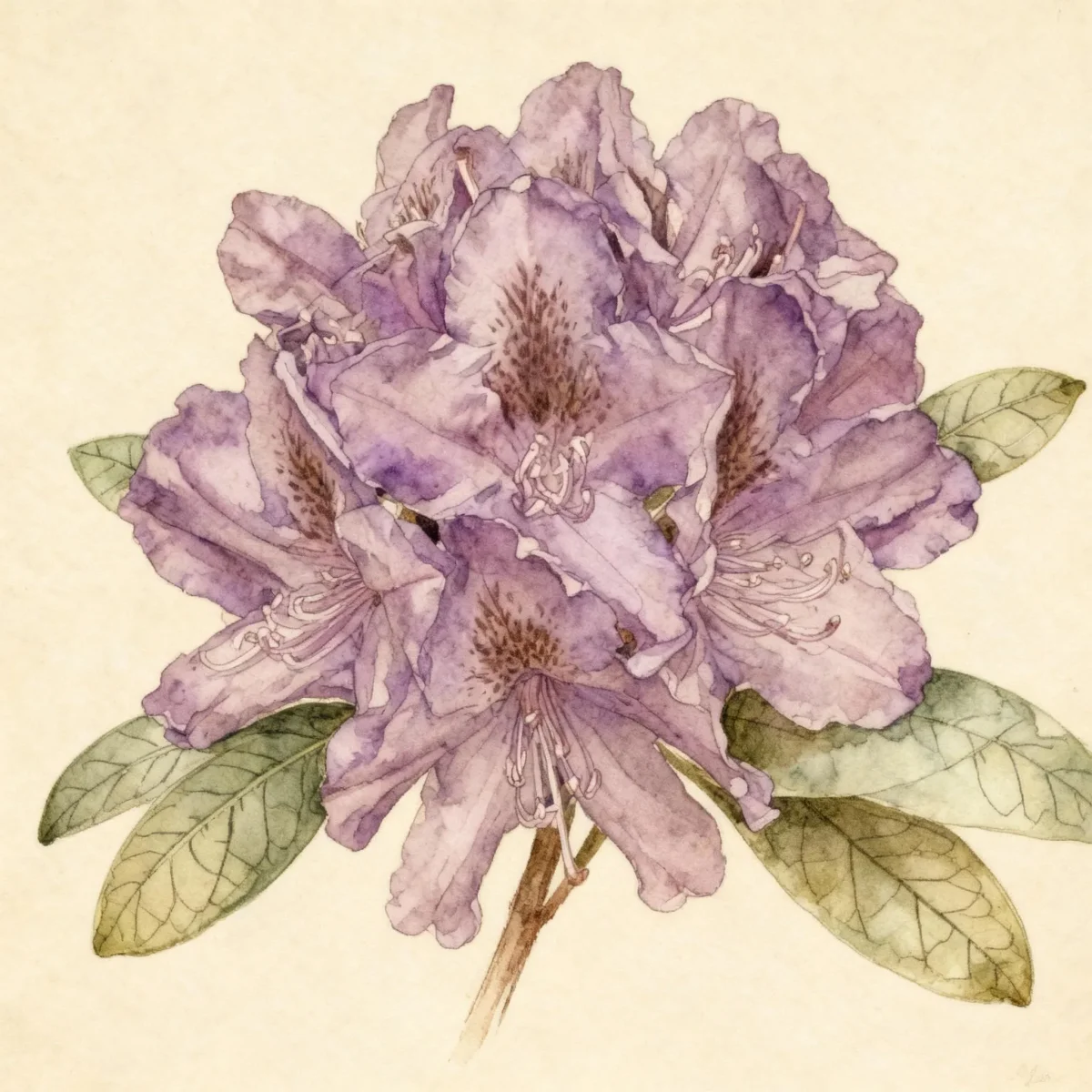
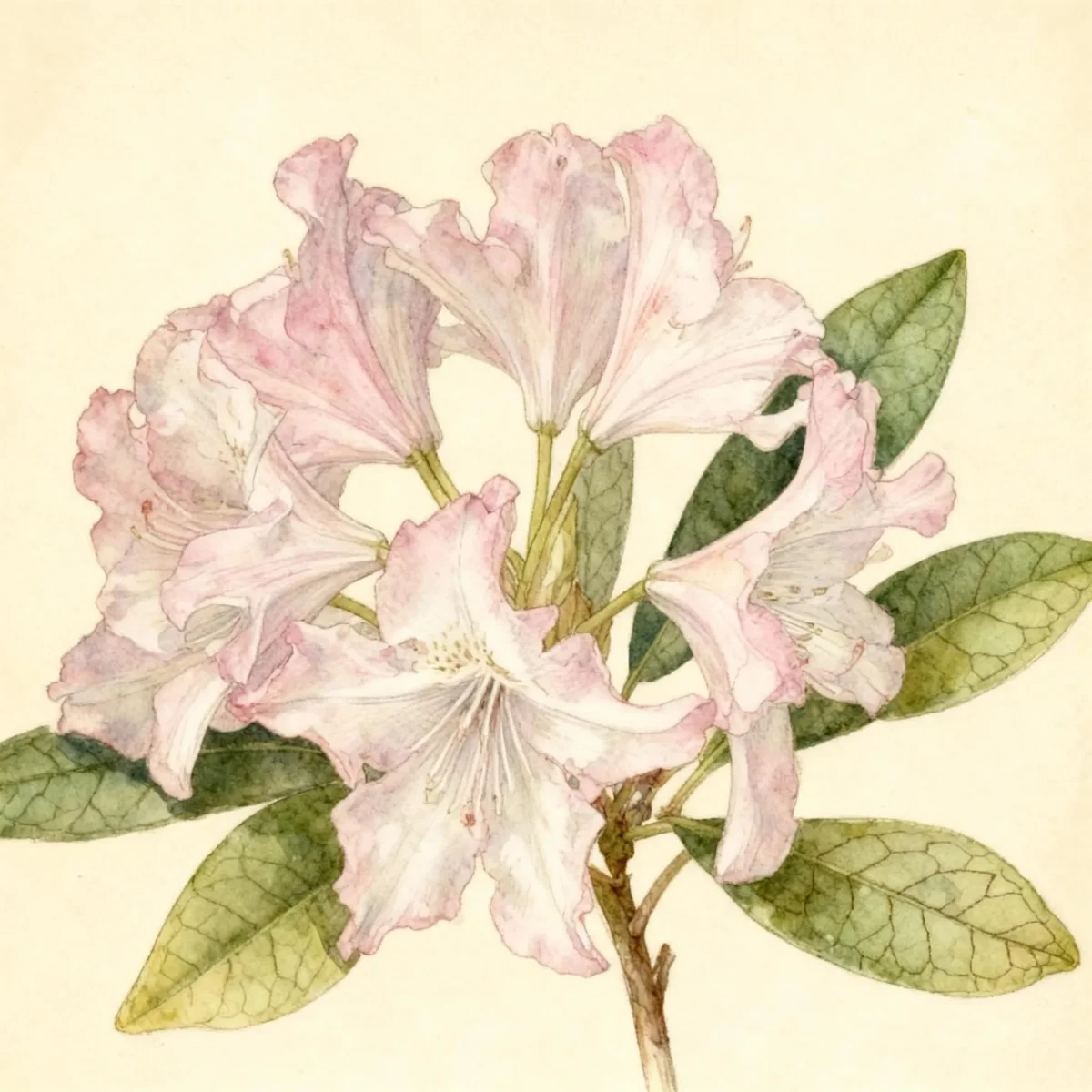
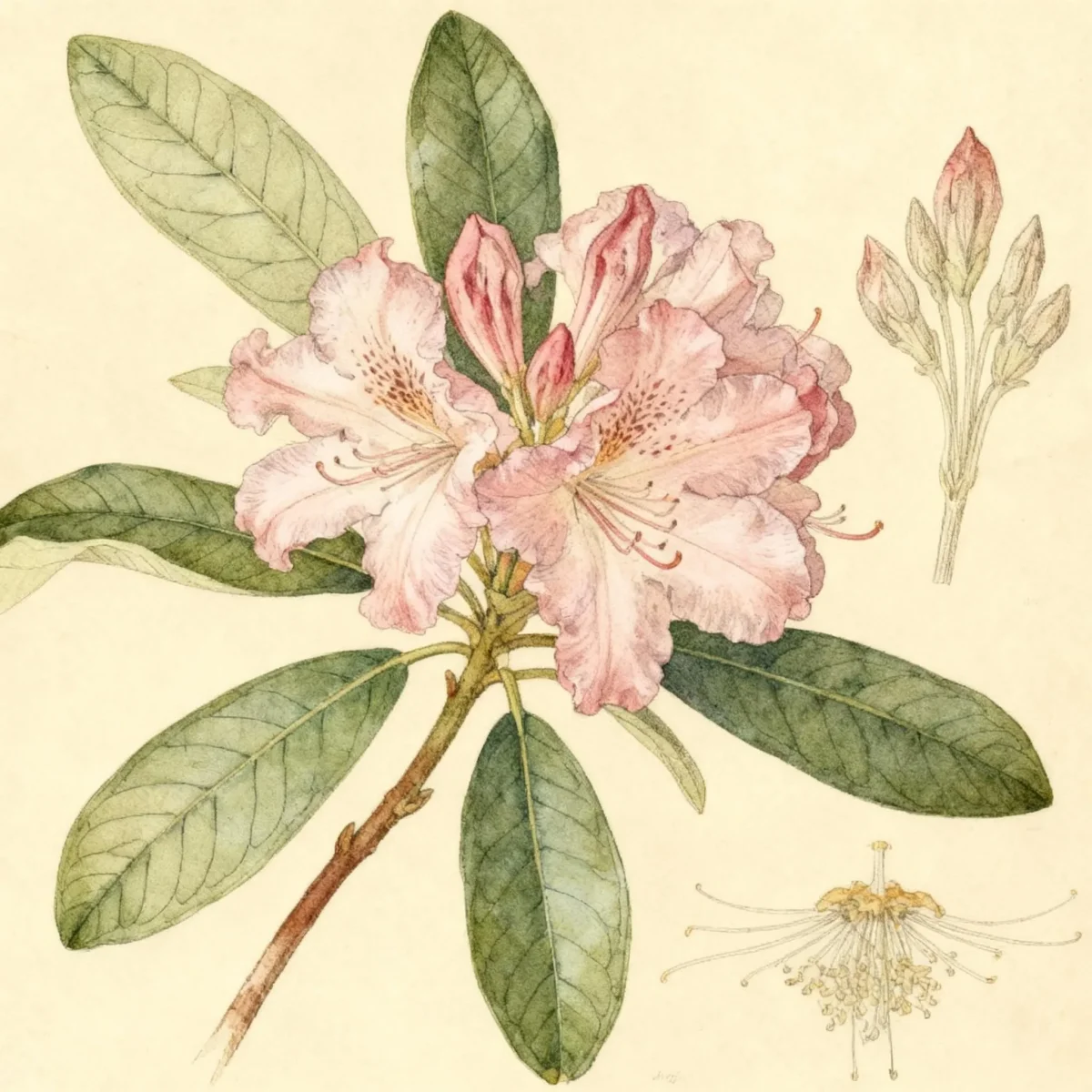
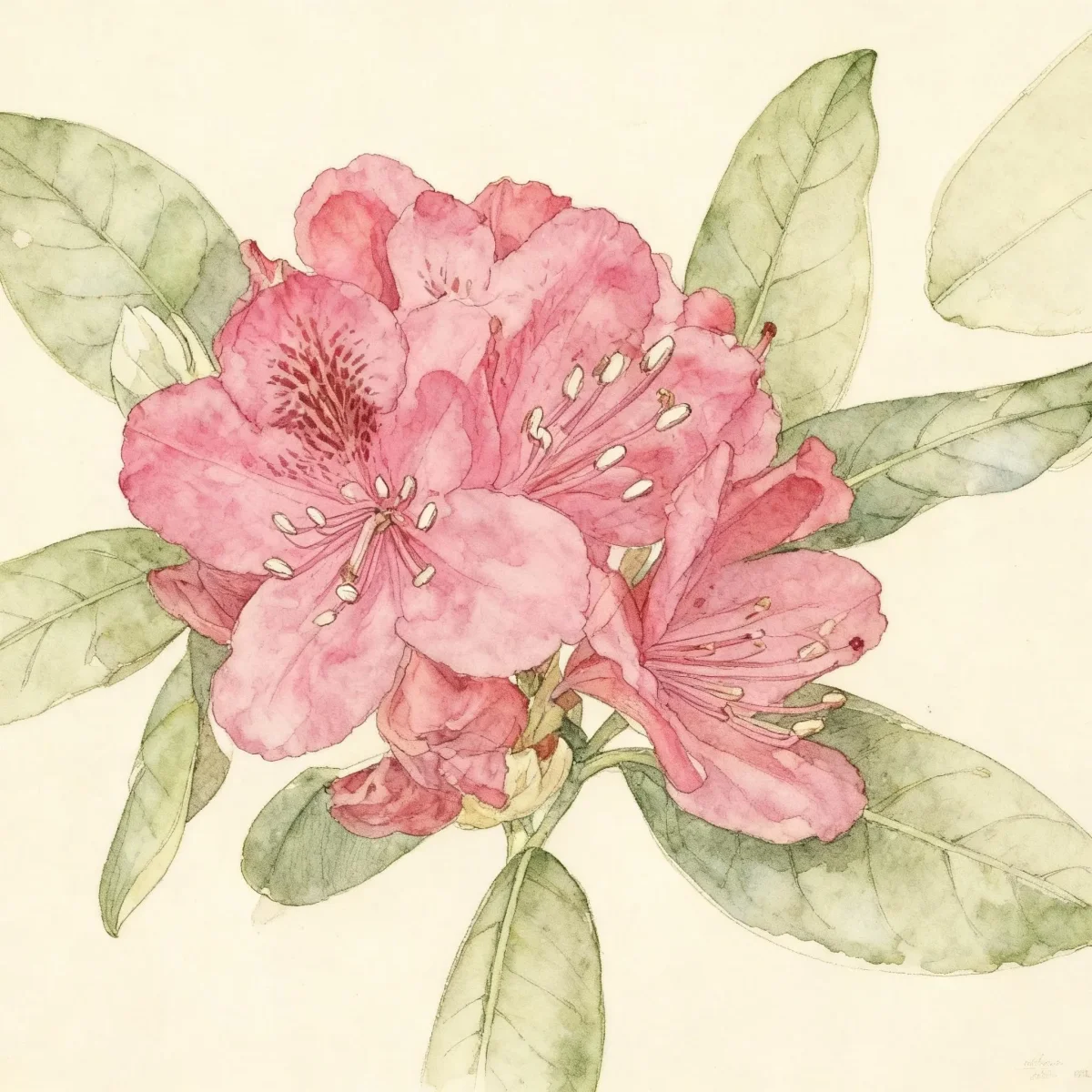
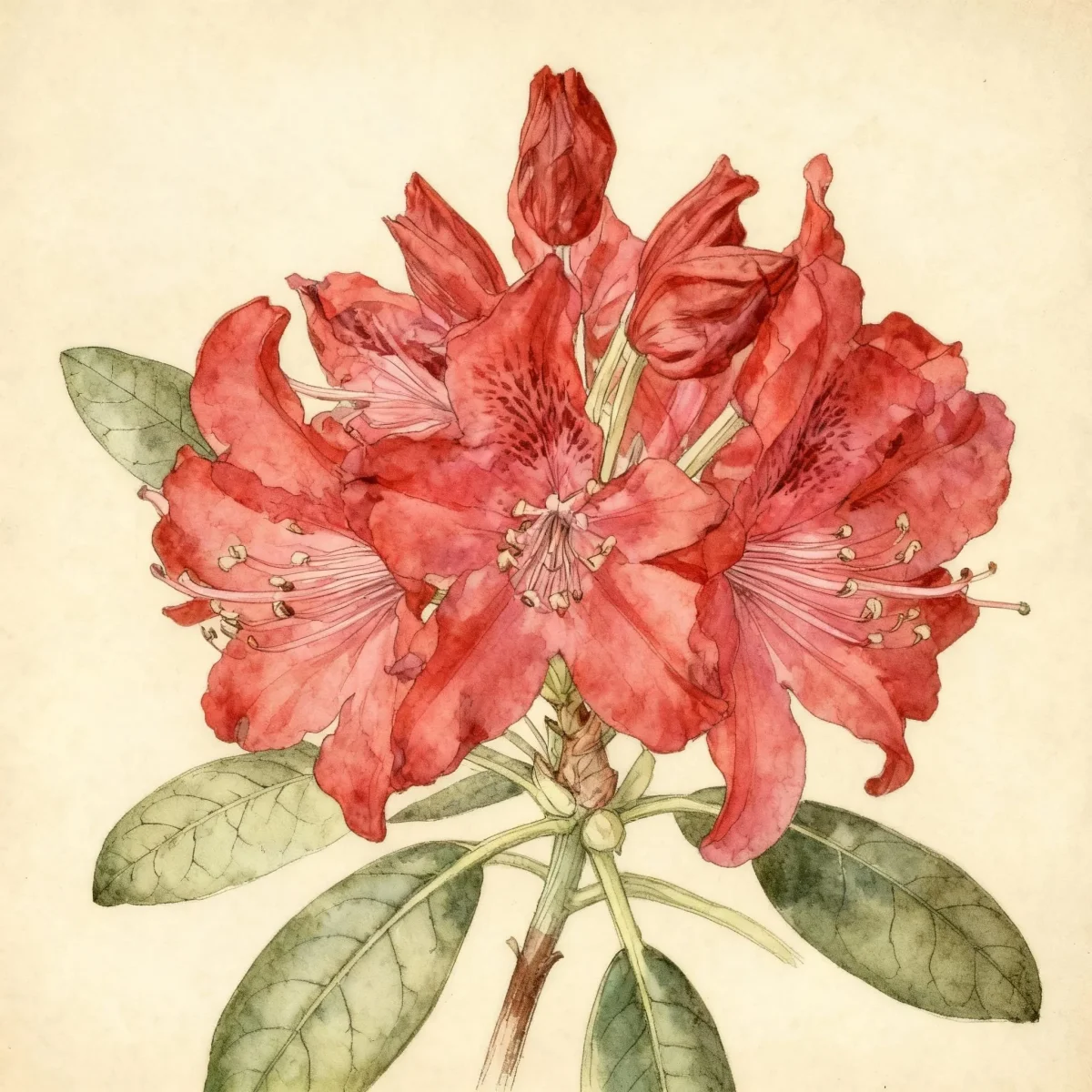
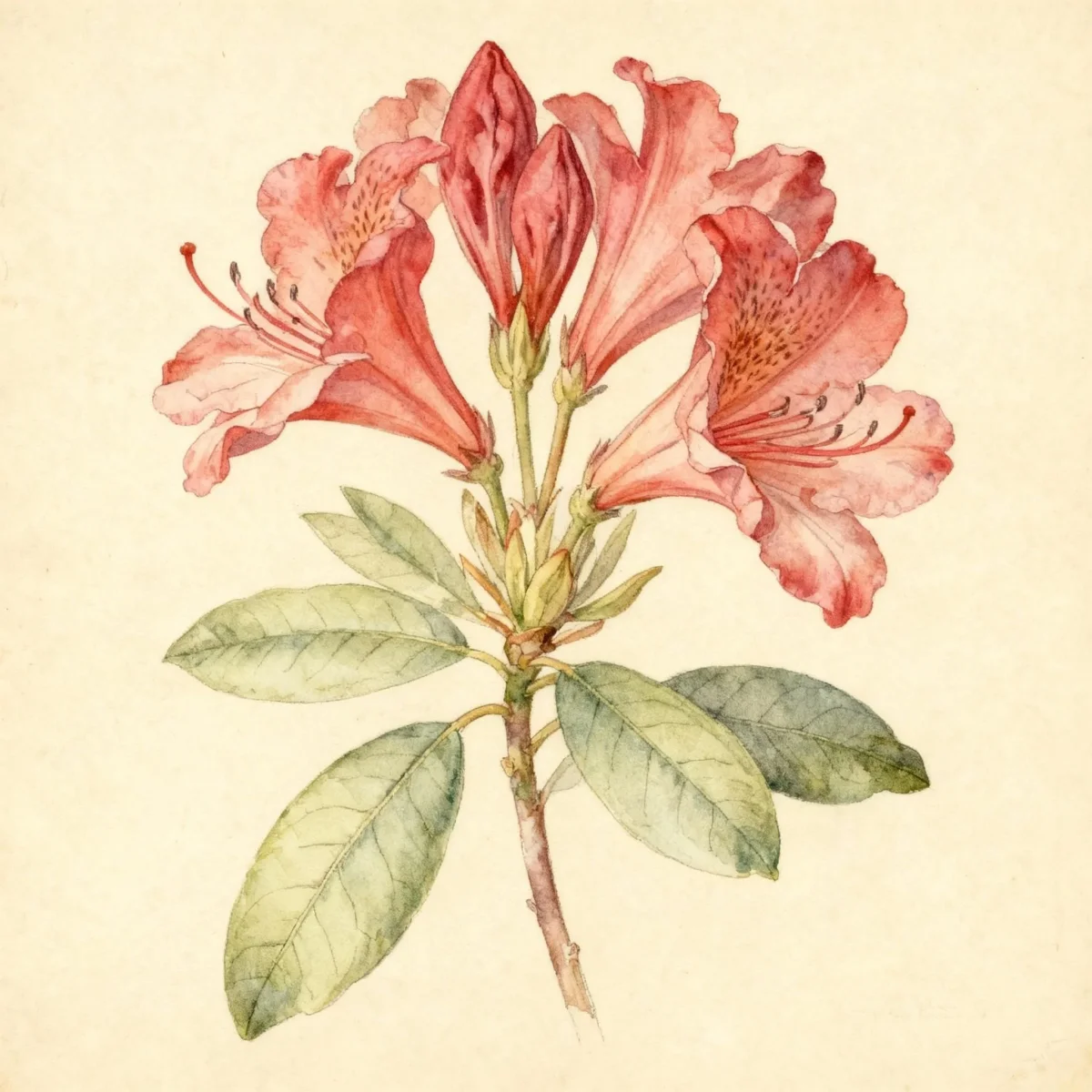
Rhododendron (Rhododendron 'Ingrid Mehlquist')
The Rhododendron 'Ingrid Mehlquist' is a broadleaf evergreen celebrated for its showy pink-to-white spring blooms and medium maintenance needs.
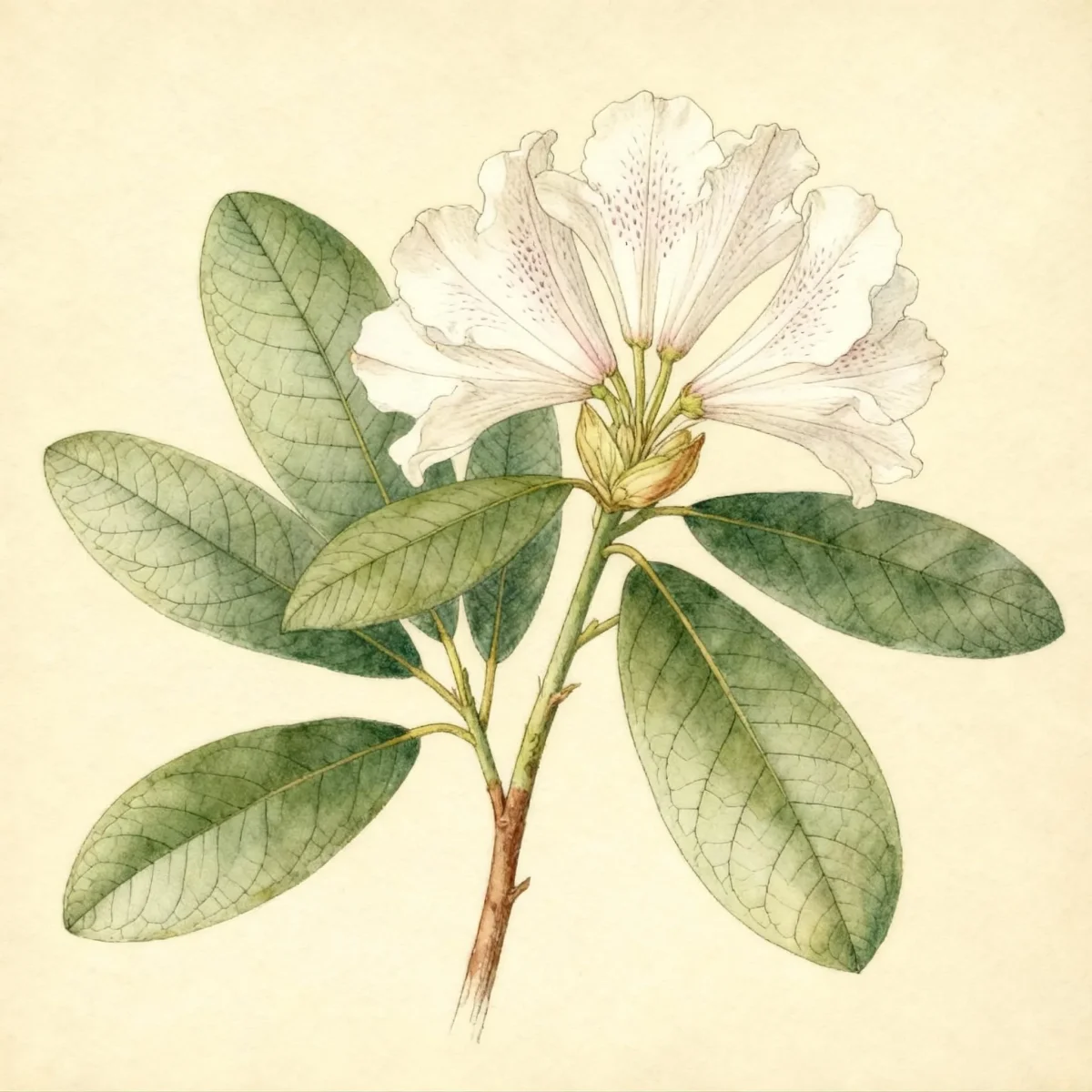

Bloom Boldly, No Matter the Season - Sweatshirt
Cozy organic cotton sweatshirt featuring our exclusive Purple Coneflower design. Perfect for gardeners who bloom year-round.
Inspired by the beautiful Rhododendron
Limited first batch (50) — join the waitlist for early access
Waitlist closes Feb 15, 2026.
Complete Plant Information
Field Guide Continues
Ready for care notes, companion picks, and planting tips?
The map is just the start. The full guide below covers growth habits, seasonal performance, and landscape uses.
Overview
Rhododendron ‘Ingrid Mehlquist’ offers gardeners a compact, dense evergreen specimen valued for its dependable spring floral display. This particular Rhododendron variety produces distinctive flowers that open from light pink buds into pale pink blooms, eventually maturing to pure white with attractive markings, making it a standout in mixed plantings. As a broadleaf evergreen, the structure and glossy foliage of Rhododendron ‘Ingrid Mehlquist’ provide year-round interest in the landscape.
Originating from extensive hybridization within the Rhododendron genus, this cultivar maintains the classic requirements of its relatives concerning soil acidity and drainage, demanding careful placement for optimal health. It thrives in locations offering protection from the harshest afternoon sun. Gardeners appreciate the refined size of Rhododendron ‘Ingrid Mehlquist’, which matures around 2 to 3 feet tall and 3 to 4 feet wide, making it versatile for borders and hedging.
The appeal of this Rhododendron lies in its manageable size and its vibrant color transition during bloom time in May. Its dense habit makes it an excellent structural plant, offering formal structure or softening foundation lines. Successful cultivation ensures a consistently attractive addition to shaded or partially sunny woodland garden settings.
Fast Facts
- Plant Family: Ericaceae
- Plant Type: Broadleaf evergreen
- Hardiness Zones: USDA Zones 5-8
- Size at Maturity:
- Height: 2-3 ft
- Spread: 3-4 ft
- Bloom Time: May
- Bloom Description: Pink fading to white
- Sun Exposure: Full sun to part shade
- Water Needs: Medium
- Maintenance Level: Medium
How to Grow
Planting Rhododendron ‘Ingrid Mehlquist’ is best done in the spring or fall when temperatures are milder, ensuring the plant establishes roots before summer stress. Location is critical; these plants thrive in acidic, organically rich, humusy soils that retain consistent moisture but drain exceptionally well. Raised beds are strongly recommended in heavy clay soils to prevent root rot, as Rhododendrons dislike “wet feet.” Aim for an area receiving morning sun or high, dappled shade, avoiding exposure to strong winds that can damage foliage.
Maintenance focuses heavily on consistent soil conditions. Water deeply but infrequently, ensuring the shallow, fibrous root system never dries out; mulch heavily with pine needles or wood chips to stabilize soil temperatures and retain moisture. Keep the cultivation area clear around the base since the roots are shallow; avoid disturbing the critical root zone. Soil pH should ideally be maintained between 5.0 and 5.5; use sulfur or iron sulfate to lower pH if necessary.
Pruning for Rhododendron ‘Ingrid Mehlquist’ primarily involves deadheading. Clip off spent flower clusters promptly after blooming concludes, as this encourages better flowering the following season. Be mindful that Rhododendrons are sensitive to juglone; never plant them near walnut family trees whose roots emit toxic compounds.
Landscape Uses
Rhododendron ‘Ingrid Mehlquist’ lends itself beautifully to moderated landscape designs where fine texture and evergreen presence are desired. Its suitability as a hedge is excellent given its compact, spreading habit, providing a low, dense screen along property lines or defining garden beds. Furthermore, it excels when used as a specimen plant or in group plantings where its spring color can create focal points.
These shrubs integrate seamlessly into woodland gardens or shade gardens, pairing well with acid-loving companions like ferns, azaleas, and camellias. For shrub borders, place them towards the front or middle, ensuring taller backdrop plants do not entirely block light during the growing season. Their dense structure also makes them effective choices for informal foundation plantings near homes where they can soften hard architectural lines.
When designing with Rhododendron ‘Ingrid Mehlquist’, consider utilizing contrasting foliage textures, such as fine-leaved conifers or hostas, to highlight the glossy dark green leaves of the Rhododendron itself. Proper spacing, allowing this variety to reach its full 3 to 4-foot spread, is essential for air circulation and mature visual appeal.
Standout Features
Flower Qualities
- Showy
Noteworthy Characteristics
The genus Rhododendron encompasses hundreds of species, celebrated for their spectacular spring flowers and evergreen structure. Rhododendron ‘Ingrid Mehlquist’ is a specific hybrid developed from Rhododendron ‘Besse Howells’ and Rhododendron x degronianum ssp. Yakushimanum. This cultivar features glossy, dark green leaves with pale tan hairs underneath, and it matures to a dense, spreading mound ideal for smaller spaces. Its flowers start as pale pink buds, opening to trumpet shapes that mature to pure white with a distinct burgundy blotch.
Tolerances
- Rabbit
Potential Problems
Rhododendrons and azaleas are hosts to various insect and disease issues if cultural needs are neglected. Common insect pests include lacebugs, scale, and aphids, while fungal issues like root rot and canker are primary concerns for diseases. Chlorosis, or yellowing leaves, frequently signals an iron deficiency caused by soil pH being too high, which prevents nutrient uptake.
Prevention is centered on proper siting and soil management. By ensuring the soil is acidic, well-drained, and organically rich, you significantly reduce the risk of root rot and chlorosis in your Rhododendron ‘Ingrid Mehlquist’. Protect plants from high winds and avoid planting near walnut trees to prevent specific chemical stress.
If pests appear, employ targeted treatments; for minor infestations, strong jets of water can dislodge aphids. Maintaining a thick layer of mulch helps stabilize moisture and soil temperatures, promoting overall plant vigor which naturally increases resistance to many common problems.
Frequently Asked Questions
What hardiness zones is Rhododendron ‘Ingrid Mehlquist’ suitable for?
Rhododendron ‘Ingrid Mehlquist’ performs reliably in USDA Hardiness Zones 5 through 8.
How large does Rhododendron ‘Ingrid Mehlquist’ grow?
This compact Rhododendron typically reaches a mature height between 2 and 3 feet and spreads 3 to 4 feet wide.
When does Rhododendron ‘Ingrid Mehlquist’ bloom?
The flowering period for this cultivar is generally in May, producing flowers that start pink and fade to white.
What sun exposure does Rhododendron need?
Rhododendron ‘Ingrid Mehlquist’ prefers full sun to part shade; morning sun with afternoon shade is often ideal to prevent scorching.
Conclusion
Rhododendron ‘Ingrid Mehlquist’ is a highly valuable broadleaf evergreen, providing refined structure and an elegant, transforming floral display early in the season. By adhering to its need for acidic, well-drained soil and partial shade, gardeners can ensure robust health for this beautiful specimen. Check your USDA hardiness zone compatibility before planting your Rhododendron ‘Ingrid Mehlquist’ this spring or fall.
Companion Planting
When selecting partners for Rhododendron ‘Ingrid Mehlquist’, prioritize plants that share its love for acidic, well-drained, humusy soil. Shade-tolerant perennials that do not compete aggressively for surface moisture make excellent ground covers. Consider planting low-growing Hellebores, which bloom earlier in the spring, or delicate woodland ferns like Japanese Painted Ferns to contrast the larger, glossy leaves of the Rhododendron.
Evergreen companions, such as dwarf conifers or Japanese hollies, help frame the Rhododendron’s softer springtime appearance. When planting near deciduous trees, ensure the Rhododendron receives enough light, as the tree canopy can often become too dense overhead once summer foliage develops. The goal with companion planting is creating a layered, woodland aesthetic that respects the shallow root systems of all involved parties.
Seasonal Care Calendar
Spring preparation for your Rhododendron is essential; once blooming concludes in May, perform any necessary light pruning by clipping off spent flower trusses immediately to direct energy toward root and leaf growth. Apply a fresh layer of organic mulch if the existing layer has decomposed, remembering never to pile it high against the stem flare.
Summer care requires diligent monitoring of soil moisture, especially during dry spells, as Rhododendrons struggle severely if their roots dry out. If leaves show yellowing, test your soil pH; if the level is high, apply acidifying agents like iron sulfate to correct potential iron chlorosis. Avoid cultivation near the base to protect the sensitive, shallow root system throughout the growing months.
Design Ideas for Evergreen Structure
The compact and spreading form of Rhododendron ‘Ingrid Mehlquist’ makes it a reliable choice for formal and informal garden edges. Use it to terminate the ends of mixed shrub borders, where its 3 to 4-foot width provides a neat visual stop that is shorter than many larger screening rhododendrons. Its evergreen nature ensures that foundation plantings remain attractive even under winter snow cover.
For contemporary designs, group three or five of these plants together near an entryway or under high-canopy trees to create a tapestry effect that flows with changing seasonal light. Because it tolerates a fair amount of sun in cool northern summers, Rhododendron ‘Ingrid Mehlquist’ can sometimes bridge the gap between a deeply shaded woodland edge and a brighter border, adding essential year-round structure.
Acid Soil Management
Successful cultivation of any Rhododendron hinges on maintaining optimal soil acidity, ideally between 5.0 and 5.5 pH. Gardeners must test their soil periodically, particularly in areas with alkaline native soil, such as heavy clay regions. To lower the pH incrementally, apply elemental sulfur or iron sulfate according to product directions several months before planting or during the growing season.
Conversely, if the soil pH is too low—a less common problem for acid-lovers—then limestone or lime can be sparingly incorporated. Remember that these amendments adjust soil chemistry slowly, so patience is key when managing the nutrient availability for your Rhododendron ‘Ingrid Mehlquist’. Always incorporate amendments into the soil, not just the mulch layer.