Texas redbud(Cercis canadensis var. texensis 'Oklahoma')
Grow Oklahoma Texas redbud (Cercis canadensis var. texensis 'Oklahoma'): glossy leathery leaves, intense wine-purple blooms, extreme heat and drought tolerance.
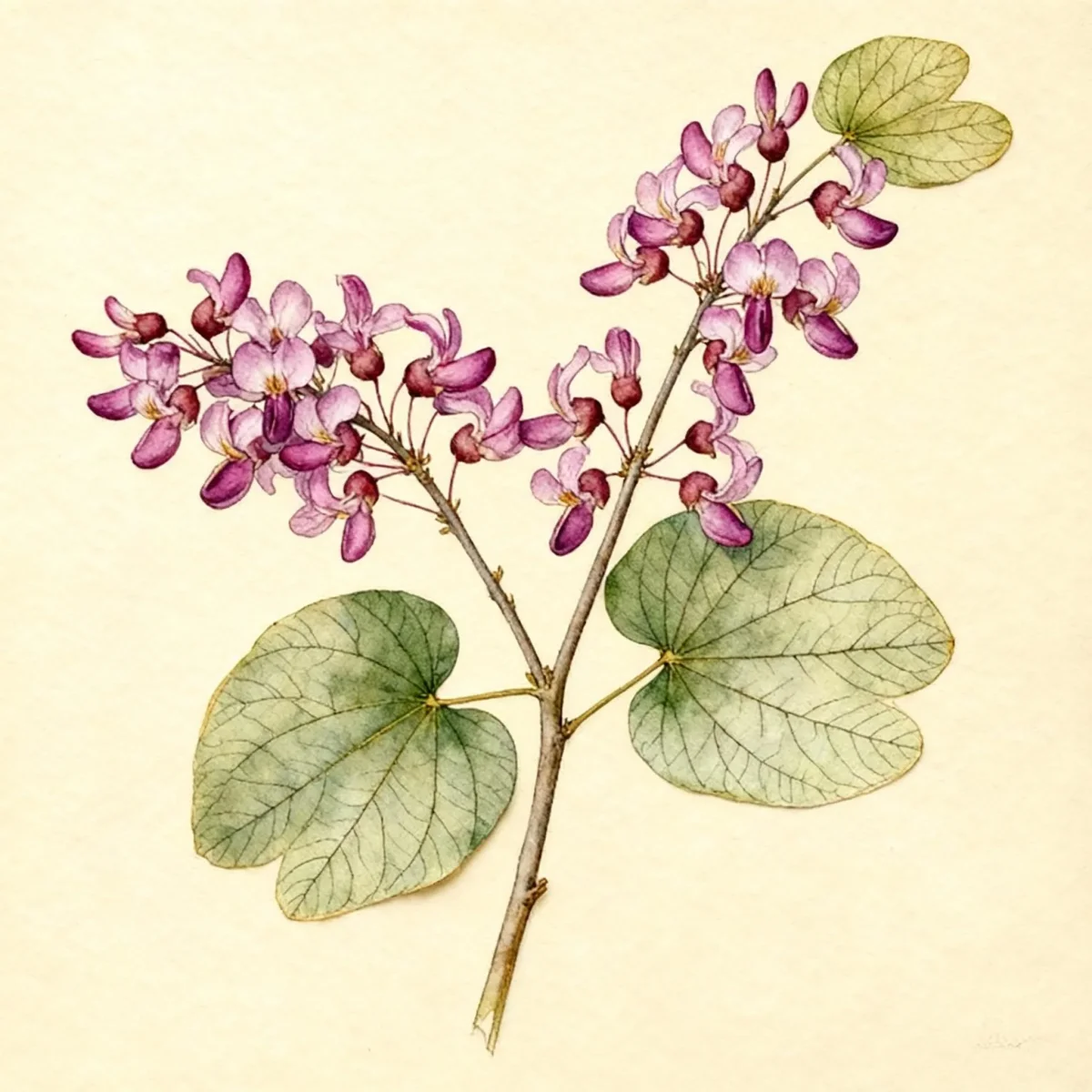
Complete Plant Information
- Hardiness zones
- USDA 6–9
- Plant type
- Tree
- Plant family
- Fabaceae
- Sun exposure
- Full sun to part shade
- Water needs
- Low to medium
- Maintenance
- Low
- Height
- 15–20 ft (457–610 cm)
- Spread
- 15–20 ft (457–610 cm)
- Bloom time
- March to April
- Flower color
- Clusters of pea-like, saturated deep magenta to wine-purple flowers along bare branches and trunk
- Flower qualities
- Showy, Early spring bloomer
- Fruit qualities
- Not recorded
- Tolerances
- Deer, Black Walnut, Drought, Alkaline Soil, Heat
- Garden uses
- Focal specimen lawn tree, courtyard centerpiece, street tree, xeriscape accent
- Native range
- South-central United States (Oklahoma, Texas; discovered in the Arbuckle Mountains, 1964)
Field Guide Continues
Ready for care notes, companion picks, and planting tips?
The map is just the start. The full guide below covers growth habits, seasonal performance, and landscape uses.
Overview
Oklahoma Texas redbud (Cercis canadensis var. texensis ‘Oklahoma’) is an elite native flowering small tree hardy across USDA Zones 6 through 9. Discovered in 1964 growing on the arid limestone slopes of the Arbuckle Mountains in Oklahoma, it is celebrated as the premier redbud for hot, sun-baked southern and western climates. Maturing into a dense, rounded vase-shaped canopy 15 to 20 feet tall and wide, it combines the richest, deepest wine-purple spring blossoms in the genus with thick, leathery heart-shaped leaves boasting a brilliant, mirror-like patent-leather gloss.
Unlike common eastern redbuds whose leaves are thin and prone to summer scorch, ‘Oklahoma’ features waxy, drought-resistant foliage that reflects intense heat and sun.
How to Grow
- Sunlight: Full sun (at least 6 hours direct daily light) produces the highest flower count and glossiest leaf cuticle.
- Limestone & Alkaline Soil Adaptation: Naturally adapted to caliche and limestone soils, ‘Oklahoma’ thrives in high-pH alkaline soils (pH 7.0 to 8.2) that cause severe iron chlorosis in acid-loving ornamentals.
- Sharp Drainage is Essential: Intolerant of poorly drained, waterlogged, or soggy soils. While young trees require regular moisture to establish roots, mature specimens exhibit exceptional drought tolerance.
- Taproot Protection: Like all redbuds, it develops a deep, searching taproot. Plant young container-grown stock and avoid attempting to transplant established trees.
- Pruning Discipline: Prune lightly immediately after spring flowering to remove crossing or dead branches. Avoid heavy winter shearing.
Landscape Uses
- Flowering Specimen Lawn Tree: Bursts with saturated wine-magenta blooms along bare branches before leaves emerge in early spring.
- Courtyard & Patio Anchor: Thick glossy leaves provide lush green shade without outgrowing residential property boundaries.
- Xeriscape & Water-Wise Gardens: Outstanding native flowering tree for drought-prone regions in Texas, Oklahoma, and the Southwest.
Potential Problems
- Canker in Drought-Stressed Trees: Can be susceptible to Botryosphaeria canker if severely stressed; maintain adequate mulch and water during establishment.
- Transplant Shock: Deep taproot makes moving established trees very difficult; site carefully at planting.
- Poor Drainage: Saturated, standing water causes fatal root rot.
Frequently Asked Questions
How is Oklahoma redbud different from regular eastern redbud?
‘Oklahoma’ features much thicker, leathery leaves with an intense mirror-like shine, deeper wine-purple flowers, and significantly higher heat and drought tolerance.
Can Oklahoma redbud grow in alkaline limestone soil?
Yes. It is native to limestone mountain regions and thrives in high-pH soils where other redbuds struggle.
Does Oklahoma redbud get fall color?
Yes. In late October, the glossy green leaves transition to a bright, clear canary-yellow before dropping.
Companion Plants
Pair Oklahoma Texas redbud with native sun-loving shrubs and perennials adapted to dry, alkaline soils:
- Flowering Native Shrubs: Plant near Texas sage (Leucophyllum frutescens), Mexican buckeye, or agarita.
- Sun-Loving Perennials: Combine with blackfoot daisy (Melampodium leucanthum), autumn sage (Salvia greggii), and purple coneflowers.
- Ornamental Grasses: Interplant with Mexican feather grass (Nassella tenuissima) or little bluestem (Schizachyrium scoparium).
Sources & Lineage
- Missouri Botanical Garden PlantFinder: Record taxon 295790 (Cercis canadensis var. texensis ‘Oklahoma’) — Arbuckle Mountains origin, morphology, and culture.
- Kew Plants of the World Online (POWO): Cercis canadensis L. (POWO: 316243-2) — species taxonomy, family (Fabaceae), and botanical variety.
- Oklahoma State University Extension: Oklahoma Proven: ‘Oklahoma’ Redbud — cultivar performance trials, heat resilience, and landscape management.
Recommended Companion Plants

Eastern redbud
Cercis canadensis 'Forest Pansy'
- USDA zones
- 5–9
- Light
- Full sun to part shade
- Water
- Medium

Chinese redbud
Cercis chinensis 'Avondale'
- USDA zones
- 6–9
- Light
- Full sun to part shade
- Water
- Medium

Bean tree
Laburnum × watereri 'Vossii'
- USDA zones
- 5–7
- Light
- Full sun to part shade
- Water
- Medium

Eastern redbud
Cercis canadensis 'Pauline Lily'
- USDA zones
- 5–9
- Light
- Full sun to part shade
- Water
- Medium
Eastern redbud
Cercis canadensis 'Covey'
- USDA zones
- 5–9
- Light
- Full sun to part shade
- Water
- Medium

Bean tree
Laburnum × watereri
- USDA zones
- 5–7
- Light
- Full sun to part shade
- Water
- Medium
Keep Learning
Test what you know with a garden quiz
You have the plant facts and care notes. Continue with a related challenge, or browse the complete quiz library.

Can You Identify These Common Garden Plants? Test Your Plant Knowledge
Think you know your roses from your peonies? Test your plant identification skills with our comprehensive garden plant quiz featuring 10 challenging questions.
Start quiz
USDA Garden Zone Map Quiz
Use this USDA garden zone map quiz to check whether you can read hardiness zones and choose plants with more confidence.
Start quizBrowse the full quizzes section
Explore plant identification, zone strategy, and seasonal gardening challenges.
View all quizzes