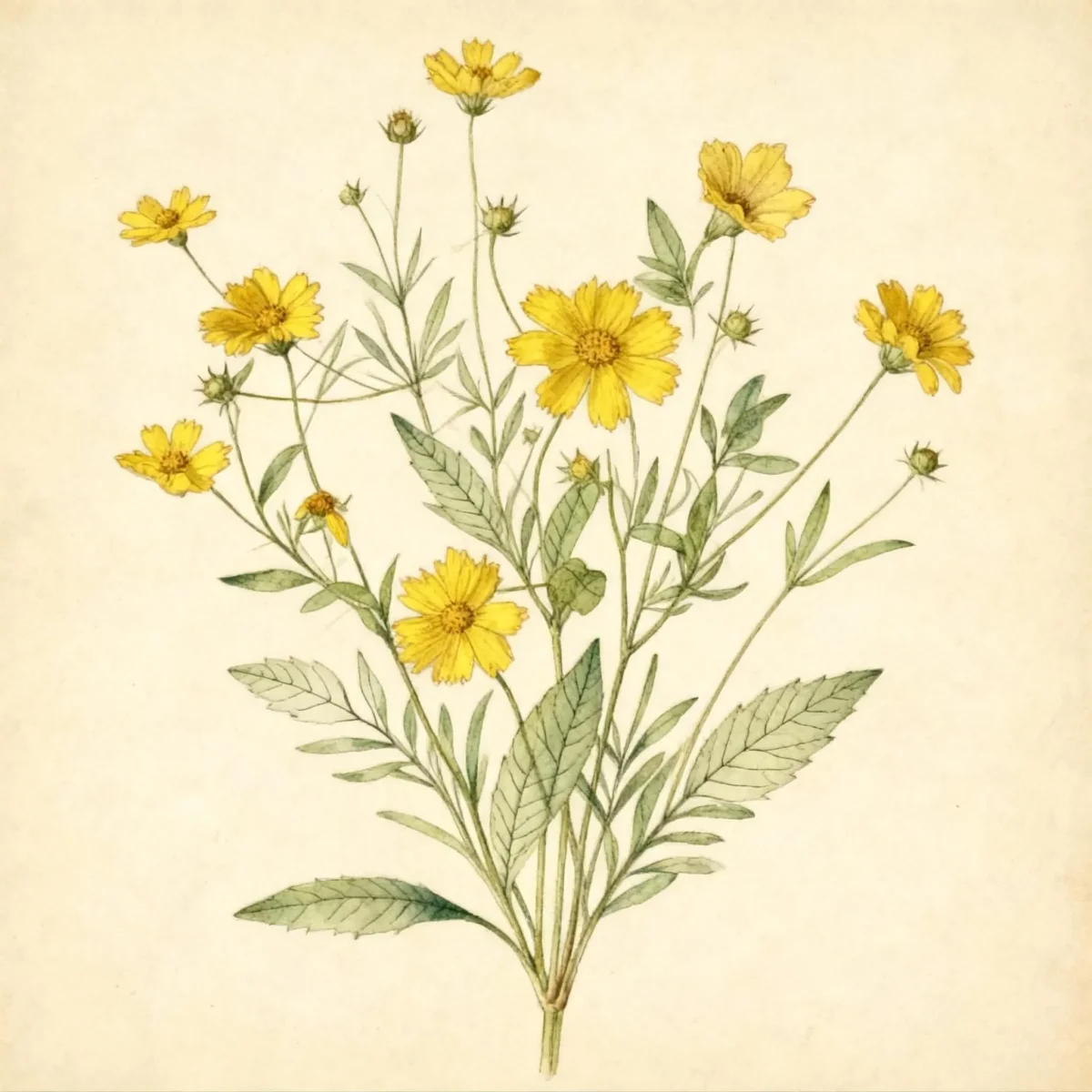
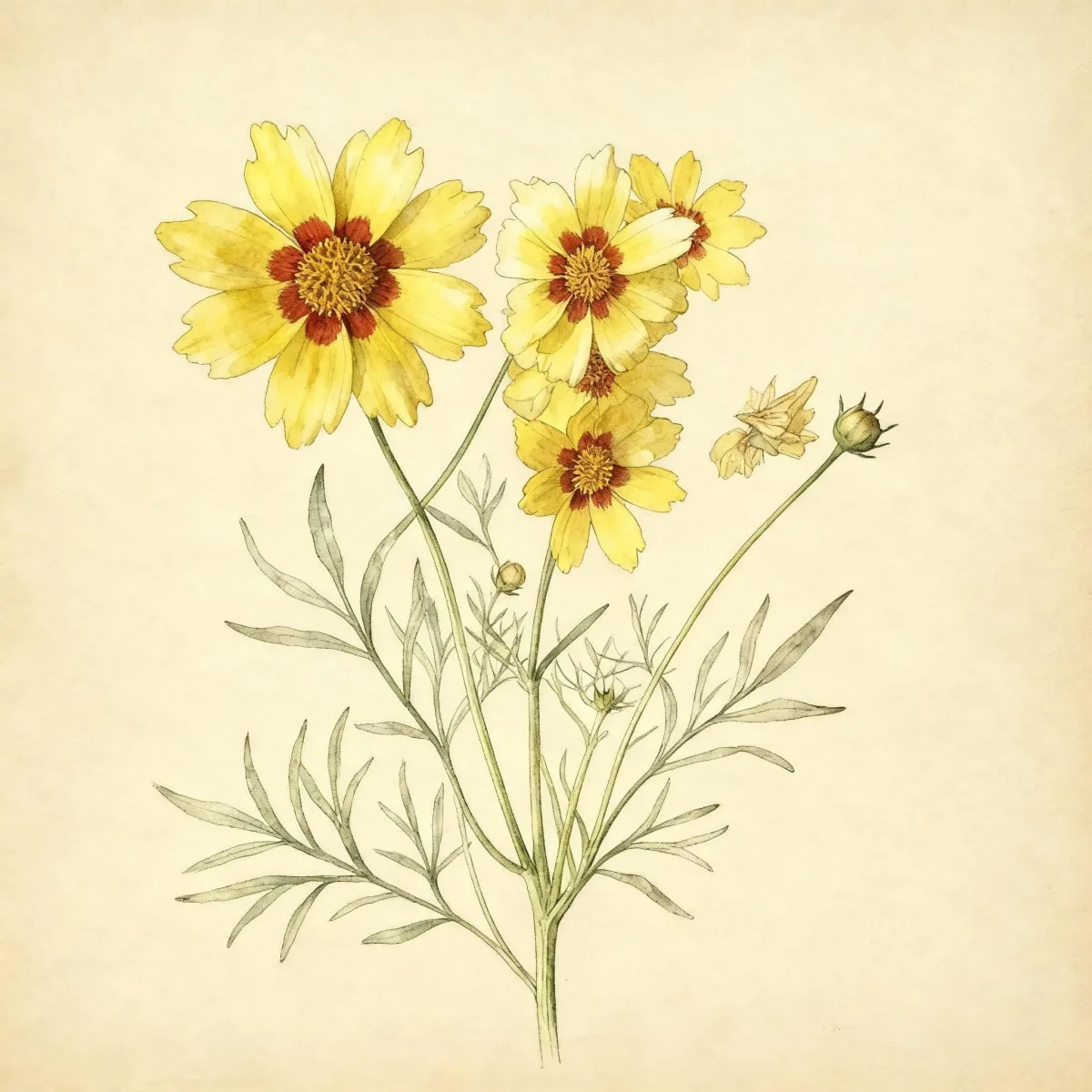
Tickseed (Coreopsis 'Red Satin' PERMATHREAD)
Coreopsis 'Red Satin' PERMATHREAD Tickseed offers stunning wine-red blooms. A low-maintenance perennial, ideal for sunny, dry borders.

Bloom Boldly, No Matter the Season - Sweatshirt
Cozy organic cotton sweatshirt featuring our exclusive Purple Coneflower design. Perfect for gardeners who bloom year-round.
Inspired by the beautiful Tickseed
Limited first batch (50) — join the waitlist for early access
Waitlist closes Feb 15, 2026.
Complete Plant Information
Field Guide Continues
Ready for care notes, companion picks, and planting tips?
The map is just the start. The full guide below covers growth habits, seasonal performance, and landscape uses.
Overview
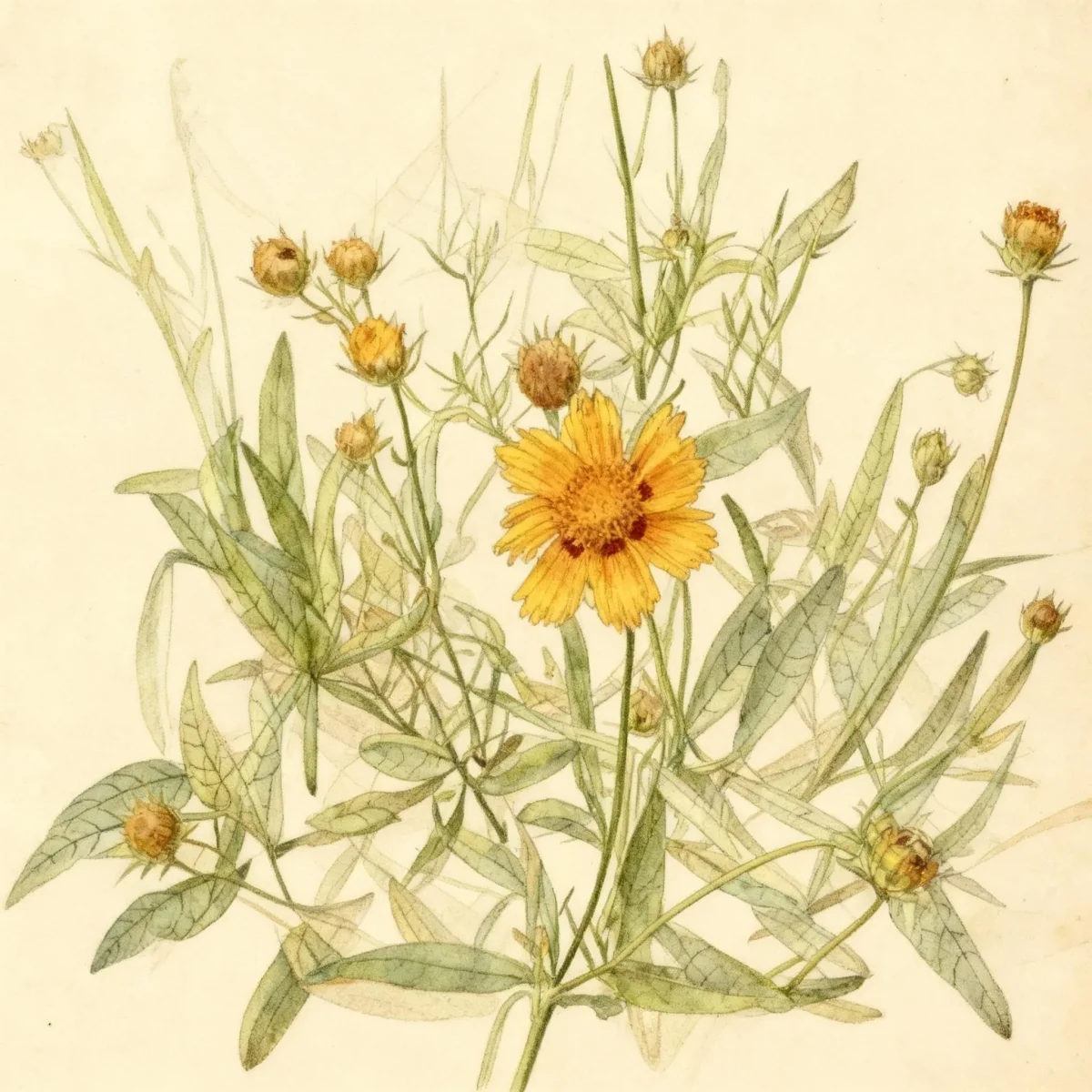
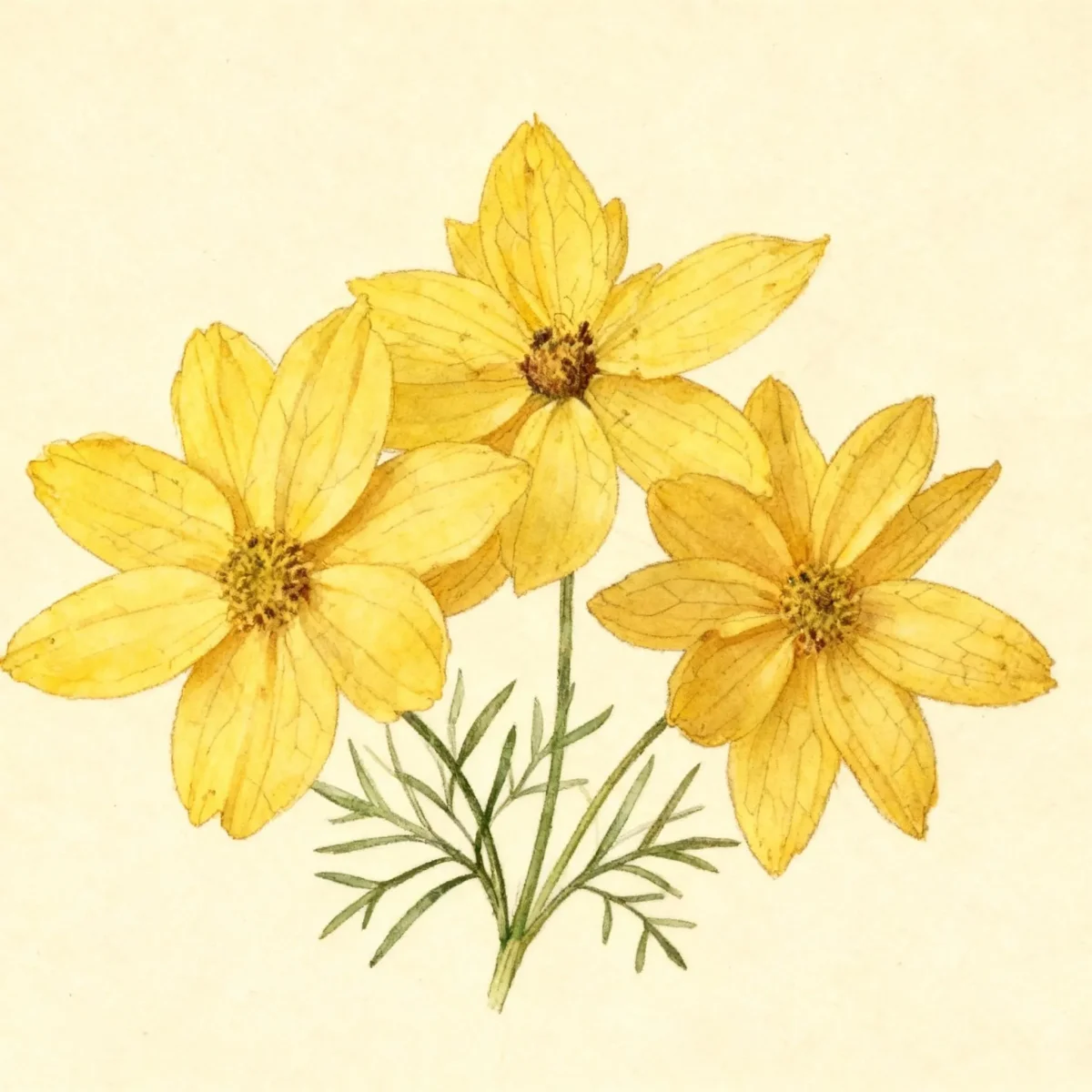
Coreopsis ‘Red Satin’ PERMATHREAD, commonly known as Tickseed, is a standout hybrid prized for its richly colored, long-lasting flowers. This cultivar boasts 1 ½ inch wide, ruby to wine red ray flowers that contrast beautifully with the central gold disc flowers, providing vibrant color from early summer well into fall if managed correctly. As part of the Permathread™ series, this specific selection offers improved hardiness over many other red-flowering Coreopsis varieties.
Cultivating Coreopsis ‘Red Satin’ PERMATHREAD is simplified by its robust constitution and low maintenance requirements. It thrives in conditions many other perennials find challenging, including heat, humidity, and periods of drought, provided it has the essential full sun exposure. Its compact growth habit, reaching about 1 to 1.5 feet tall, makes it an excellent choice for defining landscape lines without overpowering neighboring plants.
This Tickseed variety offers significant practical benefits, being sterile, meaning it will not aggressively self-seed, keeping garden beds tidy. Gardeners value the Coreopsis genus for its reliability, and the striking foliage paired with the wine-red blooms ensures this cultivar remains a focal point. For dependable summer color in sunny, drier spots, Coreopsis ‘Red Satin’ PERMATHREAD is an exceptional choice.
Fast Facts
- Plant Family: Asteraceae
- Plant Type: Herbaceous perennial
- Hardiness Zones: USDA Zones 5-9
- Size at Maturity:
- Height: 1-1.5 ft
- Spread: 1.5-2 ft
- Bloom Time: June to August
- Bloom Description: Wine red ray flowers with gold center
- Sun Exposure: Full sun
- Water Needs: Dry to medium
- Maintenance Level: Low
How to Grow
For optimal performance, plant Coreopsis ‘Red Satin’ PERMATHREAD in areas receiving full sun throughout the day. This Tickseed variety prefers well-drained soils that are dry to medium in moisture content; it strongly dislikes sitting in soggy conditions, which can lead to crown rot. Spring is the ideal time to establish new plants, allowing them sufficient time to root before the summer heat sets in.
Maintenance for this perennial is generally low once established. Watering should be consistent until the plant is settled, but mature plants exhibit good drought tolerance. Fertilizing is rarely necessary, especially if the native soil provides decent structure. A key maintenance tip is shearing the plants back in mid to late summer, especially after the initial major flush of blooms has faded.
Shearing promotes fresh growth and encourages a welcome second round of flowering later in the season. Be aware that while Coreopsis ‘Red Satin’ PERMATHREAD is robust, it may spread slowly by rhizomes. If clumps become too large or look spent, especially in formal borders, divide them in the spring, typically every 2-3 years to maintain vigor.
Landscape Uses
The tidy, compact habit of Coreopsis ‘Red Satin’ PERMATHREAD makes it perfectly suited for defined edges and structured plantings. It serves beautifully as a border front, softening the edge between a pathway and a lawn, or lining sidewalks where its low profile won’t obstruct views. It is also effective in mass plantings for vibrant, low-maintenance sweeps of color.
Beyond formal settings, this Tickseed integrates seamlessly into cottage gardens or naturalized areas, especially those featuring poor or dry soils where many fancier plants struggle. Consider planting it alongside silvery-leaved companions that appreciate similar dry soil conditions, or pair it with contrasting dark purple or blue flowering companions to make its wine-red tones pop. It also performs admirably in patio containers, lending persistent color that doesn’t require constant attention.
Standout Features
Flower Qualities
- Showy
- Good Cut
Noteworthy Characteristics
Coreopsis is a genus of between 75-80 species from North America, Mexico, Central and South America.The genus name comes from the Greek words koris meaning “bug” and opsis meaning “like” in reference to the shape of the seed which resembles a bug or tick.‘Red Satin’ was bred by hybridizer Darrell Probst and is the first member of the Permathread™ series. It has 1 ½ in. Wide, ruby to wine red ray flowers with gold disc flowers that will keep their color and rebloom all summer if cut back. ‘Red Satin’ grows 1 to 1.5 ft. Tall and 1.5 to 2 ft. Wide and has dark green, thread-leaf foliage. It is hardier than other red flowered Coreopsis and since its flowers are sterile, will not self-seed. US plant patent number PP25736 applies to this cultivar.
Tolerances
- Deer
- Drought
- Shallow-Rocky Soil
Potential Problems
The primary risk associated with growing this Tickseed in heavy clay or poorly drained sites is crown rot, so ensuring sharp drainage is paramount. While generally pest-free, watch for uncommon fungal issues like powdery mildew or botrytis, particularly in areas with poor air circulation or prolonged humidity. Stems may occasionally sprawl, especially following heavy summer rain, which emphasizes the value of shearing the plant in midsummer to maintain a tight silhouette. Deer typically avoid Coreopsis ‘Red Satin’ PERMATHREAD.
Frequently Asked Questions
What hardiness zones is Tickseed suitable for?
Coreopsis ‘Red Satin’ PERMATHREAD Tickseed is reliably hardy across USDA Zones 5 through 9.
How large does Coreopsis ‘Red Satin’ PERMATHREAD grow?
This variety typically achieves a height between 1 and 1.5 feet, spreading out to 1.5 to 2 feet wide at maturity, requiring modest spacing.
What sun exposure does Tickseed need?
This perennial demands full sun exposure to produce its best flowering display and maintain a compact habit.
When does Coreopsis ‘Red Satin’ PERMATHREAD bloom?
You can expect blooms to appear continually from June through August, featuring those desirable wine red ray flowers with a gold center.
Conclusion
Coreopsis ‘Red Satin’ PERMATHREAD offers gardeners an exceptionally low-maintenance powerhouse, delivering reliable, richly colored blooms perfect for sunny, dry locations. The sterile nature of this outstanding development in the Tickseed genus minimizes necessary cleanup while maximizing summer appeal. Before planting, confirm your site offers full sun and well-drained conditions to ensure this robust perennial thrives season after season.
Companion Planting
Companion planting helps maximize aesthetics and manage microclimates. Given the dry to medium water needs and full sun requirements of Coreopsis ‘Red Satin’ PERMATHREAD, pair it with other drought-tolerant sun lovers such as Sedum (Stonecrop), Russian Sage (Perovskia), or certain cultivars of Salvia. Matching water needs ensures that none of your border companions are overwatered while trying to keep the Tickseed happy. These pairings create vibrant, low-water perennial drifts that hold up well through hot summers.
Propagation Tips
While Coreopsis ‘Red Satin’ PERMATHREAD is sterile and will not propagate easily through seed, it can be managed through vegetative division. Division is the best method for increasing stock or rejuvenating older clumps. Wait until early spring, just as new growth begins to emerge, to carefully dig up the clump. Use a sharp, sterile spade to divide the root mass into sections, ensuring each new piece has a significant portion of healthy roots and crown tissue. Replant these divisions immediately into prepared, well-draining soil.