Coleus (Plectranthus scutellarioides)
Stunning foliage plant Coleus (Plectranthus scutellarioides) offers vast leaf color in shade gardens. Low maintenance herb perennial.

Bloom Boldly, No Matter the Season - Sweatshirt
Cozy organic cotton sweatshirt featuring our exclusive Purple Coneflower design. Perfect for gardeners who bloom year-round.
Inspired by the beautiful Coleus
Limited first batch (50) — join the waitlist for early access
Waitlist closes Feb 15, 2026.
Complete Plant Information
Field Guide Continues
Ready for care notes, companion picks, and planting tips?
The map is just the start. The full guide below covers growth habits, seasonal performance, and landscape uses.
Overview
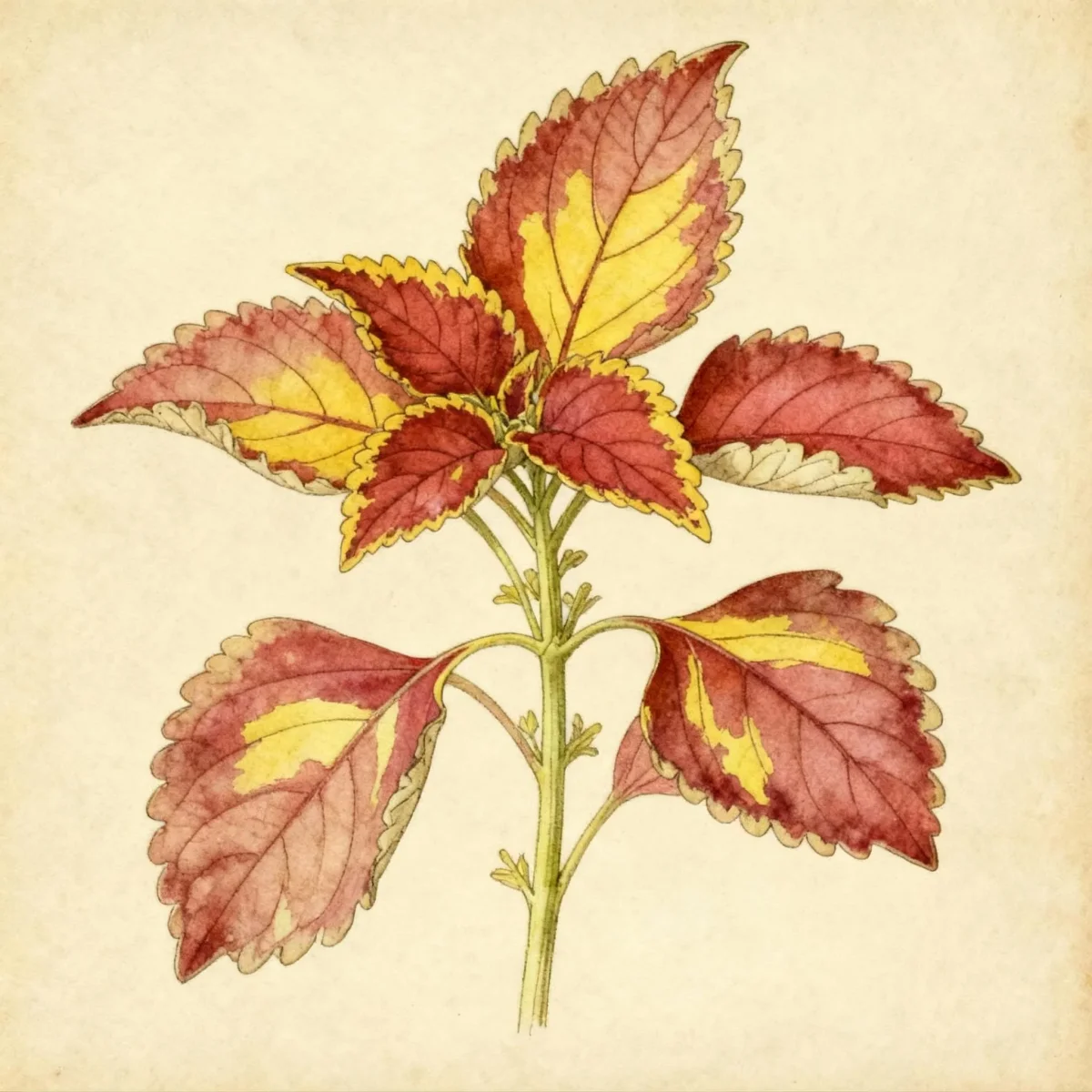
Plectranthus scutellarioides, universally known as Coleus, is cherished globally for its spectacular, highly variable foliage rather than its flowers. This tropical evergreen tender perennial has been a staple in gardens since the Victorian era, thanks to extensive hybridization creating nearly every color imaginable in its leaves. Gardeners rely on Coleus for dependable, vibrant color, particularly in shady locations where few other plants thrive.
As an herbaceous perennial, this species is typically grown as a garden annual outside of tropical environments. It prefers moist, organically rich, loose soils and thrives best in part shade conditions. While famed for foliage, proper culture involves pinching stems to maintain the bushy, compact shape that best showcases the colorful leaves of Plectranthus scutellarioides.
The sheer variety available in modern Coleus strains makes this plant invaluable for creating dynamic color contrasts in beds, borders, and containers. Whether grown indoors during winter or refreshed annually, the low maintenance associated with Plectranthus scutellarioides ensures a season of bold, textural beauty.
Fast Facts
- Plant Family: Lamiaceae
- Plant Type: Herbaceous perennial
- Native Range: Tropical and subtropical Asia to northern Australia
- Hardiness Zones: USDA Zones 10-11
- Size at Maturity:
- Height: 0.5-3 ft
- Spread: 0.5-3 ft
- Bloom Time: Flowers not showy
- Bloom Description: Blue to white
- Sun Exposure: Part shade to full shade
- Water Needs: Medium
- Maintenance Level: Low
How to Grow
Start seed cultivars indoors approximately 8 to 12 weeks before your area’s average last frost date if you wish to grow Coleus from seed. For immediate impact, inexpensive starter plants of Plectranthus scutellarioides are widely available at nurseries during the spring planting season for annual displays in beds and containers. Plant these starts in locations receiving part shade, ensuring soil remains moist and rich in organic matter.
Maintaining optimal moisture is critical; soils must never be allowed to dry out, especially for container specimens. Pruning is an important cultural practice for Coleus: remove developing flower spikes as soon as they appear, as they detract from the foliage display. Furthermore, regularly pinch the tips of plant stems to encourage a dense, bushy habit rather than a leggy specimen.
In mild climates (Zones 10-11), Plectranthus scutellarioides can be treated as a perennial, overwintering outdoors. For gardeners in colder regions, containers can be brought inside before the first frost, or favorite plants can be carefully dug up and potted for use as houseplants. Cuttings root exceptionally easily in water or plain potting soil for simple propagation and overwintering indoors.
Landscape Uses
Coleus excels as a focal point or mass planting in summer garden designs due to its year-round vibrant color. Grouping these plants creates bold blocks of color in garden beds and borders, offering superb contrast against green foliage or flowering companions. They are equally effective when used individually or mixed in pots, window boxes, and hanging baskets.
Because Plectranthus scutellarioides thrives in lower light conditions, it pairs wonderfully with shade-loving annuals like impatiens or begonias. For vertical interest, contrast the semi-mounded habit of Coleus with taller foliage plants that appreciate similar moist, rich soil conditions.
When preparing for cool weather, remember that these plants are excellent candidates for moving indoors. By potting up your bedding plants in the fall before frost, you transition your vibrant summer color displays into attractive tropical houseplants for winter enjoyment.
Standout Features
Flower Qualities
- Insignificant
Noteworthy Characteristics
Plectranthus scutellarioides, commonly known as coleus, is a tropical evergreen tender perennial that has been a popular foliage plant since at least Victorian times. It is native to Southeast Asia and Malaysia. It has been assiduously hybridized over the years into a very large number of vegetatively propagated and seed propagated strains with an almost infinite number of leaf color combinations including most colors of the spectrum except true blue. The striking, multi-colored leaves are generally ovate to oblong and toothed, frequently featuring irregular patterns of mixed colors.
Tolerances
- Heavy Shade
Potential Problems
Watch carefully for common pests such as aphids, spider mites, and whiteflies, with infestations often being more prevalent when plants are brought indoors for winter storage. Cultural issues are also common: plants positioned in excessive direct sunlight may wilt rapidly, while those receiving too much shade tend to become stretched out and leggy as they seek available light. Proper placement and consistent monitoring prevent these common issues.
Frequently Asked Questions
What hardiness zones is Coleus suitable for?
Plectranthus scutellarioides is winter hardy only to USDA Zones 10 and 11; elsewhere, it is best managed as a seasonal annual or overwintered indoors.
How large does Coleus grow?
Cultivar size varies significantly, with mature heights ranging from dwarf specimens at 6 inches up to large mounds reaching 36 inches tall and spreading up to 3 feet.
What sun exposure does Coleus need?
This plant prefers partial shade to full shade conditions, although more recently developed cultivars can tolerate full sun if carefully monitored for wilting.
When does Coleus bloom?
Coleus flowers are generally not showy clusters of blue to white, nettle-like blooms that appear in summer to early fall, and gardeners usually remove them to promote better foliage growth.
Conclusion
The visual impact achieved by growing Plectranthus scutellarioides, or Coleus, makes it an essential element for adding dynamic, low-maintenance color, especially in shaded garden areas. Its easy propagation via cuttings ensures you can easily save your favorite leaf patterns from year to year. Check your local hardiness zone compatibility now and plan to incorporate these versatile leaf stars into your bedding schemes this coming spring.
Propagation Tips
As a tropical perennial, Coleus is exceptionally easy to propagate through vegetative cuttings, which guarantees the exact characteristics of the parent plant are maintained, unlike seeds. Simply take 4- to 6-inch stem tips from a healthy Plectranthus scutellarioides plant anytime through the fall before the first frost. Remove the lower leaves and place the cuttings directly into clean, slightly moist potting soil or, famously, suspend them in a clear glass of water.
Rooting occurs rapidly, often within a couple of weeks in water, at which point they can be potted up. This method allows gardeners to easily create dozens of new plants from specimens grown in beds or large containers. Successfully rooted cuttings can then be overwintered indoors, providing instant, mature color for the following growing season when moved back outside.
Companion Planting
When designing shady borders, pairing Coleus with other foliage-focused plants that share similar needs for rich, moist soil creates a harmonious underplanting scheme. Consider pairing Plectranthus scutellarioides with hostas, impatiens, or begonias, as these selections thrive under the part shade to full shade light conditions favored by Coleus. Ensure that companion plants do not create competition for water, as keeping the soil consistently hydrated is key to successful Coleus culture.