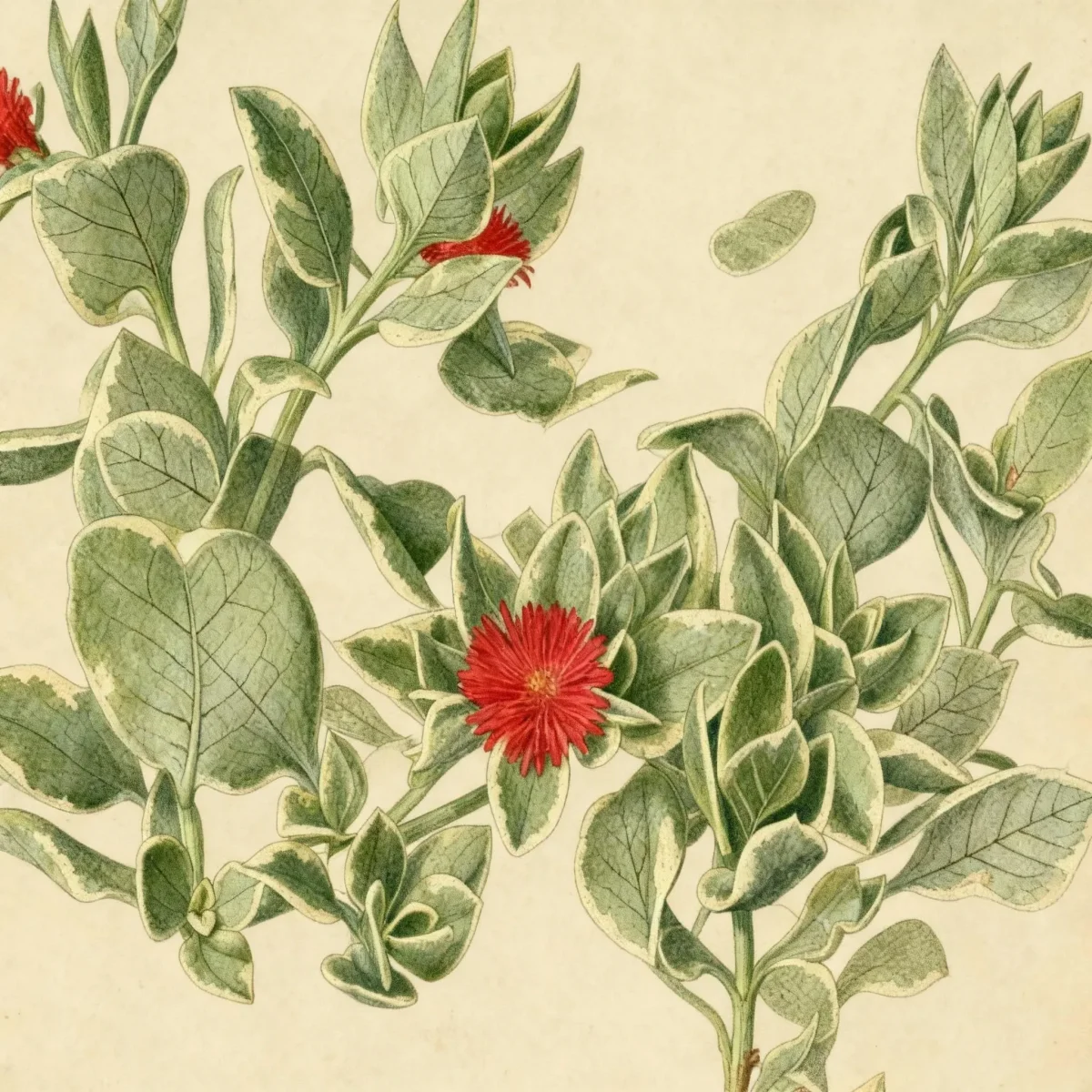
Heartleaf iceplant (Mesembryanthemum cordifolium)
Discover Mesembryanthemum cordifolium, the low-maintenance Heartleaf iceplant, perfect for sunny, dry spots in Zones 10-11.

Bloom Boldly, No Matter the Season - Sweatshirt
Cozy organic cotton sweatshirt featuring our exclusive Purple Coneflower design. Perfect for gardeners who bloom year-round.
Inspired by the beautiful Heartleaf iceplant
Limited first batch (50) — join the waitlist for early access
Waitlist closes Feb 15, 2026.
Complete Plant Information
Field Guide Continues
Ready for care notes, companion picks, and planting tips?
The map is just the start. The full guide below covers growth habits, seasonal performance, and landscape uses.
Overview
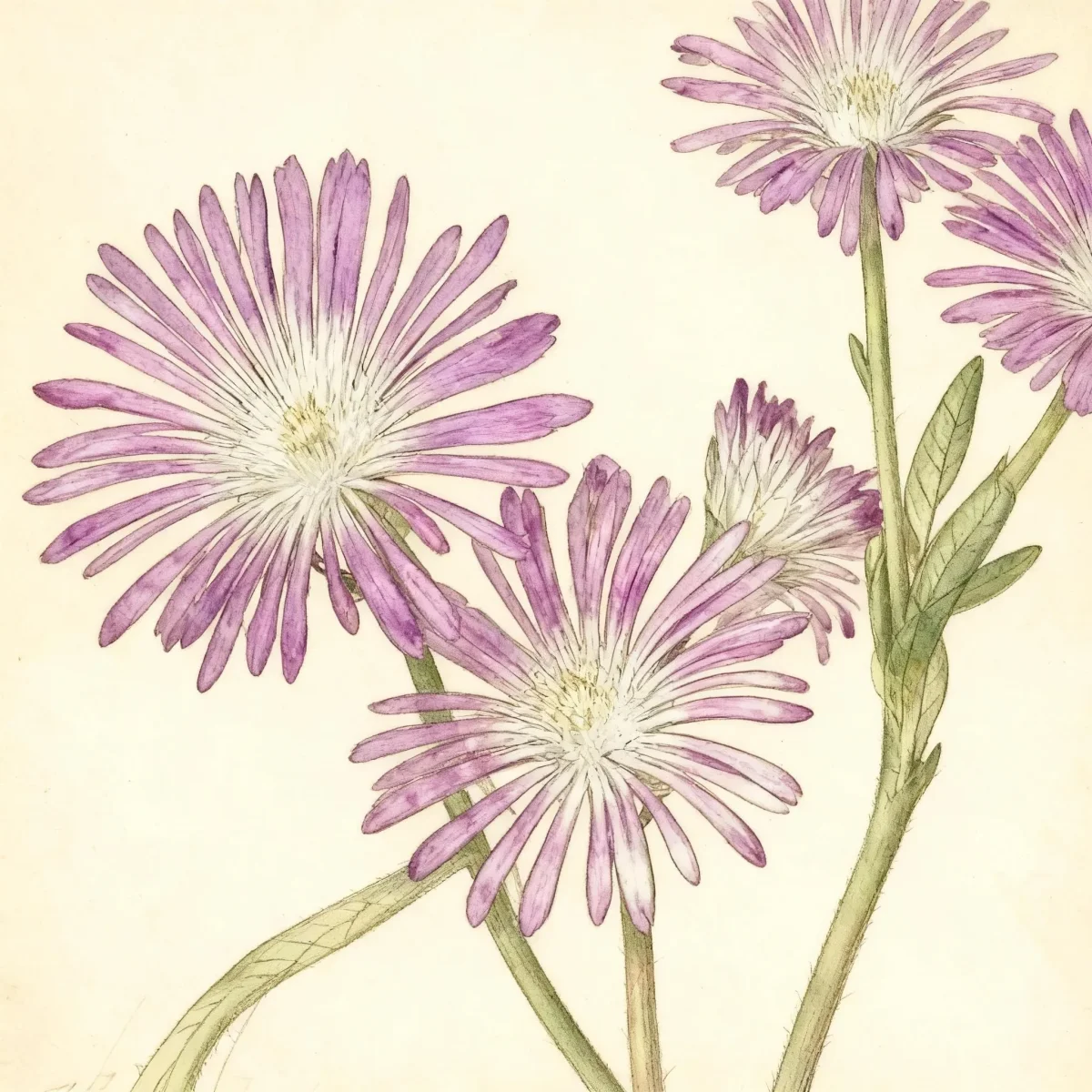
The Heartleaf iceplant is a fast-growing, succulent groundcover prized for its tolerance to dry conditions once established. This species, Mesembryanthemum cordifolium, features fleshy, bright green, heart-shaped leaves that form a dense, low mat, making it excellent for suppressing weeds and softening hardscape edges. Gardeners appreciate its low input requirements and vibrant display of purplish-red, sun-loving flowers that appear throughout the warm months.
Native to Southern Africa, Mesembryanthemum cordifolium thrives where many other plants struggle, particularly in sunny, well-drained locations. As a fast-spreading perennial in warmer climates (Zones 10-11), it offers rapid coverage, though it is sometimes treated as an annual elsewhere. Its fleshy nature helps it withstand drought, positioning it as a perfect choice for xeriscaping or hot, exposed garden beds.
While generally low-maintenance, be mindful of its vigorous nature in moist soils, as Mesembryanthemum cordifolium can become invasive in suitable climates. Utilizing it as a colorful, textural element while respecting its need for full sun and relatively dry conditions ensures a successful, vibrant groundcover display.
Fast Facts
- Plant Family: Aizoaceae
- Plant Type: Herbaceous perennial
- Native Range: Southern Africa
- Hardiness Zones: USDA Zones 10-11
- Size at Maturity:
- Height: 0.25-0.5 ft
- Spread: 1-2 ft
- Bloom Time: May to September
- Bloom Description: Purplish-red
- Sun Exposure: Full sun
- Water Needs: Dry to medium
- Maintenance Level: Low
How to Grow
Plant the Heartleaf iceplant during spring after the danger of frost has passed, placing it in full sun. This succulent requires well-drained, sandy loam soils; avoid areas where water pools, as poor drainage is the primary cause of failure. Optimal performance is seen where night temperatures remain above 50 degrees F, crucial for established plants that are performing best when soils remain dry.
Watering needs for Mesembryanthemum cordifolium are minimal once the root system has developed. Allow soils to dry out thoroughly between waterings, especially for container-grown specimens. Plants remain more compact and manageable when grown in dry soils; conversely, moist conditions encourage rapid, aggressive growth which can lead to plant longevity issues, as these plants may only last 2-3 years before needing replacement.
Fertilization is generally unnecessary, as rich soil encourages excessive foliage growth over flowering. In the garden, propagation is easily achieved via tip cuttings or seeds planted periodically to ensure continuity. Containers require vigilant watering control—ensure the potting media dries completely before reintroducing water.
Landscape Uses
In its suitable regions (USDA Zones 10-11), Heartleaf iceplant excels as a vigorous, flowering groundcover or low-spreading bedding plant. It is perfectly suited for covering slopes, filling in rock gardens where sharp drainage is available, or cascading over retaining walls. Its dense mat formation helps stabilize soil adjacent to pathways or patios.
Where winter temperatures drop too low, treat Mesembryanthemum cordifolium as a colorful, season-long annual. In this context, it performs dramatically well in hanging baskets, spilling over the edges, or in mixed containers where its trailing form contrasts nicely with upright annuals. Ensure any container planting still receives full, uninterrupted sun exposure to promote blooming.
Due to its rapid spreading habit, use this plant strategically where you do not mind aggressive colonization. Because it can overwhelm nearby vegetation in moist soil, consider pairing it primarily with other drought-tolerant, full-sun companions like sedums or other low-water succulents.
Standout Features
Flower Qualities
- Showy
Noteworthy Characteristics
Mesembryanthemum cordifolium, commonly called heartleaf ice plant or baby sun rose, is a succulent, creeping, short-lived, mat-forming perennial that is native to the Eastern Cape Province of South Africa. It has smooth, heart-shaped, fleshy, bright green leaves and produces solitary, purplish-red flowers with yellow stamens that open only in bright sunlight. Be aware that this plant has been listed as invasive in certain regions, particularly where moist soils allow rapid spread.
Tolerances
- No serious insect or disease problems.
Potential Problems
The most significant threat to Heartleaf iceplant comes from cultural mismanagement related to moisture. Too much soil moisture combined with poorly-drained soils may lead to the onset of root rot. To prevent this, always amend heavy soils with grit or coarse sand to improve drainage significantly.
If the plant is grown in overly wet conditions, not only is root rot an issue, but the plant’s lifespan shortens, potentially only lasting 2-3 years instead of longer. Monitor container drainage holes carefully and adhere strictly to the dry-out period between watering cycles to maintain succulent health.
Frequently Asked Questions
What hardiness zones is Heartleaf iceplant suitable for?
The Heartleaf iceplant is winter hardy in USDA Zones 10 and 11, where it thrives as a perennial groundcover.
How large does Mesembryanthemum cordifolium grow?
This species typically stays very low, reaching only 0.25 to 0.5 feet in height, but it spreads significantly, creating a mat that can reach 1 to 2 feet wide.
What sun exposure does Heartleaf iceplant need?
This plant absolutely requires full sun to perform optimally, as its beautiful purplish-red flowers will remain closed on cloudy days or in shaded locations.
When does Mesembryanthemum cordifolium bloom?
The flowers of this succulent typically bloom throughout the warmer months, from May through September.
Conclusion
The Heartleaf iceplant offers exceptional value for gardeners seeking tough, fast-spreading groundcover in hot, sunny, and moderately dry environments. Its attractive succulent foliage and colorful blooms make Mesembryanthemum cordifolium a standout choice for low-water landscaping. Before planting, confirm your site falls within USDA Zones 10-11 or plan to manage it as an annual for seasonal color.
Propagation Tips
Since Mesembryanthemum cordifolium is a short-lived perennial, propagating new plants annually or biennially ensures your groundcover remains vigorous and dense. Propagating from tip cuttings is the easiest and fastest method. Simply snip off healthy stem tips about 3–4 inches long, allow the basal cut end to dry and callous over for a day or two, and then place them directly into dry, well-draining potting mix or sand with high porosity.
Keep the cuttings lightly moist but never wet until rooting occurs, which is generally fast for this succulent type. Alternatively, seeds can be sown directly into containers or beds intended for annual use. Starting new plants offsets the natural 2–3 year lifespan of established patches.
Companion Planting
To maintain the dry, high-sun conditions that Heartleaf iceplant prefers, pair it with other Mediterranean or native South African succulents that share similar cultural needs. Good companions include various species of Sedum, low-growing Delosperma (another ice plant relative), or Dymondia margaretae if slightly more moisture is available.
Ensure companion plants do not require deep, frequent watering regimens, as this is the enemy of healthy Mesembryanthemum cordifolium. These drought-tolerant groupings enhance the xeriscaping appeal of the garden while maintaining a cohesive, low-maintenance aesthetic throughout the summer when the purplish-red blooms are present.