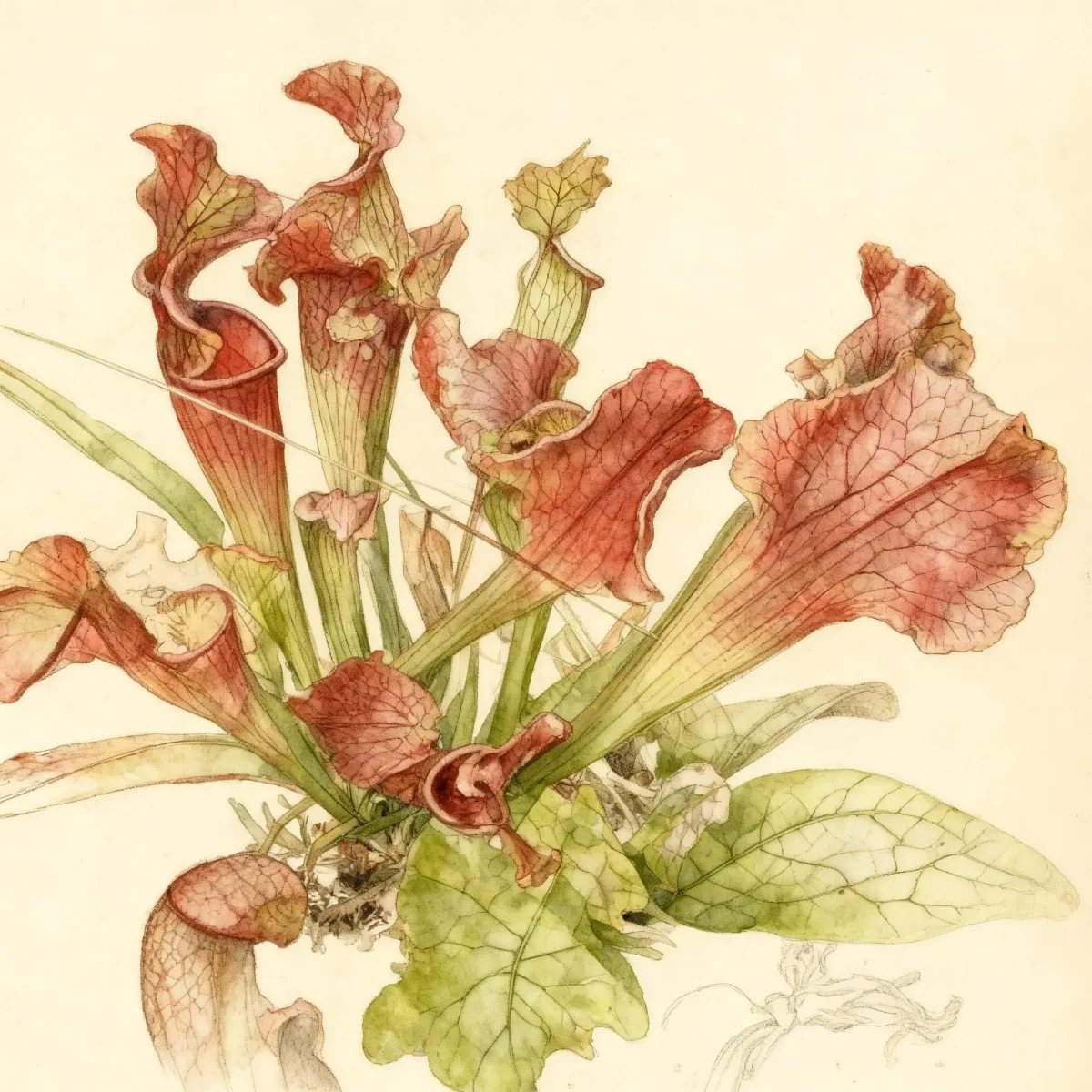
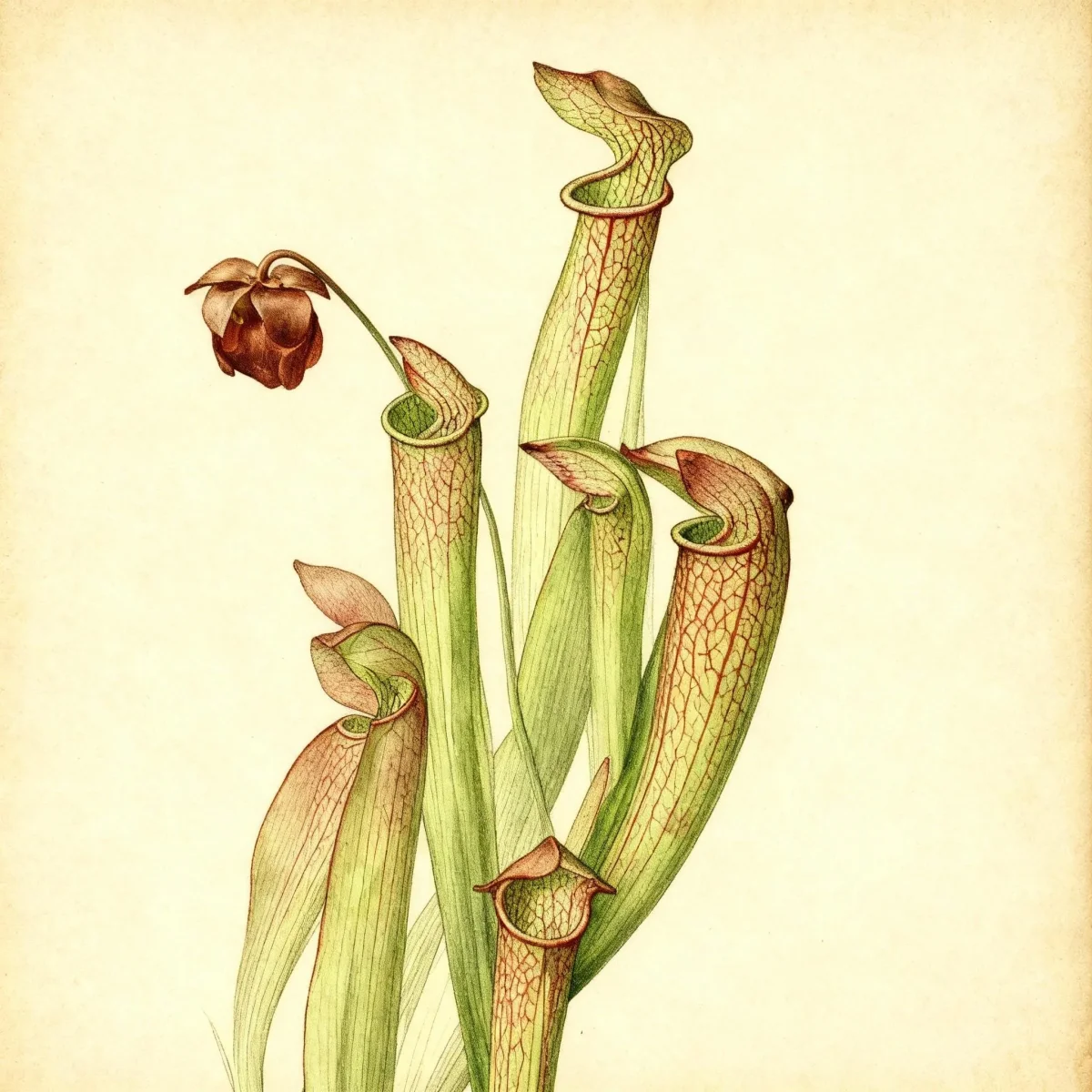
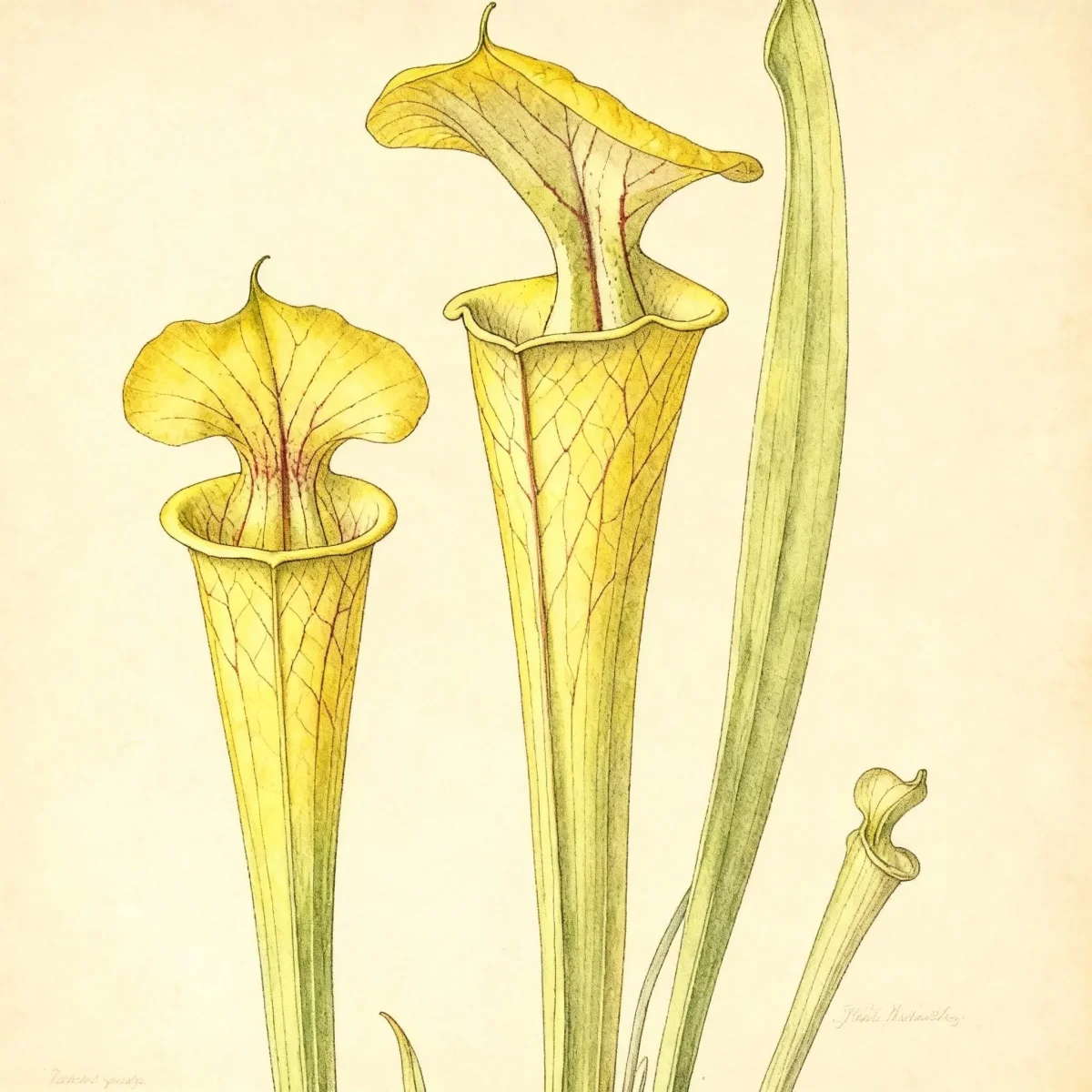
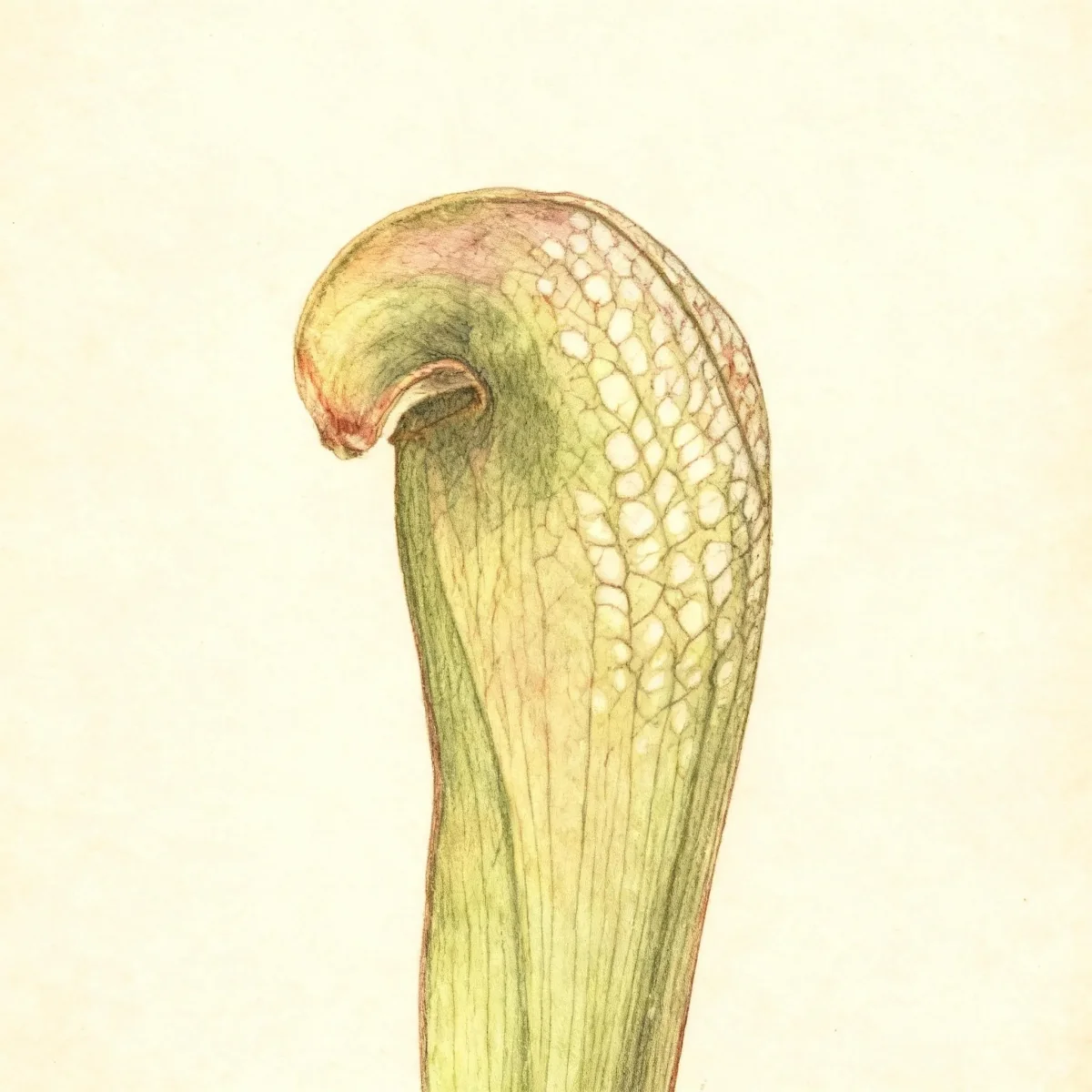
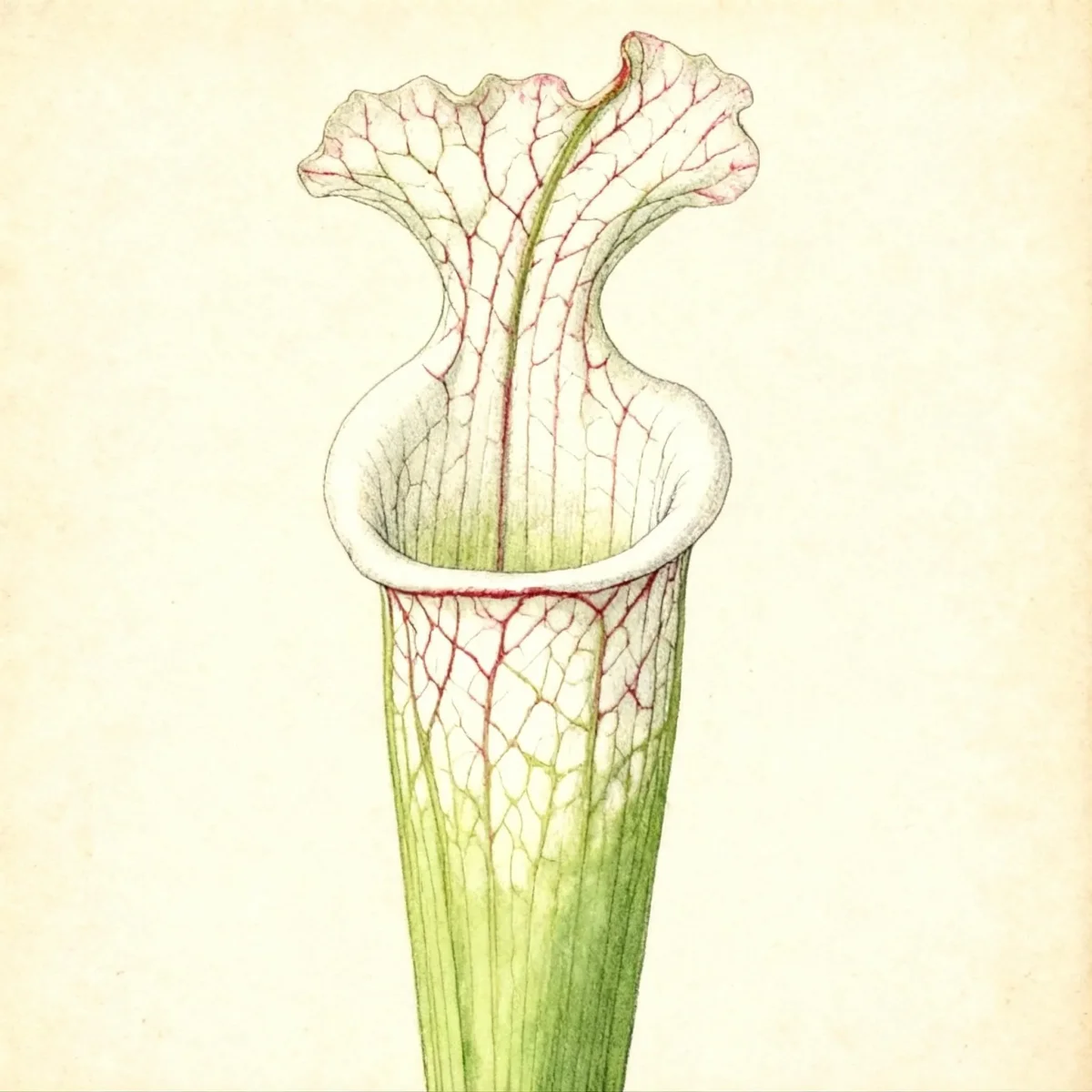
Hybrid pitcher plant (Sarracenia × excellens)
Sarracenia × excellens is a striking Hybrid pitcher plant offering white-topped, red-veined pitchers. Requires high maintenance in bog conditions.

Bloom Boldly, No Matter the Season - Sweatshirt
Cozy organic cotton sweatshirt featuring our exclusive Purple Coneflower design. Perfect for gardeners who bloom year-round.
Inspired by the beautiful Hybrid pitcher plant
Limited first batch (50) — join the waitlist for early access
Waitlist closes Feb 15, 2026.
Complete Plant Information
Field Guide Continues
Ready for care notes, companion picks, and planting tips?
The map is just the start. The full guide below covers growth habits, seasonal performance, and landscape uses.
Overview
The Hybrid pitcher plant (Sarracenia × excellens) is a naturally occurring cross between S. Leucophylla and S. Minor, valued highly for its excellent horticultural appeal. Mature specimens display impressive, upright tubes reaching up to two feet tall, featuring distinct white pitcher tops contrasted sharply by deep red venation. This carnivorou perennial provides dynamic visual interest, utilizing its specialized pitchers to lure and trap insects, gaining essential nutrients where soils are poor.
Cultivating this Hybrid pitcher plant demands strict attention to detail, as it is classified as high maintenance. Success hinges entirely on replicating its native environment, primarily through maintaining constantly moist, acidic soil conditions, preferably in a purpose-built bog garden. When cultural requirements are met, Sarracenia × excellens rewards the gardener with outstanding architectural foliage and spring blooms.
Gardeners should understand that the striking coloration and robust growth of Sarracenia × excellens depend on receiving full, unobstructed sunlight throughout the active growing season. While its needs are specialized, the unique structure and carnivorous habit make the Hybrid pitcher plant a fascinating and rewarding specimen for dedicated enthusiasts.
Fast Facts
- Plant Family: Sarraceniaceae
- Plant Type: Herbaceous perennial
- Native Range: Southeast United States
- Hardiness Zones: USDA Zones 5-9
- Size at Maturity:
- Height: 1.5-2 ft
- Spread: 1-1.5 ft
- Bloom Time: April to May
- Bloom Description: Red
- Sun Exposure: Full sun
- Water Needs: Wet
- Maintenance Level: High
How to Grow
Establishing Sarracenia × excellens requires creating an artificial bog habitat. The ideal location is a protected site receiving full sun; partial shade will inhibit proper leaf coloration and cause pitchers to weaken and droop. Before planting, prepare a dedicated bog garden, ensuring it uses acidic, humus-rich material. Recommended soil mixes rely on Canadian peat, often blended with sand or perlite in a 1:1 ratio. The primary cultural requirement is moisture—the soil must never be allowed to dry out.
Ongoing care centers heavily on water management and nutritional control. Use distilled water, collected rainwater, or reverse osmosis water only; tap water minerals will quickly poison this specialized plant. Keep the soil constantly damp, often achieved by placing containers in a water tray or by implementing irrigation hoses for bog setups. Crucially, do not fertilize or feed the plant manually; it derives its necessary nutrients from captured insects.
As winter approaches, pitchers will naturally die back. In colder zones (near the low end of the 5-9 range), trim only the fully dead leaf tissue in the winter after the foliage has completely withered, and consider mulching the soil surface with pine needles for added cold protection. Propagation is most easily achieved in spring by dividing the horizontal rhizomes, ensuring that each division retains adequate roots and growth points.
Landscape Uses
The primary and most successful recommended use for the Hybrid pitcher plant is in dedicated bog garden settings. These environments allow the gardener to fully control the water table, keeping the necessary acidic muck consistently saturated throughout the growing season. For smaller spaces or controlled environments, growing Sarracenia × excellens in containers is a viable alternative, provided a constant water source is maintained, such as placing the plastic pots into a deep saucer of water.
When planted outdoors, locate these specimens in low spots where natural moisture collects or integrate them into water features where edges remain soggy. Because they require such specific, constantly wet soil, they rarely integrate well into standard perennial borders unless that area receives irrigation designed for moisture-loving plants. They pair well aesthetically with other bog inhabitants like sphagnum mosses, certain irises, and other carnivorous plants that share acidic soil preferences.
While containers offer flexibility, remember that Sarracenia × excellens requires both intense summer sun and cold winter dormancy to thrive, making management as a long-term houseplant difficult outside of specialized greenhouse setups.
Standout Features
Flower Qualities
- Showy
Noteworthy Characteristics
Sarracenia × excellens is recognized for its upright pitchers characterized by striking white tops accented with contrasting red venation and elegantly curved, ruffled hoods. These excellent specimens, reaching up to two feet tall, recall the parent species while creating a highly desirable collector’s plant. The colorful foliage is complemented by single red, nodding flowers borne on tall scapes during the spring season.
Tolerances
- Wet Soil
Potential Problems
Failure to adhere strictly to the cultural requirements of the Hybrid pitcher plant will result in poor performance and eventual decline. The most common issue is improper watering; these plants cannot tolerate drying out, necessitating constant moisture in their acidic medium. Protect plants from harsh freezing winds during winter, although general winter hardiness zones 5-9 are manageable for established clumps. Avoid adding any fertilizers or feeding the pitchers manually, as applying potting soil or chemical nutrients will almost certainly cause root burn and death. Common pests to monitor include scale, aphids, and mealybugs, which can usually be managed by ensuring excellent air circulation and applying insecticidal soap only if necessary, avoiding systemic treatments.
Frequently Asked Questions
What hardiness zones is Hybrid pitcher plant suitable for?
Sarracenia × excellens is reliably hardy in USDA Zones 5 through 9.
How large does Sarracenia × excellens grow?
This Hybrid pitcher plant typically reaches a height between 1.5 to 2 feet and spreads to occupy an area of 1 to 1.5 feet wide.
What sun exposure does Sarracenia × excellens need?
This species requires full sun exposure during the growing season to ensure vibrant pitcher coloring and strong structure.
When does Hybrid pitcher plant bloom?
The plant blooms in the spring, generally between April and May, producing distinctive red flowers.
Conclusion
The Hybrid pitcher plant (Sarracenia × excellens) offers unparalleled architectural drama and unique carnivorous interest, making it a prized addition for specialized wetland features. Successful cultivation of this Hybrid pitcher plant depends entirely on mimicking bog conditions: full sun, constant wetness, and highly acidic, nutrient-poor soil. Before attempting to grow Sarracenia × excellens, confirm your local hardiness zone and dedicate the necessary resources to preparing a proper bog garden or container setup.
Companion Planting
When designing a bog garden for Sarracenia × excellens, it is essential to select companions that share the exact same demands for consistently saturated, acidic, low-nutrient soil. Excellent neighbors include other North American pitcher plants (Sarracenia purpurea or S. flava), sundews (Drosera species), and Venus flytraps (Dionaea muscipula). These plants not only thrive in identical conditions but also offer complementary textures and colors throughout the growing season. Avoid planting near standard perennials, as they require drier conditions, different soil pH, and high fertilization, all of which are toxic to the Hybrid pitcher plant.
Propagation Tips
The simplest and most reliable method for increasing your stock of Sarracenia × excellens is division of the spreading rhizomes. This process should be performed in early spring just as new growth is emerging or immediately after the plant finishes flowering, but before it puts massive energy into pitcher production. Carefully dig up the clump and gently tease the horizontal rhizomes apart, ensuring each resulting division has several healthy growth nodes and an established root system. Replant these divisions immediately into fresh, acidic bog medium, ensuring they are returned to full sun and consistent moisture post-division.