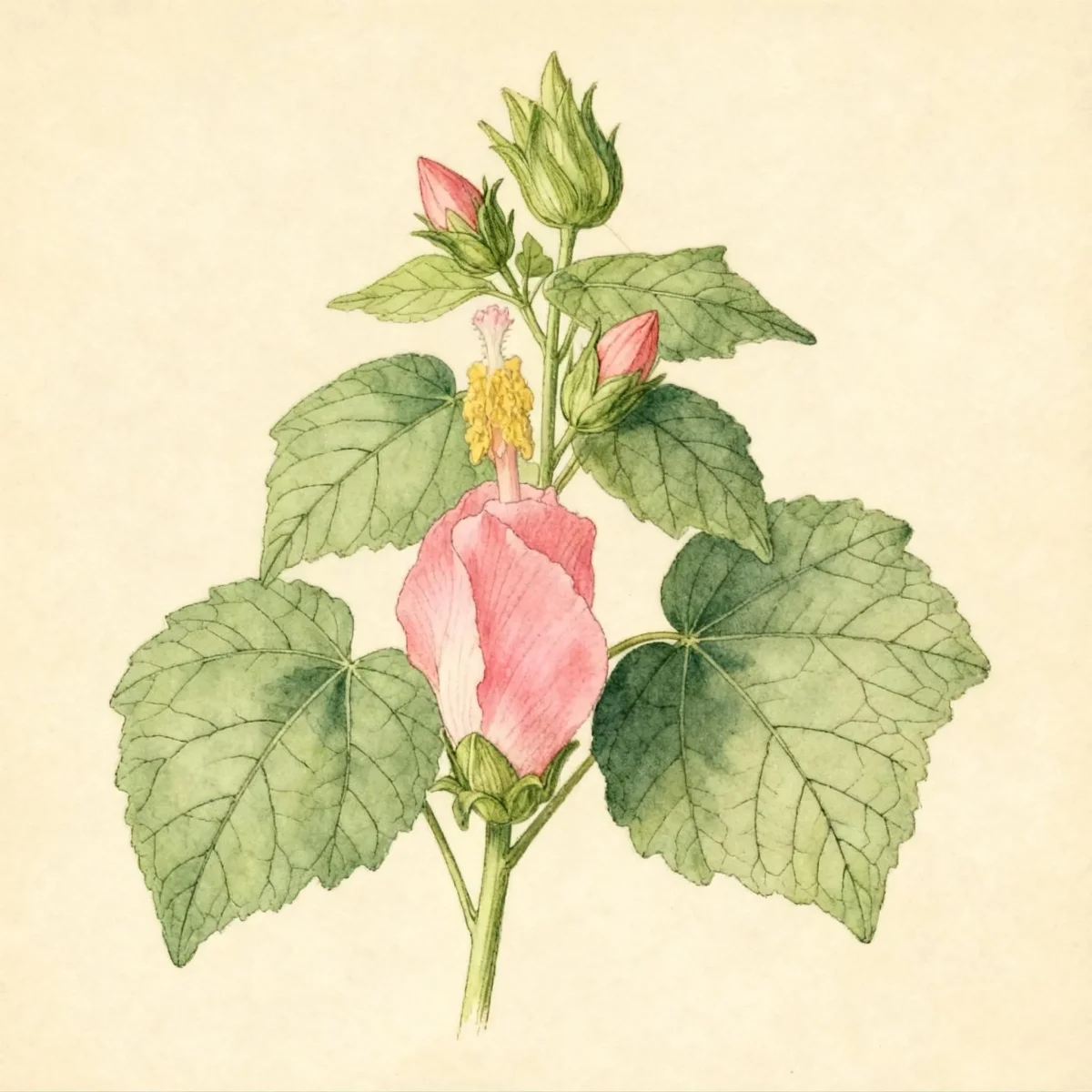
Pink turk's-cap (Malvaviscus drummondii 'Pam Puryear')
Pink turk's-cap, Malvaviscus drummondii 'Pam Puryear', is a low-maintenance perennial blooming pink May-Oct, ideal for part shade gardens.

Bloom Boldly, No Matter the Season - Sweatshirt
Cozy organic cotton sweatshirt featuring our exclusive Purple Coneflower design. Perfect for gardeners who bloom year-round.
Inspired by the beautiful Pink turk's-cap
Limited first batch (50) — join the waitlist for early access
Waitlist closes Feb 15, 2026.
Complete Plant Information
Field Guide Continues
Ready for care notes, companion picks, and planting tips?
The map is just the start. The full guide below covers growth habits, seasonal performance, and landscape uses.
Overview
Malvaviscus drummondii ‘Pam Puryear’ offers vibrant, continuous color throughout the growing season, distinguishing itself with soft pink blooms instead of the typical red found in the species. This spectacular native perennial provides long-lasting textural interest, making it a favorite for gardeners seeking reliable performance and high wildlife appeal. The unique, closed flowers of the Pink turk’s-cap are especially magnetic to hummingbirds, ensuring constant garden activity from late spring until the first hard frost.
As an upright, shrubby perennial, Malvaviscus drummondii ‘Pam Puryear’ reaches between 2 and 5 feet tall and wide, fitting beautifully into mixed borders or woodland settings. Its adaptability is a significant asset; while it prefers consistent moisture, it tolerates clay and dry spells once established, reducing overall fuss. Cultivar ‘Pam Puryear’ is slightly celebrated for its enhanced cold tolerance, often surviving winters where the native form might struggle.
This cultivar delivers low maintenance and high impact. Its extended bloom time from May through October ensures that your garden remains decorated with its distinctive structure, enhancing shaded areas that often lack strong summer flowering color. Plant Pink turk’s-cap where you can enjoy the visiting pollinators attracted to its unusual, abundant blossoms.
Fast Facts
- Plant Family: Malvaceae
- Plant Type: Herbaceous perennial
- Hardiness Zones: USDA Zones 7-10
- Size at Maturity:
- Height: 2-5 ft
- Spread: 2-5 ft
- Bloom Time: May to October
- Bloom Description: Pink
- Sun Exposure: Part shade
- Water Needs: Medium
- Maintenance Level: Low
How to Grow
The ideal planting location for Malvaviscus drummondii ‘Pam Puryear’ should offer moist, well-drained, loamy soils and situated in partial shade. However, this resilient semi-shrub readily adapts, thriving even in full sun provided it receives adequate water, and surprisingly handles clay and dry soils better than many alternatives. Ensure planting occurs in the spring after the danger of frost has passed, allowing the roots time to establish before intense summer heat.
Watering should remain consistent, aiming for medium input; while mature plants are drought-tolerant, consistent moisture yields the best flowering performance. Fertilization is generally unnecessary unless the plant is grown in poor, lean soil, in which case a balanced, slow-release fertilizer applied in early spring is sufficient. Pruning is mainly required in early spring, especially in colder zones where the entire plant may die back to the ground, necessitating a trim down to the healthy overwintered base.
For gardeners in the colder reaches of Zone 7 (down to 5°F or 7b), supplementary winter protection may be beneficial, particularly if the plant is exposed to harsh winter winds. In contrast, in the warmer end of the scale (Zones 9-10), the Pink turk’s-cap may remain semi-evergreen, requiring only light shaping to maintain form.
Landscape Uses
Malvaviscus drummondii ‘Pam Puryear’ excels as a versatile, flowering perennial or small shrub where dappled light prevails. Due to its moderate height and dense growth habit, it functions perfectly as mid-story planting in mixed borders flanking walkways or defining the edge of woodland areas. The light pink flowers provide excellent contrast against dark green foliage found in shaded settings, brightening up areas that struggle under intense sun.
Consider using this cultivar in containers grouped with lower-growing, moisture-loving annuals, allowing the Pink turk’s-cap to serve as a dramatic upright focal point throughout the summer season. It pairs wonderfully with ferns, hostas, and other shade-tolerant perennials that appreciate similar soil moisture levels. Its ability to attract hummingbirds elevates its role beyond simple aesthetics, turning borders into active wildlife observation spots.
Standout Features
Flower Qualities
- Showy
Fruit Qualities
- Showy
Noteworthy Characteristics
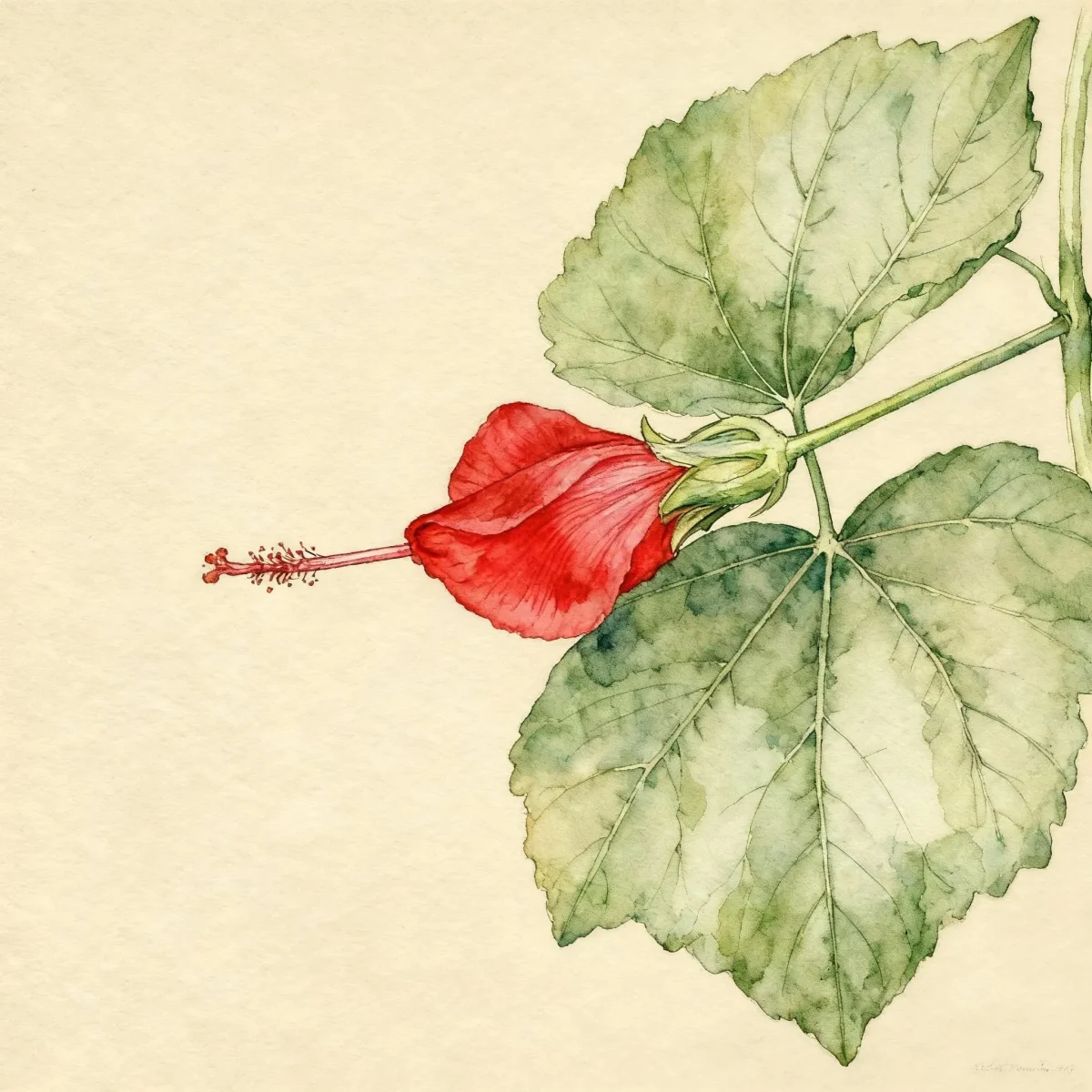
Malvaviscus drummondii, also known as turk’s cap, is an upright, shrubby perennial native to eastern Texas and Louisiana, found naturally on rocky slopes and along wooded stream banks. Its small to medium size, ranging from 2-5’ tall with an equal spread, makes it manageable in most garden sizes. A key identifier is the unique flower structure: the petals form a tube from which the showy pistil extends, a shape that has earned it the common name referring to a Turkish cap. The cultivar ‘Pam Puryear’ is particularly valued in the garden for offering soft pink blooms rather than the typical bright red of the wild form.
Tolerances
- Drought
- Clay Soil
- Dry Soil
Potential Problems
Generally, Malvaviscus drummondii ‘Pam Puryear’ is quite resilient, showing no major reported insect or disease issues that threaten its long-term survival, making it excellent for low-care gardening. The primary pest concern is occasional infestations of whiteflies, a common nuisance on many plants during hot, dry spells. If whiteflies are observed, treatment can usually begin with a strong jet of water to dislodge them, followed by an application of insecticidal soap or horticultural oil if the problem persists.
Frequently Asked Questions
What hardiness zones is Pink turk’s-cap suitable for?
Malvaviscus drummondii ‘Pam Puryear’ is hardy across USDA Zones 7 through 10, offering reliable perennial performance across a wide range of the Southern and transitional US climates.
How large does Pink turk’s-cap grow?
This herbaceous perennial typically matures to a height between 2 and 5 feet, spreading to a similar width of 2 to 5 feet, forming an attractive, upright bushy shape.
What sun exposure does Malvaviscus drummondii ‘Pam Puryear’ need?
While happiest in part shade, which protects the foliage during the hottest part of the day, this tough cultivar will also tolerate full sun if consistent medium water is supplied.
When does Pink turk’s-cap bloom?
You can expect glorious pink blooms on Malvaviscus drummondii ‘Pam Puryear’ consistently from May all the way through to October.
Conclusion
The Pink turk’s-cap, Malvaviscus drummondii ‘Pam Puryear’, is a standout performer known for its long bloom season, low maintenance needs, and significant appeal to native wildlife like hummingbirds. Its successful cultivation hinges on providing adequate light, whether part shade or sun, and ensuring its medium water needs are met, especially in hotter climates. Before planting, confirm that your local climate falls within USDA Zones 7 to 10 to ensure this beautiful semi-shrub thrives for years to come.
Companion Planting
Selecting complementary partners for Malvaviscus drummondii ‘Pam Puryear’ should focus on plants that share similar light and moisture requirements, particularly those that thrive in dappled shade. Hostas, with their broad, textural foliage, create a beautiful contrast to the fine structure of the Pink turk’s-cap. Consider pairing it with shade-loving salvias or coreopsis varieties that offer blooms in cooler tones, preventing the pink flowers from competing visually.
Another excellent strategy is to use groundcovers that handle dry shade beneath the taller structure of the Turk’s-cap. Creeping Jenny or vinca can suppress weeds while enjoying the filtered light provided by the shrubby perennial above them. This layered approach creates a rich, multi-dimensional look within the perennial border that remains engaging all summer long.
Wildlife Benefits
The unique structure of the Malvaviscus drummondii ‘Pam Puryear’ flower is perfectly shaped to provide nectar for long-billed pollinators, making it a phenomenal asset for attracting hummingbirds. These flowers remain open and accessible for much of the summer and early fall, spanning the critical late-season feeding needs of migratory and resident hummingbirds.
Beyond the nectar delights, the plant produces small, berry-like fruits that ripen from green to red, which are readily consumed by various small birds and mammals across its native range. Incorporating this native perennial into your landscape not only adds ornamental value but actively supports local biodiversity throughout the growing season.