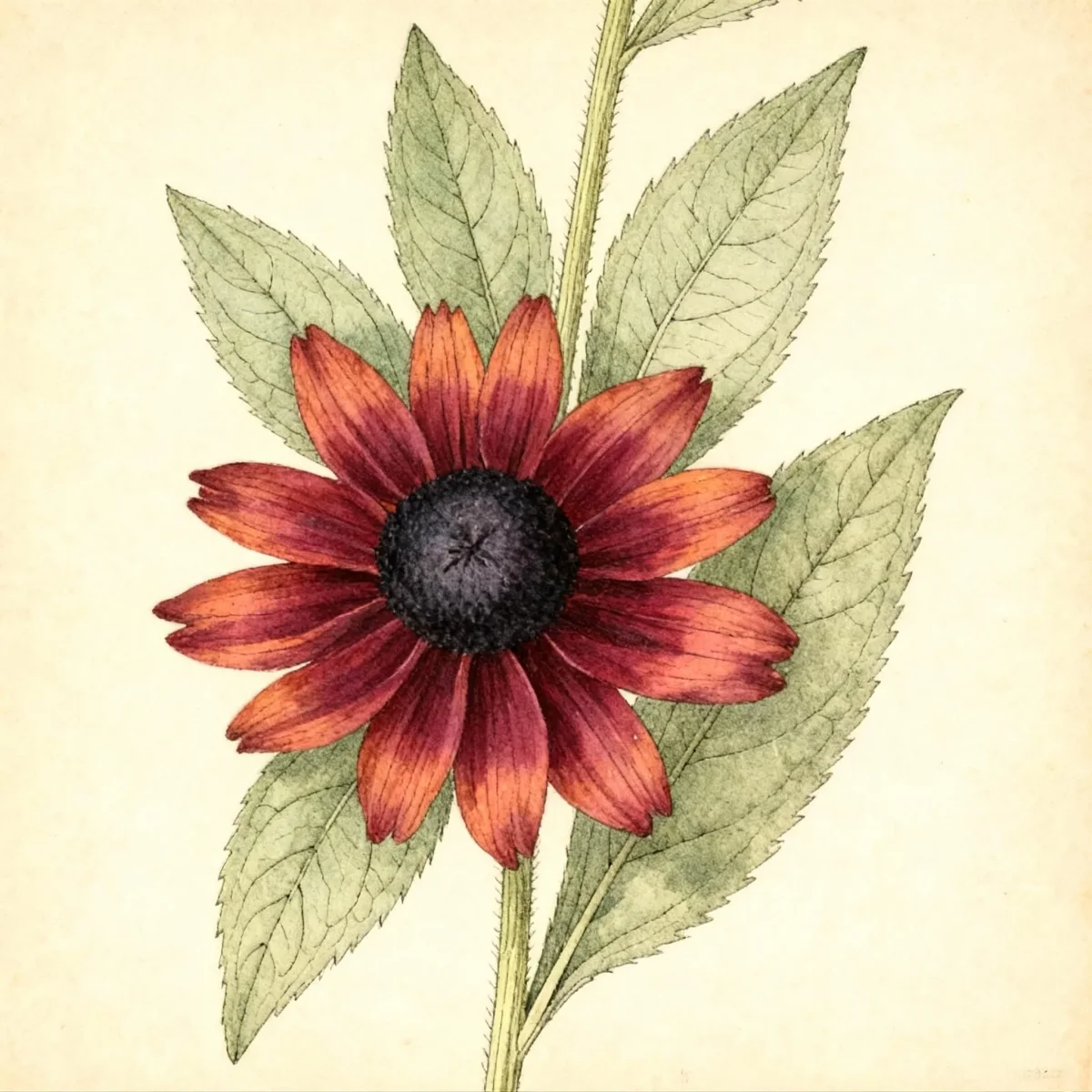
Black-eyed Susan (Rudbeckia hirta 'Cherry Brandy')
Rudbeckia hirta 'Cherry Brandy' offers stunning, velvety red Black-eyed Susan blooms from summer to frost. Requires full sun and low maintenance.

Bloom Boldly, No Matter the Season - Sweatshirt
Cozy organic cotton sweatshirt featuring our exclusive Purple Coneflower design. Perfect for gardeners who bloom year-round.
Inspired by the beautiful Black-eyed Susan
Limited first batch (50) — join the waitlist for early access
Waitlist closes Feb 15, 2026.
Complete Plant Information
Field Guide Continues
Ready for care notes, companion picks, and planting tips?
The map is just the start. The full guide below covers growth habits, seasonal performance, and landscape uses.
Overview
Rudbeckia hirta ‘Cherry Brandy’ is a spectacular cultivar of the familiar Black-eyed Susan, highly valued for its unique coloration. Instead of the typical yellow, this selection boasts vividly colored petals that deepen to maroon or rich red surrounding the dark, prominent center cone. It brings continuous color to the garden from early summer right up until the first hard frost, making it an outstanding value.
This plant thrives in sunny conditions and adapts well to various soil types, provided they are not waterlogged. While technically a short-lived perennial, it is frequently treated as an annual because it blooms profusely in its first year when sown early. The sturdy stems of the Black-eyed Susan hold the large daisy-like flowers aloft, providing vertical interest.
Gardeners appreciate the low requirements of this Rudbeckia selection, as it tolerates both heat and drought once established. Its bold color and reliable performance make the ‘Cherry Brandy’ cultivar a superb choice for adding high-impact color to borders, annual displays, and cottage garden settings.
Fast Facts
- Plant Family: Asteraceae
- Plant Type: Herbaceous perennial
- Hardiness Zones: USDA Zones 5-9
- Size at Maturity:
- Height: 1.75-2 ft
- Spread: 1-1.25 ft
- Bloom Time: June to frost
- Bloom Description: Red
- Sun Exposure: Full sun
- Water Needs: Medium
- Maintenance Level: Low
How to Grow
For optimal performance, plant Rudbeckia hirta ‘Cherry Brandy’ where it receives full, unimpeded sun throughout the day. Although often grown as an annual, it benefits from being started indoors around March 1 if you desire early blooms, or seeds can be sown directly into the garden once all danger of frost has passed. It performs best in moist, organically rich, well-drained soils, though this Black-eyed Susan tolerates a wide range of soil conditions, including average moisture and clay, as long as drainage is adequate.
Care for this cultivar is generally simple, aligning with its low maintenance rating. Water consistently, especially during dry spells, maintaining medium soil moisture. Fertilizing is rarely necessary if the soil is organically sound, preventing lush, floppy growth that can reduce flowering.
To maximize the stunning red blooms, deadheading spent flowers regularly is recommended. This practice encourages the plant to put energy into producing new buds rather than setting seed. Even if you allow some flowers to fade, this species tends to self-seed freely, often ensuring its return the following season true to type, regardless of its perennial survival rate.
Landscape Uses
The vibrant, deep red blooms of Rudbeckia hirta ‘Cherry Brandy’ make it an excellent focal point in mixed annual beds where bold color is desired. Its upright habit, reaching up to 2 feet, positions it perfectly for the middle or back layers of a border design. Consider pairing this Black-eyed Susan with white or blue companions for maximum contrast and visual punch.
This variety excels in creating the informal, abundant look of a cottage garden or a wild meadow setting, where its ability to self-seed is an asset rather than a concern. Given its strong stems and excellent flower longevity, it is highly recommended as a source for fresh-cut floral arrangements. Plant groups or mass plantings together to create sweeping drifts of this unique coloration across the landscape.
Standout Features
Flower Qualities
- Showy
- Good Cut
Noteworthy Characteristics
Rudbeckia hirta, commonly called black-eyed Susan, is known for its daisy-like flowers, though the ‘Cherry Brandy’ selection features 3-4” diameter blooms with striking red to maroon petals around dark center cones. This floriferous selection blooms continuously from mid-summer into fall on sturdy stems, making it highly attractive to pollinators. Like many species in the genus, the variety ‘Cherry Brandy’ will self-seed freely in the garden, usually returning true to type.
Tolerances
- Deer
- Drought
- Clay Soil
Potential Problems
This Black-eyed Susan generally resists serious insect or disease issues, contributing to its low-maintenance appeal. The main cultural problem to watch for is powdery mildew, especially in areas with high humidity and poor air circulation around the foliage. Ensure plants are spaced adequately to allow breezes to dry the leaves promptly after rain or watering.
On very young seedlings, slugs and snails may pose a temporary threat; inspect new growth regularly and manage these pests proactively if noticed. While free self-seeding is beneficial for continuity, it can lead to unwanted crowds of Rudbeckia hirta ‘Cherry Brandy’ in subsequent years, so monitoring and thinning seedlings in spring may be necessary. Deer are typically unconcerned by this species.
Frequently Asked Questions
What hardiness zones is Black-eyed Susan suitable for?
Rudbeckia hirta ‘Cherry Brandy’ is winter hardy across USDA Zones 5 through 9.
How large does Rudbeckia hirta ‘Cherry Brandy’ grow?
This cultivar typically reaches a height between 1.75 and 2 feet tall, with a spread ranging from 1 to 1.25 feet wide.
What sun exposure does Black-eyed Susan need?
This plant requires full sun exposure to produce the best display of its unique red blooms.
When does Rudbeckia hirta ‘Cherry Brandy’ bloom?
The flowering period for this plant is extended, occurring from June until frost arrives.
Conclusion
The Rudbeckia hirta ‘Cherry Brandy’ delivers exceptional garden impact with minimal fuss, offering superior, rich red flower color compared to standard yellow varieties. Its attractiveness to pollinators and reliability as a cut flower make this Black-eyed Susan a highly versatile addition to any sunny space. Before planting, confirm that your location falls within USDA Zones 5-9 and plan for early spring sowing to enjoy its full seasonal glory.
Companion Planting
When designing a visually appealing border featuring Rudbeckia hirta ‘Cherry Brandy’, pairing it with plants that complement its deep red tones and upright structure is key. Consider using fine-textured, silvery foliage plants like Lamb’s Ears (Stachys byzantina) to provide a soft contrast to the coarse texture of the sunflower leaves. For color harmony, silvery-blue flowers, such as Salvia nemorosa cultivars or tall lavender plumes, work wonderfully alongside this Black-eyed Susan, enhancing the rich maroon petals.
Since ‘Cherry Brandy’ prefers well-drained, average soil and full sun, select neighbors with similar cultural needs to simplify care. Plants that appreciate these conditions, like ornamental grasses such as Panicum virgatum cultivars (Switchgrass) or sturdy late-season bloomers like Coneflowers (Echinacea), will naturally thrive alongside your Rudbeckia plantings. This ensures a cohesive, low-stress patch of garden beauty all season long.
Wildlife Benefits
The prominent, dark center cones of Rudbeckia are magnets for native insect pollinators throughout the summer months. Butterflies, in particular, are frequently observed feeding on the abundant nectar provided by the ‘Cherry Brandy’ flowers. While the flowers attract pollinators, the seed heads that develop late in the season offer valuable late-season food resources for seed-eating songbirds.
By allowing a few of the rudbeckia stalks to remain standing into late fall and early winter—a practice gardeners call ‘leaving the bones’—you extend the garden’s ecological value. This provides necessary cover and food through the colder months. Integrating a plant like this Black-eyed Susan supports local biodiversity while still offering the aesthetic benefit of its continuous bloom cycle.