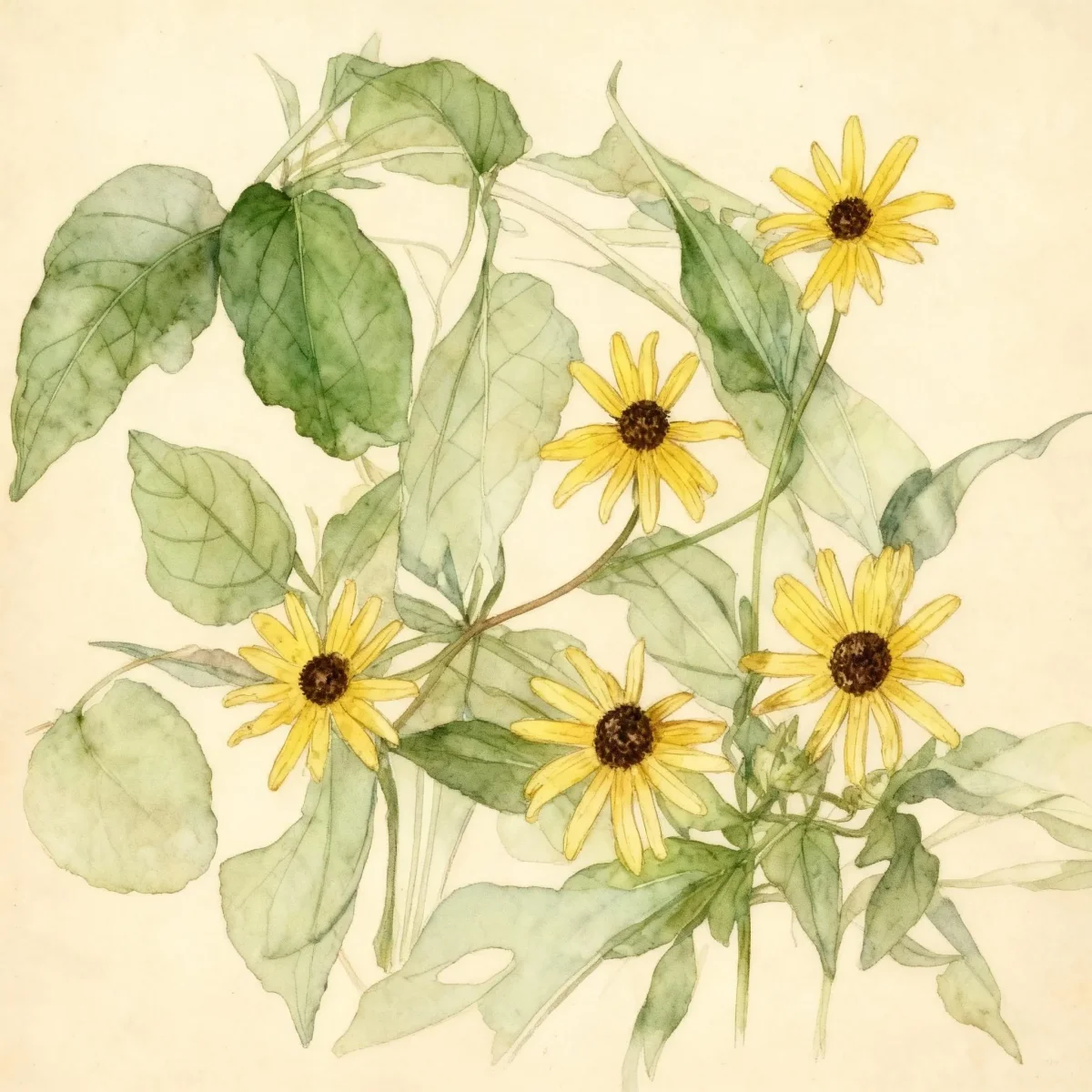
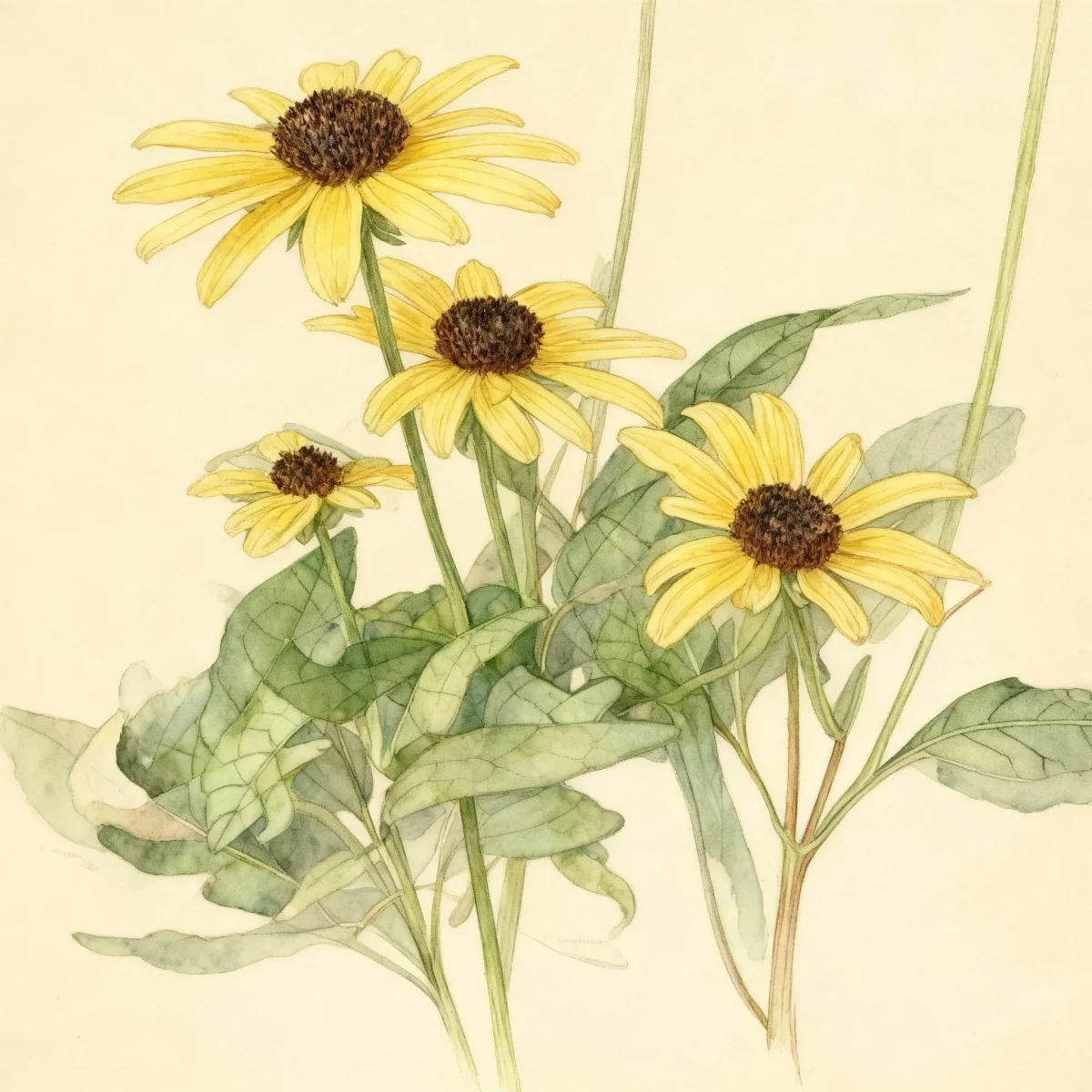
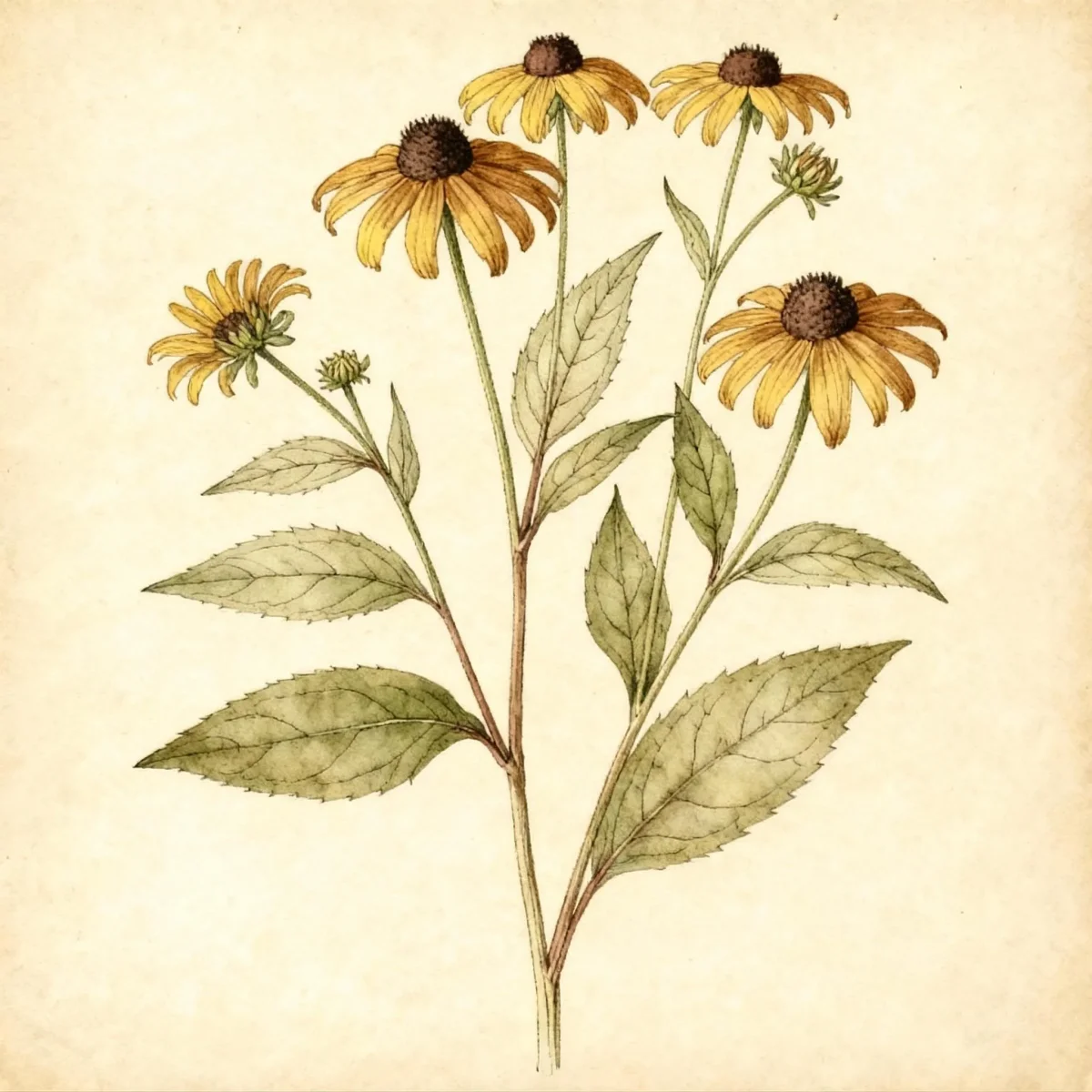
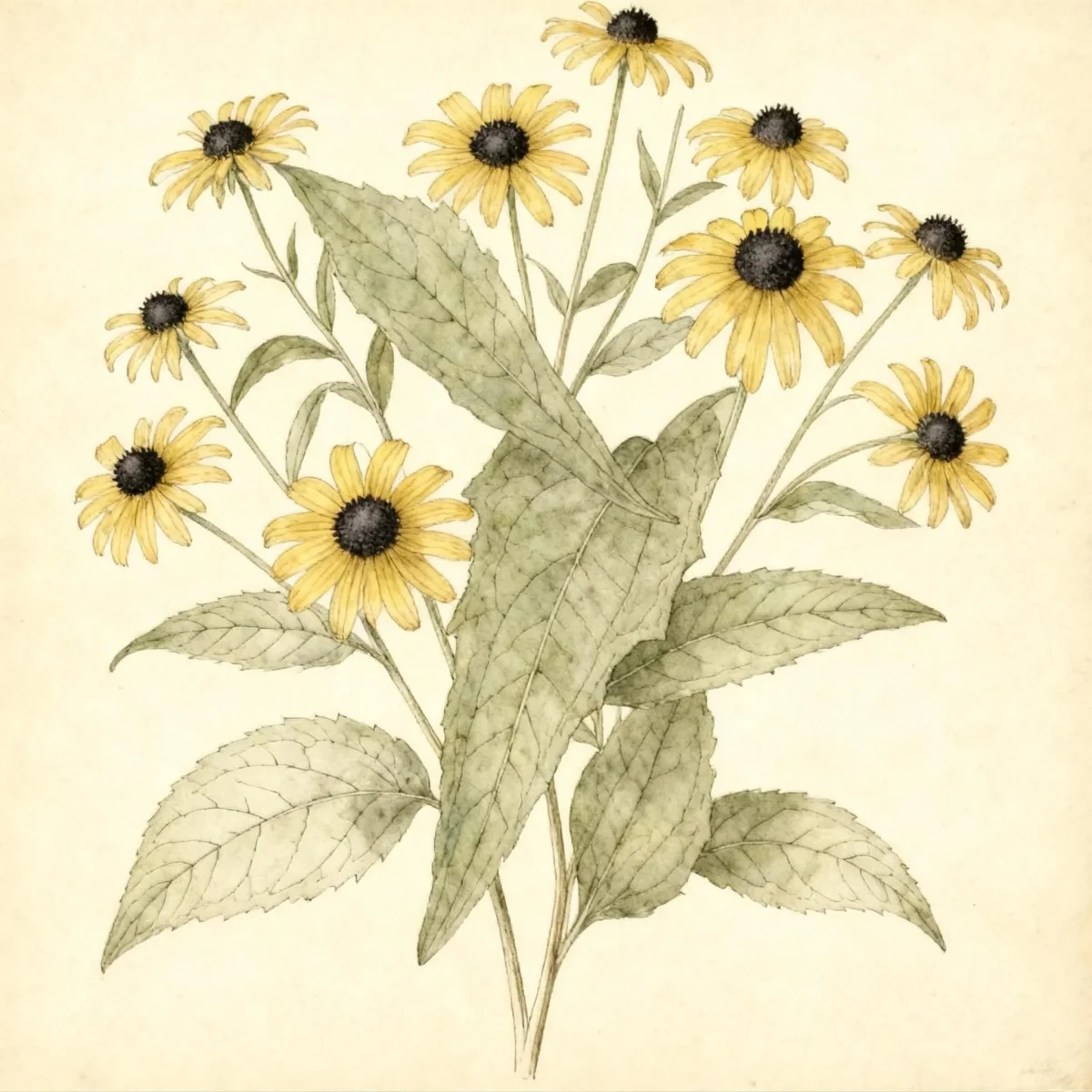
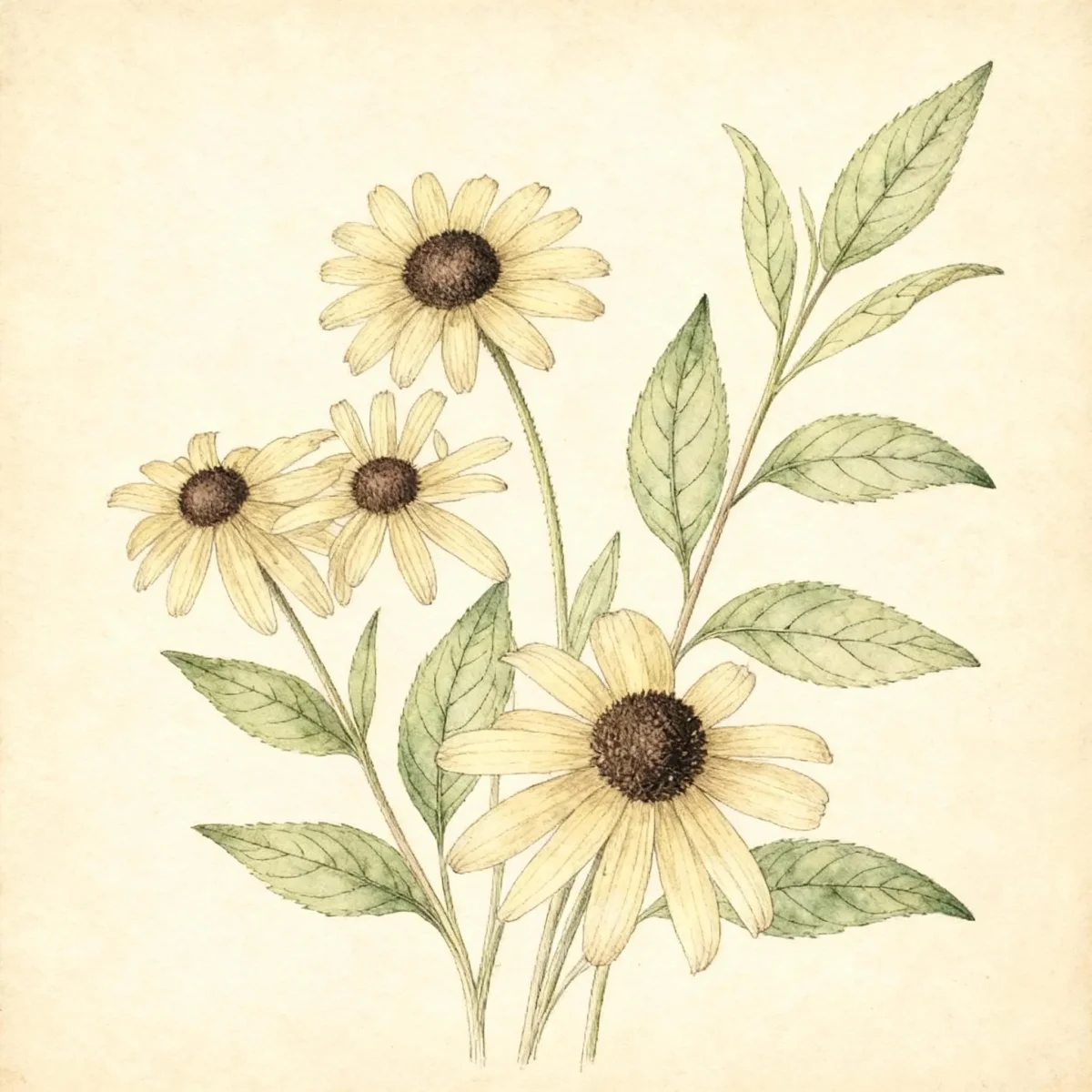
Black-eyed Susan (Rudbeckia 'Glitters Like Gold')
Rudbeckia 'Glitters Like Gold' offers season-long golden daisy blooms. This low-maintenance Black-eyed Susan thrives in full sun and handles diverse soils.
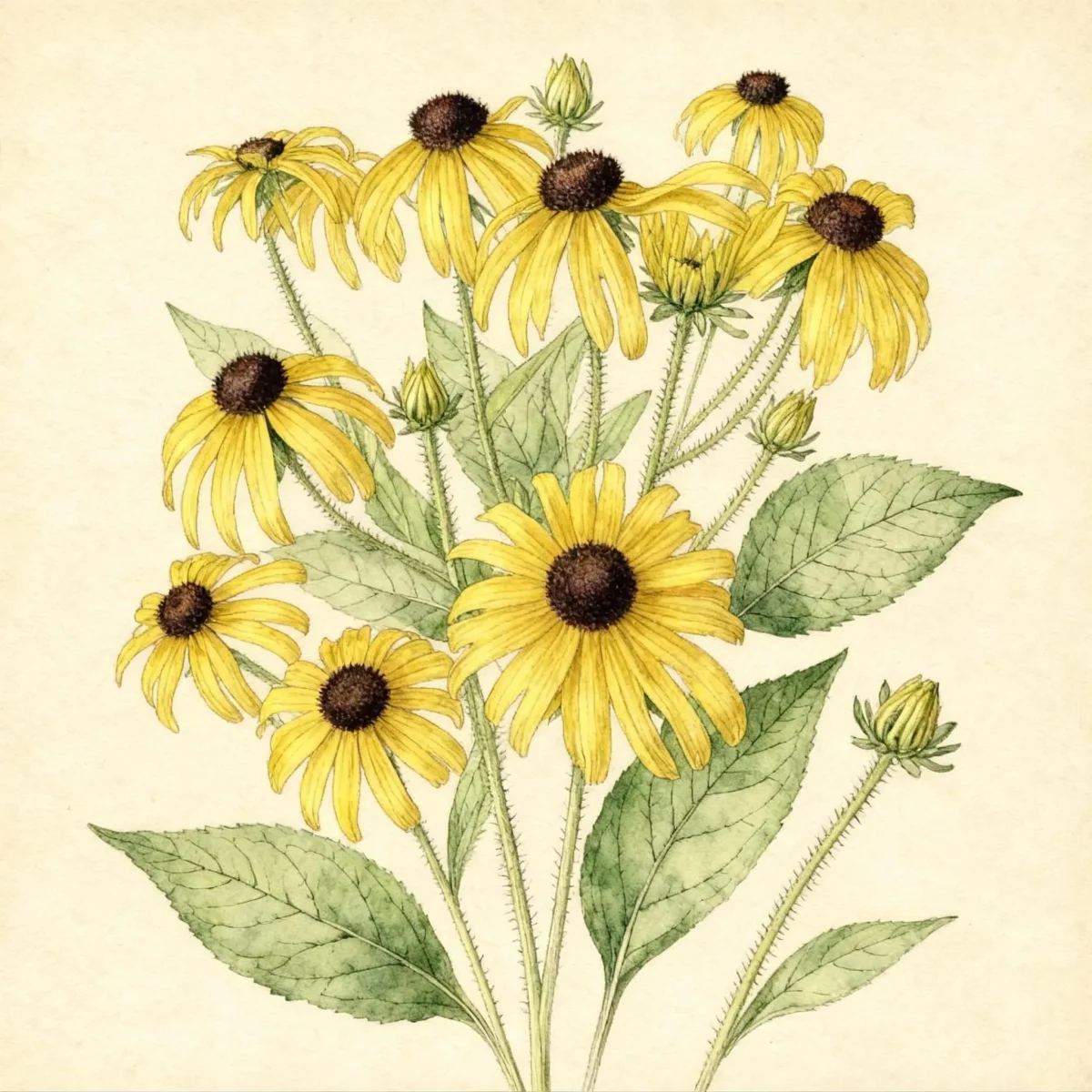

Bloom Boldly, No Matter the Season - Sweatshirt
Cozy organic cotton sweatshirt featuring our exclusive Purple Coneflower design. Perfect for gardeners who bloom year-round.
Inspired by the beautiful Black-eyed Susan
Limited first batch (50) — join the waitlist for early access
Waitlist closes Feb 15, 2026.
Complete Plant Information
Field Guide Continues
Ready for care notes, companion picks, and planting tips?
The map is just the start. The full guide below covers growth habits, seasonal performance, and landscape uses.
Overview
Rudbeckia ‘Glitters Like Gold’ is a vigorous herbaceous perennial prized for its reliable, long-lasting display of bright yellow, daisy-type flowers accented by a dark central eye. This selection of Black-eyed Susan is an excellent workhorse for sunny borders, offering exceptional garden impact from mid-summer well into the fall. Its stature, typically reaching two to three feet tall, makes it a robust presence in mixed plantings.
This cultivar is noted among gardeners for its hardiness across many climates, thriving reliably from USDA Zones 3 through 9. Rudbeckia ‘Glitters Like Gold’ offers the classic, cheerful appearance of the genus while often exhibiting improved disease resistance compared to older types. It is an inherently low-maintenance plant, making it ideal for gardeners seeking maximum color with minimal fuss.
The adaptability of Rudbeckia ‘Glitters Like Gold’ extends to its soil tolerance; while it prefers consistently moist ground, it manages dry spells once established, fitting well into sustainable, water-wise landscapes. The showy blooms are highly attractive to pollinators, cementing the status of the Black-eyed Susan as a valuable addition to any productive garden space.
Fast Facts
- Plant Family: Asteraceae
- Plant Type: Herbaceous perennial
- Hardiness Zones: USDA Zones 3-9
- Size at Maturity:
- Height: 2-3 ft
- Spread: 1-2 ft
- Bloom Time: July to September
- Bloom Description: Yellow
- Sun Exposure: Full sun
- Water Needs: Dry to medium
- Maintenance Level: Low
How to Grow
Start by selecting a location that receives full sun exposure, as light is crucial for abundant blooming in Rudbeckia ‘Glitters Like Gold’. This plant performs best when planted in average soils that are evenly moist and well-drained. While it appreciates regular moisture, it gains notable drought tolerance once its root system is mature, making it resilient during hot, humid summers.
During the growing season, water deeply when the top inch or two of soil begins to feel dry. Fertilizing is generally unnecessary, especially in rich soils, as excess fertility can cause the stems of this Black-eyed Susan to become floppy, potentially requiring staking for support. Deadheading (removing spent flowers) is a primary maintenance task that encourages the plant to produce further golden blooms throughout summer and early autumn.
For long-term health and vigor, plan to divide the clumps of Rudbeckia ‘Glitters Like Gold’ every four to five years. Dividing prevents overcrowding, rejuvenates the center of the plant, and allows you to propagate new specimens. Perform this division in early spring before new growth emerges.
Landscape Uses
Rudbeckia ‘Glitters Like Gold’ excels when massed or grouped in mixed perennial borders, creating bold strokes of reliable yellow color against summer foliage. Its upright habit and sturdy stems make it perfect for the middle to back third of a border edging. Being a low-maintenance choice, it integrates seamlessly into cottage gardens where vibrant, informal plantings are desired.
Consider using this Black-eyed Susan in native plantings or naturalized areas where it can mingle naturally with ornamental grasses and complementary perennials that share similar sun and water requirements. Its bold, simple flowers also make it an excellent choice for cutting gardens, providing long-lasting stems for fresh arrangements indoors.
Standout Features
Flower Qualities
- Showy
Noteworthy Characteristics
Rudbeckia is a genus of about 20 species of annuals, biennials and perennials from North America, valued for their showy, daisy-type flowers featuring a dark central eye ringed by yellow ray florets. ‘Glitters Like Gold’ is a hybrid cultivar specifically developed with 3-inch wide golden blooms and noted resistance to septoria leaf spot disease. This improved selection handles most soil conditions well, provided the ground is not persistently wet or saturated.
Tolerances
- Deer
- Drought
- Clay Soil
Potential Problems
Gardeners should monitor Rudbeckia ‘Glitters Like Gold’ for common issues, primarily watching for pests like aphids and fungal problems such as powdery mildew. Downy mildew and septoria leaf spot are also potential concerns, although this specific cultivar shows improved resistance to the latter. Promptly removing any affected foliage and ensuring good air circulation around the plants can mitigate disease development. Be aware that aster yellows disease, which causes stunted, distorted growth, can rarely affect the Black-eyed Susan.
Frequently Asked Questions
What hardiness zones is Black-eyed Susan suitable for?
Rudbeckia ‘Glitters Like Gold’ is generally suitable for USDA Zones 3 through 9.
How large does Rudbeckia ‘Glitters Like Gold’ grow?
This perennial typically reaches a height between 2 and 3 feet, with a spread of 1 to 2 feet wide.
What sun exposure does Black-eyed Susan need?
This plant requires full sun exposure to achieve its best performance and maintain strong, upright stems.
When does Rudbeckia ‘Glitters Like Gold’ bloom?
You can expect vibrant yellow flowers on Rudbeckia ‘Glitters Like Gold’ from July through September.
Conclusion
Rudbeckia ‘Glitters Like Gold’ is an essential, resilient perennial, delivering non-stop golden color to the summer garden while demanding little attention. Its tolerance for drought and clay soil makes the Black-eyed Susan a reliable performer in challenging spots. Check your local USDA zone compatibility now and plan to plant your Rudbeckia ‘Glitters Like Gold’ this spring for reliable color next season.
Companion Planting
Selecting the right neighbors enhances the aesthetic of Rudbeckia ‘Glitters Like Gold’ while supporting overall garden health. Pair this Black-eyed Susan with late-season bloomers that appreciate similar conditions, such as ornamental grasses like Panicum virgatum or sturdy salvias. Since these plants share a preference for full sun and tolerate dry spells, they will naturally thrive alongside each other without complicated cultural adjustments. Avoid placing it near plants that require consistently rich or wet soil, as this can stress the Rudbeckia.
Design Ideas
Utilize Rudbeckia ‘Glitters Like Gold’ to create bold, informal mass plantings reminiscent of prairie borders. For a cottage garden look, intersperse them with spiky blue or purple companions, such as Russian Sage (Perovskia atriplicifolia) or tall Catmint (Nepeta). This contrast between the daisy form and the spiky forms adds necessary texture and visual interest while highlighting the plant’s brilliant yellow ray florets against a cooler backdrop.