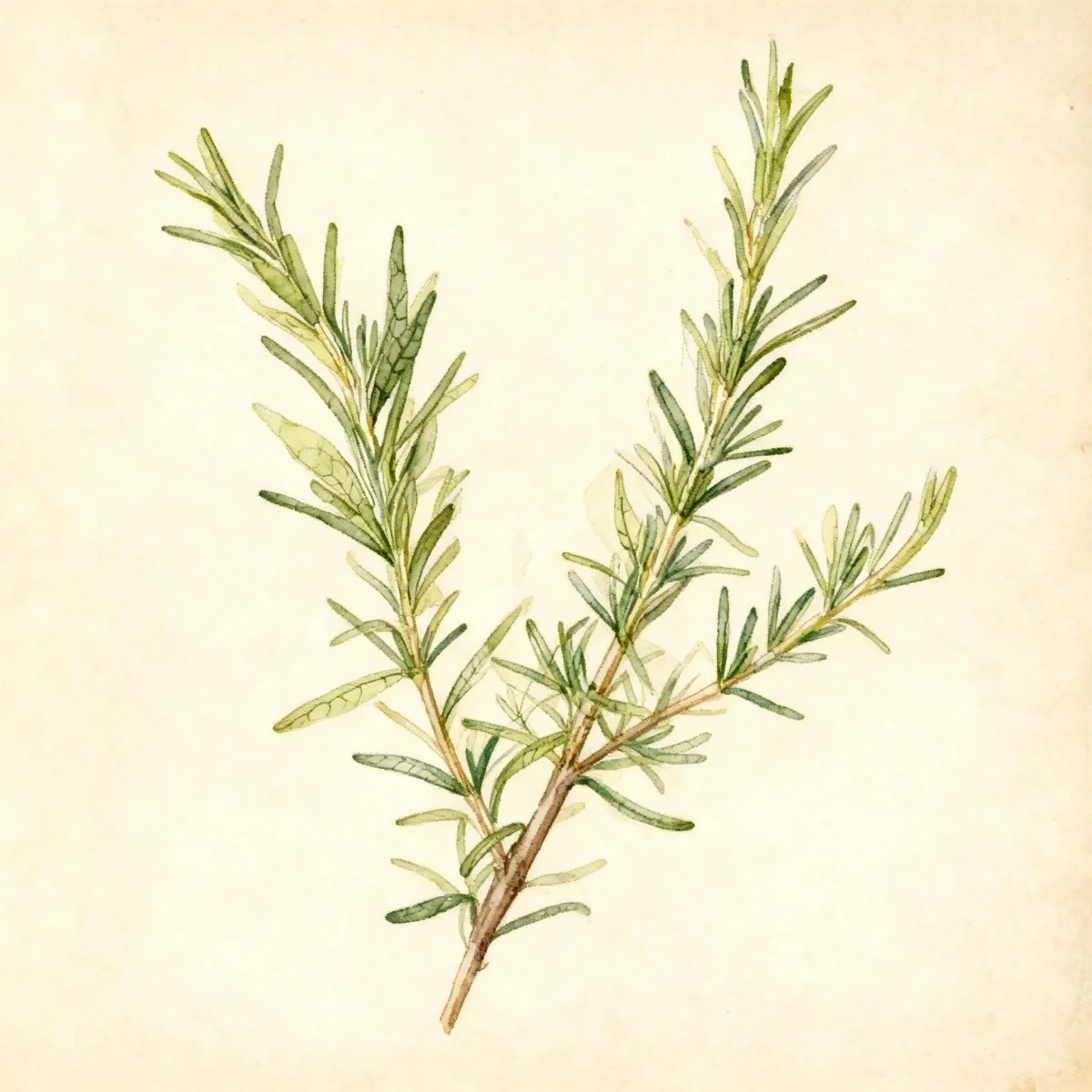
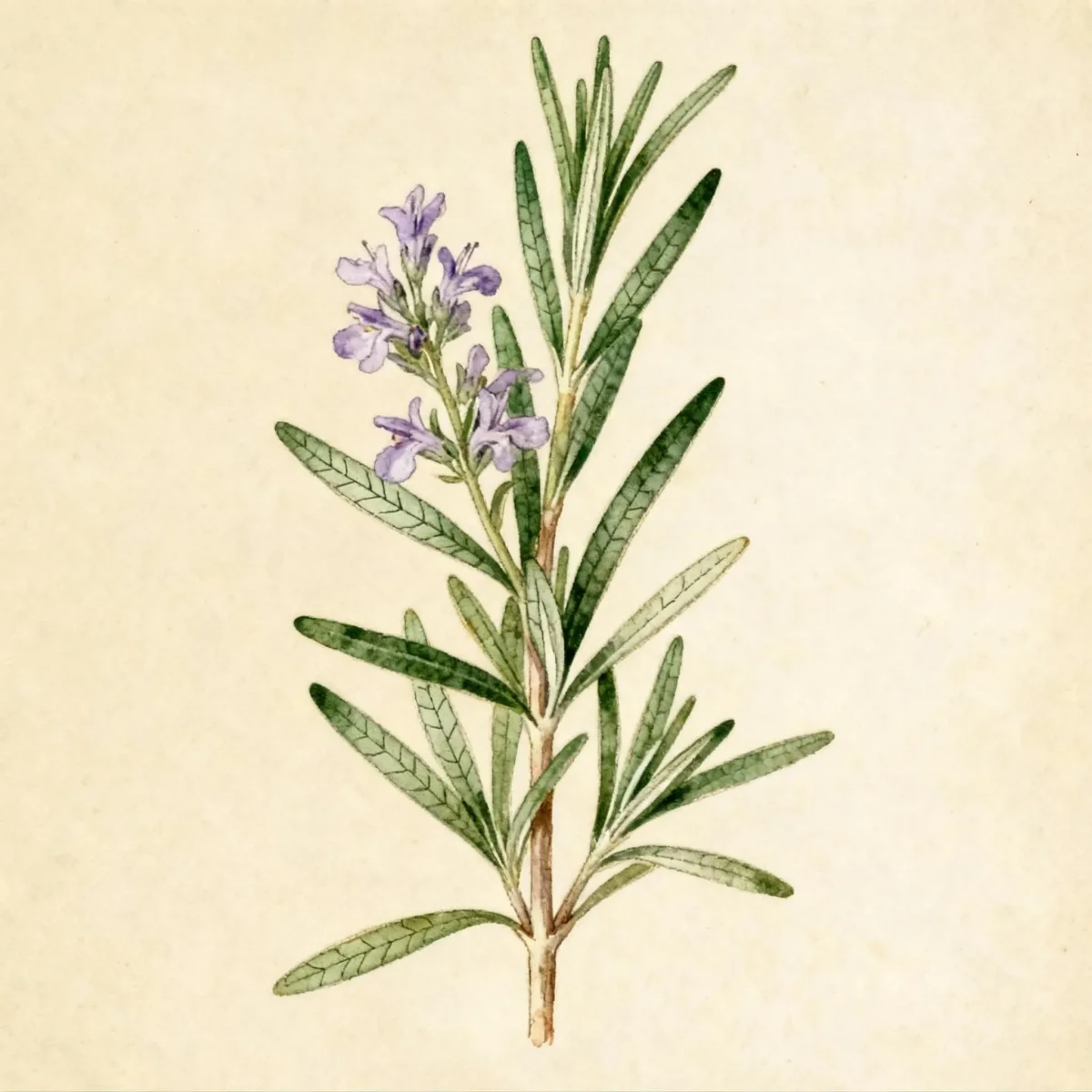
Rosemary (Salvia rosmarinus 'Madeline Hill')
Salvia rosmarinus 'Madeline Hill' is a compact Rosemary cherished for intensely fragrant, aromatic foliage and soft blue blooms.
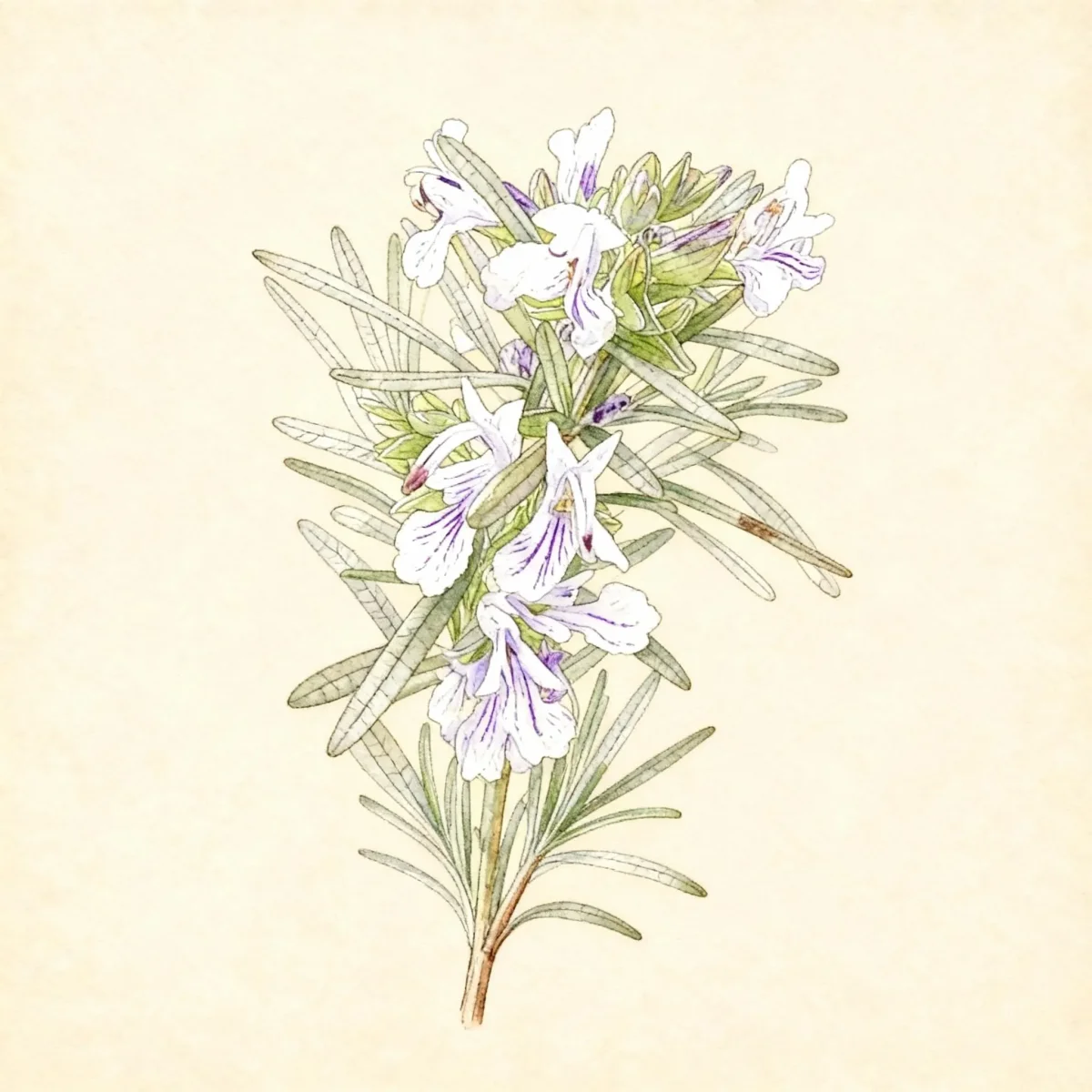

Bloom Boldly, No Matter the Season - Sweatshirt
Cozy organic cotton sweatshirt featuring our exclusive Purple Coneflower design. Perfect for gardeners who bloom year-round.
Inspired by the beautiful Rosemary
Limited first batch (50) — join the waitlist for early access
Waitlist closes Feb 15, 2026.
Complete Plant Information
Field Guide Continues
Ready for care notes, companion picks, and planting tips?
The map is just the start. The full guide below covers growth habits, seasonal performance, and landscape uses.
Overview
Salvia rosmarinus ‘Madeline Hill’ is a highly valuable culinary and ornamental evergreen shrub known widely as Rosemary. This cultivar offers improved cold tolerance over the standard species, making it successful in a wider range of garden settings, especially when compared to older varieties. Gardeners prize this plant for its stiff, upright stems densely covered in aromatic, needle-like, gray-green foliage prized in cooking and crafts. While typically grown as an herbaceous perennial in warmer regions, its ability to handle drier conditions once established makes Salvia rosmarinus ‘Madeline Hill’ an excellent choice for sun-drenched, low-water borders or attractive containers.
Fast Facts
- Plant Family: Lamiaceae
- Plant Type: Herbaceous perennial
- Hardiness Zones: USDA Zones 6-10
- Size at Maturity:
- Height: 2.5-3 ft
- Spread: 1.5-2 ft
- Bloom Time: Seasonal bloomer
- Bloom Description: Blue
- Sun Exposure: Full sun
- Water Needs: Dry to medium
- Maintenance Level: Medium
How to Grow
Planting Rosemary, especially Salvia rosmarinus ‘Madeline Hill’, requires meticulous drainage. Ensure the location receives full sun. While it tolerates light shade, optimal growth and flowering occur in maximum light. Soil should be light, slightly acidic, and crucially, dry to medium. Established plants exhibit good drought tolerance, but wet, poorly-drained soil conditions, particularly in winter, are usually fatal to Rosemary.
Watering must be managed carefully; allow the soil surface to dry out completely between applications, but do not let the entire root ball desiccate. Overwatering is a primary killer, invariably leading to root rot. Maintenance is medium; if desired, prune plants lightly after blooming concludes to encourage a denser habit. Propagation is best achieved using cuttings rather than seed.
For gardeners in borderline zones (like Zone 6 or 7) or those growing Salvia rosmarinus ‘Madeline Hill’ in containers, overwintering needs special attention. Bring containerized plants indoors before the first hard frost. Overwintering requires a sunny southern window, sufficient air circulation to prevent fungal issues like powdery mildew, and allowing the soil to dry between waterings. Take containers outside only after all danger of frost has passed in the spring.
Landscape Uses
Rosemary provides structure and year-round fragrance when integrated into varied landscapes. Where winter hardy (Zones 8-10), it excels in herb gardens, rock gardens, or along sunny borders where its compact statured habit can form a low hedge or specimen planting. Container culture is highly effective, utilizing clay pots to enhance drainage on patios or decks, making it easy to move Salvia rosmarinus ‘Madeline Hill’ indoors for winter protection.
Beyond its ornamental appeal, the intensely fragrant foliage of Rosemary is invaluable. The leaves contribute deep flavor to meats, fish, breads, and vinegars. Furthermore, the foliage and sometimes the tiny blooms are used in sachets, adding a rustic, traditional element to the garden design. Its Mediterranean origins mean it pairs beautifully with drought-tolerant, sun-loving companions like Lavender, Thyme, and certain ornamental grasses.
Standout Features
Flower Qualities
- Showy
Noteworthy Characteristics
Salvia rosmarinus, commonly known as rosemary, is a generally erect, rounded, evergreen shrub with aromatic, needle-like, gray-green leaves and tiny, two-lipped, pale blue to white flowers. The intensely fragrant foliage is commonly harvested for culinary flavorings, toiletries, and sachets, while the appearance adds excellent ornamental value to borders and patio settings. The cultivar ‘Madeline Hill’ is noted for being compact, offering fragrant foliage and soft blue flowers, reaching about 3’ tall and spreading to fill a 2’ area.
Tolerances
- Deer
- Drought
- Shallow-Rocky Soil
Potential Problems
Rosemary is vulnerable to fungal diseases, particularly powdery mildew, which thrives in humid conditions coupled with poor air circulation; ensuring good airflow around the foliage is crucial, especially for indoor overwintering plants. Conversely, overwatering invariably causes root rots, a common failure point for beginners. Keep an eye out for common houseplant pests like aphids, mealybugs, whiteflies, and spider mites when bringing containers inside for the dormant season, though outdoor plants are generally less bothered.
Frequently Asked Questions
What hardiness zones is Rosemary suitable for?
Salvia rosmarinus ‘Madeline Hill’ is suitable for USDA Zones 6 through 10, though it requires extra protection or containerization north of Zone 8.
How large does Rosemary grow?
This specific selection matures to a height between 2.5 and 3 feet and spreads to 1.5 to 2 feet wide.
What sun exposure does Rosemary need?
Rosemary requires full sun for the best performance, although it can tolerate very light shade.
When does Rosemary bloom?
This plant blooms seasonally with small, two-lipped blue flowers, typically blooming from late winter into spring when grown outdoors in suitable zones.
Conclusion
Salvia rosmarinus ‘Madeline Hill’ is an essential herb offering year-round visual appeal, intense fragrance, and culinary utility in a manageable, compact form. Successfully growing this Rosemary variety hinges on providing sharp drainage and ample sunlight, whether planted in the ground or maintained as a protective container specimen. Before planting, confirm your local climate falls within USDA Zones 6–10 to maximize its perennial success.
Propagation Tips
Propagation of Salvia rosmarinus ‘Madeline Hill’ is most reliably achieved through cuttings rather than seeds. Take semi-hardwood cuttings in late summer or early fall when the new growth has started to firm up but is not fully woody. Cuttings should be taken 4 to 6 inches long, stripping the needles from the bottom half of the cutting. Dipping the base in rooting hormone can speed up success, although it is sometimes successful without it.
Plant these prepared cuttings in a very well-draining, loose medium, such as a mix of perlite and coarse sand. Keep the cuttings warm and mist them frequently or cover them with a plastic dome to maintain high humidity while they develop roots. Roots usually form within several weeks, allowing you to transplant the new Rosemary plants into individual pots for overwintering or into the garden the following spring once established.
Wildlife Benefits
The tiny, two-lipped flowers of Salvia rosmarinus ‘Madeline Hill’ attract important insect pollinators. While ornamental appeal is high, the flowers specifically draw in butterflies, bees, and other beneficial insect pollinators when blooming occurs. Due to its strong, aromatic foliage, deer tend to avoid foraging on this plant, making it a reliable addition to borders where browsing pressure is a concern near standard edibles.