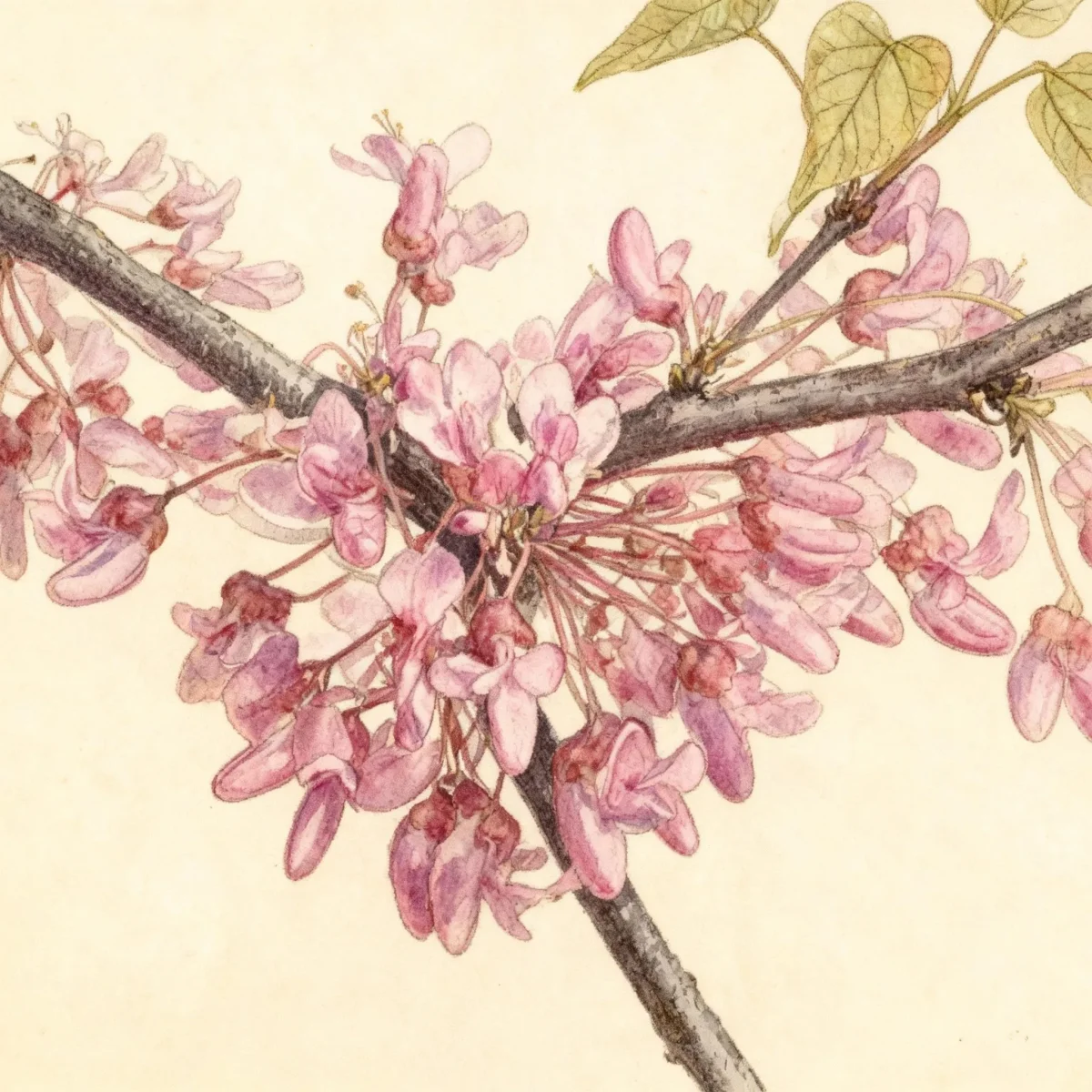

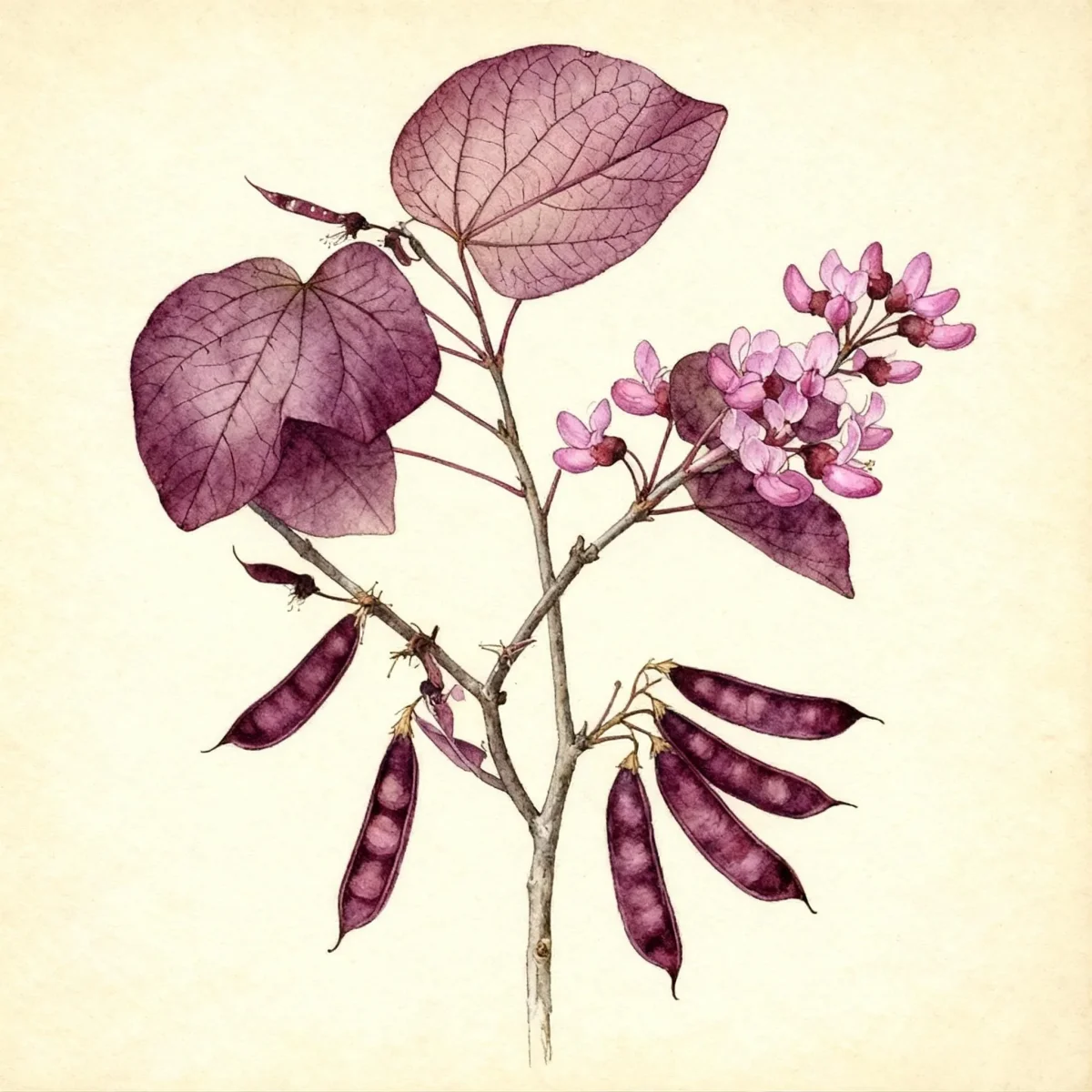
Redbud (Cercis 'Merlot')
Cercis 'Merlot' Redbud is a stunning ornamental tree known for its rich purple-maroon foliage and early spring blooms.
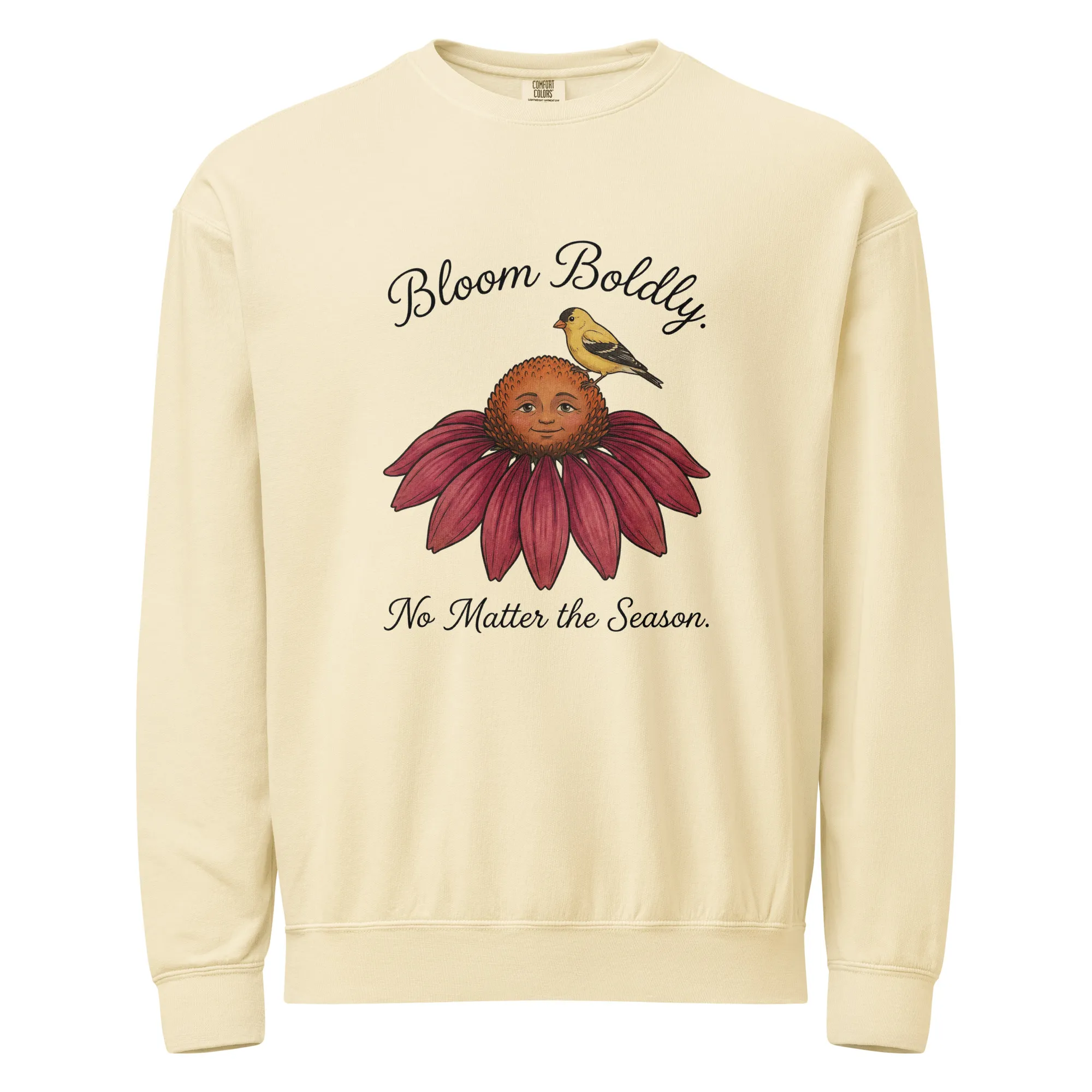
Bloom Boldly, No Matter the Season - Sweatshirt
Cozy organic cotton sweatshirt featuring our exclusive Purple Coneflower design. Perfect for gardeners who bloom year-round.
Inspired by the beautiful Redbud
Limited first batch (50) — join the waitlist for early access
Waitlist closes Feb 15, 2026.
Complete Plant Information
Field Guide Continues
Ready for care notes, companion picks, and planting tips?
The map is just the start. The full guide below covers growth habits, seasonal performance, and landscape uses.
Overview
The Cercis ‘Merlot’ is a standout hybrid cultivar of the popular Redbud, cherished by gardeners for its exceptionally colorful, deep purple foliage that rivals its early spring flowers. This tree offers multiple seasons of visual interest, beginning with a profusion of purple-pink blooms just before the new leaves fully emerge. Its compact size and dense branching pattern make the Cercis ‘Merlot’ an excellent specimen choice for smaller landscapes or defined areas.
As a low-maintenance addition to the landscape, the Redbud thrives when given consistent moisture during establishment. Its heart-shaped leaves provide a rich, dark backdrop throughout the summer, eventually transitioning to yellow tones in the fall. Homeowners seeking hardy, showy flowering trees should seriously consider incorporating the unique coloring of Cercis ‘Merlot’ into their garden designs.
Fast Facts
- Plant Family: Fabaceae
- Plant Type: Tree
- Hardiness Zones: USDA Zones 6-9
- Size at Maturity:
- Height: 12-15 ft
- Spread: 12-15 ft
- Bloom Time: March to April
- Bloom Description: Purple-pink
- Sun Exposure: Full sun to part shade
- Water Needs: Medium
- Maintenance Level: Low
How to Grow
Planting the Cercis ‘Merlot’ is best performed when the tree is young, as this variety—like many Redbuds—does not tolerate transplanting well once established. Aim to plant in spring or fall in average, medium-moisture soils that are well-drained. While it tolerates full sun, providing part shade will help protect the attractive foliage from scorching in intensely hot summer climates.
This flowering tree performs best in moderately fertile soils, requiring regular and consistent moisture, especially during its first few years in the ground. Avoid locations where water tends to pool, as wet or poorly drained soils can cause significant stress. Once established, the Redbud requires relatively low maintenance.
Routine care involves pruning only to remove dead or crossing branches as they occur. Keeping the tree vigorous through appropriate watering and occasional fertilization (if soil quality is poor) will also help it resist common issues. Since transplanting is difficult, select your final location carefully and allow this beauty to mature undisturbed.
Landscape Uses
The Cercis ‘Merlot’, with its manageable mature size of 12 to 15 feet, is perfectly scaled for use as a striking specimen tree in medium-sized yards or courtyard gardens. Its dense, upright habit also makes it an excellent choice for use as a prominent flowering tree in lawn settings or flanking entryways. Because it is listed as suitable for street tree applications, its tolerance for urban conditions, including clay soil, is a significant advantage.
Consider massing the Cercis ‘Merlot’ in small groups near patios or along woodland margins where its dark foliage can contrast beautifully with lighter green or variegated companion plants. The deep purple color ensures it stands out whether it is displaying its early spring flowers or showcasing its summer leaf color. Its versatility allows it to fit formal settings or more naturalized plantings equally well.
Standout Features
Flower Qualities
- Showy
- Good Cut
Noteworthy Characteristics
Cercis is a genus of around 10 species of shrubs and trees native to North America, Europe, and Asia. Several species and hybrids are common in cultivation and are typically grown for their showy blooms. ‘Merlot’ is a hybrid redbud selection that features colorful foliage and a showy display of purple-pink blooms in early spring. This cultivar is a second generation (F2) hybrid that resulted from crossing seedlings of Cercis canadensis var. Texensis ‘Texas White’ × C. Canadensis ‘Forest Pansy’. The glossy, heart-shaped leaves emerge dark purple before maturing to maroon and finally dark olive green by mid-summer.
Tolerances
- Deer
- Clay Soil
- Black Walnut
Potential Problems
The primary management concern for the Redbud family often involves fungal issues; Canker can become a significant disease problem if the plant is stressed. Other potential issues include Verticillium wilt, dieback, leaf spots, mildew, and various blights. Vigilance regarding insect pests, which can include scale, borers, and caterpillars, is also advised.
The best defense against these potential problems is maintaining a healthy plant. This means prioritizing proper watering, especially during dry spells, and ensuring any dead wood is promptly pruned out. Fortunately, deer tend to avoid browsing on the foliage of Cercis ‘Merlot’.
Frequently Asked Questions
What hardiness zones is Redbud suitable for?
The Cercis ‘Merlot’ Redbud thrives in USDA Hardiness Zones 6 through 9.
How large does Cercis ‘Merlot’ grow?
This compact cultivar generally reaches a mature height and spread between 12 to 15 feet tall and wide.
When does Redbud bloom?
The prolific flowering period for this Redbud occurs in early spring, typically from March to April, featuring beautiful purple-pink blossoms.
What sun exposure does Cercis ‘Merlot’ need?
For best performance and richest foliage color, plant the Cercis ‘Merlot’ in full sun to part shade; afternoon shade is beneficial in the hottest zones.
Conclusion
The Cercis ‘Merlot’ offers exceptional ornamental value that surpasses standard Redbuds due to its consistently deep, colorful foliage accompanying its signature spring blooms. As a tough city tree known for its low maintenance needs and tolerance for challenging soils, the Cercis ‘Merlot’ is a reliable showstopper. Before planting, confirm that your site falls within USDA Zones 6-9 and ensure young trees receive consistent moisture to help them establish successfully.
Companion Planting Recommendations
When integrating the Cercis ‘Merlot’ into a mixed border, select companions that thrive under similar medium moisture and fertility requirements, but offer textural or color contrast. Mid-to-late season flowering perennials that enjoy dappled sunlight, such as Astilbe or Hosta varieties with chartreuse or variegated leaves, will look spectacular next to the dark foliage of your Redbud. Avoid planting overly aggressive spreaders nearby, which can compete heavily with the tree’s moisture needs, especially while it establishes its root system.
Seasonal Care Calendar
Spring is the focal point for the Cercis ‘Merlot’, when you should clean up any winter debris and apply a light, slow-release fertilizer if desired after the blooms fade. Summer care centers entirely on water management; deeply and regularly water the tree, especially during periods of drought, to maintain that medium moisture level the tree prefers. In autumn, monitor leaf drop; while the fall color is often yellow, remove excessive leaf litter around the base to improve air circulation leading into winter dormancy.