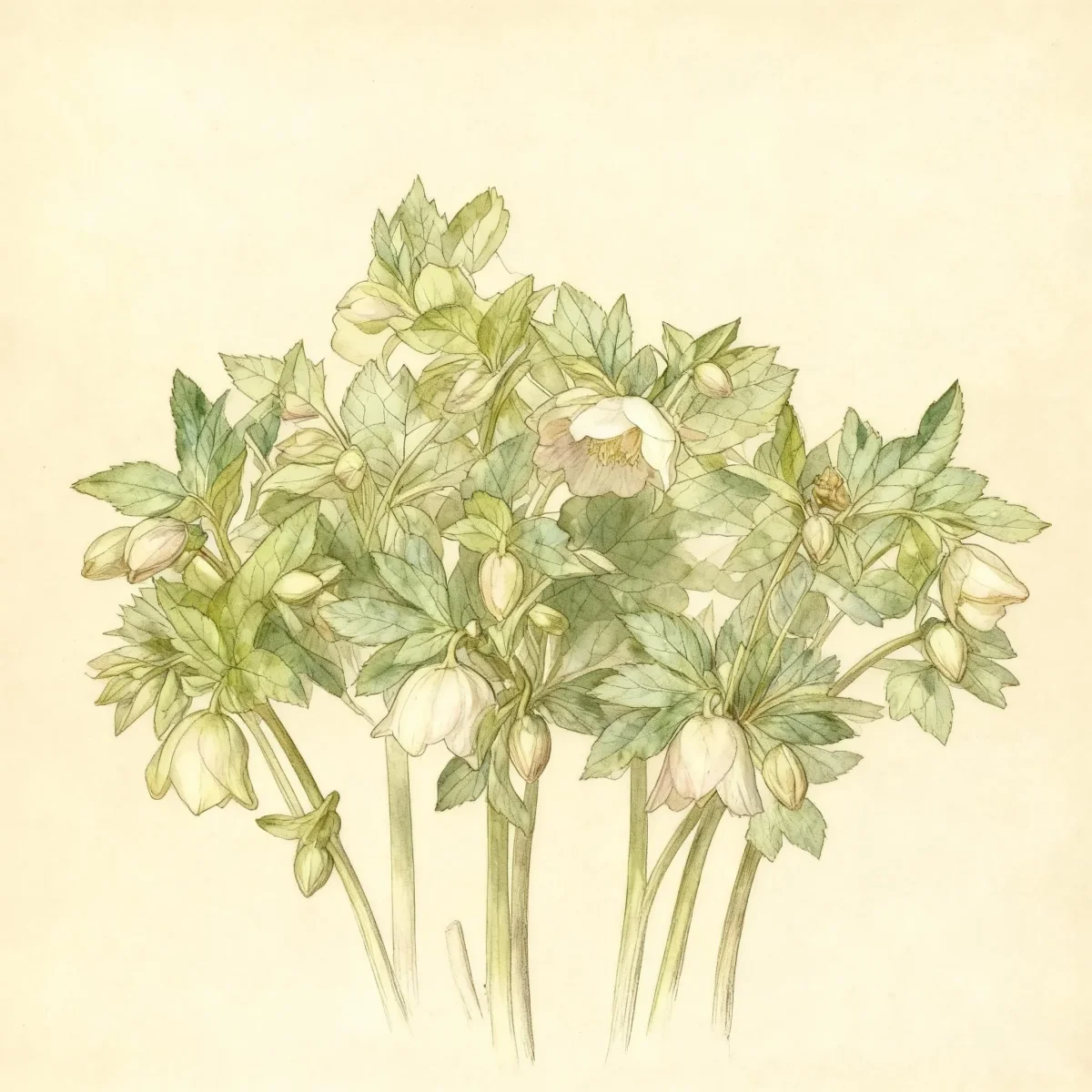
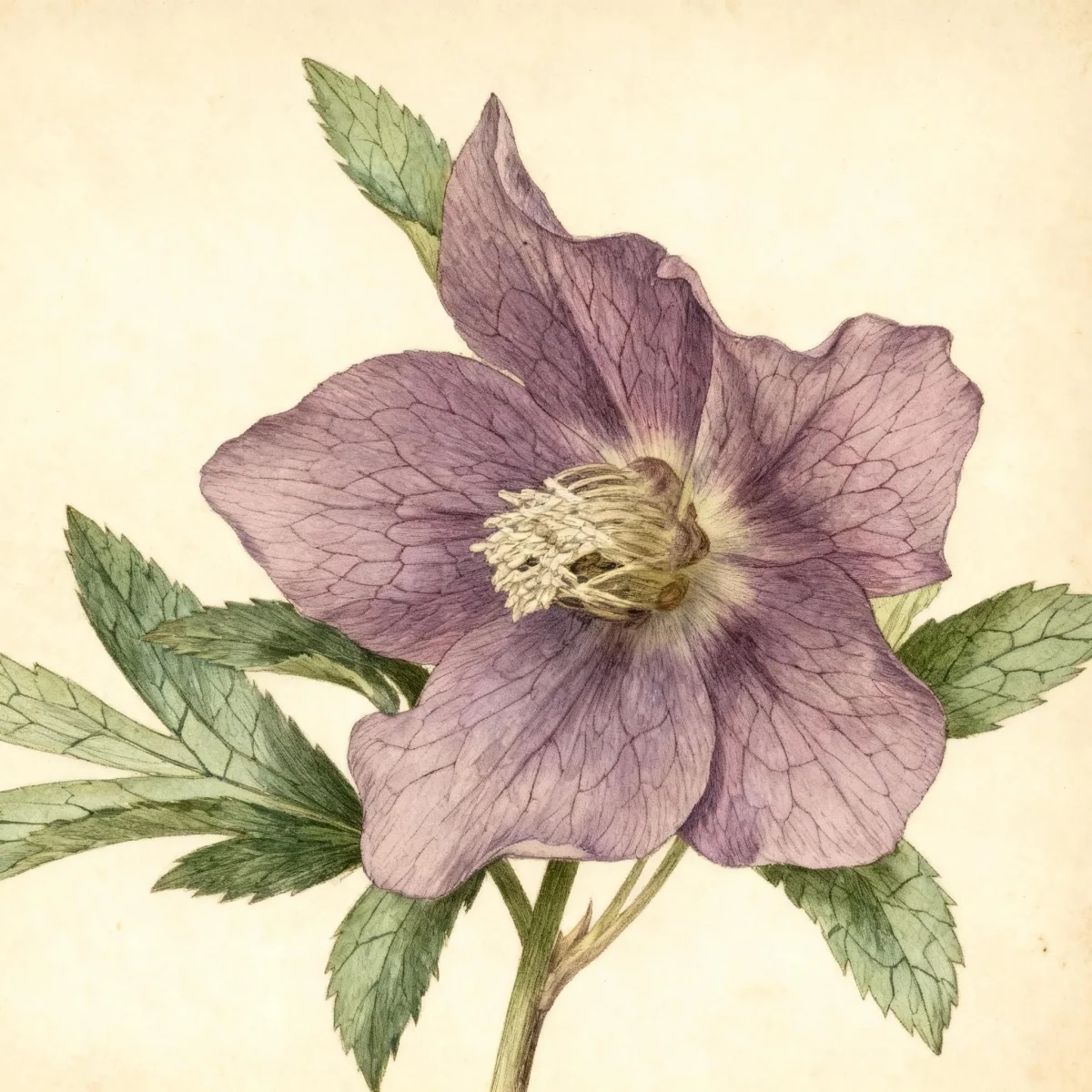
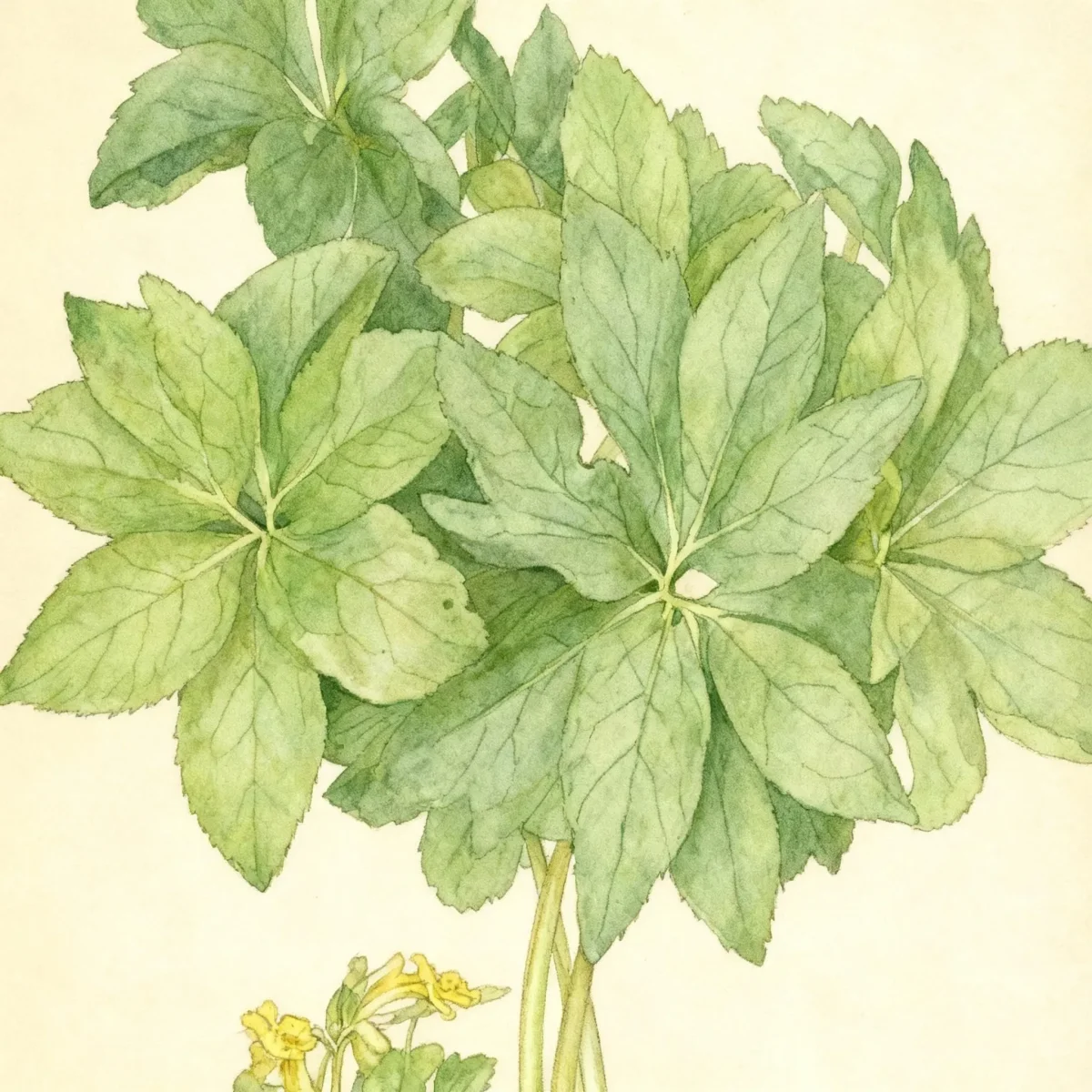
Hellebore (Helleborus HONEYMOON NEW YORK NIGHT)
The Helleborus HONEYMOON NEW YORK NIGHT Hellebore offers dark purple to black blooms from March to April, thriving in shade.
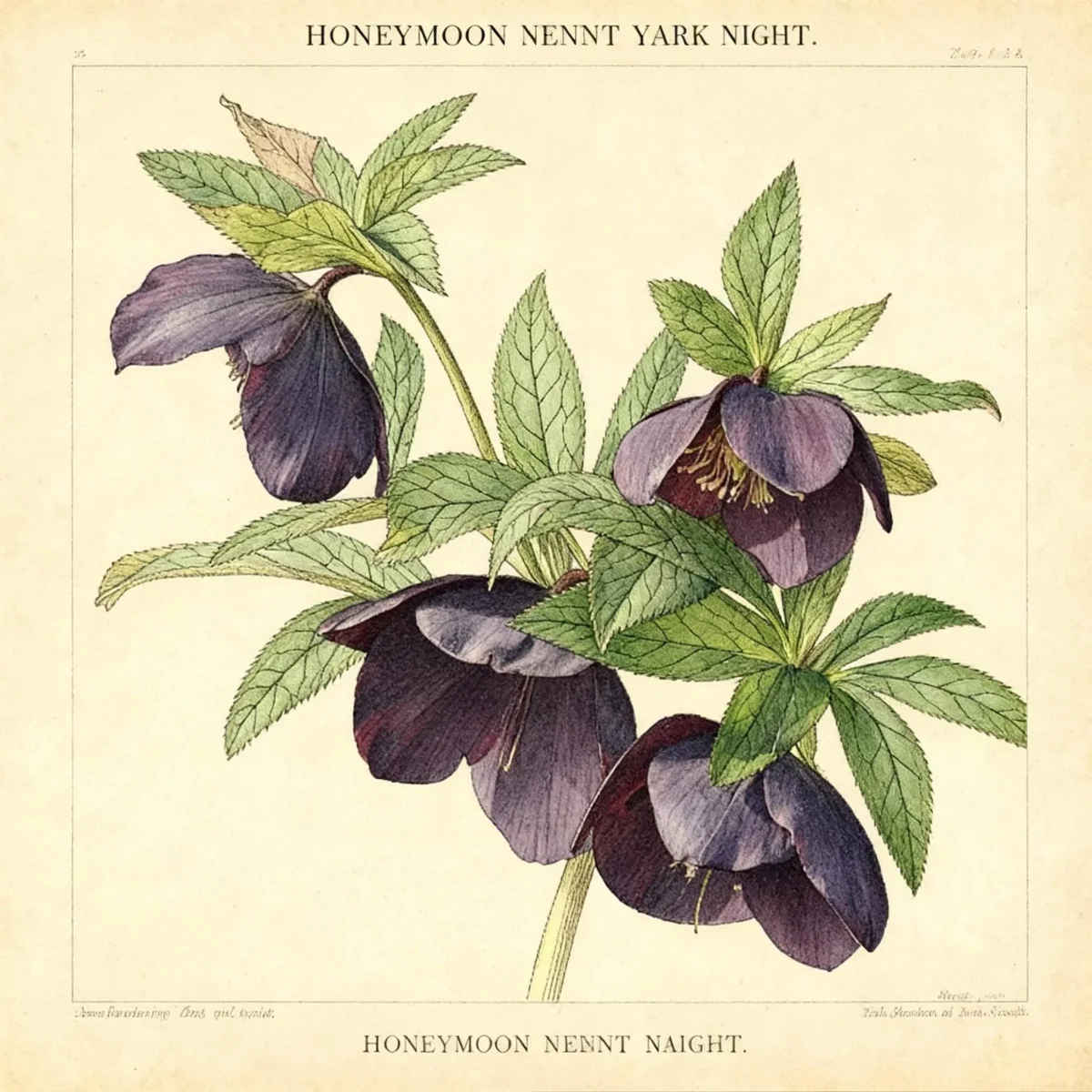

Bloom Boldly, No Matter the Season - Sweatshirt
Cozy organic cotton sweatshirt featuring our exclusive Purple Coneflower design. Perfect for gardeners who bloom year-round.
Inspired by the beautiful Hellebore
Limited first batch (50) — join the waitlist for early access
Waitlist closes Feb 15, 2026.
Complete Plant Information
Field Guide Continues
Ready for care notes, companion picks, and planting tips?
The map is just the start. The full guide below covers growth habits, seasonal performance, and landscape uses.
Overview
The Helleborus HONEYMOON NEW YORK NIGHT is a highly desirable herbaceous perennial celebrated for pushing color into the late winter and early spring landscape. As a sturdy Hellebore hybrid, it provides consistent evergreen interest, making it invaluable when most other plants remain dormant. This specific selection is prized for its floriferous display of darkly colored blooms.
Mature plants of this robust Hellebore reach about 2 feet tall and across, forming neat, clump-forming mounds of glossy, divided foliage. The nearly black, single cup-shaped flowers of Helleborus HONEYMOON NEW YORK NIGHT are a dramatic contrast against the emerging spring light and last for an extended period.
Gardeners value this perennial for its low fuss requirements and its reliability in shaded areas where few other showy options succeed. Plant the Helleborus HONEYMOON NEW YORK NIGHT where its early show can be easily appreciated, providing much-needed cheer during the transition from winter to spring.
Fast Facts
- Plant Family: Ranunculaceae
- Plant Type: Herbaceous perennial
- Hardiness Zones: USDA Zones 4-9
- Size at Maturity:
- Height: 1.5-2 ft
- Spread: 1.5-2 ft
- Bloom Time: March to April
- Bloom Description: Dark purple to black
- Sun Exposure: Part shade to full shade
- Water Needs: Medium
- Maintenance Level: Low
How to Grow
Planting this Hellebore is best accomplished in late summer or early fall, allowing the roots to establish before the heat or deep freeze. This variety thrives in organically rich, fertile soils that are humusy and well-drained. Ensure your planting site offers protection from harsh winter winds, as the evergreen foliage can scorch or become tattered in extremely cold conditions, especially without protective snow cover.
Water needs are medium; maintain consistent, medium moisture, particularly during dry spells, ensuring the soil remains well-drained to prevent root issues. While generally low maintenance, you should cut back the old flowering stems immediately after the blooms fade to encourage the freshest, healthiest new foliage growth. Congested mature clumps can be divided in very late summer or early fall.
Remember that while the stunning blossoms appear early, hybrid hellebores grown from seed can take as long as two years to produce their first flowers. Choosing the established Helleborus HONEYMOON NEW YORK NIGHT variety ensures a reliable early return on your investment, as mature plants provide a floriferous display in early to mid-spring.
Landscape Uses
The evergreen nature of the Hellebore makes it an essential component for year-round garden structure, especially in deep shade. Listed uses include massing for attractive ground cover or naturalizing in woodland settings beneath mature trees and large shrubs. Planting in large groups offers the greatest visual impact, effectively marking the end of winter.
Locating these plants near patios, walkways, or kitchen windows is easily justified, enabling close admiration of the nodding, dark blooms of Helleborus HONEYMOON NEW YORK NIGHT during the late winter months. These perennials pair beautifully with other shade lovers such as Hosta, Japanese Forest Grass (Hakonechloa), and various ferns, though ensure companions do not overly compete for moisture.
Standout Features
Flower Qualities
- Showy
Noteworthy Characteristics
Hybrid hellebores, sometimes commonly called hybrid Lenten roses or hybrid winter roses, are bushy, clump-forming perennials which typically grow to 12-15” tall. They are noted for producing single, cup-shaped flowers (typically 2-3” diameter) with five showy, usually overlapping petals (technically sepals), but sometimes come in a double flowered form. Flowers bloom in a large variety of colors, including various shades and tints of white, pink, red, purple, and yellow, and sometimes have inside spotting. Bloom typically commences in late winter extending into early spring. Flowers appear at the tips of branched stems clad with evergreen dark green leaves which are divided into glossy, leathery, deeply-lobed, often toothed, lanceolate to elliptic segments.Genus name comes from the Greek words bora meaning “food” and helein meaning “injures/destroys” in reference to the plant’s toxic leaves, stems and roots which are poisonous to humans if ingested.Hellebores is the old Greek name for H. Orientalis.HONEYMOON NEW YORK NIGHT is a vigorous selection of hellebore that features dark green foliage and a floriferous display of dark purple to black flowers. The gently nodding, 2.5-3” wide, single blooms appear in early to mid-spring. Mature plants will reach 2’ tall with an equal spread.
Tolerances
- Rabbit
- Deer
- Heavy Shade
Potential Problems
This classic Hellebore generally exhibits few serious insect or disease problems when sited correctly, which is a major benefit. Occasional issues may include crown rot if drainage is poor, or leaf spot fungi, particularly in overly damp or crowded conditions. Remember that the leaves, stems, and roots of the plant are poisonous if ingested by humans or pets. While deer and rabbits typically avoid this foliage entirely, proper siting in well-drained soil is the best preventative measure against fungal issues.
Frequently Asked Questions
What hardiness zones is Hellebore suitable for?
The Helleborus HONEYMOON NEW YORK NIGHT is reliably hardy in USDA Zones 4 through 9.
How large does Hellebore grow?
This perennial typically reaches a height between 1.5 and 2 feet, with a spread of 1.5 to 2 feet at maturity.
What sun exposure does Hellebore need?
This plant prefers partial shade to full shade conditions, thriving best in light to moderate shade throughout the day.
When does Hellebore bloom?
The bloom time for this variety is generally from March into April, displaying dark purple to black flowers.
Conclusion
The reliable, early-season performance and evergreen foliage of the Helleborus HONEYMOON NEW YORK NIGHT make it a cornerstone plant for managing tough, shady garden spaces. By capitalizing on the low maintenance nature of this hardy Hellebore, you ensure visual interest long before most other perennials awaken. Plan your purchase and planting for early fall to maximize establishment before the next winter season arrives.
Companion Planting
When designing a border around your Helleborus HONEYMOON NEW YORK NIGHT, focus on plants that share similar cultural requirements for moist, rich, alkaline soil and shade. Consider pairing them with broadleaf evergreens like Japanese Holly (Ilex crenata) for year-round structure, or deciduous ground covers such as Sweet Woodruff (Galium odoratum). Since the Hellebore blooms so early, spring bulbs like snowdrops (Galanthus) or early daffodils that emerge near the same time offer an exciting color progression as they mature alongside the Hellebore’s fading flowers.
Propagation Tips
While hybridization makes exact reproduction tricky, established groups of Helleborus HONEYMOON NEW YORK NIGHT can be increased through division, which is essential for managing overcrowded clumps. Perform this division only in late summer or early fall when the plant is beginning to slow its growth cycle but before the true winter dormancy sets in. Carefully lift the entire clump and gently tease apart the root sections, ensuring each division retains a healthy portion of both roots and growing points. Replant immediately into prepared, well-amended soil.