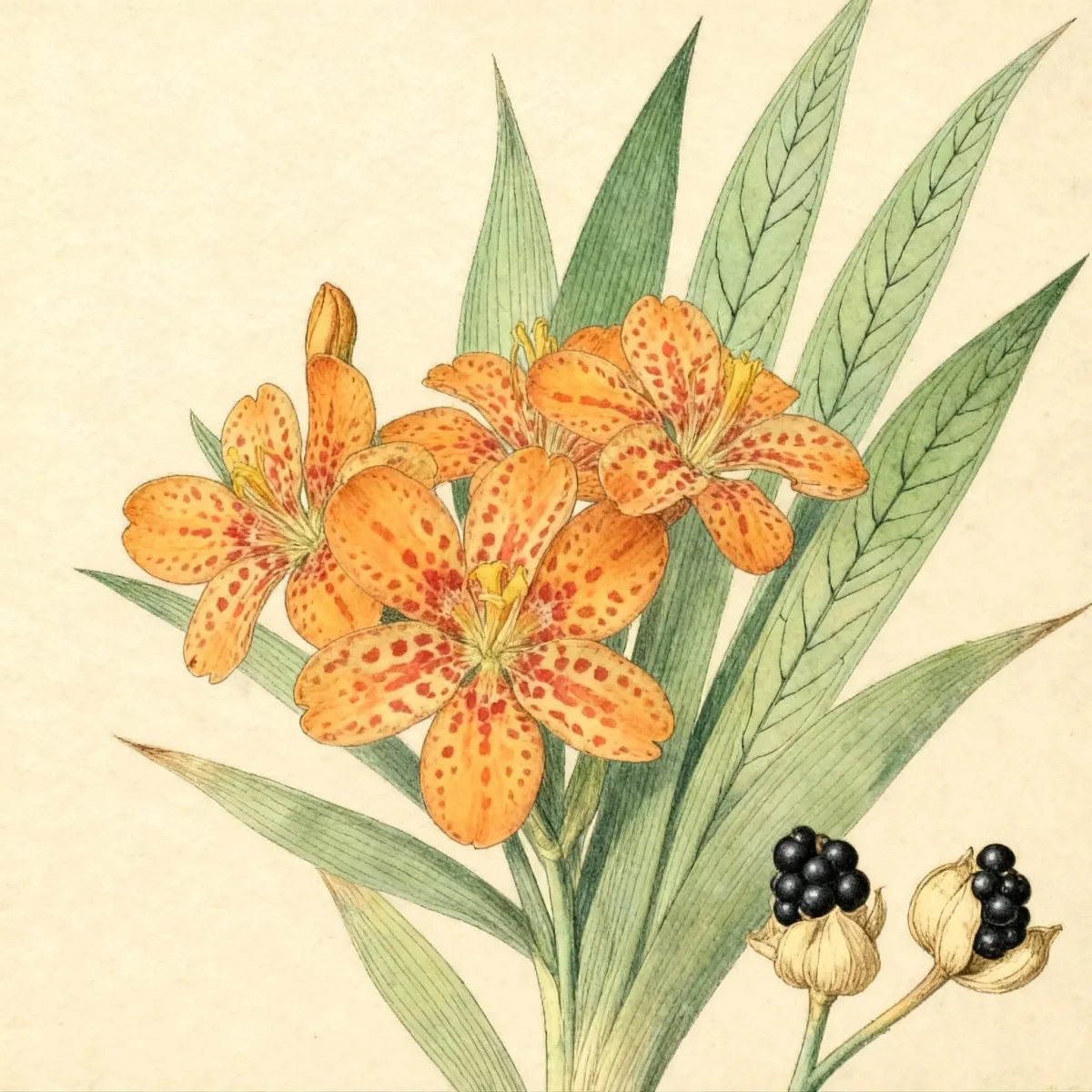
Blackberry lily (Iris domestica 'Freckle Face')
Iris domestica 'Freckle Face' is a low-maintenance perennial boasting orange, red-spotted blooms and persistent, berry-like seed heads.

Bloom Boldly, No Matter the Season - Sweatshirt
Cozy organic cotton sweatshirt featuring our exclusive Purple Coneflower design. Perfect for gardeners who bloom year-round.
Inspired by the beautiful Blackberry lily
Limited first batch (50) — join the waitlist for early access
Waitlist closes Feb 15, 2026.
Complete Plant Information
Field Guide Continues
Ready for care notes, companion picks, and planting tips?
The map is just the start. The full guide below covers growth habits, seasonal performance, and landscape uses.
Overview
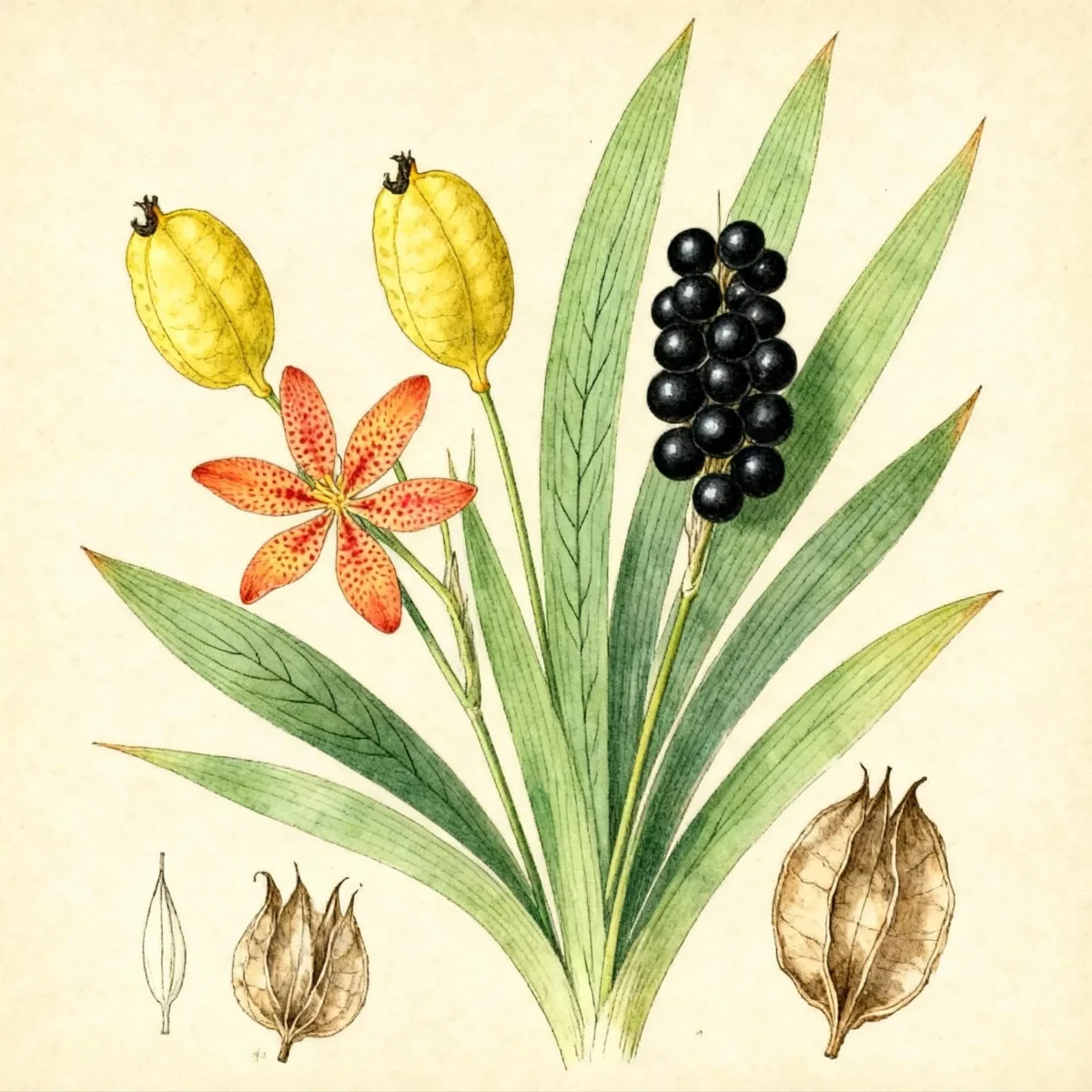
Iris domestica ‘Freckle Face’, commonly known as Blackberry lily, offers unique texture and color contrast for summer gardens. This herbaceous perennial is highly valued for its late summer blooms, which feature striking lily-like, deep orange flowers heavily spotted with red dots. Its upright, sword-shaped foliage provides an attractive green backdrop even when not in flower.
The transition from flower to persistent, pear-shaped seed pods ensures visual interest extends well into the fall and winter months. The mature pods open to reveal clusters of black seeds, mimicking blackberries, which gives the Blackberry lily its memorable common name. Cultivar ‘Freckle Face’ is known for its manageable size, reaching up to 2 feet tall, and its improved resistance to common leaf spot issues.
This plant is relatively easy to grow, preferring full sun and average, well-drained soils. While it appreciates medium moisture, overwatering, especially in poorly-drained soil during winter, should be avoided. Gardeners appreciate Iris domestica ‘Freckle Face’ for its low maintenance needs and its tendency to slowly expand its clumps via creeping rhizomes.
Fast Facts
- Plant Family: Iridaceae
- Plant Type: Herbaceous perennial
- Hardiness Zones: USDA Zones 5-10
- Size at Maturity:
- Height: 1.5-2 ft
- Spread: 0.75-1 ft
- Bloom Time: July to August
- Bloom Description: Orange with red spots
- Sun Exposure: Full sun
- Water Needs: Medium
- Maintenance Level: Low
How to Grow
Plant Iris domestica ‘Freckle Face’ in the spring after the danger of hard frost has passed, or in early fall. Choose a location that receives full sun daily, as insufficient light will diminish blooming. The soil should be average and well-drained; while this Blackberry lily appreciates medium soil moisture, excessive wetness, particularly during winter dormancy, must be avoided as it can prove fatal to the rhizomes.
Once established, watering needs are medium. Provide consistent moisture during the heat of summer, but allow the soil to dry slightly between thorough soakings. Fertilization is rarely necessary; rich soil promotes lush foliage but may reduce flower production. Division is usually only needed every few years when the clumps become overcrowded, as this plant expands slowly.
Deadheading faded flowers can tidy the appearance, though many gardeners leave the spent flower stalks intact to showcase the unique seed pods. After the first hard frost in autumn, foliage can be cut back close to the ground. While the plant is generally short-lived, consistent garden presence is maintained as the Blackberry lily may self-seed lightly in ideal conditions.
Landscape Uses
The upright, sword-like foliage of Iris domestica ‘Freckle Face’ lends itself perfectly to structured plantings. Its moderate height makes it an excellent choice for bordering pathways or defining the edges of a mixed perennial bed. Plant clumps intermittently to achieve a naturalized look, spacing them appropriately to allow their 1-foot spread.
Consider pairing this variety with plants that offer different textural elements. Its summer bloom time means it complements later-season perennials that bloom in the fall, providing continuous interest. The striking orange and red spots of the flowers contrast beautifully against silvery foliage or blue-flowering companions, such as Catmint or certain Salvia cultivars.
Since the seed heads persist after blooming, the Blackberry lily functions well as a structural element in winter gardens, especially when placed near evergreen shrubs. For a formal look, mass planting Iris domestica ‘Freckle Face’ along a sunny border creates a striking band of color and texture throughout the growing season.
Flower Qualities
- Showy
Fruit Qualities
- Showy
Noteworthy Characteristics
Iris domestica, commonly called blackberry lily or leopard lily, is an erect, rhizomatous perennial which typically grows 2-3’ tall. Lily-like, deep orange flowers (to 2” across), heavily spotted with red dots, have 6 petal-like perianth segments. Flowers appear in early to-mid summer in sprays above the foliage on wiry, naked stems typically rising to 3’ (less frequently to 4’) tall. Sword-shaped, iris-like, medium green leaves (to 10” long) are in flattened fans. Flowers give way to pear-shaped seed pods which split open when ripe (late summer), with each pod revealing a blackberry-like seed cluster, hence the common name of blackberry lily. The seed heads are persistent and can provide winter interest. Spotting on the flowers gives rise to the additional common name of leopard lily. Formerly known as Belamcanda chinensis.Genus named for the Greek goddess of the rainbow.Specific epithet means frequently used as a house plant or domesticated.‘Freckle Face’ features 2” wide, orange-yellow blooms speckled with contrasting red spots. The flowers are held in sprays of 3-12 that emerge from the foliage clumps from mid to late summer. The foliage is typical of irises, with upright fans of lanceolate leaves. Mature plants will reach up to 2’ tall with a 1’ spread.
Tolerances
- No serious insect or disease problems.
Potential Problems
While generally robust, gardeners should be aware of potential pest issues, primarily Iris borers which may attack the rhizomes beneath the soil surface. Fortunately, the ‘Freckle Face’ cultivar is noted for offering improved natural resistance to cercospora leaf spot, a common fungal issue for many related plants. Good air circulation and avoiding overly wet winter conditions will further minimize most disease risks. Promptly removing any visibly damaged foliage can help limit the spread of potential issues.
Frequently Asked Questions
What hardiness zones is Blackberry lily suitable for?
The Blackberry lily, Iris domestica ‘Freckle Face’, is hardy across USDA Zones 5 through 10, offering broad adaptability.
How large does Iris domestica ‘Freckle Face’ grow?
This specific perennial typically achieves a height between 1.5 and 2 feet, with a spread ranging from 0.75 to 1 foot at maturity.
When does Blackberry lily bloom?
You can expect the distinctive flowers of Iris domestica ‘Freckle Face’ to appear from July through August, showing off their vibrant orange with red spots.
What sun exposure does Iris domestica ‘Freckle Face’ need?
This plant thrives best when situated in full sun exposures in the garden.
Conclusion
The Iris domestica ‘Freckle Face’ delivers exceptional value through its vibrant, spotted summer flowers and its unique, persistent berry-like winter interest. Its low maintenance requirements and adaptation to full sun make the Blackberry lily an ideal choice for a variety of landscapes. Confirm your USDA hardiness zone compatibility and plan for spring planting to enjoy this striking perennial next summer.
Companion Planting
Selecting companions for Iris domestica ‘Freckle Face’ should focus on plants with similar needs for full sun and medium water, yet offering contrasting textures and bloom times. Consider pairing it with hardy, drought-tolerant perennials like Russian Sage (Perovskia) or ornamental grasses whose fine, airy plumes will contrast with the stiff, upright fans of the lily. Plants that bloom later in the season, such as Sedum or Coneflowers, will ensure continuous color once the Blackberry lily bloom fades.
Propagation Tips
While Iris domestica ‘Freckle Face’ clumps slowly expand via creeping rhizomes, propagation is generally straightforward through division. This is best performed in early spring or early fall when the plant is dormant or just initiating growth. Carefully excavate the clump and gently separate the rhizomes, ensuring each division has healthy root mass and at least one visible growth shoot. Plant these divisions immediately at the same depth they were previously growing, ensuring the crown is just below the soil surface.