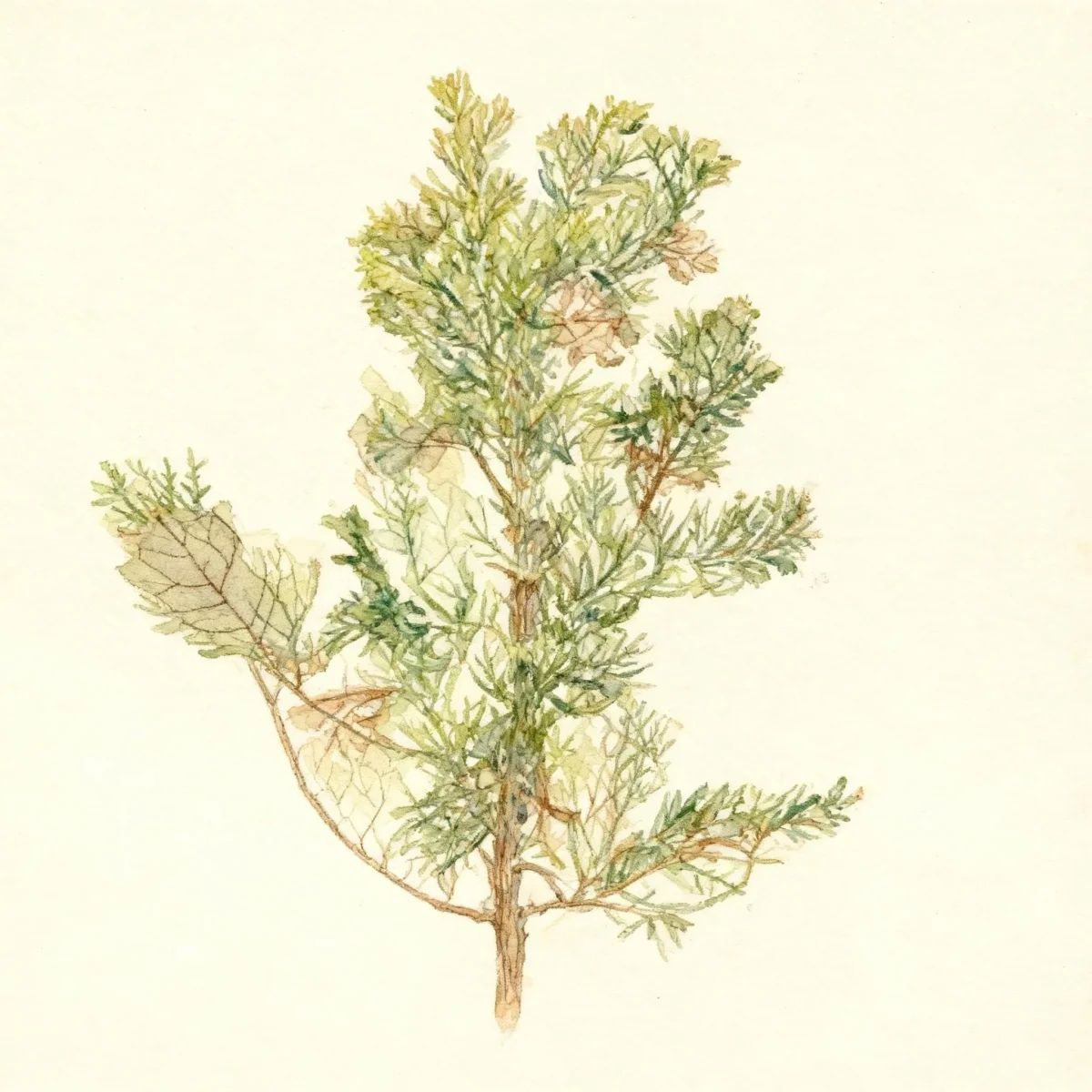
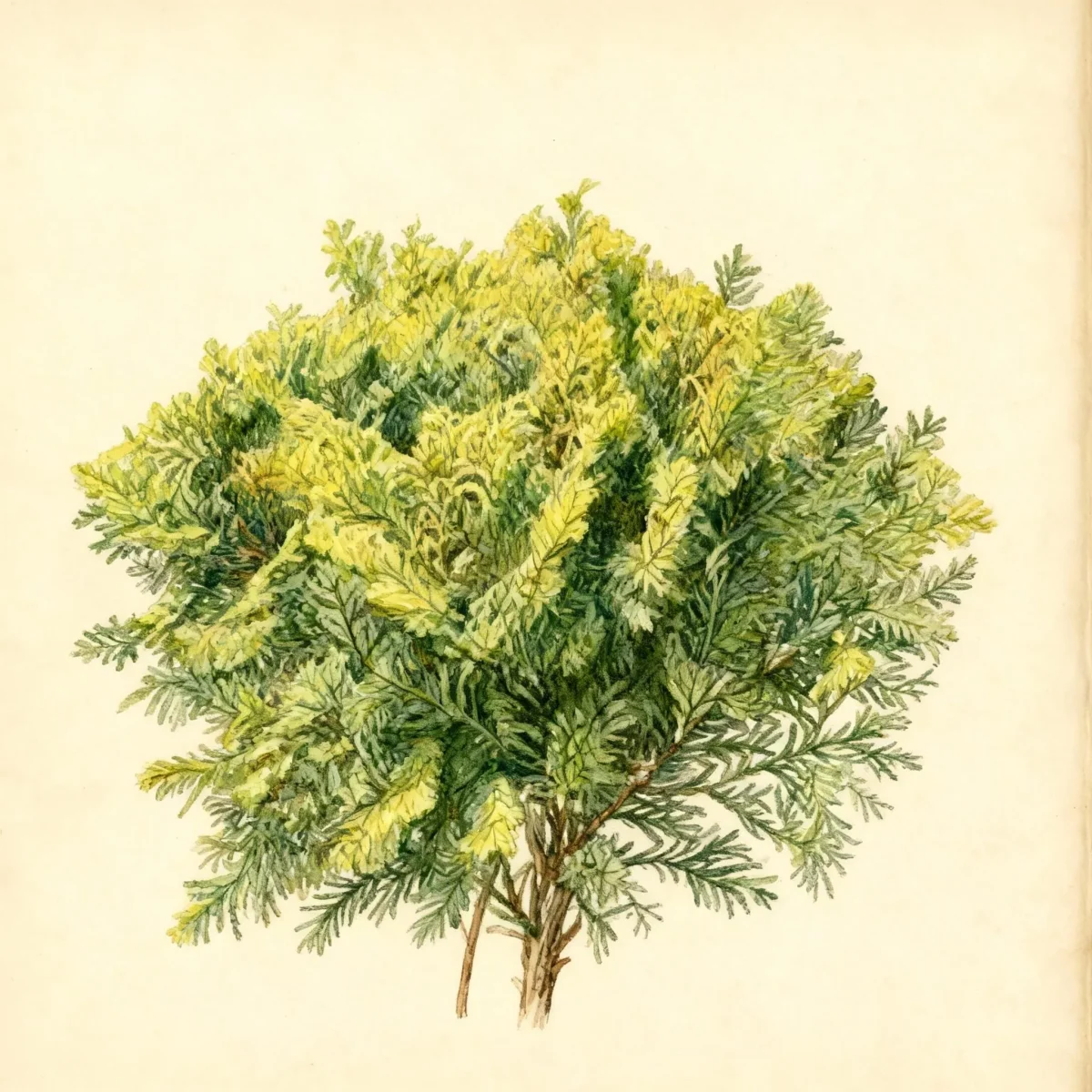
Hinoki cypress (Chamaecyparis obtusa 'Hage')
Discover Chamaecyparis obtusa 'Hage', a miniature Hinoki cypress growing 1.5' tall with dense, dark green foliage perfect for rock gardens.
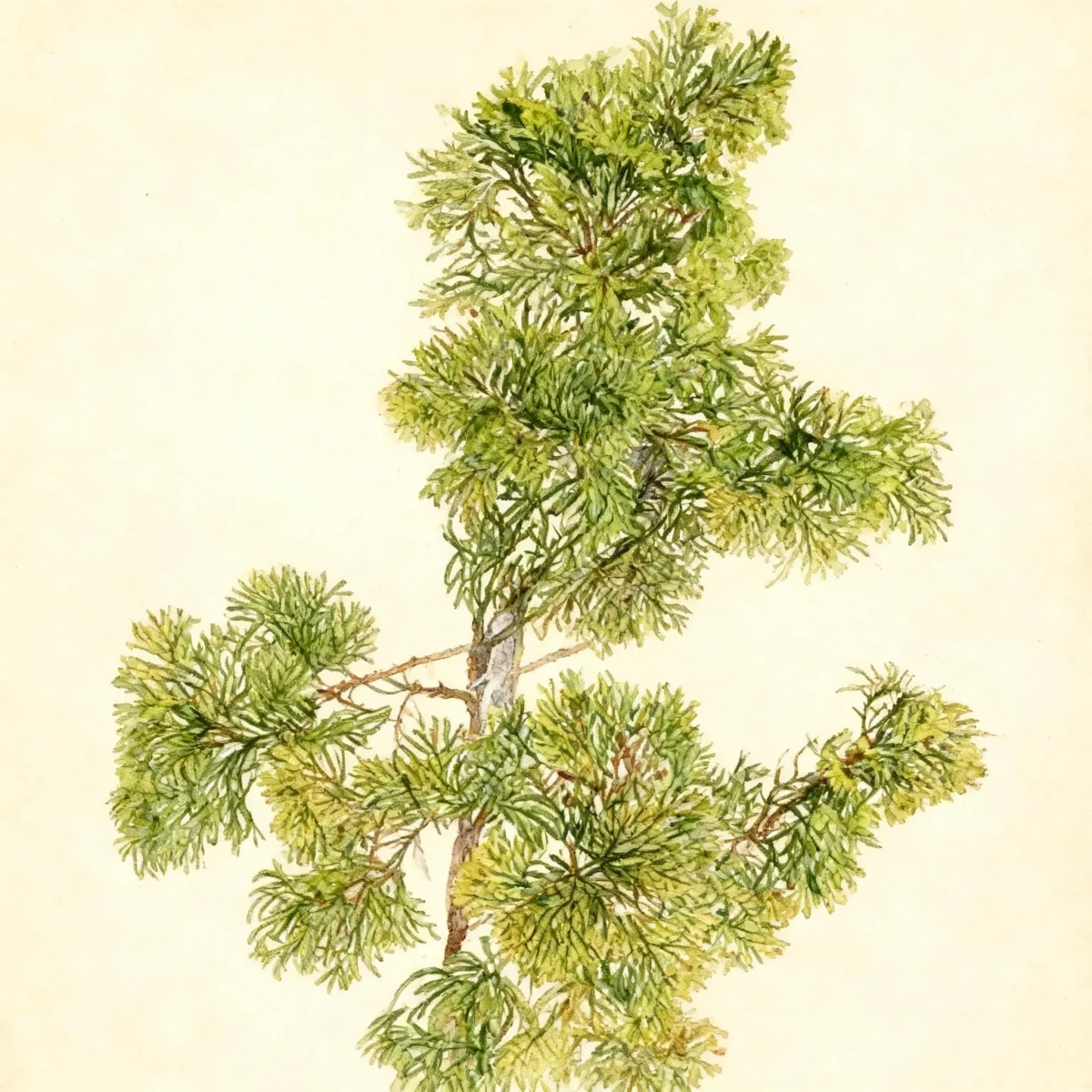

Bloom Boldly, No Matter the Season - Sweatshirt
Cozy organic cotton sweatshirt featuring our exclusive Purple Coneflower design. Perfect for gardeners who bloom year-round.
Inspired by the beautiful Hinoki cypress
Limited first batch (50) — join the waitlist for early access
Waitlist closes Feb 15, 2026.
Complete Plant Information
Field Guide Continues
Ready for care notes, companion picks, and planting tips?
The map is just the start. The full guide below covers growth habits, seasonal performance, and landscape uses.
Overview
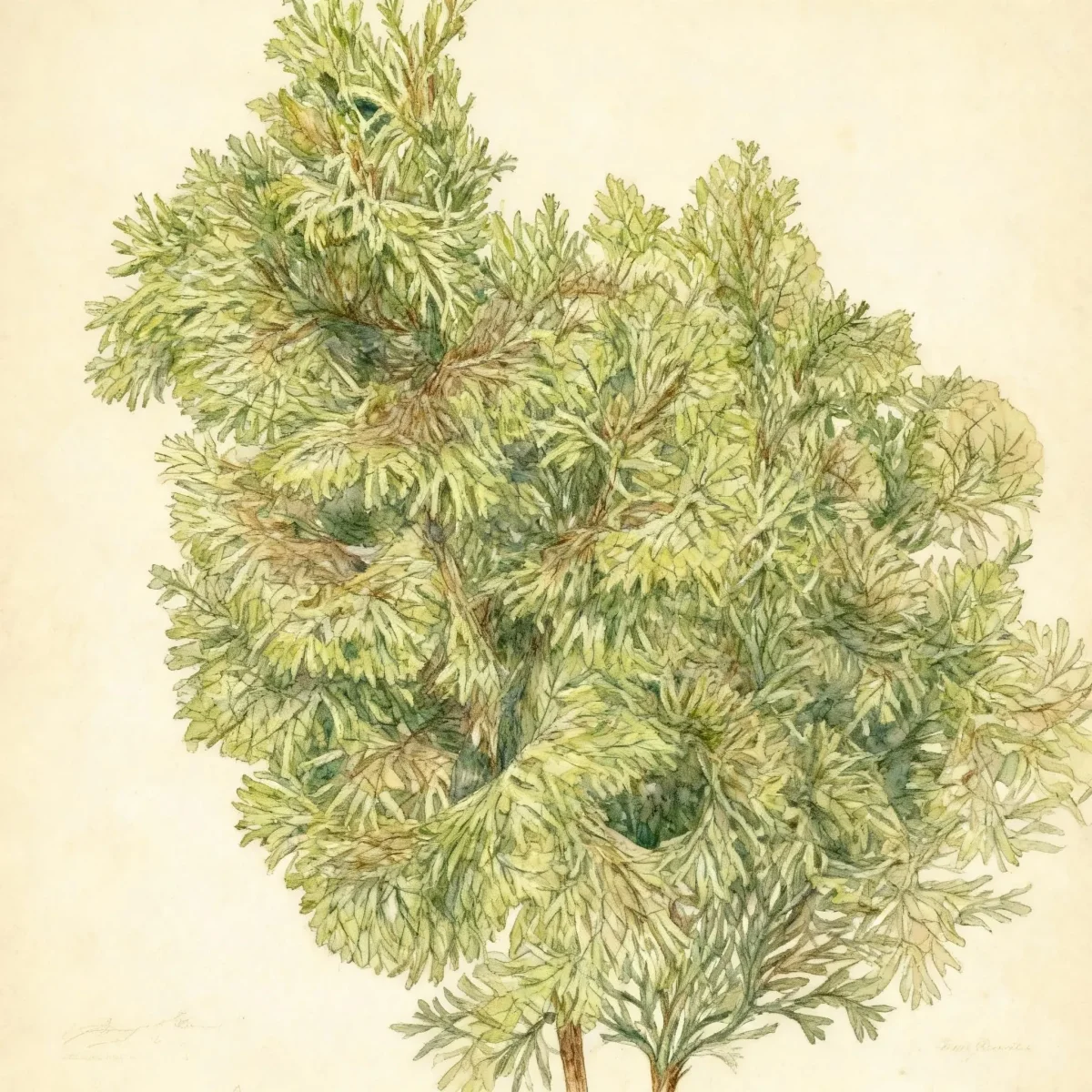
The Chamaecyparis obtusa ‘Hage’, commonly known as Hinoki cypress, is a highly valued miniature cultivar renowned for its compact, dense globose form. This dwarf evergreen is an exceptional choice for smaller landscapes or rock gardens where slower growth and manageable size are essential for long-term structure. Its dark green foliage provides year-round texture and interest, making it a dependable specimen plant.
As a dwarf cultivar, Chamaecyparis obtusa ‘Hage’ typically reaches only 1 to 1.5 feet in height and spread over ten years, offering substantial impact without overwhelming space. It maintains the stately presence of its larger relatives but perfectly suits modern or constrained garden designs. Gardeners appreciate the low maintenance associated with this variety of Hinoki cypress.
Originating from Japan, the species name obtusa refers to the rounded tips of its scale-like leaves, creating a soft texture within the garden scheme. Planting the Chamaecyparis obtusa ‘Hage’ ensures a slow-growing, evergreen focal point that requires minimal intervention once established.
Fast Facts
- Plant Family: Cupressaceae
- Plant Type: Needled evergreen
- Hardiness Zones: USDA Zones 4-8
- Size at Maturity:
- Height: 0.5-1.5 ft
- Spread: 0.5-1.5 ft
- Bloom Time: Non-flowering
- Bloom Description: Non-flowering
- Sun Exposure: Full sun to part shade
- Water Needs: Medium
- Maintenance Level: Low
How to Grow
For best results with your Hinoki cypress, plant during the cooler seasons—either early spring or fall—to minimize transplant shock. This evergreen thrives in average, medium moisture, well-drained soils, although it prefers moist, fertile conditions. Ensure your selected site offers full sun, as it performs optimally in bright light, though it tolerates part shade.
Watering should be consistent, especially during the first year as the root system establishes. Aim for medium water, keeping the soil evenly moist but never waterlogged, as wet, poorly-drained soils must be avoided to prevent root rot issues common to cypress. While formal fertilization is rarely necessary for low-maintenance Chamaecyparis obtusa ‘Hage’, a light application in spring can support vigorous growth.
Pruning is minimal due to its naturally slow-growing, dense globose habit. If shaping is required, light shearing in early spring before new growth fully expands is best. Protect dwarf Hinoki cypress specimens from harsh winter winds, which can cause foliage burn or physical damage.
Landscape Uses
The diminutive scale of Chamaecyparis obtusa ‘Hage’ makes it highly versatile in structured landscaping. It excels as a solitary specimen evergreen conifer, drawing the eye in small beds or along pathways. Because of its naturally tight, rounded form, it serves perfectly as year-round structure near entryways or incorporated into foundation plantings where larger shrubs would eventually become problematic.
This dwarf Hinoki cypress is an excellent candidate for container gardening, allowing gardeners to feature its fine texture on decks or patios. When grouped, these plants create a sophisticated, low-maintenance ground cover effect or act as living accents in rock gardens. Pair the rich dark green of Chamaecyparis obtusa ‘Hage’ with contrasting textures, such as broadleaf perennials or brightly colored annuals, to enhance its year-round visual appeal.
Standout Features
Noteworthy Characteristics
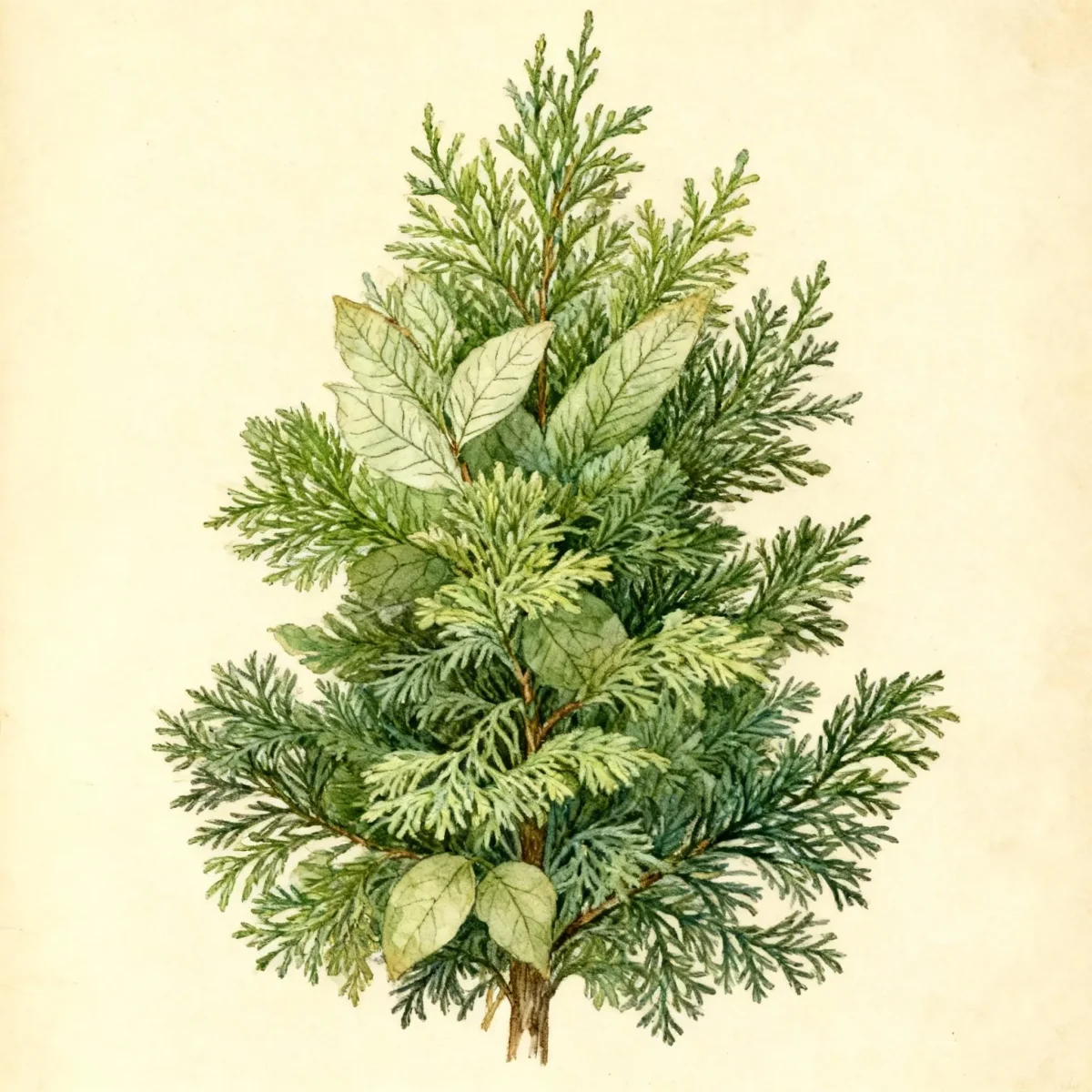
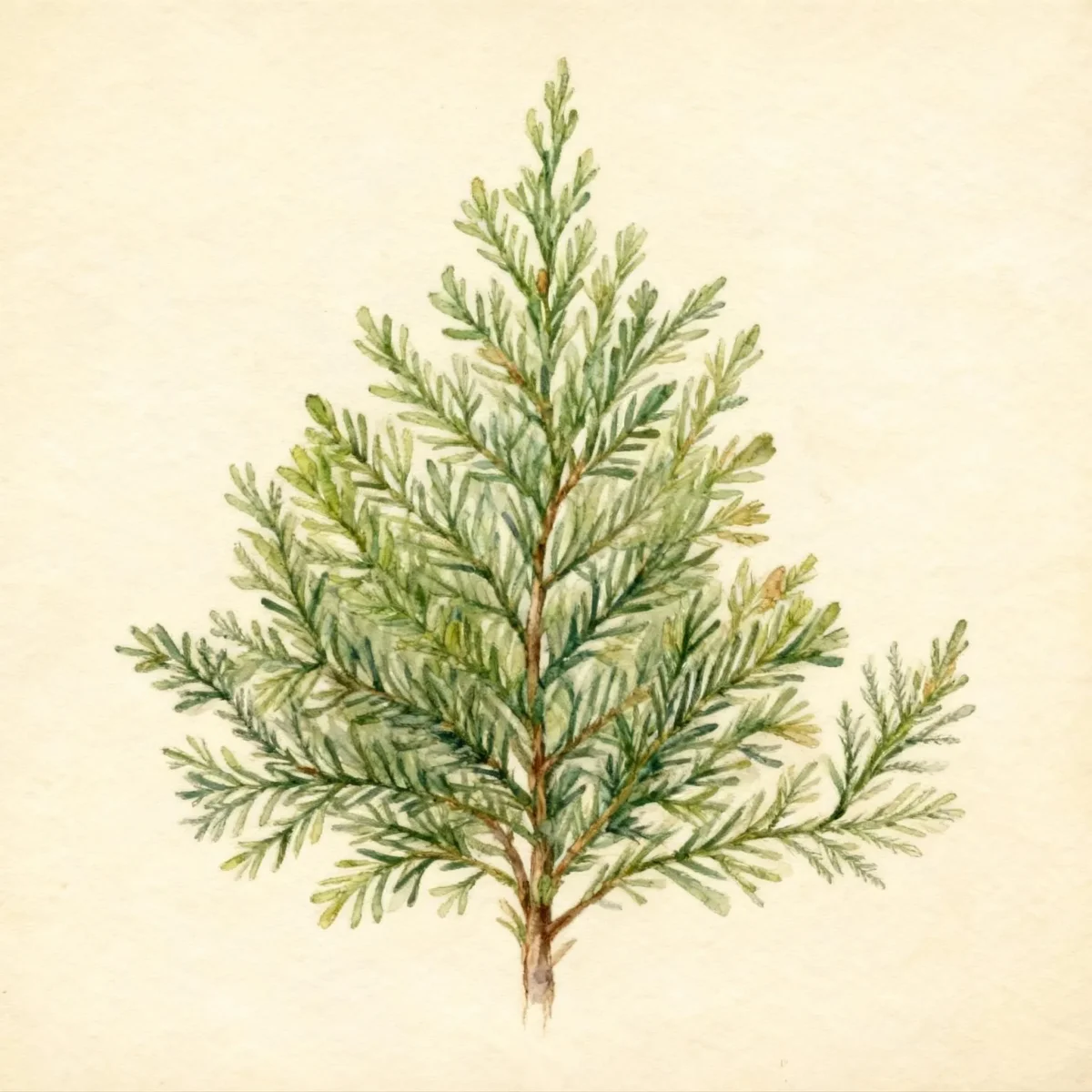
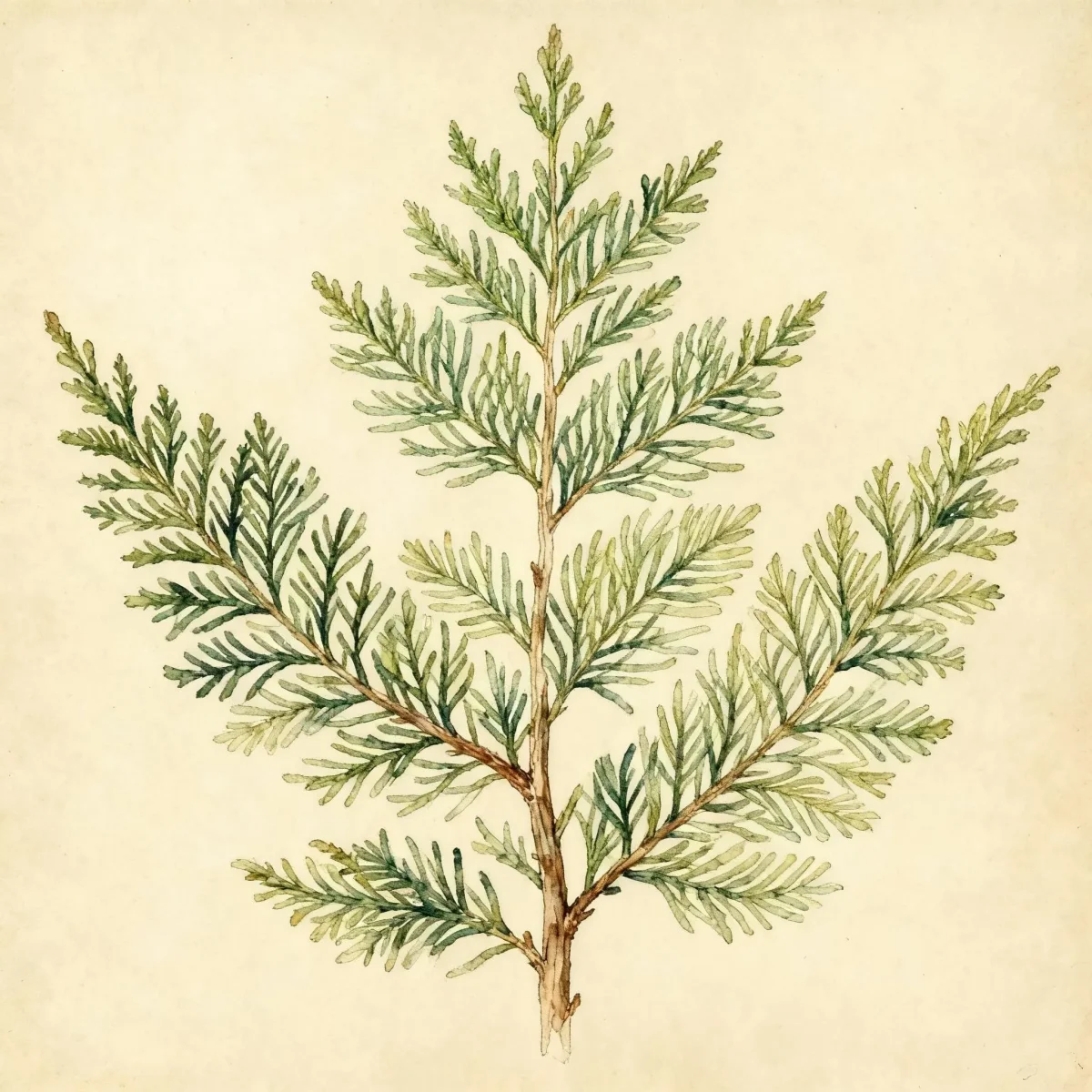
Chamaecyparis obtusa is native to Japan, where it is known as hinoki cypress. This evergreen conifer features spreading branches with distinctive flattened horizontal branchlets that droop slightly at the ends. The dark green, scale-like leaves have attractive white markings on their undersides, and the crushed foliage releases a pleasant aroma. The cultivar ‘Hage’ is specifically prized as a miniature form, maintaining a dense globose shape, growing slower and smaller than the similar cultivar ‘Nana’.
Tolerances
- Some susceptibility to juniper blight
- Root rot
Potential Problems
While the Chamaecyparis obtusa ‘Hage’ is generally easy to care for, vigilance against specific issues will ensure peak health. Watch for signs of juniper blight, which affects the foliage, and take steps to improve air circulation if planting in dense groupings. Root rot is a significant concern, primarily linked to poor drainage; ensure soils are well-draining to avoid this common failing of moisture-sensitive conifers.
Insect pests may occasionally bother this Hinoki cypress, with bagworms being among the noted pests. Regular scouting, especially in spring and early summer, allows for early intervention. If infestation is noted, appropriate horticultural oils or insecticides, applied according to label directions, can manage pest pressure effectively on your dwarf Chamaecyparis obtusa ‘Hage’.
Frequently Asked Questions
What hardiness zones is Hinoki cypress suitable for?
The Chamaecyparis obtusa ‘Hage’ is well-suited for cultivation in USDA Hardiness Zones 4 through 8. Always ensure your planting location is within this range for reliable winter survival.
How large does Chamaecyparis obtusa ‘Hage’ grow?
This is a genuine dwarf cultivar. Expect the Hinoki cypress to reach a height and spread between 0.5 and 1.5 feet over the course of 10 years, remaining very compact.
What sun exposure does Chamaecyparis obtusa ‘Hage’ need?
This evergreen performs best when placed in full sun, though it can successfully tolerate partial shade conditions. Full sun helps maintain the dense habit and coloration of the dark green foliage.
When does Chamaecyparis obtusa ‘Hage’ bloom?
This plant is classified as non-flowering in the ornamental sense; it is a conifer that reproduces via cones, not showy, colorful flowers.
Conclusion
The Chamaecyparis obtusa ‘Hage’ offers indispensable structure and evergreen color in a perfectly miniature package, making it a superb choice for gardeners needing dependable low-maintenance specimens. This diminutive Hinoki cypress fits seamlessly into small spaces, rockeries, and container arrangements where its dense globose form shines. Before planting, confirm your landscape provides the necessary full sun exposure and excellent drainage to support this splendid dwarf conifer.
Companion Planting
Selecting appropriate neighbors is key to highlighting the dense texture of the Chamaecyparis obtusa ‘Hage’. Because this Hinoki cypress prefers medium moisture, group it with other plants that share similar needs, avoiding moisture-loving perennials or those highly intolerant of drought. Consider planting it near deciduous shrubs that offer seasonal color contrast, such as smokebush (Cotinus) foliage, or low-growing heathers (Calluna) which thrive in acidic, well-drained soil.
When using Chamaecyparis obtusa ‘Hage’ in rock gardens, utilize contrasting foliage colors like the silvery blues of certain creeping junipers or the bright greens of low-growing sedums. Proper spacing is vital; since these cypress prefer to be sheltered from strong winds, taller, slightly denser shrubs planted to the northwest can provide a beneficial windbreak for this miniature specimen.
Design Ideas for Dwarf Conifers
Integrating dwarf conifers like Chamaecyparis obtusa ‘Hage’ into modern and traditional designs provides essential year-round contrast. In Asian-inspired settings, this plant mimics larger sculpted pines, offering a focal point in a miniature landscape vignette. Its rounded habit makes it ideal for breaking up the linear formality often found along retaining walls or pathway edges.
Use this Hinoki cypress in repeating patterns along borders where larger specimens might overwhelm the sightline. For year-round containers, place one Chamaecyparis obtusa ‘Hage’ as the central “thriller,” surrounded by seasonal “fillers” that can be swapped out as their bloom cycles end. Even in winter, its dark green foliage provides crucial color interest when deciduous plants are dormant.