

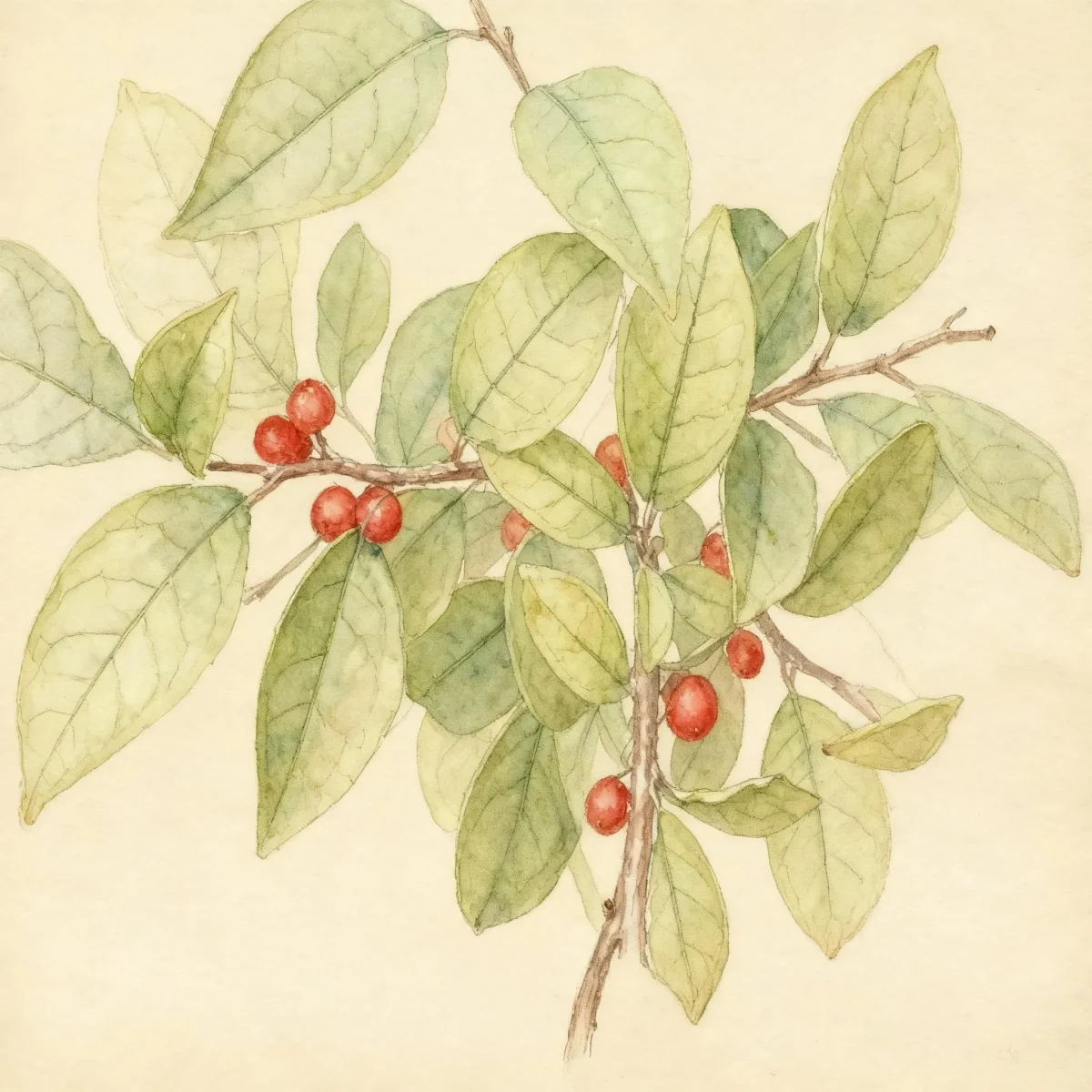
Winterberry (Ilex 'Sparkleberry')
Discover Ilex 'Sparkleberry' Winterberry, a low-maintenance deciduous shrub featuring spectacular red berries persisting all winter.

Bloom Boldly, No Matter the Season - Sweatshirt
Cozy organic cotton sweatshirt featuring our exclusive Purple Coneflower design. Perfect for gardeners who bloom year-round.
Inspired by the beautiful Winterberry
Limited first batch (50) — join the waitlist for early access
Waitlist closes Feb 15, 2026.
Complete Plant Information
Field Guide Continues
Ready for care notes, companion picks, and planting tips?
The map is just the start. The full guide below covers growth habits, seasonal performance, and landscape uses.
Overview
Ilex ‘Sparkleberry’ Winterberry is prized by gardeners for its unparalleled winter interest, showcasing an exceptional, dense display of glossy red berries against bare branches. This deciduous hybrid offers reliable performance, thriving in conditions that challenge many other shrubs, especially wet soils. As a female cultivar, the reward of persistent fruit requires thoughtful placement with a suitable male pollinator.
This low-maintenance shrub provides year-round structure, transitioning from lustrous dark green foliage in summer to brilliant fall color before its famous berry show begins. The presence of vibrant fruit from fall through early spring makes the ‘Sparkleberry’ a cornerstone for winter landscapes and a valuable food source when other resources are scarce.
Cultivating Ilex ‘Sparkleberry’ is straightforward, provided its moisture needs are met. It brings essential structure, seasonal color, and wildlife benefits, solidifying its role as a dependable, high-impact specimen for targeted landscape placements.
Fast Facts
- Plant Family: Aquifoliaceae
- Plant Type: Deciduous shrub
- Hardiness Zones: USDA Zones 5-9
- Size at Maturity:
- Height: 6-10 ft
- Spread: 6-10 ft
- Bloom Time: May to June
- Bloom Description: Greenish-white
- Sun Exposure: Full sun to part shade
- Water Needs: Medium to wet
- Maintenance Level: Low
How to Grow
Plant Ilex ‘Sparkleberry’ in spring or fall when the soil is moist. Locate it where it receives full sun to light afternoon shade, ensuring the soil is consistently moist but well-drained over the long term. This shrub is highly adaptable but performs best in acidic, organic loams, showing good tolerance for heavy clay if moisture levels are managed.
Watering should be consistent, especially during establishment, maintaining medium to wet conditions. While inherently low maintenance, remember that Ilex ‘Sparkleberry’ is dioecious; you must plant a male pollinator, such as Ilex ‘Apollo’, nearby to ensure fruit set. One male shrub can support 6 to 10 female Winterberries.
Pruning, if needed for shaping, should be executed in early spring just as new growth is about to emerge. Avoid heavy pruning in late summer or fall, as this can remove potential flower buds or berry clusters. Low maintenance means minimal specialized feeding is usually required if the soil quality is adequate.
Landscape Uses
The primary allure of Ilex ‘Sparkleberry’ is its incredible year-round visual appeal, culminating in the spectacular red berry display of winter. These shrubs are superb for mass plantings in shrub borders or along woodland margins where moisture is plentiful during the growing season. Their upright, rounded habit makes them excellent foundation plantings that offer seasonal contrast.
They are naturally suited for challenging wet spots, excelling in rain gardens, low areas, or along the edges of ponds and streams where other woody ornamentals may struggle. For design continuity, group them in large masses to maximize the impact of their fruit load against snow. Furthermore, the fruiting branches of Winterberry make excellent, long-lasting natural decorations when cut for indoor winter arrangements.
Standout Features
Flower Qualities
- Insignificant
Fruit Qualities
- Showy
Noteworthy Characteristics
Ilex is a genus renowned for both evergreen and deciduous forms, but the ‘Sparkleberry’ is a deciduous hybrid, resulting from a cross between Ilex serrata and Ilex verticillata. It is specifically noted for bearing a dense, magnificent crop of glossy, bright red berries that cling exceptionally well, providing impactful scenery throughout the cold months. Its leaves turn an attractive yellow-bronze in autumn before dropping, revealing the persistent fruit display.
Tolerances
- Erosion
- Clay Soil
- Wet Soil
- Air Pollution
Potential Problems
While generally robust, Ilex ‘Sparkleberry’ can occasionally face issues from common garden pests like scale, whitefly, or spider mites; regular monitoring is key to early intervention. Fungal diseases such as leaf spot or powdery mildew can appear, especially in high humidity or when air circulation is poor. Look out for signs of chlorosis (yellowing leaves), which often indicates that the soil pH is too high, as this specific Winterberry prefers slightly acidic conditions.
Frequently Asked Questions
What hardiness zones is Winterberry (Ilex ‘Sparkleberry’) suitable for?
Ilex ‘Sparkleberry’ is hardy across USDA Zones 5 through 9, offering a broad range for gardeners in temperate climates.
How large does Ilex ‘Sparkleberry’ grow?
This deciduous shrub typically matures to a height and spread between 6 to 10 feet tall and wide, maintaining an upright-rounded shape.
What sun exposure does Winterberry need?
For the best fruiting and most compact growth, Ilex ‘Sparkleberry’ requires full sun, although it tolerates partial shade.
When does Winterberry bloom?
The inconspicuous, greenish-white flowers of the Ilex ‘Sparkleberry’ generally appear in the landscape from late May into June.
Conclusion
The Ilex ‘Sparkleberry’ Winterberry is an indispensable addition for gardeners seeking guaranteed drama and high wildlife value during the dormant season. Its low maintenance profile combined with its heavy fruiting habit secures the reputation of this particular cultivar as a superior choice for wet or average soils. Before planting, confirm your existing landscape conditions and ensure you have a compatible male pollinator selected to unlock the full winter splendor of your new Ilex ‘Sparkleberry’.
Design Ideas
When integrating Ilex ‘Sparkleberry’ into a garden design, consider using evergreens nearby to contrast sharply with the bare, berry-laden branches in deep winter. Planting groups of three or more female shrubs next to a single male pollinator creates an excellent focal point. Their tolerance for wet soil makes them ideal for softening the edges of drainage areas or creating a rich backdrop along a woodland border.
For an effective seasonal transition, pair the ‘Sparkleberry’ with late-blooming perennials or grasses that hold their structure into the fall. As the foliage drops and the berries emerge, plants that offer contrasting colors—like dark green conifers or plants with silvery winter bark—will heighten the visual pop of the bright red fruit clusters.
Wildlife Benefits
The berries produced by the Ilex ‘Sparkleberry’ are a critical late-season and winter food source for numerous bird species, earning it high marks in wildlife gardening. While the berries often persist until early spring, they are especially important when other natural food sources are depleted. Planting berries helps support local ecosystems by providing reliable sustenance throughout the harshest part of the year.


