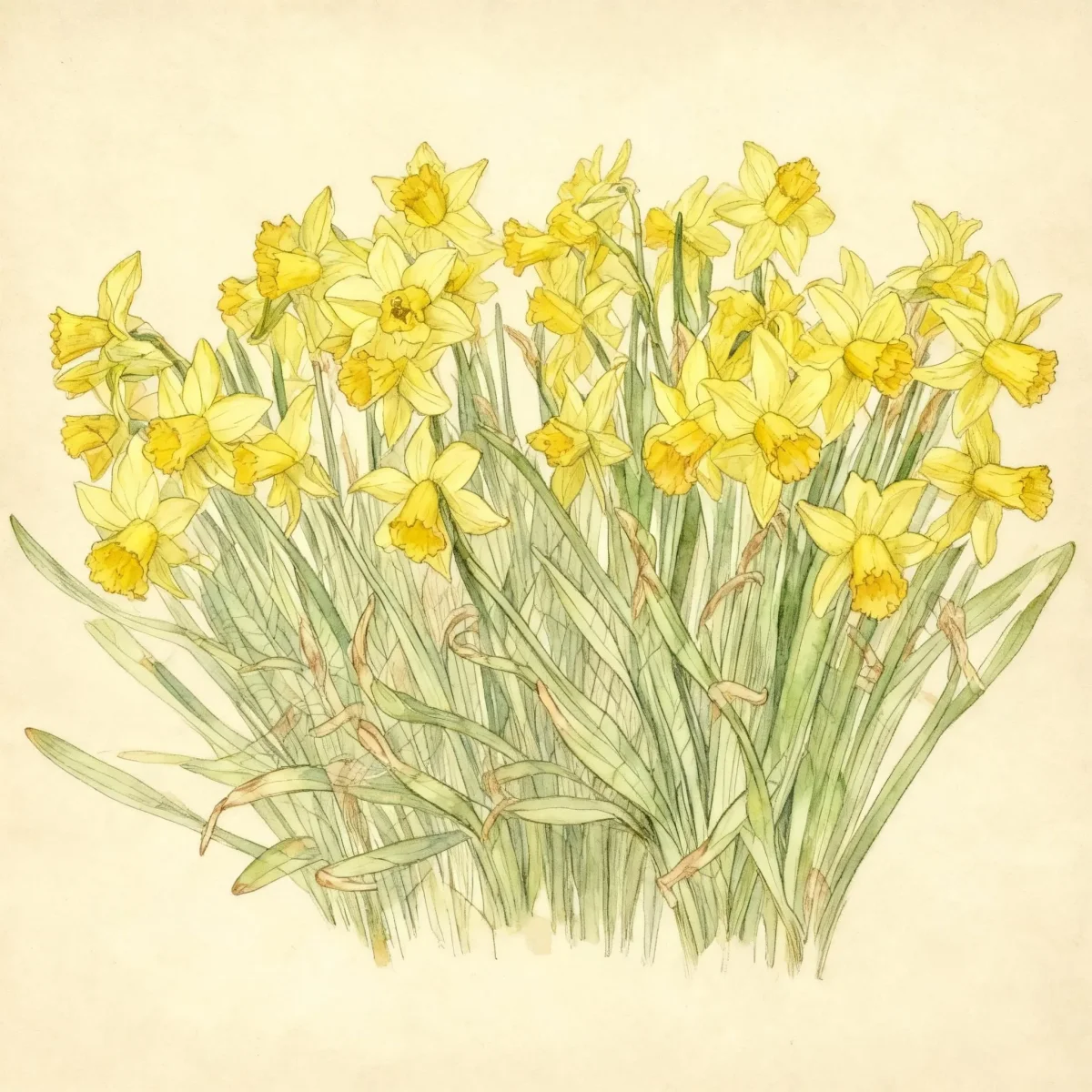
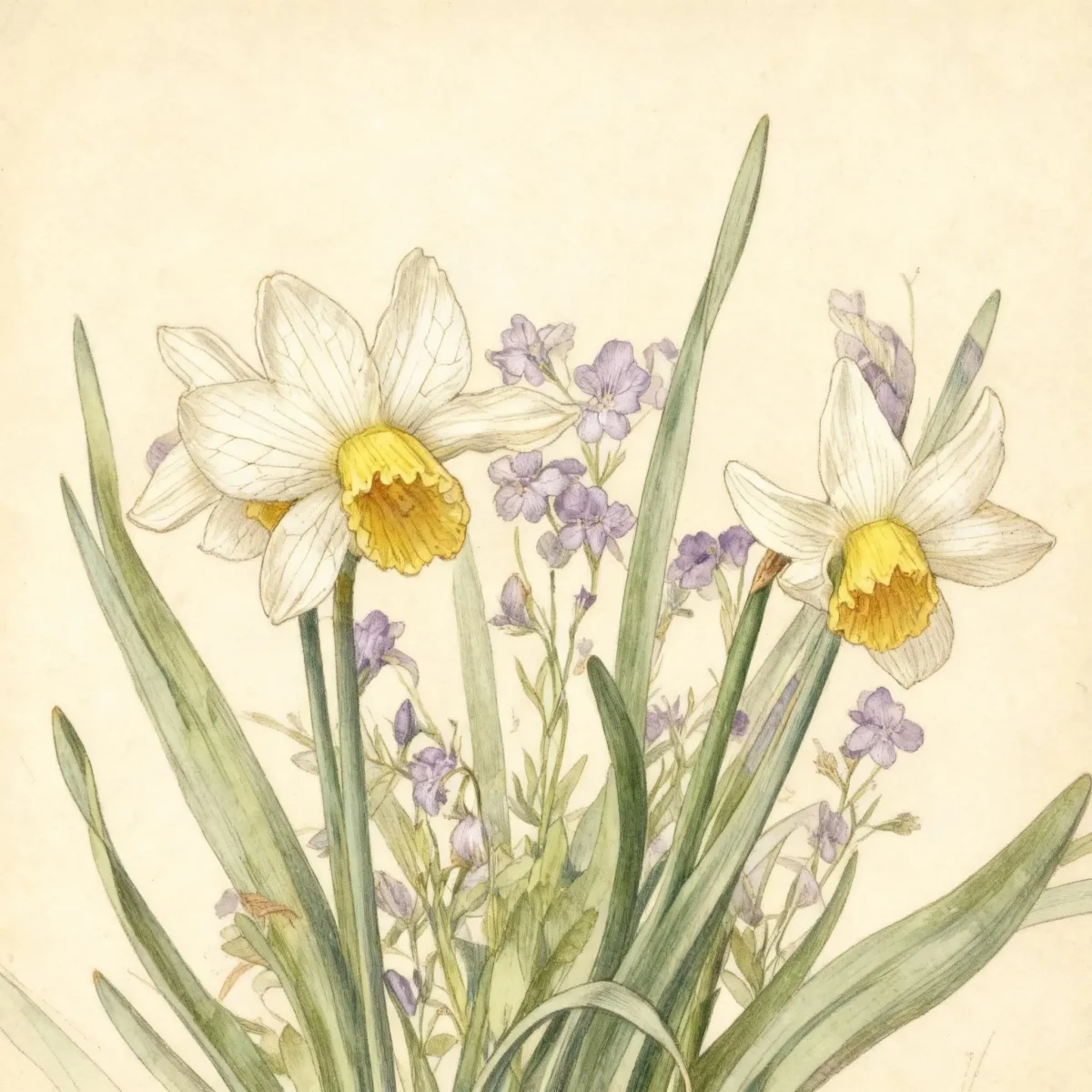
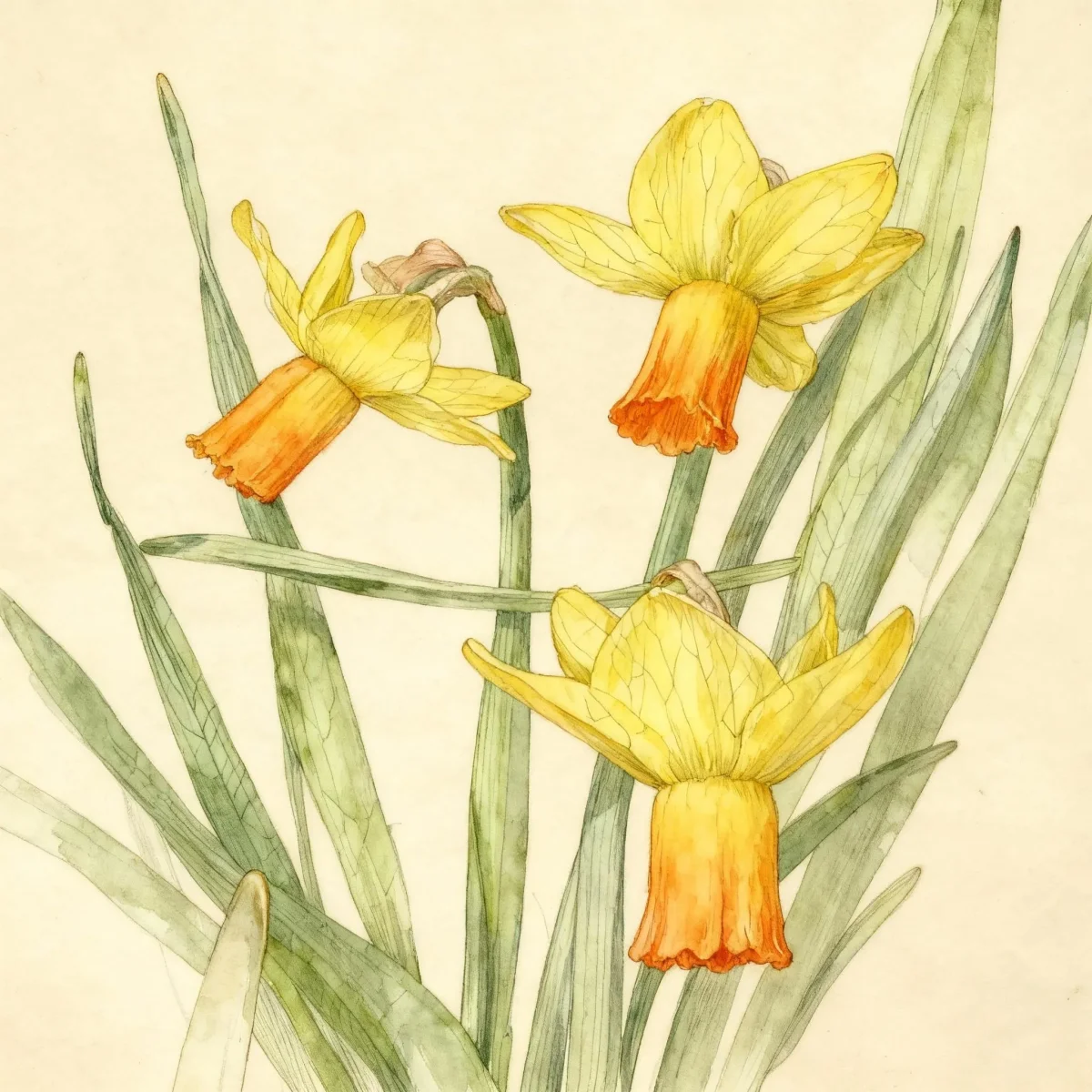
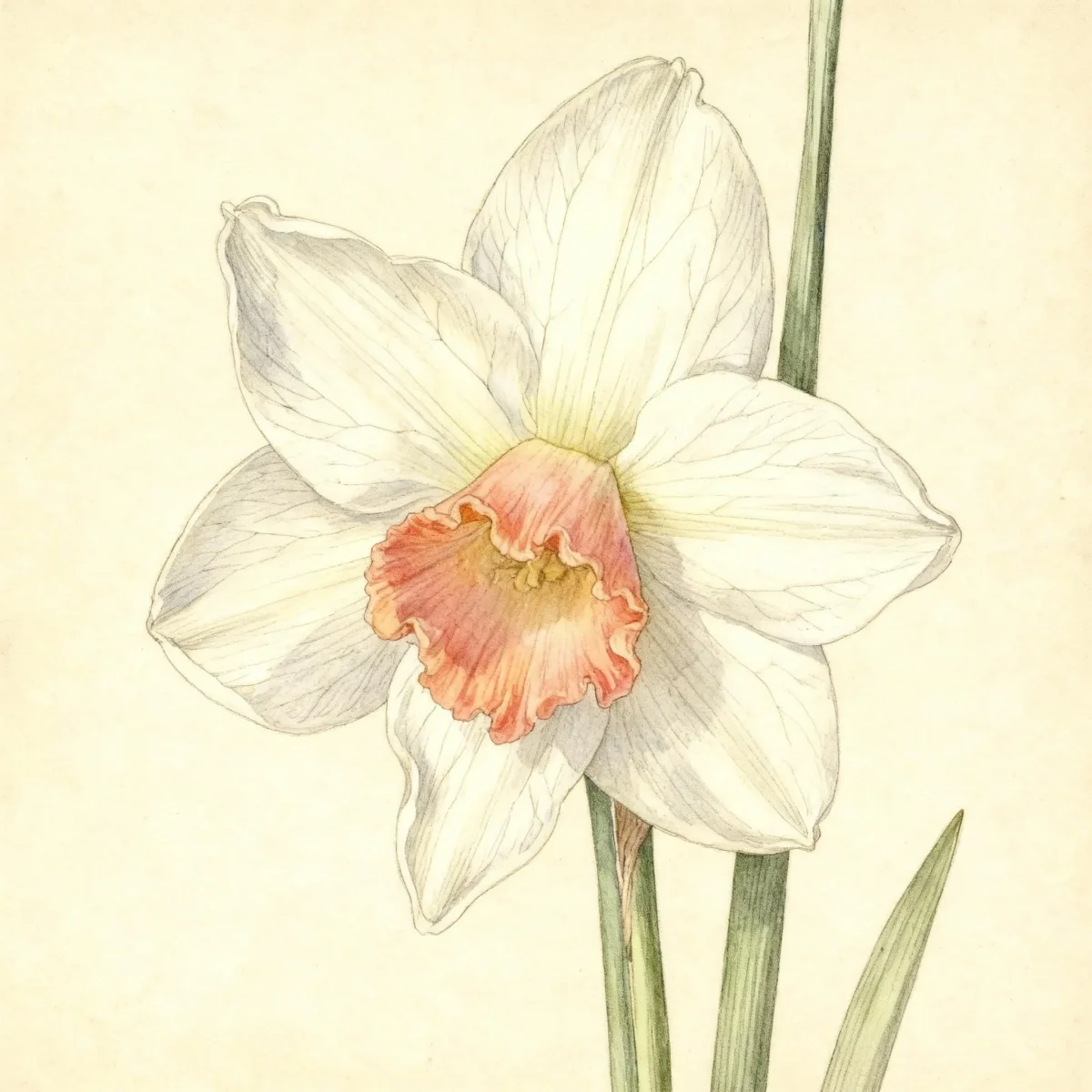
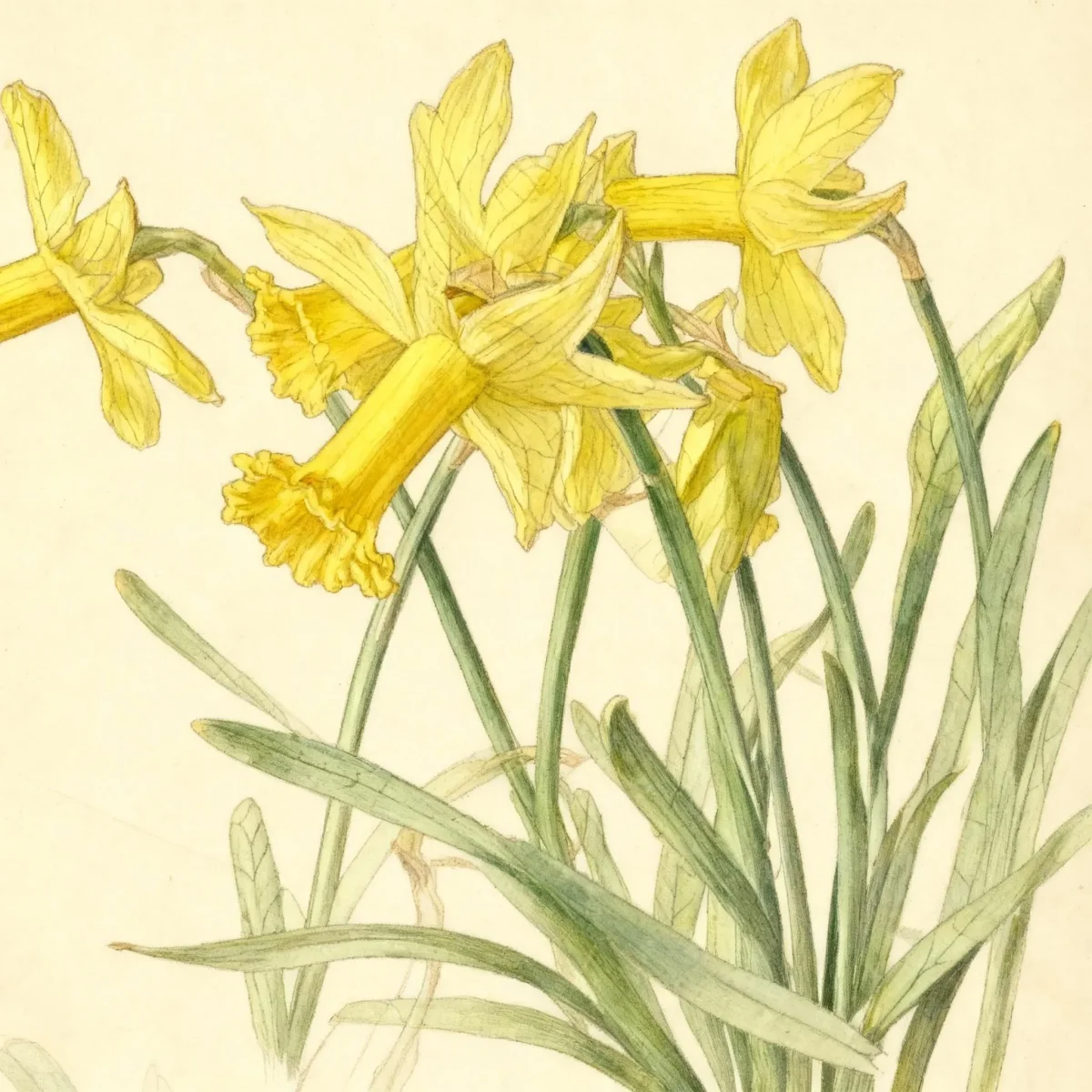
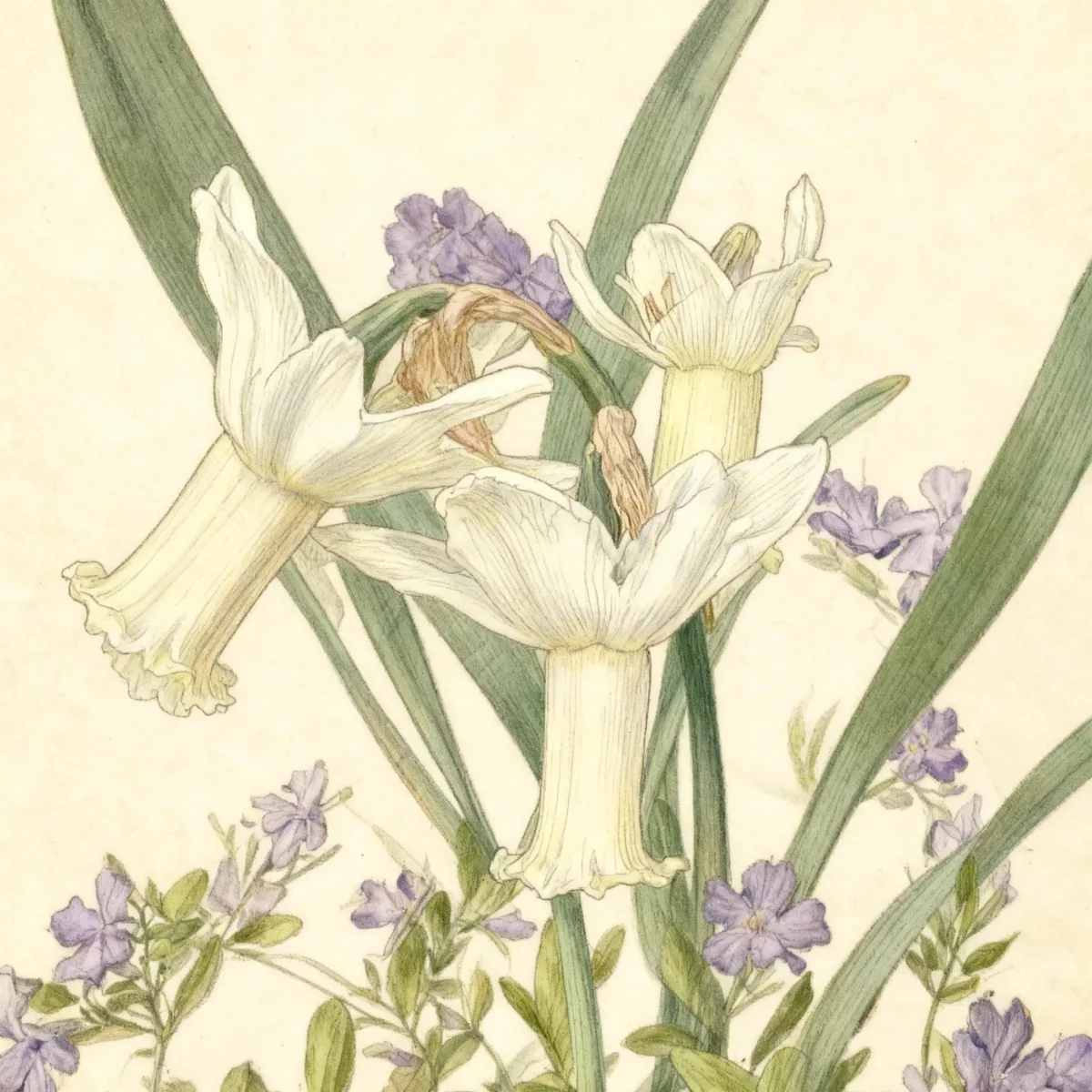
Cyclamineus daffodil (Narcissus 'Jenny')
Narcissus 'Jenny', a classic Cyclamineus daffodil, offers early spring beauty with reflexed white petals and a lemon-yellow trumpet. Low maintenance and reliably perennial.
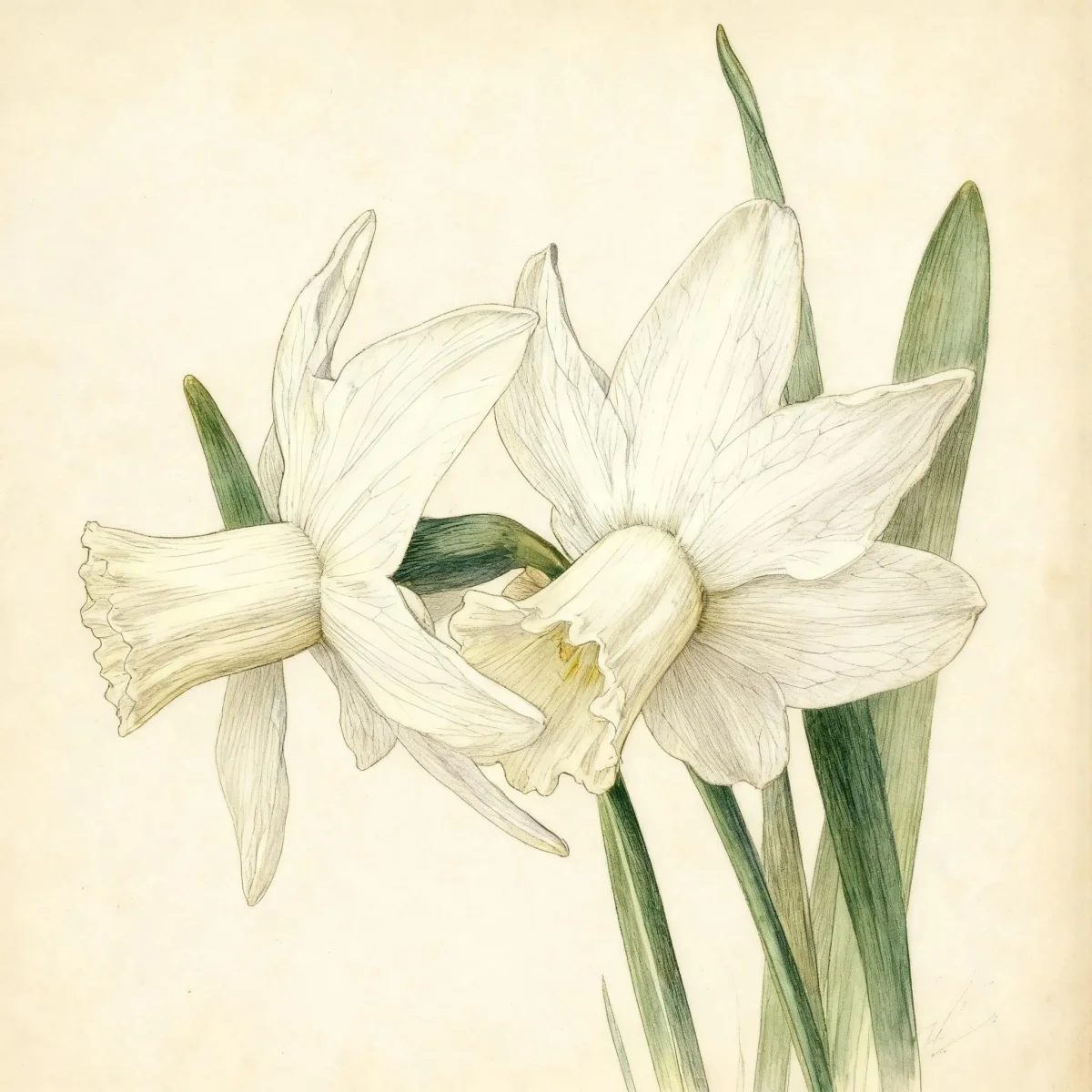

Bloom Boldly, No Matter the Season - Sweatshirt
Cozy organic cotton sweatshirt featuring our exclusive Purple Coneflower design. Perfect for gardeners who bloom year-round.
Inspired by the beautiful Cyclamineus daffodil
Limited first batch (50) — join the waitlist for early access
Waitlist closes Feb 15, 2026.
Complete Plant Information
Field Guide Continues
Ready for care notes, companion picks, and planting tips?
The map is just the start. The full guide below covers growth habits, seasonal performance, and landscape uses.
Overview
Narcissus ‘Jenny’ is a treasured feature in the early spring garden, classifying as a desirable Cyclamineus daffodil. This hybrid stands out due to its uniquely gracefully recurved perianth segments, setting it apart from traditional trumpet varieties. Gardeners appreciate its combination of refined form and reliable, low-maintenance return year after year.
As a perennial bulb, Narcissus ‘Jenny’ establishes quickly, providing welcome color typically in April. Its mature height remains generally compact, ranging between 0.75 and 1 foot tall, making it perfect for softening the edges of borders or naturalizing in woodland settings. Its tolerance to pests like rabbits and deer adds significant practical value.
This variety is prized for its distinct flower structure, featuring a creamy white perianth contrasted beautifully with a lemon-yellow trumpet that softens as the bloom matures. For optimal visual impact, plant Narcissus ‘Jenny’ in drifts where their early display can be fully appreciated before summer plantings take over.
Fast Facts
- Plant Family: Amaryllidaceae
- Plant Type: Bulb
- Hardiness Zones: USDA Zones 3-8
- Size at Maturity:
- Height: 0.75-1 ft
- Spread: 0.5-0.75 ft
- Bloom Time: April
- Bloom Description: White perianth and lemon-yellow trumpet
- Sun Exposure: Full sun to part shade
- Water Needs: Medium
- Maintenance Level: Low
How to Grow
Planting Narcissus ‘Jenny’ bulbs should occur in the early to mid-fall to allow for adequate cold conditioning before spring growth begins. They thrive in average, medium-moisture, well-drained soils. Excellent drainage is crucial to prevent bulb rot, particularly in the bulb’s dormant period. Position the bulbs 2 to 3 times as deep as the bulb is tall, ensuring at least 3 inches of soil coverage overhead. Space bulbs between 4 and 10 inches apart; while wider spacing might look sparse initially, the clumps will naturally fill in over time, reducing the need for frequent division.
Once established, the care requirements for this Cyclamineus daffodil are minimal. Keep the soil uniformly moist during the active growing period in spring. While mature bulbs tolerate drought when dormant, consistent moisture aids bulb development. After the flowers finish blooming, remove only the spent flower stem if desired, but absolutely avoid cutting back the foliage until it has completely yellowed naturally, as this process recharges the bulb for next year’s display.
Because the blooms of Narcissus ‘Jenny’ tend to face the sun, strategically place them so that any rear border shade areas are behind the planting. These bulbs naturalize beautifully and can be left undisturbed for many years. If flowering diminishes, divide the clumps in late spring immediately after the foliage dies back.
Landscape Uses
Daffodils, unlike many other spring bulbs, are renowned for returning faithfully each year, making Narcissus ‘Jenny’ an excellent long-term investment for landscape design. They are highly recommended for mass plantings—think drifts of at least six bulbs—or for larger sweeping naturalized areas, such as open woodlands or beneath deciduous trees where they receive ample spring sun before summer shade arrives.
Integrating this Cyclamineus daffodil into structured settings like perennial borders or mixed beds offers excellent early-season structure. They look fantastic planted in front of later-emerging shrubs, creating foundational color. They mix seamlessly with other spring bloomers like early tulips or grape hyacinths, creating layered interest as the season progresses.
For a contemporary look, plant Narcissus ‘Jenny’ liberally in containers. Ensure the container has excellent drainage, layering the bulbs in rich potting mix. When planting in borders, consider the mature height of neighboring perennials to avoid masking the shorter, distinct flowers of this variety.
Standout Features
Flower Qualities
- Showy
Noteworthy Characteristics
Narcissus is a genus of about 50 species of bulbous perennials from Europe and North Africa, widely considered a mainstay of the spring garden. ‘Jenny’ falls into Division VI, the cyclamineus group, which is characterized by having flowers with significantly reflexed perianth segments and a generally long, narrow corona. This early to mid-season blooming miniature daffodil rises to about 10-12 inches, showcasing strongly reflexed, pointed, creamy white perianth segments cradling a long, yellow trumpet that lightens toward cream with age.
Tolerances
- Rabbit
- Deer
- Drought
Potential Problems
Daffodils generally suffer from no serious insect or disease issues, especially when cultural requirements, such as excellent drainage, are met. The most common cultural problem resulting in trouble is bulb rot, which occurs from sitting in overly wet or poorly draining soils. Infrequent pests to watch for include slugs and snails, particularly when new foliage emerges. The foliage should always be allowed to yellow naturally after flowering; cutting it back early will severely weaken the bulb.
Frequently Asked Questions
What hardiness zones is Cyclamineus daffodil suitable for?
This dependable bulb, Narcissus ‘Jenny’, is hardy across USDA Zones 3 through 8.
How large does Narcissus ‘Jenny’ grow?
This miniature daffodil typically reaches a height between 0.75 and 1 foot tall, with a spread of 0.5 to 0.75 feet.
When does Narcissus ‘Jenny’ bloom?
It blooms reliably in the month of April, offering its distinctive white perianth and lemon-yellow trumpet to welcome spring.
What sun exposure does Cyclamineus daffodil need?
This plant performs best when sited in locations receiving full sun to partial shade, ensuring strong flowering performance.
Conclusion
The Cyclamineus daffodil, Narcissus ‘Jenny’, brings unique architectural beauty and dependable, low-effort persistence to the beginning of the growing season. Its pest resistance and tolerance to drought once dormant make it an ideal, worry-free bulb selection. Confirm your USDA Hardiness Zone compatibility (3-8) and plan your autumn planting sessions to ensure a stunning display of white and yellow next April.
Companion Planting
Effective companion planting revolves around balancing sunlight needs and obscuring foliage decline. Since Narcissus ‘Jenny’ foliage yellows after its April bloom, pair it with summer-blooming perennials that emerge later, such as Geraniums or early-season Hostas. These later plants will fill in the space vacated by the fading daffodil leaves, maintaining visual density throughout the season.
Aim to plant the Cyclamineus daffodil bulbs near the front of mixed borders. Consider planting them near summer annuals like trailing Petunias or Lobelia that appreciate the same medium water needs during spring. This layering technique ensures continuous visual interest from the first thaw until the heat of mid-summer.
Seasonal Care Calendar
Spring care involves monitoring moisture levels; ensure the soil stays uniformly moist while the flowers and foliage are actively growing. The most critical step after bloom is patience—do not cut the foliage as it feeds the bulb for next year. If you planted densely, plan for division every three to five years; dig the clumps just as the leaves begin to yellow in the late spring die-back phase.
Fall is the prime time for bulb planting. When planting Narcissus ‘Jenny’, remember the general rule: plant the bulb 2 to 3 times as deep as its height. Enriching the planting hole with some bone meal can support bulb health, though these daffodils are generally not heavy feeders. Ensure the soil is well-drained before backfilling the hole.