Lawson's cypress(Chamaecyparis lawsoniana)
Grow Lawson cypress (Chamaecyparis lawsoniana / Port Orford cedar): Pacific native conifer, garden cultivars, USDA zones 5–8 care, and Phytophthora root rot risks.
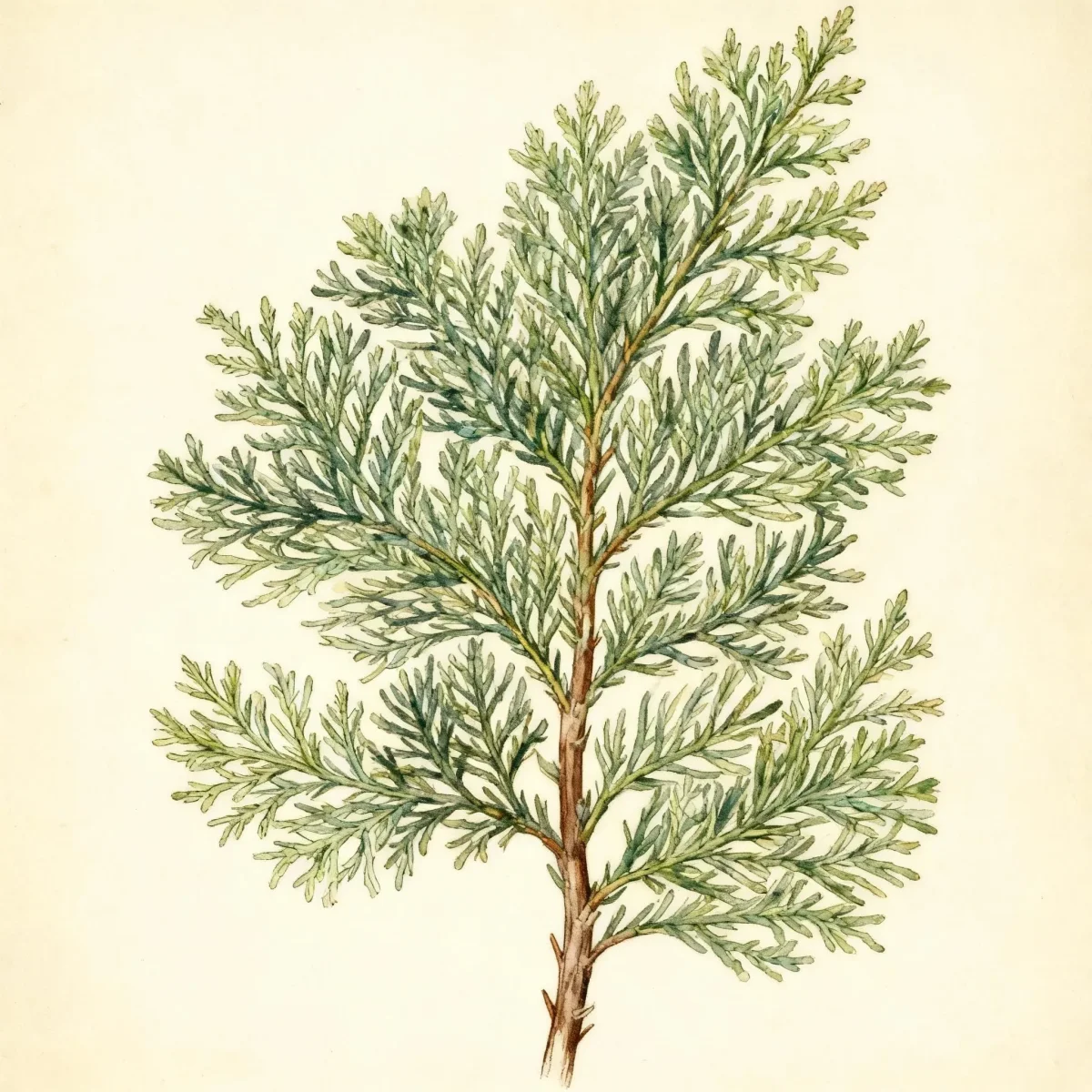
Complete Plant Information
- Hardiness zones
- USDA 5–8
- Plant type
- Needled evergreen
- Plant family
- Cupressaceae
- Sun exposure
- Full sun to part shade
- Water needs
- Medium to moist
- Maintenance
- Medium
- Height
- 40–60 ft (1219–1829 cm)
- Spread
- 15–25 ft (457–762 cm)
- Bloom time
- Non-flowering
- Flower color
- Non-flowering gymnosperm; small rounded woody cones with wrinkled scales
- Flower qualities
- Insignificant
- Fruit qualities
- Not recorded
- Tolerances
- Air Pollution
- Garden uses
- Windbreak, park specimen, conifer collection (cultivars used for residential hedges and rock gardens)
- Native range
- Pacific Northwest (coastal southwest Oregon and northwest California)
Field Guide Continues
Ready for care notes, companion picks, and planting tips?
The map is just the start. The full guide below covers growth habits, seasonal performance, and landscape uses.
Overview
Lawson’s cypress (Chamaecyparis lawsoniana, historically called Port Orford cedar or ginger pine) is a stately needled evergreen conifer in the cypress family (Cupressaceae), hardy across USDA Zones 5 through 8. Native exclusively to the fog-drenched coastal ravines and mountain streams of southwest Oregon and northwest California, wild trees can reach heights of over 150 feet. In North American landscape cultivation, the species typically matures between 40 and 60 feet tall with a 15 to 25 foot spread.
Renowned for its lace-like, drooping fronds of blue-green foliage and aromatic resin with a distinctive ginger scent, it has parented hundreds of compact, weeping, and golden cultivars for residential gardens.
How to Grow
- Hardiness & Climate: USDA Zones 5 through 8. Reflecting its Pacific coastal fog-belt lineage, it thrives where summers are cool to moderate with ample atmospheric humidity. In hot, dry continental interiors or the humid Deep South, plants often struggle with heat stress and spider mites.
- Sunlight: Full sun to partial shade. Protect young plants from hot, scorching afternoon sun in southern portions of Zone 8.
- Soil & Moisture: Requires moist, fertile, slightly acidic, and deeply draining soil. Intolerant of severe summer drought and standing stagnant water. Maintain consistent irrigation and a thick layer of organic bark mulch.
- Pruning: Rarely required for standard trees. Lightly shear cultivar hedges in late spring to maintain shape.
Landscape Uses
- Large Park or Acreage Specimen: The straight species serves as an imposing, graceful focal tree for large estate lawns and arboretums.
- Evergreen Windbreak: Drooping feathery branches absorb wind and provide heavy winter shelter for birds.
- Garden Cultivars: Dwarf selections (such as ‘Ellwoodii’ or ‘Pygmaea Argentea’) fit into residential foundation borders and rock gardens.
Potential Problems
- Fatal Port Orford Cedar Root Rot (Phytophthora lateralis): The greatest threat to Lawson cypress worldwide. The soil-borne water mold enters fine feeder roots and girdles the trunk base, turning foliage rapidly from blue-green to dull bronze and causing sudden death. Never plant in low-lying, poorly drained, or flooded sites.
- Heat & Drought Stress: Stagnant, hot summer nights encourage spider mite infestations and branch desiccation.
- Wind Breakage on Exposed Sites: Heavy, wet snow and severe winds can split young leaders.
Frequently Asked Questions
Why does Lawson cypress smell like ginger?
Crushed foliage and freshly cut wood emit volatile essential oils rich in limonene and terpenes, producing a distinctive, sweet ginger aroma that earned it the historical common name “ginger pine.”
Can I grow Lawson cypress in a small backyard?
The wild species grows too large (over 50 feet) for small yards, but dwarf cultivars like ‘Ellwoodii’ stay under 8 feet and thrive in residential beds.
What causes Lawson cypress needles to turn brown suddenly?
The most common fatal cause is Phytophthora lateralis root rot, typically caused by planting in heavy, waterlogged soil.
Companion Plants
Pair Lawson cypress with conifers and shrubs that thrive in cool, moist, well-draining soils:
- Rhododendrons & Azaleas: Acid-loving woodland shrubs provide spring flower color beneath its evergreen canopy.
- Complementary Conifers: Combine with Western red cedar (Thuja plicata) or dwarf Hinoki cypresses (Chamaecyparis obtusa).
- Woodland Understory: Plant near maidenhair ferns, hostas, and salal (Gaultheria shallon).
Sources & Lineage
- Missouri Botanical Garden PlantFinder: Record taxon 279607 (Chamaecyparis lawsoniana) — morphological profile, botanical baseline, and cultivation overview.
- Kew Plants of the World Online (POWO): Chamaecyparis lawsoniana (A.Murray bis) Oerst. (POWO: 261839-1) — species taxonomy, family (Cupressaceae), and Pacific coast native range.
- USDA Forest Service / Silvics Manual: Chamaecyparis lawsoniana: Port-Orford-Cedar — ecological requirements, climate limits, and Phytophthora lateralis epidemiology.
Recommended Companion Plants
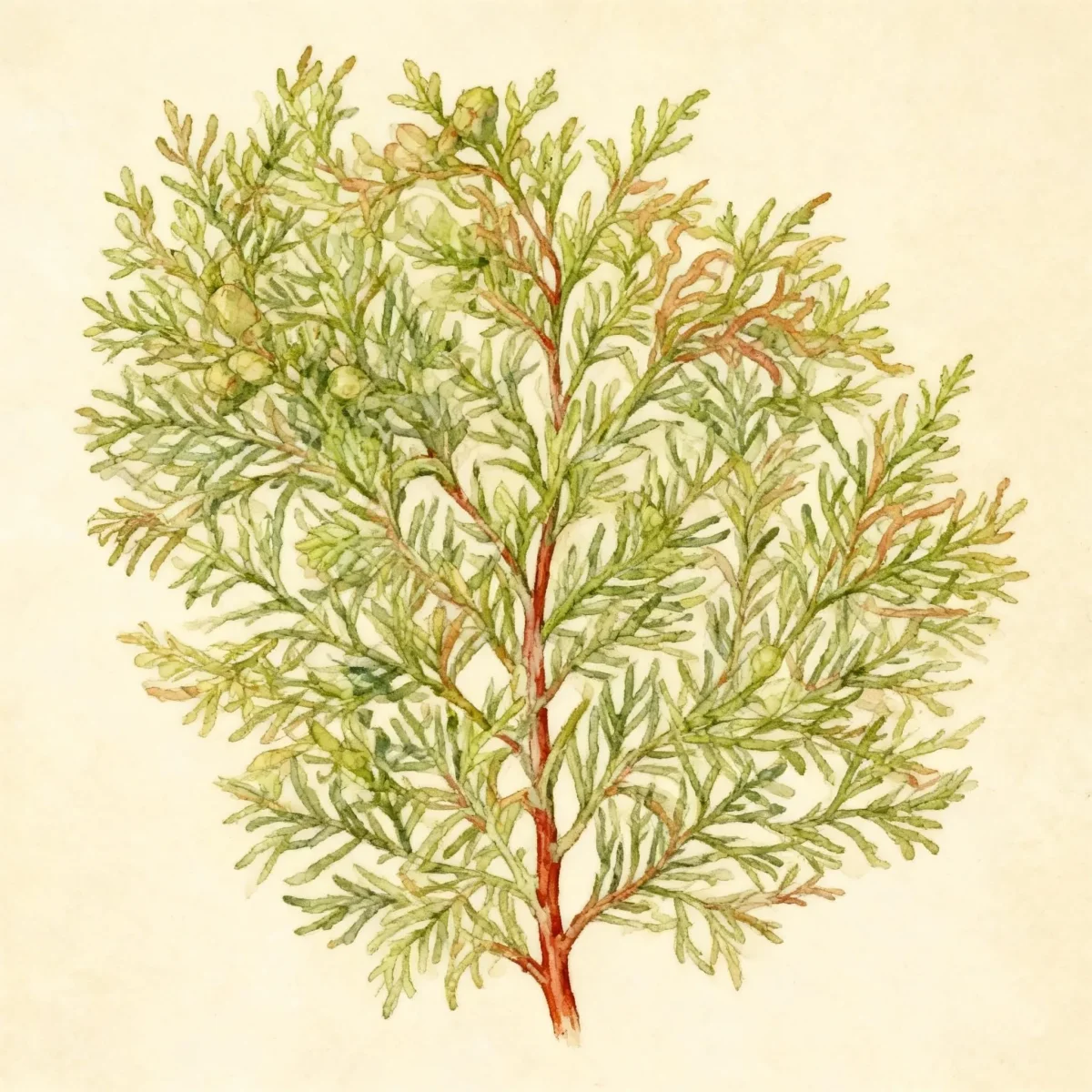
Western red cedar
Thuja plicata 'Cuprea'
- USDA zones
- 5–7
- Light
- Full sun to part shade
- Water
- Medium to moist
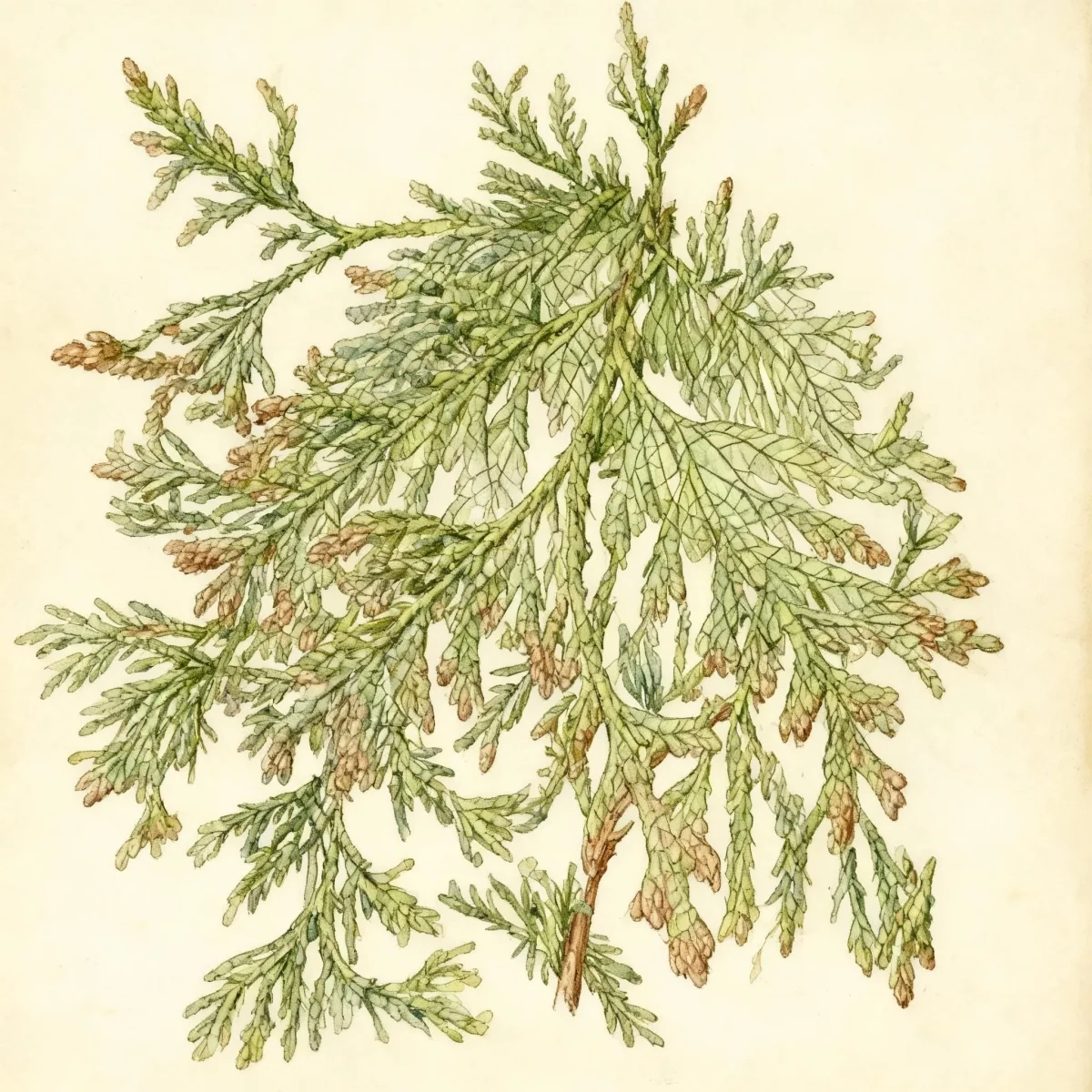
Oriental arborvitae
Platycladus orientalis 'Elegantissima'
- USDA zones
- 5–9
- Light
- Full sun to part shade
- Water
- Medium
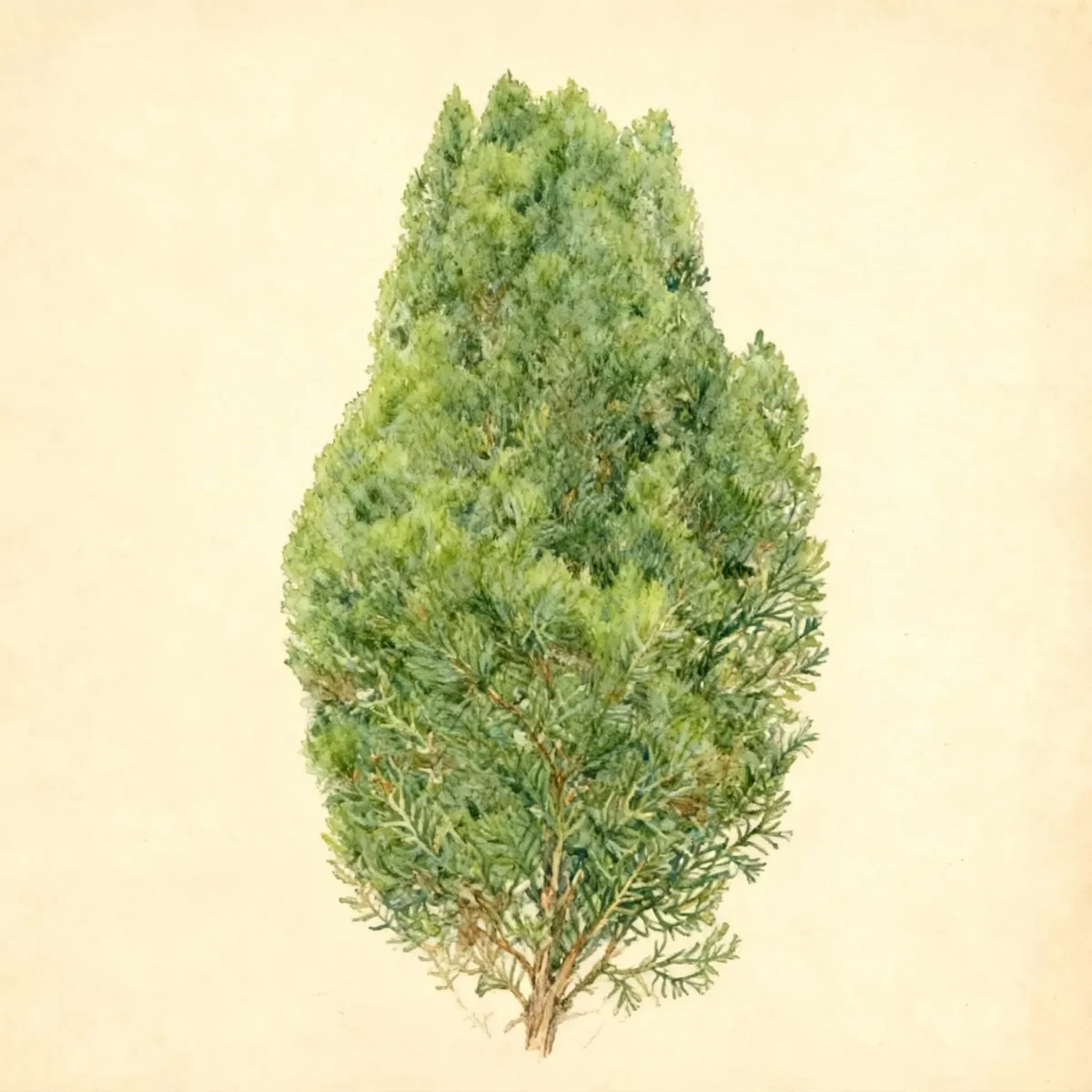
Chinese arborvitae
Platycladus orientalis 'Westmont'
- USDA zones
- 6–9
- Light
- Full sun to part shade
- Water
- Medium

Western red cedar
Thuja plicata 'Aurea'
- USDA zones
- 5–7
- Light
- Full sun to part shade
- Water
- Medium
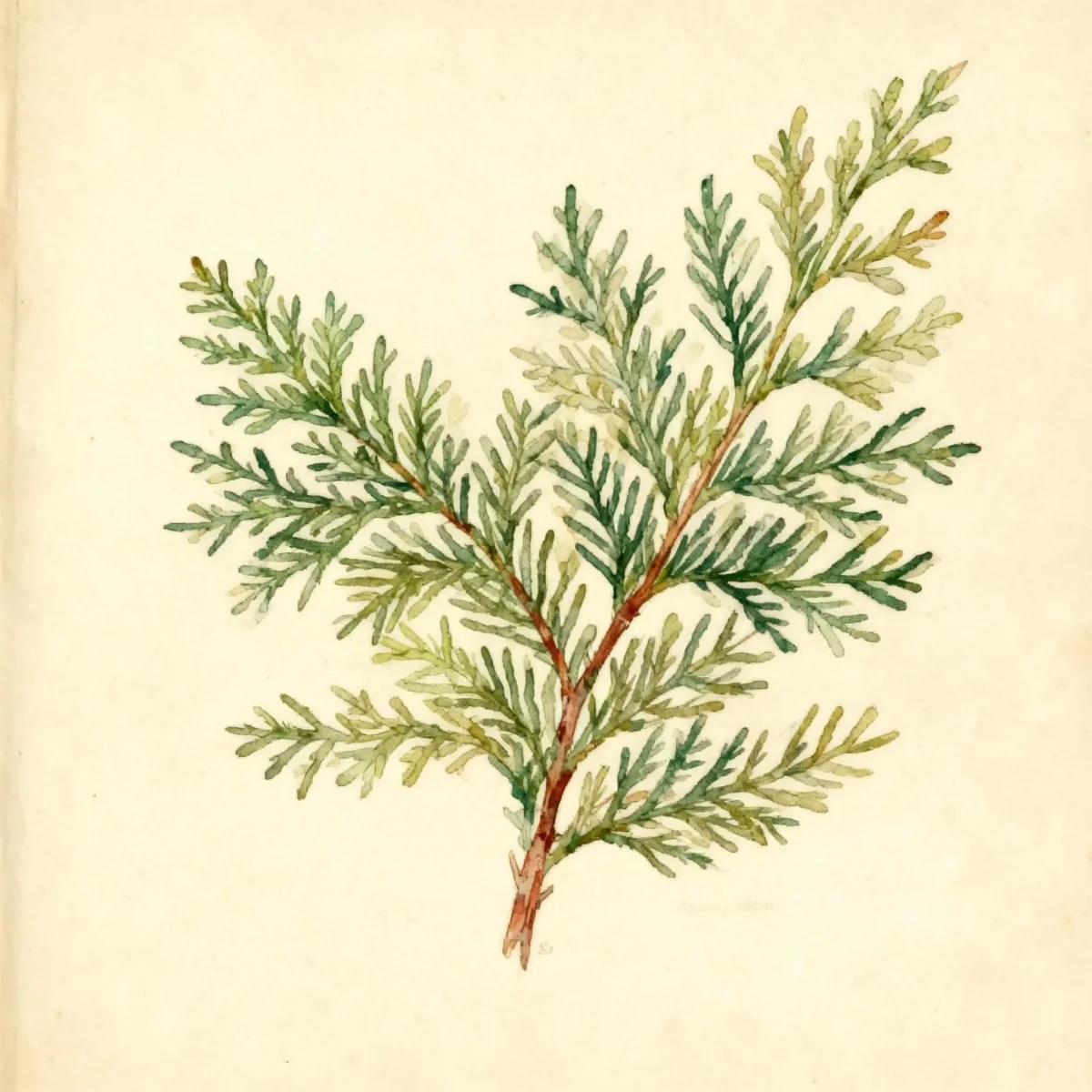
Western red cedar
Thuja plicata 'Zebrina'
- USDA zones
- 5–7
- Light
- Full sun to part shade
- Water
- Medium
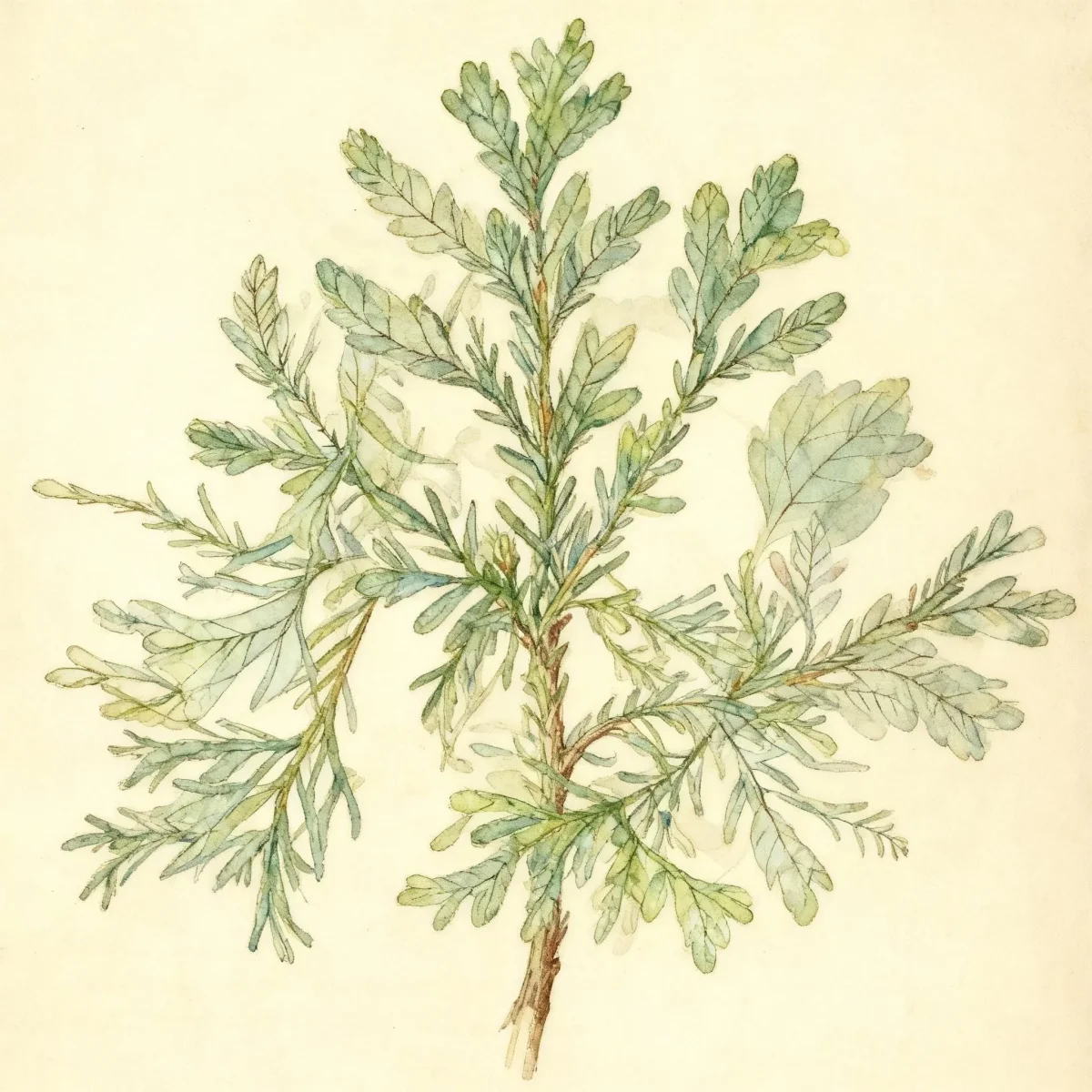
Hiba
Thujopsis dolabrata
- USDA zones
- 5–7
- Light
- Full sun to part shade
- Water
- Medium
Keep Learning
Test what you know with a garden quiz
You have the plant facts and care notes. Continue with a related challenge, or browse the complete quiz library.

Can You Identify These Common Garden Plants? Test Your Plant Knowledge
Think you know your roses from your peonies? Test your plant identification skills with our comprehensive garden plant quiz featuring 10 challenging questions.
Start quiz
USDA Garden Zone Map Quiz
Use this USDA garden zone map quiz to check whether you can read hardiness zones and choose plants with more confidence.
Start quizBrowse the full quizzes section
Explore plant identification, zone strategy, and seasonal gardening challenges.
View all quizzes