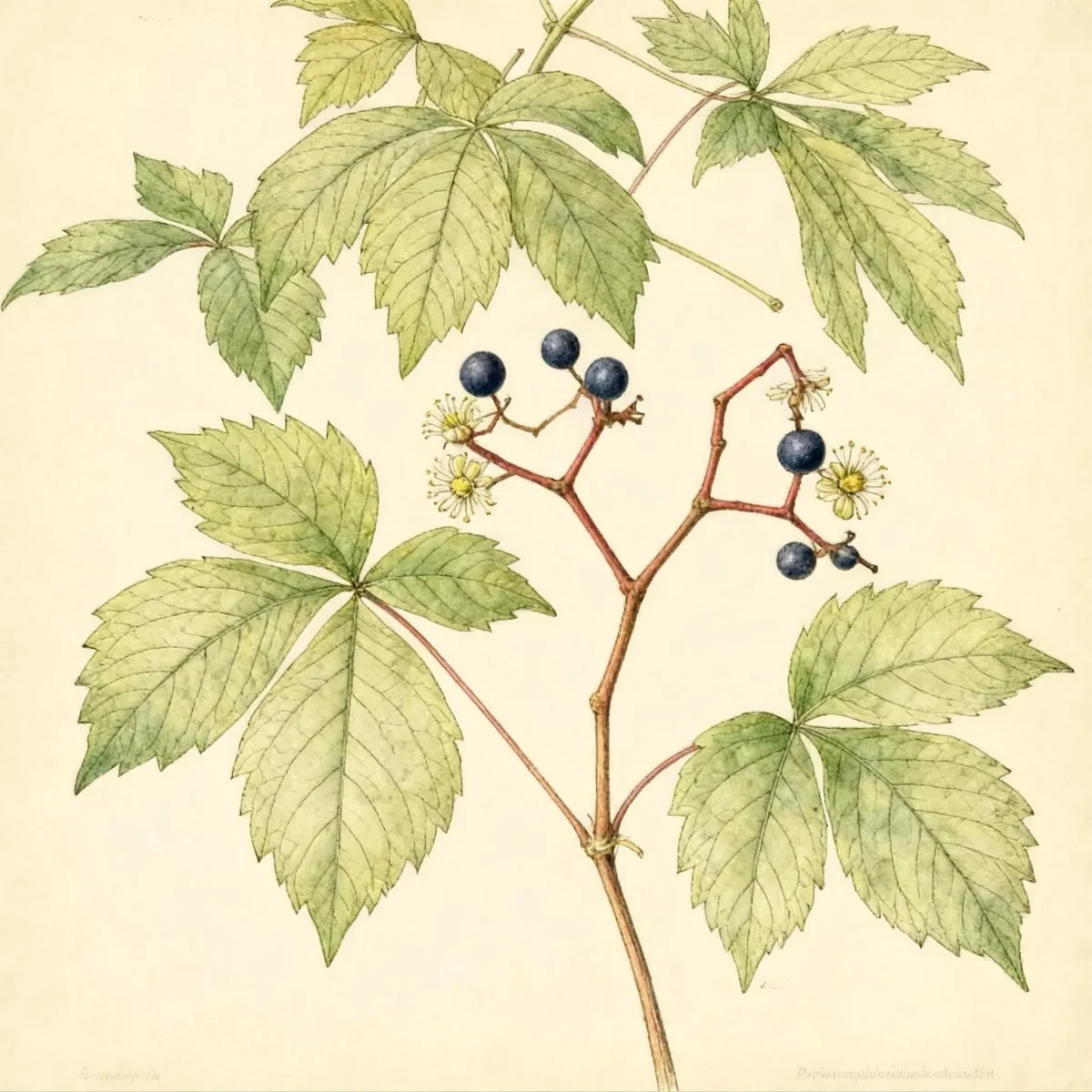
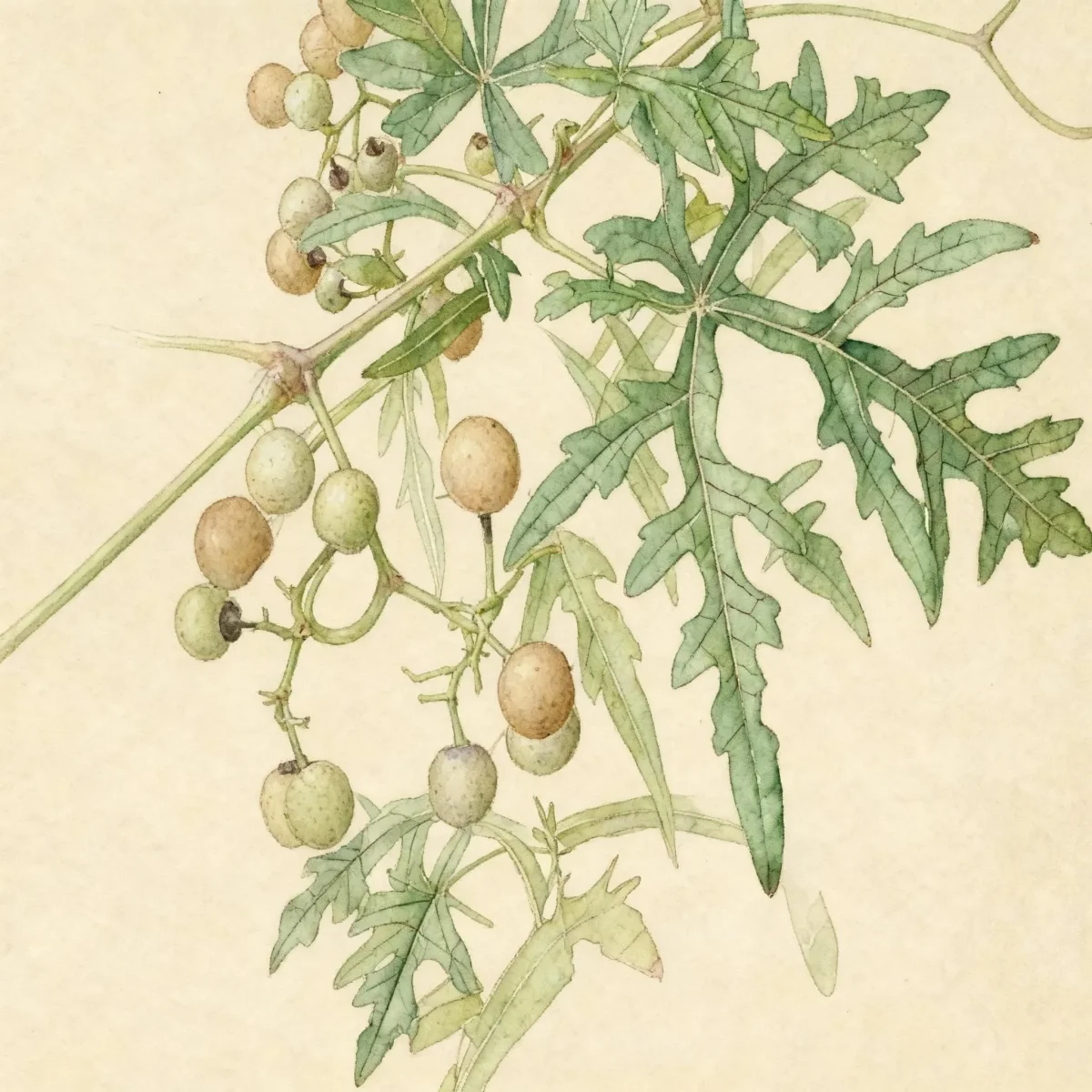
Monkshood vine (Ampelopsis aconitifolia var. Glabra)
Discover Monkshood vine (Ampelopsis aconitifolia var. glabra), a vigorous deciduous climber perfect for arbors. Hardy in Zones 4-7, it offers striking orange-yellow fruit clusters.

Bloom Boldly, No Matter the Season - Sweatshirt
Cozy organic cotton sweatshirt featuring our exclusive Purple Coneflower design. Perfect for gardeners who bloom year-round.
Inspired by the beautiful Monkshood vine
Limited first batch (50) — join the waitlist for early access
Waitlist closes Feb 15, 2026.
Complete Plant Information
Field Guide Continues
Ready for care notes, companion picks, and planting tips?
The map is just the start. The full guide below covers growth habits, seasonal performance, and landscape uses.
Overview
The Monkshood vine, scientifically known as Ampelopsis aconitifolia var. glabra, is a vigorous, woody, deciduous climber prized for its lush foliage and late-season fruit display. This tendril-climbing vine brings architectural interest to the garden, rapidly covering vertical structures with its deep green leaves. Its growth habit and moderate maintenance needs make it an excellent choice for gardeners looking for substantial vertical coverage.
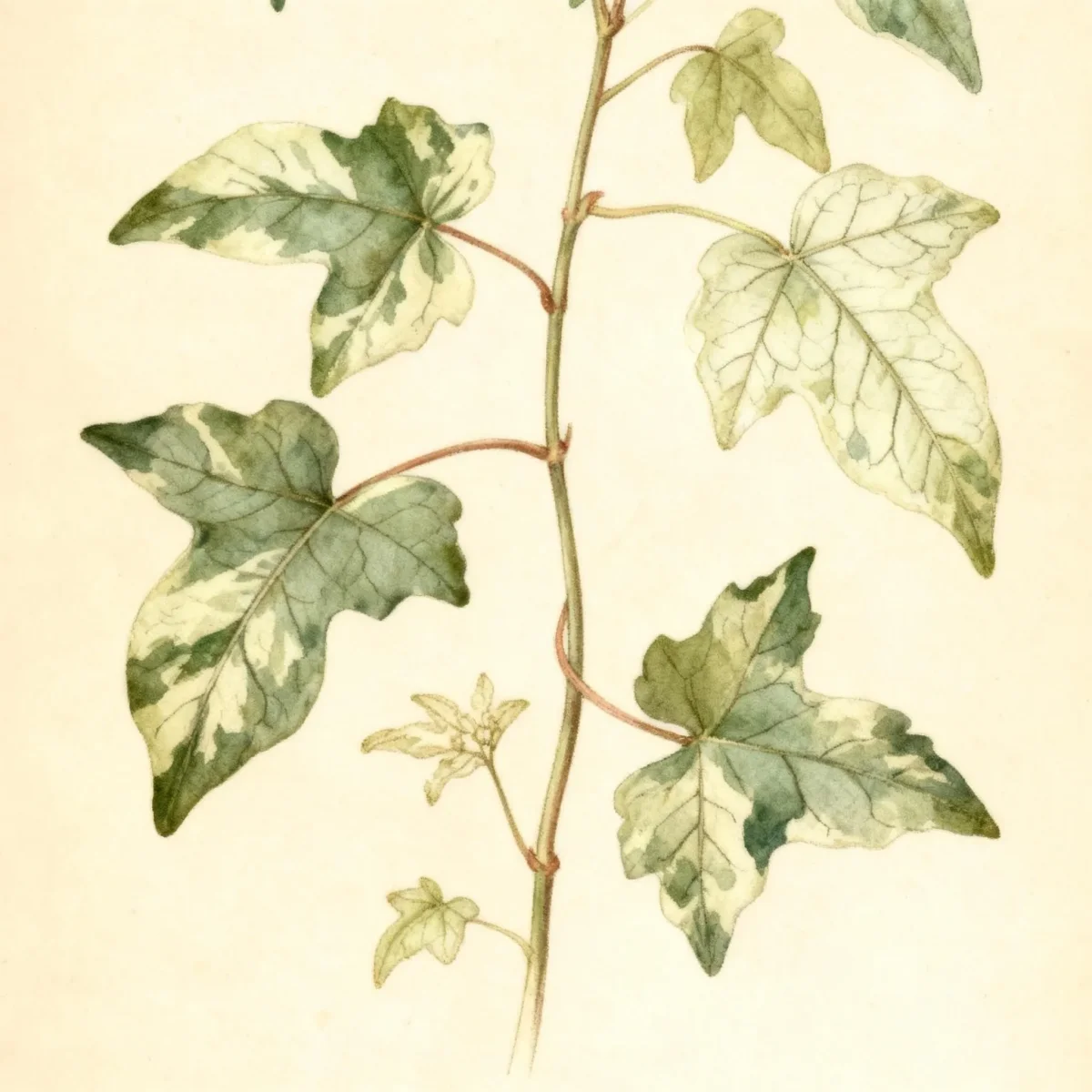
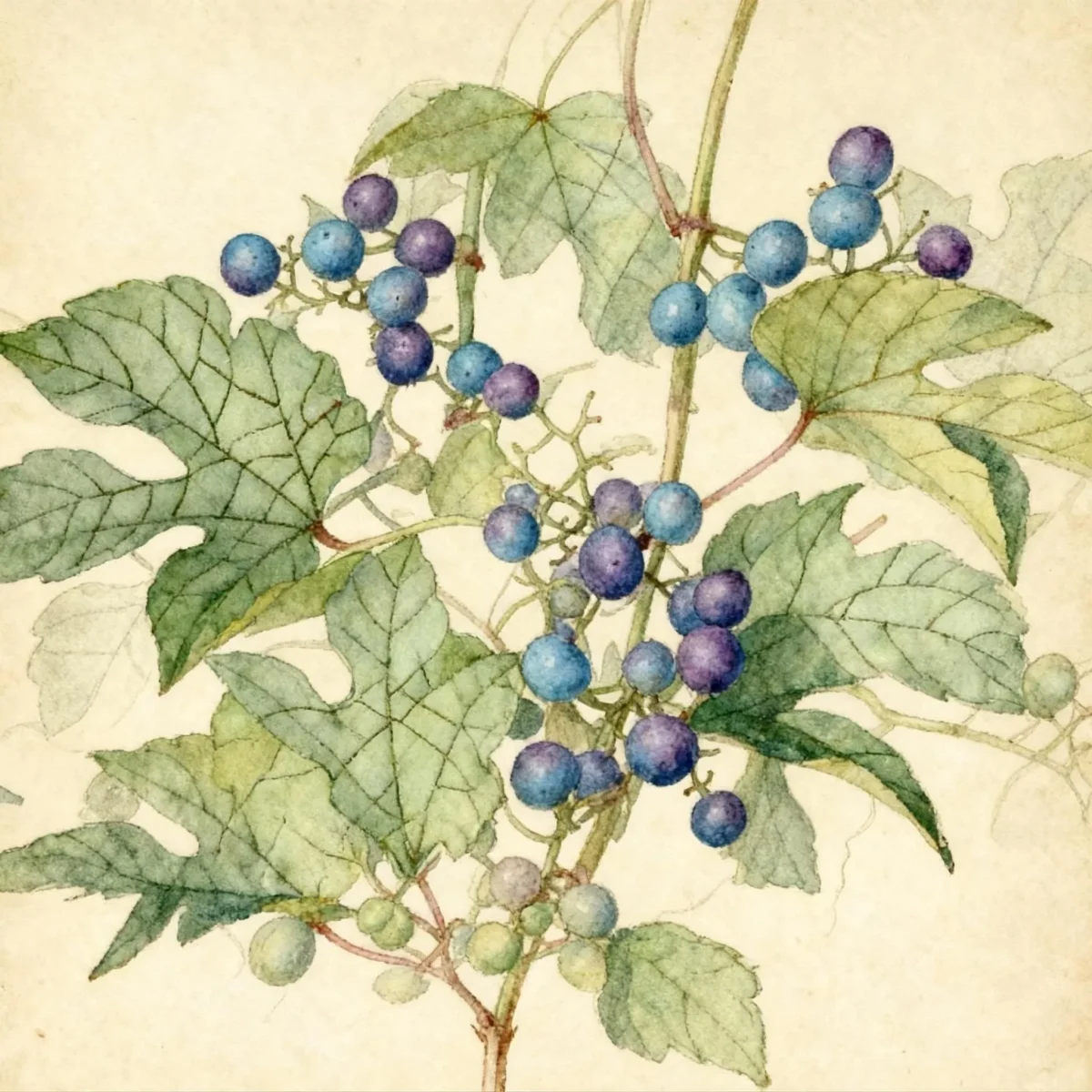
A key identifier for this variety, Ampelopsis aconitifolia var. Glabra, is its characteristically 3-parted leaves, setting it apart from the species which typically has 5-parted leaves. While the summer flowers are inconspicuous, they mature into eye-catching clusters of bluish fruits that brilliantly transition to deep orange-yellow tones by autumn. Gardeners appreciate this plant for its reliable performance and structure, connecting it aesthetically to grape vines due to its family relation.
Offering both substantial height—reaching up to 25 feet—and a relatively contained spread, this Monkshood vine is highly adaptable to various structural supports. Its relatively low maintenance requirement, coupled with significant year-end color from its mature fruit, cements its place as a valuable feature plant in the landscape.
Fast Facts
- Plant Family: Vitaceae
- Plant Type: Vine
- Native Range: Northern China, Mongolia
- Hardiness Zones: USDA Zones 4-7
- Size at Maturity:
- Height: 15-25 ft
- Spread: 6-9 ft
- Bloom Time: July to August
- Bloom Description: Green
- Sun Exposure: Full sun to part shade
- Water Needs: Medium
- Maintenance Level: Low
How to Grow
Planting should occur when soil temperatures are warm, ideally in spring after the last frost threat has passed. The Monkshood vine thrives in average, well-drained soil; critically, avoid wet or poorly drained locations, as these conditions hinder root health. For the most robust fruit production from your Ampelopsis aconitifolia var. glabra, ensure it receives full sun exposure, though it can tolerate part shade.
This vigorous grower requires an immediate and reliable support structure upon planting, such as a sturdy trellis, arbor, or wall. Watering should be maintained at a medium level—consistent moisture is best, especially during establishment, but never allow the area around the roots to become waterlogged. Fertilizing is generally unnecessary given its low maintenance profile in average soils.
Pruning is minimal for structure, but training the young tendrils onto their support is important during the first few seasons. As a deciduous vine, enjoy the autumn fruit display, and perform any cleanup of spent foliage and hanging fruit clusters in late fall or early spring before new growth begins.
Landscape Uses
The primary function of the Monkshood vine is vertical accentuation. It excels when tasked with softening harsh lines or covering utilitarian structures. Plant it near fences, arbors, or large trellises to create beautiful, living architectural elements throughout the growing season.
Due to its vigorous, tendril-climbing nature, this plant is perfect for obscuring unsightly elements, such as aging stumps or unsightly rock piles, allowing nature to reclaim the space organically. While it climbs upward, it can also be allowed to ramble along the ground if desired for mass coverage.
Consider the late-season impact of the Ampelopsis aconitifolia var. glabra when placing it; its orange-yellow autumnal fruits transition beautifully against deep evergreen shrubs or dark painted structures that allow the fruit to truly “showy.”
Standout Features
Flower Qualities
- Insignificant
Fruit Qualities
- Showy
Noteworthy Characteristics
Ampelopsis aconitifolia, commonly called monkshood vine, is a vigorous, woody, deciduous, tendril-climbing vine which typically grows 15-25’. The species features palmate, mostly 5-parted, glossy deep green leaves somewhat reminiscent of perennial monkshood (Aconitum). Clusters (cymes) of non-showy, greenish flowers appear in the leaf axils in late summer, giving way to rounded-to-oval, bluish fruits maturing to orange-yellow.Var. Glabra is almost identical to the species except it features 3-parted leaves, and the name Glabra means smooth.
Tolerances
Potential Problems
The Monkshood vine generally remains free of severe pest or disease issues, contributing to its low maintenance rating. However, gardeners should remain vigilant for powdery mildew, a common fungal issue in humid or crowded conditions.
Preventing powdery mildew on your Ampelopsis aconitifolia var. glabra involves ensuring excellent air circulation around the foliage. Proper spacing and adequate sunlight exposure can significantly reduce incidence. If mildew appears, treatment often involves cultural adjustments first; for persistent issues, fungicides labeled for mildew control on vines can be applied according to label directions.
Frequently Asked Questions
What hardiness zones is Monkshood vine suitable for?
This resilient vine is suitable for gardeners situated in USDA Hardiness Zones 4 through 7.
How large does Monkshood vine grow?
The Ampelopsis aconitifolia var. glabra is a substantial climber, typically reaching mature heights between 15 and 25 feet, with a spread of 6 to 9 feet.
What sun exposure does Monkshood vine need?
For optimal growth and the best fruit production, provide Ampelopsis aconitifolia var. glabra with full sun, although it will tolerate partial shade.
When does Monkshood vine bloom?
This vine produces inconspicuous green flowers during the peak of summer, specifically from July through August, preceding its colorful fruit display.
Conclusion
The Monkshood vine, Ampelopsis aconitifolia var. glabra, offers exceptional vertical interest with minimal required effort, making it a rewarding addition for structure and late-season color. Its vigorous climbing habit and tolerance for a range of conditions ensure it will thrive when given proper support. Before planting this fantastic climber, confirm that your landscape falls within USDA Zones 4 to 7 and ensure you have a sturdy structure ready to accommodate its 25-foot potential.
Companion Planting
Selecting companions for the Monkshood vine requires focusing on plants that share similar moderate water needs and can tolerate or benefit from the dappled light provided by the vine in partial shade. Consider planting low-growing, perennial groundcovers near the base to help shade the soil, reducing water evaporation.
Since the vine dies back in winter, select lower-growing companions that offer winter interest or very early spring blooms, such as Lenten Rose (Helleborus), which handles shade well. Roses trained on pillars near the vine can complement its structure, provided the soil draining requirements are met for both plants.
Avoid plants that require consistently moist feet, as the well-drained soil necessary for a healthy Ampelopsis aconitifolia var. glabra will prove too dry for moisture-loving neighbors. Focus on drought-tolerant perennials or ornamental grasses that appreciate the full sun exposure often required for the best fruit set.
Wildlife Benefits
While the greenish flowers of the Monkshood vine are not significantly showy, they do offer nectar sources during the mid-summer lull, attracting generalist pollinators when many other flowers are past their peak. The vine’s tendrils provide excellent cover for small nesting birds seeking shelter within dense foliage.
The most significant interaction comes from the fruit production. The clusters of bluish fruits that ripen to orange-yellow in autumn are highly attractive to various bird species as the weather cools. Planting this vine near areas visible from windows enhances seasonal bird watching opportunities.
Ensure that the structure the vine covers is not constantly used by pets or small children, as the fruits are noted to be visually appealing but are not recommended for consumption. The vine’s dense canopy also offers valuable thermal cover for wildlife during colder months once the seeds/fruit have been dispersed.