Beginner Guides
15 Reliable 5b Zone Plants That Return After Winter
Discover 15 reliable 5b zone plants for sun, shade, flowers, shrubs, and structure—plus a practical plan for helping them survive winter.
The snow finally retreats from the back fence, leaving a flattened border and a row of plant labels that suddenly feel like promises. For a week, nothing happens. Then the serviceberry buds swell. Red peony shoots nose through the cold soil. A tight crown of catmint turns green at the edges.
That spring return is what most gardeners are really searching for when they look up 5b zone plants. They do not just want something beautiful in a nursery pot. They want plants that can build roots through summer, disappear beneath a serious winter, and come back ready to grow.
These 15 choices give you flowers, foliage, pollinator value, shade coverage, shrubs, and winter structure without gambling the whole garden on borderline hardiness.
What Does Zone 5b Mean for Plants?
The 2023 USDA Plant Hardiness Zone Map defines Zone 5b by an average annual extreme minimum winter temperature of -15 to -10°F (-26.1 to -23.3°C). The map helps predict whether a perennial plant can survive winter cold at a location.
It does not predict your last frost date, summer heat, rainfall, snow cover, soil drainage, or exposure to winter wind. Two Zone 5b gardens can share the same cold rating while having very different growing conditions.
When you read a plant label, look for a hardiness range that begins at Zone 5 or lower. A plant rated for Zones 3–8 has more cold margin than one rated for Zones 5–9, but neither will thrive if its light, moisture, and drainage needs are ignored. Confirm your location with our interactive USDA hardiness zone map, then use the zone as one part of the decision.
5b Zone Plants at a Glance
| Plant | Typical hardiness | Best light | What it brings |
|---|---|---|---|
| Purple coneflower | Zones 3–8 | Full sun to part shade | Long summer bloom and seed heads |
| Black-eyed Susan | Zones 3–9 | Full sun | Late-summer color |
| Bee balm | Zones 4–9 | Full sun to part shade | Hummingbird and pollinator flowers |
| Catmint | Zones 4–8 | Full sun to part shade | Long bloom and soft edging |
| Yarrow | Zones 3–9 | Full sun | Drought tolerance and flat flower clusters |
| Russian sage | Zones 5–9 | Full sun | Airy blue flowers and silver foliage |
| Stonecrop | Zones 3–9 | Full sun | Late bloom and sturdy succulent foliage |
| Hosta | Zones 3–8 | Part shade to full shade | Bold foliage |
| Astilbe | Zones 4–9 | Part shade to full shade | Feathery flowers for moist shade |
| Coral bells | Zones 4–9 | Part shade; cultivar dependent | Colorful low foliage |
| Peony | Zones 3–8 | Full sun to part shade | Long-lived spring flowers |
| Panicle hydrangea | Zones 3–8 | Full sun to part shade | Large flowers on new growth |
| Ninebark | Zones 2–8 | Full sun to part shade | Tough shrub structure and peeling bark |
| Serviceberry | Zones 4–8 | Full sun to part shade | Spring flowers, fruit, and fall color |
| Switchgrass | Zones 5–9 | Full sun to part shade | Upright grass and winter movement |
Hardiness can vary by species and cultivar, so verify the exact plant you are buying rather than relying only on the common name.
Seven Flowering Plants for a Sunny Zone 5b Border
1. Purple coneflower
Purple coneflower is one of the easiest ways to give a sunny bed a strong middle layer. It flowers through summer, handles dry-to-medium soil once established, and keeps its dark seed heads into fall. Leave some standing for texture and possible bird feeding rather than cutting every stem at the first frost.
Give it good drainage and enough sun for sturdy growth. In rich or consistently wet soil, coneflowers can become shorter-lived or floppy despite being cold hardy.
2. Black-eyed Susan
Black-eyed Susan carries the border when early-summer flowers begin to fade. Golden petals and dark centers are easy to combine with coneflower, bee balm, grasses, and sedum.
Plant it in full sun and allow room for air movement. Some types spread by seed or rhizomes, which is useful in a naturalized bed but worth watching in a small, formal border.
3. Bee balm
Bee balm supplies the animated part of the garden: shaggy flowers, visiting bees, and the quick flash of a hummingbird. It prefers more consistent moisture than yarrow or Russian sage, so do not group all three on a single irrigation schedule simply because they share a hardiness zone.
Good airflow helps limit powdery mildew. If that disease is common in your area, look for resistant cultivars and divide crowded clumps.
4. Catmint
Catmint forms a soft, blue-flowered edge and can bloom for months. It tolerates dry-to-medium soil, and a light trim after the first flush often encourages fresh growth.
Use it beside paths, at the feet of roses, or in front of taller perennials. Well-drained soil is more important than winter pampering.
5. Yarrow
Yarrow is a practical choice for a hot, open bed where richer plants struggle. Its fernlike foliage and flat flower clusters contrast with daisylike coneflowers and vertical grasses.
Too much fertilizer or shade can make stems lean. Give yarrow sun, drainage, and relatively lean soil; divide it if the center of an older clump begins to thin.
6. Russian sage
Russian sage sits at the warmer edge of this list because many selections begin at Zone 5. Place it in full sun with sharply drained soil, where its silver stems and blue flowers can remain dry through winter.
Avoid a low spot that collects meltwater. In a cold climate, winter wet can be more dangerous to a drainage-loving crown than the temperature itself.
7. Stonecrop
Stonecrop waits until late summer to open its broad flower heads, extending color toward frost. Thick leaves handle dry periods, while the spent blooms keep their shape when the rest of the perennial bed collapses.
Full sun and good drainage produce the strongest stems. Stonecrop is an especially useful bridge between summer flowers and the winter structure of ornamental grasses.
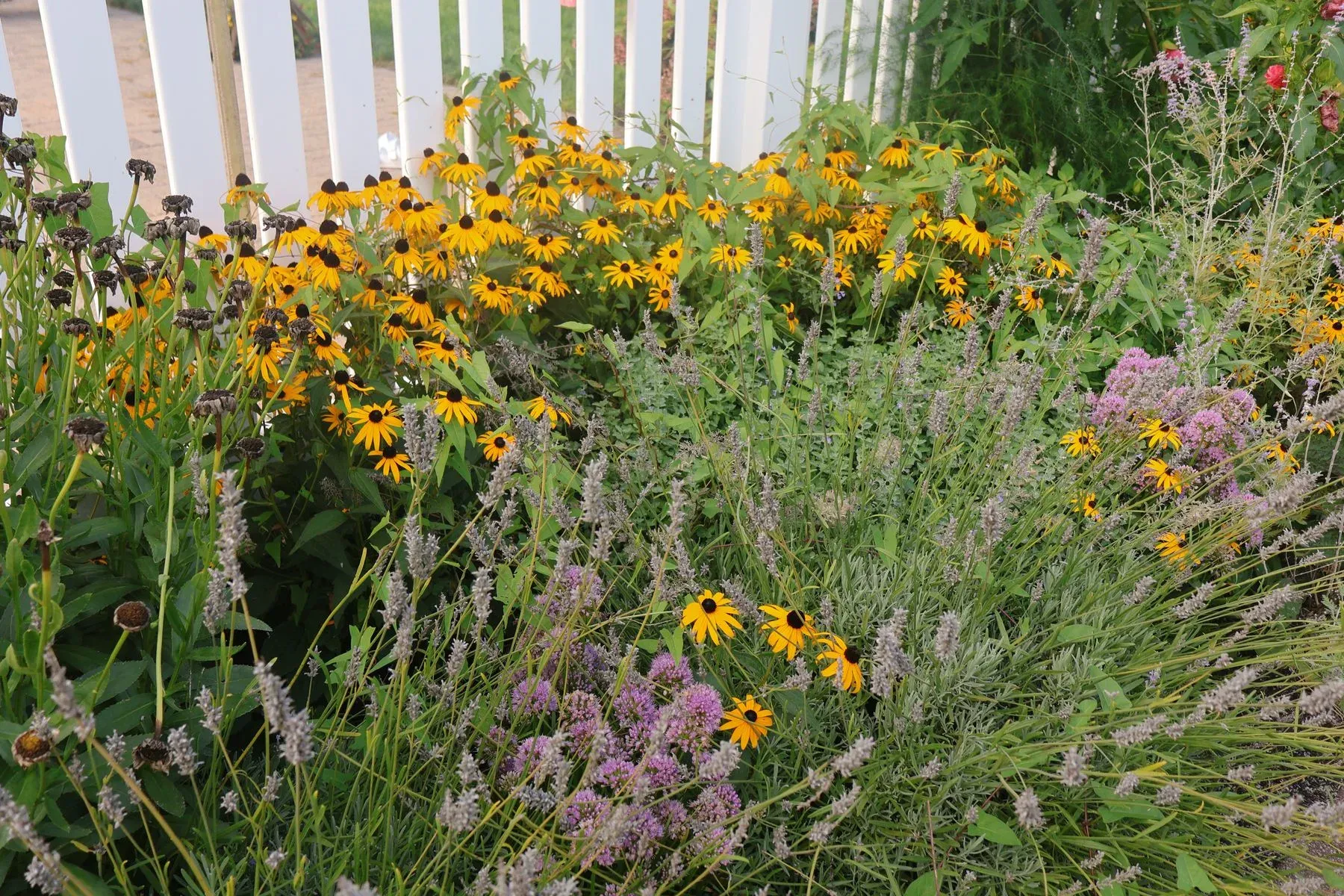
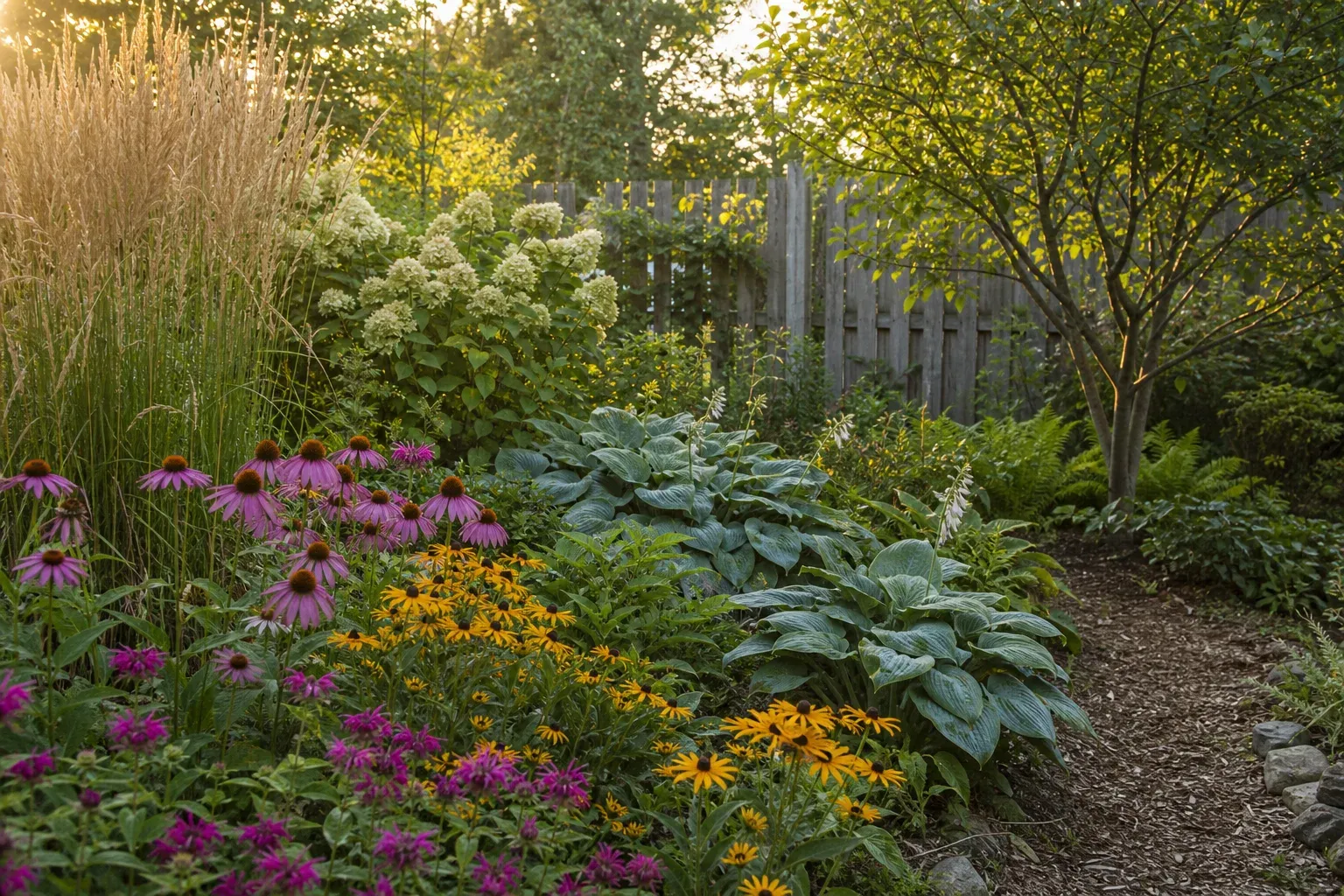
A layered perennial bed is more resilient than a row of isolated plants: overlapping flowers cover soil and spread bloom across the season. Photo by Sarah O’Shea on Pexels.
Three Reliable Plants for Zone 5b Shade
8. Hosta
Hosta earns its place through foliage rather than flowers. Broad leaves fill the visual gap between spring bulbs and taller shade plants, and sizes range from small edging cultivars to enormous specimens.
Part shade is usually ideal. Deep shade can reduce vigor, while strong afternoon sun can scorch some blue or variegated leaves. Watch for slug and deer pressure, and keep the crown out of standing water.
9. Astilbe
Astilbe adds upright flower plumes where hostas provide rounded leaves. It tolerates substantial cold but does not tolerate dry shade well. Give it organic soil and steady moisture, especially during its first summer.
Pairing astilbe with hosta works because their forms contrast, not because their needs are identical. Both appreciate shade, but astilbe will show drought stress sooner.
10. Coral bells
Coral bells stay low and bring burgundy, caramel, lime, silver, or green foliage to the front of a bed. Their shallow crowns can be affected by freeze-thaw cycles, so check in spring for plants that have lifted from the soil.
Hardiness and sun tolerance vary widely among cultivars. Read the individual label and favor selections proven by a regional nursery or local Extension trial.
Five Structural Plants That Hold the Garden Together
11. Peony
Peony is comfortable with cold dormancy and can remain in one spot for decades. Its spring flowers are brief, but the dark foliage contributes a solid mound for the rest of the growing season.
Choose the site carefully because peonies dislike frequent disturbance. Plant herbaceous peony eyes shallowly—burying them too deeply is a common reason plants grow leaves but do not bloom.
12. Panicle hydrangea
Panicle hydrangea is a safer hydrangea choice for cold gardens than many bigleaf types. It flowers on the current season’s growth, so winter stem damage does not necessarily erase the year’s display.
Allow for its mature size instead of forcing a large shrub beneath a window. It performs in sun to part shade with adequate moisture and well-drained soil; afternoon shade can help in hotter Zone 5b regions.
13. Ninebark
Ninebark is a durable deciduous shrub with spring flowers, dense branching, and peeling bark that becomes more noticeable after the leaves fall. Dark- and gold-leaved cultivars can add contrast without relying on continuous bloom.
Give standard forms enough room to reach their natural size. Repeatedly shearing a large ninebark into a small space creates more work than choosing a compact cultivar at the beginning.
14. Serviceberry
Serviceberry brings several seasons into one plant: white spring flowers, edible summer fruit, fall color, and fine winter branches. It can be grown as a large multi-stemmed shrub or a small tree, depending on species and training.
Birds often claim the fruit quickly. Before planting, check which serviceberry species is native or well adapted to your region and whether local disease pressure makes another selection preferable.
15. Switchgrass
Switchgrass rises through the summer, catches low autumn light, and keeps moving after frost has quieted the flowers. The standing stems also give a new perennial bed presence during its bare first winter.
Most switchgrass performs best in sun. Select a cultivar sized for the bed, and consult local fire-wise guidance before placing ornamental grasses close to structures in wildfire-prone areas.
How to Turn This Plant List into a Garden
Buying one of everything creates a collection. Repeating compatible plants creates a garden.
For a sunny bed, try a simple three-layer rhythm:
- Back: panicle hydrangea, ninebark, or switchgrass
- Middle: coneflower, black-eyed Susan, bee balm, or stonecrop
- Front: catmint or yarrow
For part shade, use a serviceberry or panicle hydrangea as the high layer, repeat hostas through the middle, and weave astilbe and coral bells between them. Match moisture before color: a dry pocket beneath mature tree roots is not the same site as cool, moisture-retentive shade beside a north-facing wall.
Start with fewer species and more repetition. Three coneflowers read as an intention; one coneflower surrounded by fourteen unrelated plants can look like a nursery cart was emptied into the soil.
The First Year Decides More Than the First Winter
Cold-hardiness labels make winter sound like the only test, but survival often begins months earlier.
Spring: plant into workable soil
Wait until the soil is no longer saturated or frozen. Set each plant at the correct depth, loosen circling roots, and water the root ball and surrounding soil. Do not assume spring rain has soaked a nursery-grown root ball.
Summer: build the root system
Newly planted perennials and shrubs are not drought tolerant yet. Water deeply when the root zone begins to dry, and use a modest layer of organic mulch to conserve moisture. Keep mulch away from crowns, stems, and trunks.
Fall: let plants prepare
Continue watering new plants during dry autumn weather until the ground freezes. Avoid pushing tender late growth with unnecessary high-nitrogen fertilizer. Leave healthy seed heads and hollow stems where practical; they add winter interest and can provide food or shelter for wildlife.
Winter: protect against swings, not just cold
Once the ground begins to freeze, a loose winter cover of clean leaves or straw can reduce repeated freezing and thawing around vulnerable or newly planted perennials. Applying it too early can keep soil warm and encourage unwanted growth. Remove excess cover gradually as the ground thaws in spring.
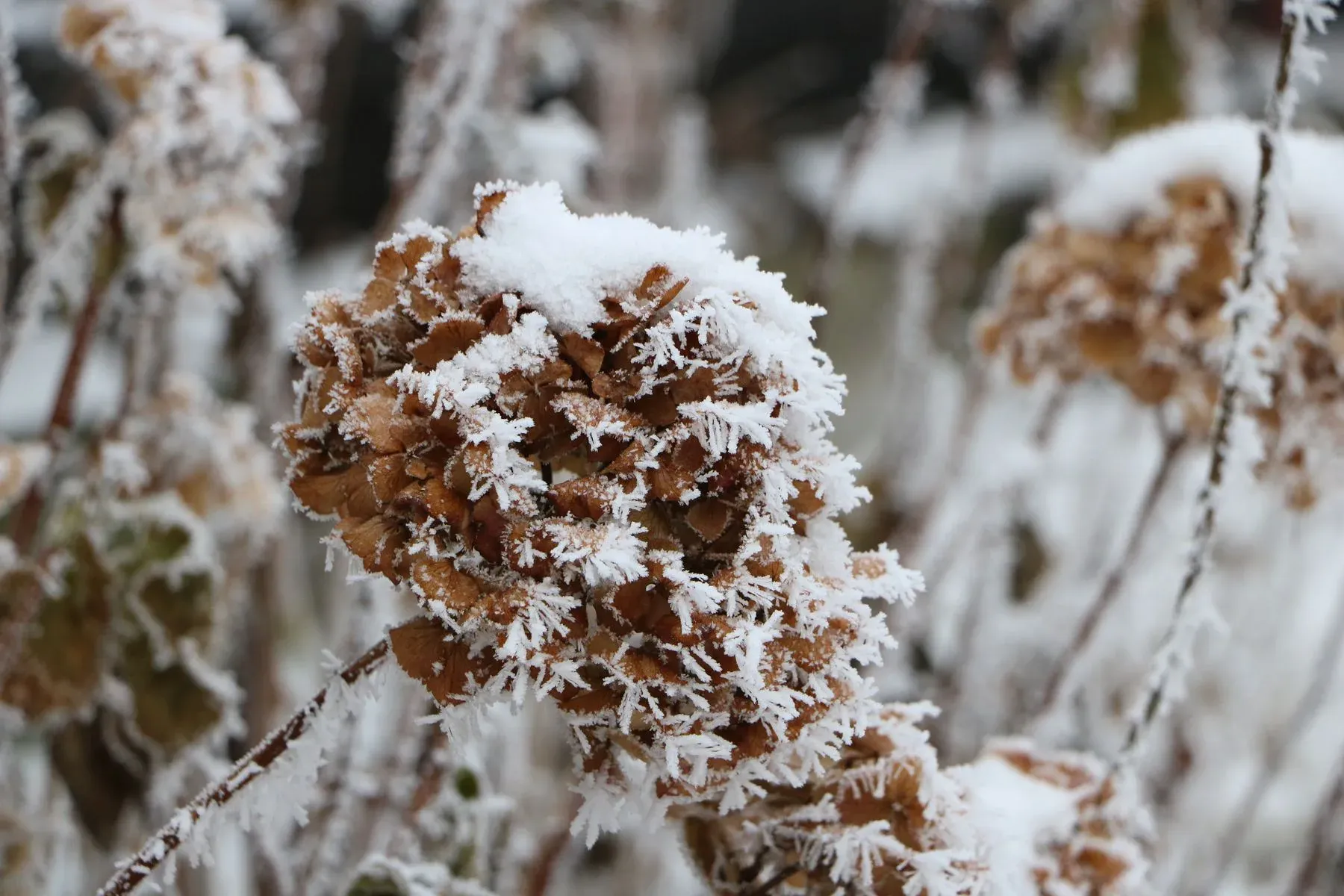
Dormant does not mean empty. Persistent flowers and stems can give a Zone 5b garden structure through snow and frost. Photo by Incze Andras on Pexels.
Frequently Asked Questions About 5b Zone Plants
Are all Zone 5b plants perennials?
No. A hardiness zone is most useful for plants expected to live for more than one year, including perennials, shrubs, and trees. Annual vegetables and flowers are usually planned around frost dates and growing-season length instead.
Can a plant rated for Zone 6 survive in Zone 5b?
It may survive in a protected microclimate or during a mild winter, but it is outside its listed cold-hardiness range. Treat it as an experiment rather than the backbone of the garden, and do not assume a warm wall can compensate for every cold event.
Is Zone 5a or 5b colder?
Zone 5a is colder. Its average annual extreme minimum is -20 to -15°F, while Zone 5b is -15 to -10°F. A plant hardy to Zone 5a should have slightly more cold margin in a 5b garden.
When should I plant perennials in Zone 5b?
Spring after the soil becomes workable is the simplest window. Early fall can also work if plants have enough time to establish roots before the ground freezes. Use local frost and soil conditions rather than a zone-wide calendar date.
The Spring Answer
By the end of the first winter, the garden looks reduced to stems, seed heads, snow, and faith. Then the sequence from the opening repeats: serviceberry buds, peony shoots, the green rim of catmint. The reveal is not that every leaf survived. Most were never supposed to.
What survived was the structure you planned underground—the right plant, in the right light and soil, with enough time and water to establish. That is the real promise behind reliable 5b zone plants: not a garden that resists winter, but one built to return from it.
Browse more plants suited to USDA Zone 5 and use each plant’s exact hardiness range, light, water, and mature size to refine your shortlist.
Sources and Further Reading
- USDA Agricultural Research Service: 2023 Plant Hardiness Zone Map
- University of Minnesota Extension: Mulch Perennials and Bulbs After the Soil Freezes
- North Carolina Extension Gardener Plant Toolbox: Panicle Hydrangea
- North Carolina Extension Gardener Plant Toolbox: Switchgrass
- Penn State Extension: Fall Garden Care for Pollinators